oli
-
Posts
443 -
Joined
-
Last visited
-
Days Won
1
1 Follower

Recent Profile Visitors
9,847 profile views


oli's Achievements






-
Bumb, new price 5700 Euro
-
He mostly made Tantos and Wakizashis, Katana are very rare. There is one example in this book: https://www.lulu.com/shop/markus-sesko/e-masters-of-keicho-shinto/ebook/product-1q526rw8.html?q=keicho+shinto&page=1&pageSize=4
-
From Markus Sesko book: NAOHIRO (直弘), 1st gen., Keiō (慶応, 1865-1868), Musashi – “Naohiro” (直弘), real name Shino Tomesuke (土野留助), student of Taikei Naotane (大慶直胤), some say he was the son of Jikishinshi Masahiro (直心子正弘) NAOHIRO (直弘), 2nd gen., Meiji (明治, 1868-1912), Musashi – “Naohiro” (直弘), son of the 6th gen. Naomichi (直道), he lived in Edo´s Ichigaya-Takajōmachi (市ケ谷鷹匠町), real name Yanagawa Saijirō (柳川才次郎), mostly a chōji-midare NAOHIRO (直弘), 3rd gen., Shōwa (昭和, 1926-1989), Saitama – “Juō Bushū Musashi-machi Takakura-jū Naohiro” (寿王武州武蔵町高倉住直弘), real name Yanagawa Masaki (柳川昌喜), born October 5th 1910, son of Yanagawa Saijirō, he died in September 1994 (see picture right) NAOHIRO (直弘), 4th gen., Shōwa (昭和, 1926-1989), Saitama – “Minamoto Naohiro saku” (源直弘作), “Musashi no Kuni Ōmiya-jū Minamoto Naohiro saku” (武蔵国大宮住源直弘作), real name Matsubara Eiichi (松原英一), born May 5th 1924, student of Juō Naohiro (寿王直弘) NAOHIRO (直弘), 5th gen., Heisei (平成, 1989- ), Saitama – “Kei´un Naohiro” (慶雲直弘) “Hiroshi tsukuru” (寛造), “Hiroshi kore o tsukuru” (寛造之), real name Kojima Hiroshi (小島寛), born January 22nd 1957, he studied under his father, the 3rd gen. Juō Naohiro (寿王直弘), and under the 4th gen. Naohiro, his older brother, by becoming independent in 1981 he received the name Naohiro from his senior fellow – 764 –students, he uses the gō Kei´un (慶雲) and signs sometimes also just with his first name Hiroshi (寛) which is read “Kan” by its Sino-Japanese reading NAOHIRO (直弘), 6th gen., Heisei (平成, 1989- ), Saitama – “Naohiro” (直弘), real name Suzuki Takekazu (鈴木健和)
-
Bump, still for sale
-
Hi Will, the pictures aren't the best. I would say Shinto, because of the Sugata and also seems it don't had so many polishing. The rest looks like Mino-den for me. Regards Oli
-
The Tanto is sold, and has now a good new home, thanks all for the support. I also made a donation for the board, Thank you all Oli
-
on hold
-
more from the iPhone


-
some pictures with the iPhone:


-
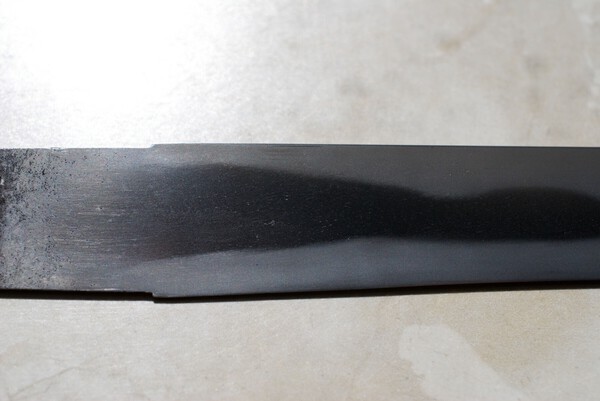
-
the other side:

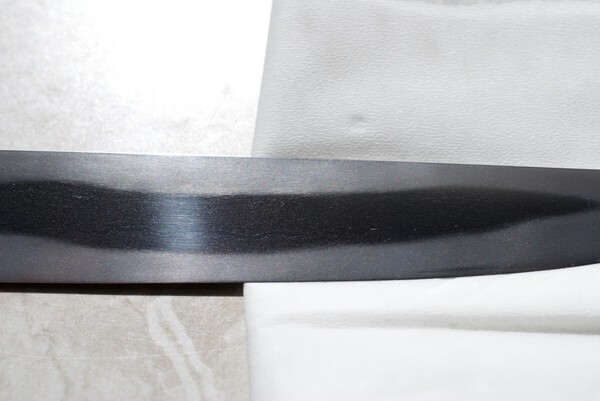

-
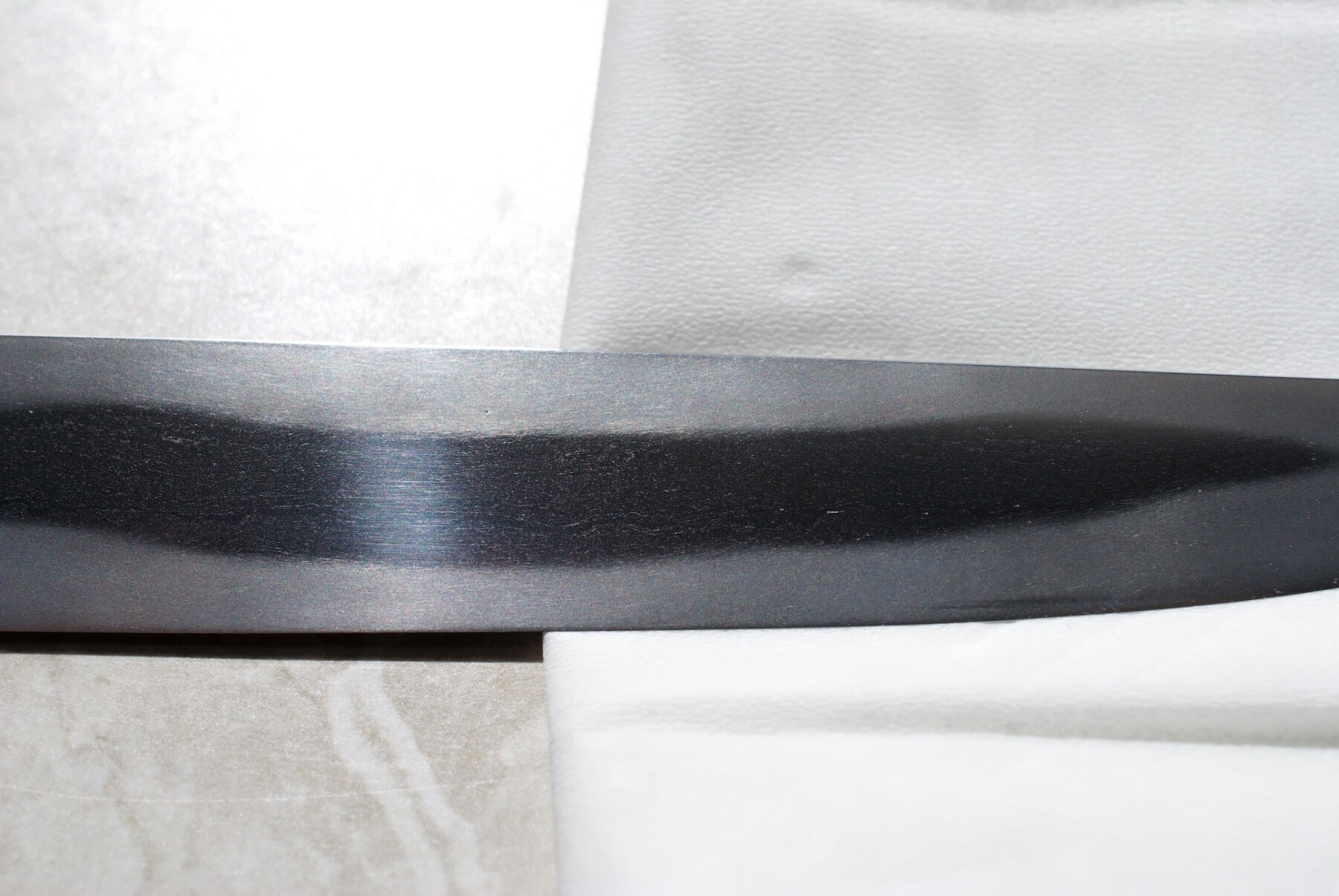
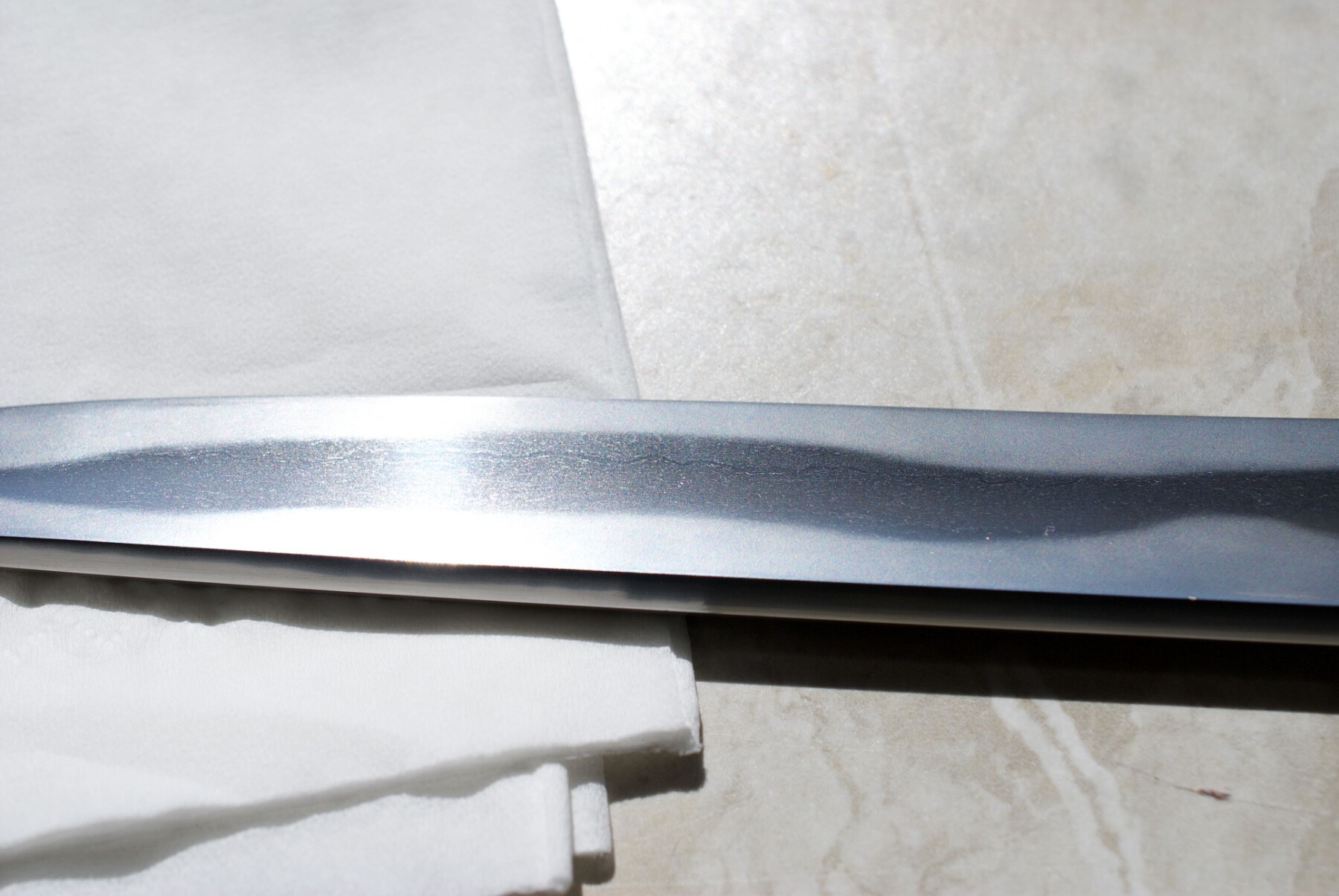
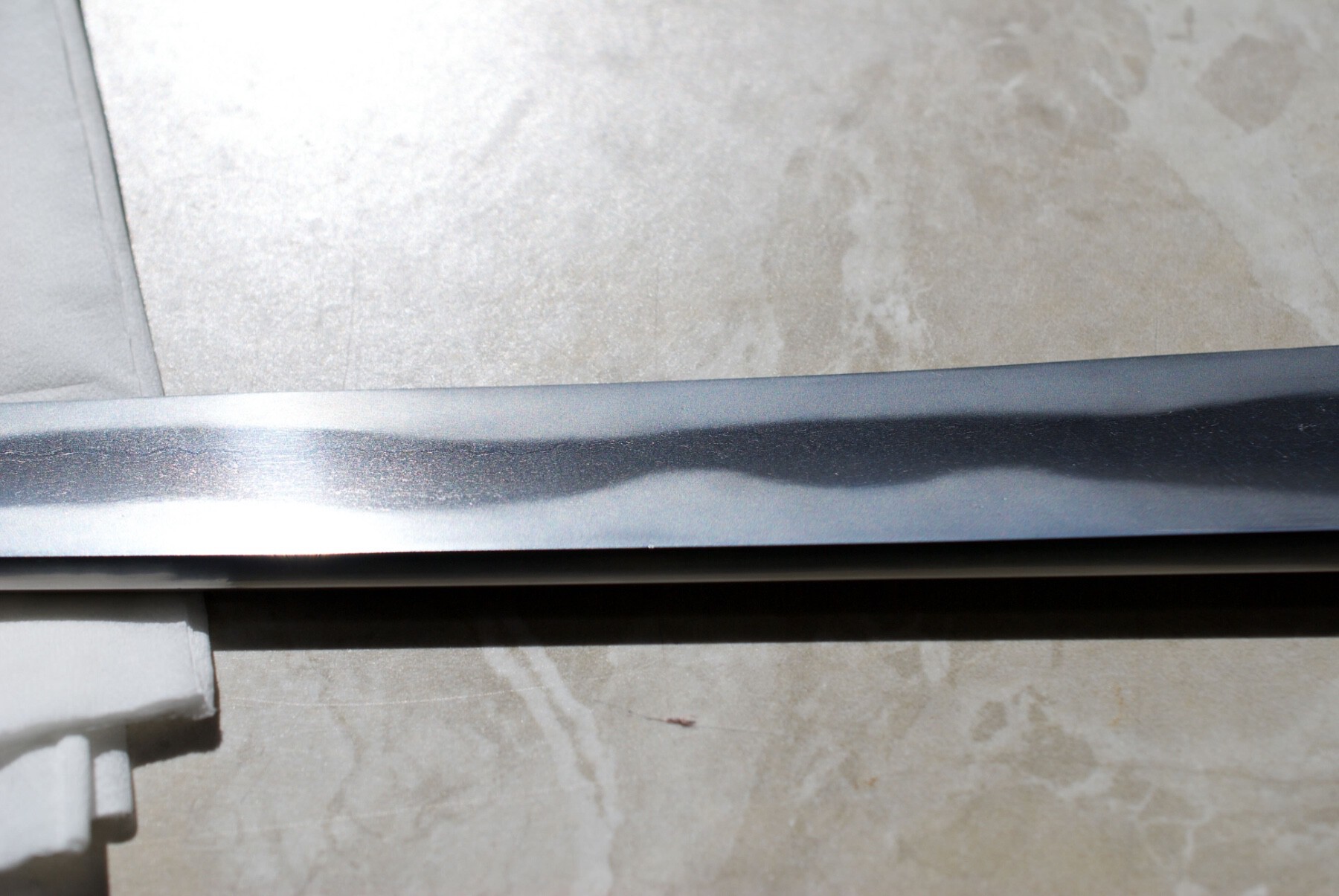
Some pictures in the sunlight (sorry no dark background):


-
Hi All, thanks for your Feedback. Yes as a private Seller and not a professional Photographer it's hard to make nice pictures, but I will try it on Sunday to make some pictures under sunlight. And I have no problem to take it back, if somebody is disappointed from the buy. The only reason because I sell it, I want to reduce my collection and I am focussing on special shinshinto smiths, Thanks Oli
-
Bump, still for sale