Conway
-
Posts
636 -
Joined
-
Last visited
-
Days Won
1
Content Type
Profiles
Forums
Events
Store
Downloads
Gallery
Everything posted by Conway
-
Mark, Maybe 相根 - Sagane. Not sure that’s the correct pronunciation.
-
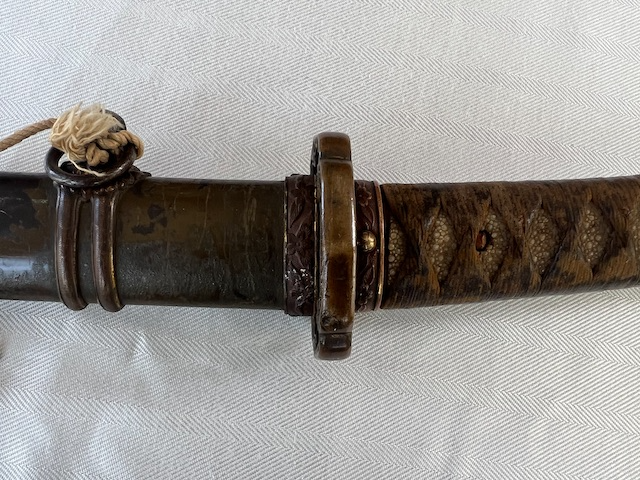
Hi Edward, Your grandfather brought home a Type 95 NCO sword. This is an early one which features the copper handle (tsuka). I believe less than 7,000 of these were produced before production shifted to aluminum handles. It looks like the original scabbard was replaced at some point during the war based on the existence of the chape on the scabbard drag. There should be a serial number on the throat piece (opening). This is common especially on the early copper swords. It's a very desirable sword among collectors of WW2 Japanese swords, so take good care of it. Conway
-
Attention Mantetsu Owners: A Survey
Conway replied to Bruce Pennington's topic in Military Swords of Japan
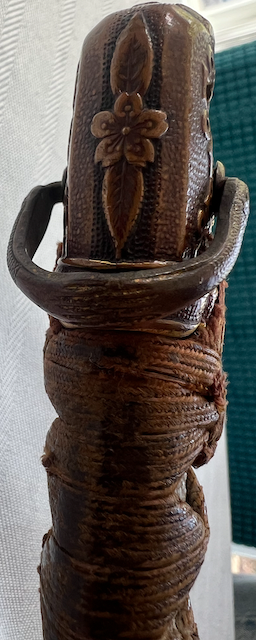
A few more pictures:

-
Attention Mantetsu Owners: A Survey
Conway replied to Bruce Pennington's topic in Military Swords of Japan
Posting this recent acquisition. It's dated Spring 1939 with katakana "ro" 口 233. It was hard to get a good picture of the mune due to it being a little rusty. Based on Bruce's Iroha chart, I believe this would be from the second series. Please correct me if that is incorrect. The sword has early features such as the center chuso release, thick pierced tsuba, copper rain pattern habaki, and hands clasped sarute. The tsuka also has metal shims for added durability. Conway

-
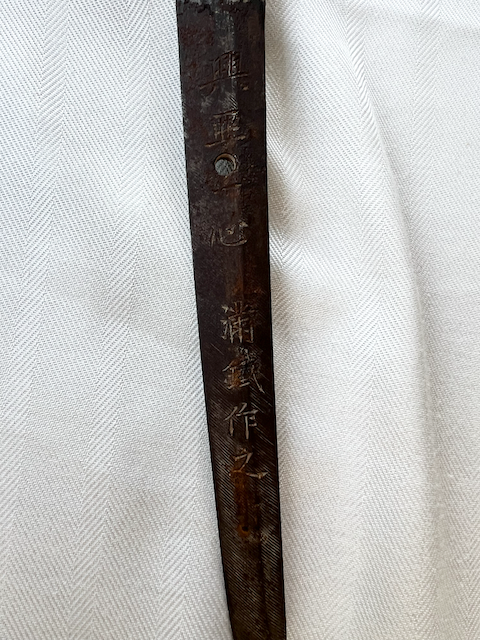
Hi Steve, More details here. Your sword is dated Showa 17 or 1942. The hot stamp is the one used by Asano Kanezane and his students. It also bears the Seki stamp at the top of the nakago:
-
Joe, Did you miss the responses that you were provided in the other thread here?:
-
There is a common misconception amongst militaria collectors that swords in this style of mounts are "navy/marine landing forces" swords. Conway
-
Steve, The signature starts with "Shoshin Kobuse kitae" Kotani Kaneyoshi (小谷包義). Your pictures don't show the remnants of the Kobuse Method hot stamp at the bottom of the nakago. There are many references to the kobuse method on the forum if you can use the search tool. Maybe you are already aware, but this sword has been listed for months. Conway
-
Thanks for posting, Perry! It's a really cool piece. Conway
-
Questions about "late war", NCO swords
Conway replied to WilBru5's topic in Military Swords of Japan
Could be a piece from the workshop of Showa 22. The scabbard throat piece and the scabbard look a bit pieced together. Conway -
Manchurian blade or Mantetsu blade Sword 2
Conway replied to Dogditcher's topic in Military Swords of Japan
Hey Steve, This one is signed 肥前國住保廣作- "Hizen Kuni ju Yasuhiro Saku" and dated January 1942. The smith is Yasuhiro. It looks like he was from Saga. I don't have any additional details. This is not a Mantetsu, although it looks like it could be traditionally made. Conway -
Hi Dylan, It’s a a Chinese reproduction. Similar examples can be found on eBay being sold from China. These are very common. Here’s a linked thread in the military section of the forum that details other examples of fakes: Conway
-
Possible Diplomat Type 19 Emblem?
Conway replied to Bruce Pennington's topic in Military Swords of Japan
Looks Chinese... and by "Chinese" I am not implying modern fake. I scanned through all three volumes of Jan Culbertson's Chinese Swords and could not find a match though. Hopefully you can get more pictures @Bruce Pennington Conway -
It’s signed Inaba - 伊奈波. Quite a few references within the site if you search the term. This signature may refer to a sword forge or a smith. Conway
-
Hi Steve, Looks like it could be a surname - 黒田 - Kuroda. Conway
-
Hi Sam, To add to what Ed posted, I would agree it looks like a Sam Browne belt. Keep in mind the Japanese rolled through British colonial holdings and repurposed their equipment. I have a British-made pith helmet over-stamped with Japanese inspection marks. So it’s possible the Japanese did use your belt. Conway
-
Maybe it's just the picture quality, but the habaki looks silvery as opposed to brass. 108,XXX serial number should be Suya. Conway
-
I believe that’s a Type 98 saya. The screw hole for the ishizuki is visible in the picture. Conway
-
Hi Anthony, See the attached thread below. This sword may not be of Japanese origin. It’s possible it falls in the category of “island sword.” It could also be post-war Chinese fake too. If you are looking for a genuine WW2 Japanese sword, I would save your money. Conway
-
Type 98 Gunto with just a name- Legit or repro?
Conway replied to Casual_Collector's topic in Military Swords of Japan
The link Bruce included in his post explains the meaning on the text on the drag. Do you have any additional photos of the blade itself? Maybe some better close ups? Conway -
Need Help Identifying this sword please.
Conway replied to NinjaBear's topic in Military Swords of Japan
Anthony, I believe the signature is Yoshikuni, and the first two characters (top-bottom) might be E-Saka. 江坂義國. The sword looks to be of wartime manufacture. It’s in nice shape overall with higher quality fittings. Conway -
My new Kobe type 95 - I have a few questions
Conway replied to JohnWB's topic in Military Swords of Japan
John, Nice find! I linked a useful bit of information on Kobe in another thread below. I believe there should not be any other subcontractors mixed in once the Kobe range starts. I think the “K” marked Kobe swords in this range are unique because production with this fuchi stamp was so brief. However, if you factor in that there is a belief that Ichi “一” and Kobe may be the same subcontractor, then I guess Kobe/Ichi production is not so short. “一” marked swords appear in many serial number ranges. Also note that your sword has the brass tsuba whereas these Kobe swords are commonly found with the black iron tsuba. I have one similar to your example in the linked thread. Conway -
Steve, You know, there is a search function on the forum where you could easily type in “Jumyo” and find many results. From the pictures this looks like non-traditionally made from Showa Period. If it was a steal, it probably wouldn’t still be on eBay days later… Conway
-
Second Lieutenant Fuku-? - Name on Holster
Conway replied to Conway's topic in Translation Assistance
Thank you again, Moriyama san. Conway -
Greetings, I having trouble identifying the second character in the surname. There are a few characters I think it could be with a 土 radical on the top. My best guess was 吉, but that is probably way off. Any thoughts would be appreciated. Thank you! Conway