John C
-
Posts
3,055 -
Joined
-
Last visited
-
Days Won
19
Content Type
Profiles
Forums
Events
Store
Downloads
Gallery
Everything posted by John C
-
I think it's Kanemichi, dated Heisei 20 (2008). But wait for one of the translators to be sure. John C
-
I could be wrong here, however if those same dots are on the other side I would be thinking a vise. I've seen that before on habaki when the blade was stuck. But as I said, I could be wrong and maybe it's just a design that wasn't completed. Another possibility are punches like on a tsuba nakago-ana to tighten it up on the blade. John C.
-
Nice garage sale find with a cool ww2 story
John C replied to Jonas Ne's topic in General Nihonto Related Discussion
It's a decent find. The wooden habaki were common on these. Made for soldiers or sailors. John C. -
Don't have it in hand, but will take some shots for you when I get it. John C.
-
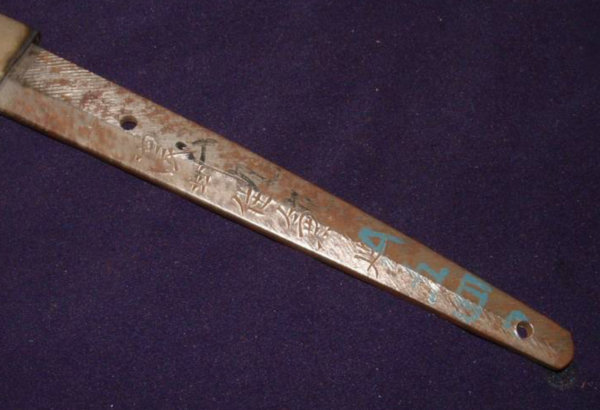
RS fittings, double latch (though may not be original); two mekugiana. Fittings in rough shape and blade rusty. Dated: Showa 19 (1944), June Niwa Shuji Kanenobu (son of Niwa Kanematsu Kanenobu), RJT smith. Signed: Noshu ju Kanenobu Star stamp and small seki stamp (unknown nakago stamp) Painted green numbers A 540 in both kanji and western numerals Black painted numbers 99 in kanji No dots or stamped numbers. John C.
-
Thank you. Seller just got back to me and it does have the small seki. Not sure about the mune yet. Do you want the particulars of this sword for your files? John C.
-
Seems to have the earlier thicker (11mm) tsuba as well. John C
-
That's what I thought. Looking specifically at a 1944 Kanenobu that does not appear to have any inspection stamps. Do you have any of his work in your lists? John C.
-
@Bruce Pennington Bruce: Did all star stamped gendaito have seki or Na inspection stamps (large or small) after 1942? John C.
-
George: Here is the link to an excellent article on NBTHK papers if you haven't seen it already. Also, look closely at the areas indicated by the arrows. You should see two very small brown kanji for sword in that line. http://www.nihontocr...se_sword_papers.html John C.

-
Looks like the katakana letter KO. John C.
-
Roger that. I wasn't sure because many smiths went into other metal craft after the 1868 ban. Iv'e seen some really cool yatate made out of unused fuchi. Sorry Yves for hijacking the thread. Hope you find an answer. John C.
-
Looks homemade from old chair parts (note the hammer is made from two leg parts). The wedge is a block of wood put through a table saw then cut at an angle. If you have access to a table saw you could make these quite easily. I would add a soft but rigid "foot pad" on the end to protect the tsuba. John C.
-
Fear not. Gimei is common. If the blade is nice, then you did well. John C.
-
Need the pics, Steve. John C.
-
@Bruce Pennington Not sure if you are following this, however this Hirashige kao could be added to the stamps doc if you are collecting these. John C.
-
What is the third kanji? The first could also be Taira (a title) so just wondering if his name is Shige something? John C.
-
I'm looking to replace some silk kumihimo cords on some inro and yatate. I was looking at a company called Atelier Miyagi in Japan (they sell through Etsy), however the whole customs thing has me reticent to purchase. Does anyone have experience with this? Were there any customs fees? John C.
-
Crap, I won! How did I do? Kake
John C replied to Scogg's topic in Auctions and Online Sales or Sellers
Sam: Looks like a good find regardless of age. In one pic, the right side of the center panel looks like it might be peeling a bit. If it is old plywood, that could narrow down the time frame a little. If it is veneer, it could be much older. John C. -
Dom: There are file reducing apps on line, however I use a simple method - take a screen shot of the original picture, check the size there. Go to tools or whatever app you have to manage the screenshot and under pixels (should say 144) change to 124 or 114 to reduce the size. 3megs goes to 750kb pretty quickly. John C.
-
Kyle: Not sure if you have this already, but this page lists which flaws are fatal and which are normal. http://www.japaneseswordindex.com/kizu.htm John C.
-
I see chrysanthemum, bamboo leaf, and plum flower. What is the one on the bottom right? John C.
-
Interestingly, the mekugiana closest to the guard would be the original one and looks empty, while the one closest to the pommel seems to have a mekugi in it. Could possibly mean the nakago was re-drilled for a repair or something. John C.
-
J: Not saying it's a fake Japanese sword, just that there may be some other reason he's selling it (crack, tired blade, gimei, or whatever). Because of that, however, you can find some good prices with him if you are willing to own a blade that isn't perfect and has some flaws. John C.
-
@SteveM Steve: With this much information, how much luck would a Japanese speaker have in possibly finding the relatives of Lt. Abe? (was the hint too subtle?) John C.