Iekatsu
-
Posts
326 -
Joined
-
Last visited
-
Days Won
1
.thumb.png.4c5df79fec171b2dc4a23af38e280a4d.png)





Iekatsu's Achievements






-
To be clear I don't think it is Mino, but I can see the influence in the general layout of elements, the shape of the Seppa-dai and the Hitsu-ana etc.
-
You guys need to stop feaking people out. It is a legitiamate Tsuba, Edo period. It is a carved design with applied gilding. Gilding in not perfect, sometimes it is worn away and sometimes it goes outside of the lines. I would say clear Mino influence with this one.
-
Sold for much higher than it should have, someone is going to be very upset when they realise.
-
Just a heads up that this is not Edo period, please do not bid on it. Aoi Art Menpo
- 14 replies
-
- 12
-

-

-

-
In the current market papers definitely add financial value and provide piece of mind for those that don't yet have the knowledge to make confident judgements for themselves. Items papered as Tokubetsu Hozon and above can significantly impact the value, generally exceeding the initial investment and the submission fee, which is why a lot of dealers buy or get items papered. There are also people who get a thrill out of finding quality items in the wild and having them validated with high ranking papers, a test of knowledge and skill of sorts. I have always appreciated that the NTHK at least gives an estimate on the period.
-
Even if we were to suppose that the successful attribution rate is relatively high, we are still stuck with categories that are often arbitrary in nature and do not necessarily reflect the latest research/scholarship. This is very much understood and discussed privately between collectors, and why a lot of collectors do not really submit items unless it is an outstanding example, they are looking for confirmation on a Mei or if the financial investment makes it worthwhile for sale. Collectors in this category generally have a pretty good idea of a likely attribution before submitting and are unlikely to learn any new information by having an item papered. It is a game, the game has rules, but at the end of the day a lot of the attributions are meaningless outside of the small number of people that understand the game. This is not necessarily an easy problem to solve though, as Steve mentioned there is so much that is unknown and may never be known for certain in this field, but I feel that arbitrary categorisation does stifle legitimate research, that could improve the situation.
-
Glen's suggested approach is the only serious way for this field of study to progress. There needs to be a significant overhaul of the current system and how judgments are made. Ideally this would be driven by the NBTHK, but they are somewhat stuck between a rock and a hard place, because any major changes to the current system would potentially invalidate tens of thousands of issued papers/attributions, and honestly they are overwhelmed as is.
-
Modern cloth, this stuff is machine made and sold by the yard. The materials, the cut, construction and details are not period. Lots of modern Jinbaori get made for various festivals. The key give aways are the style of fabric, the bias tape and how it is sewn.
-
Never fun to be the bearer of bad news, but I think the original posted Jinbaori is a modern reproduction.
-
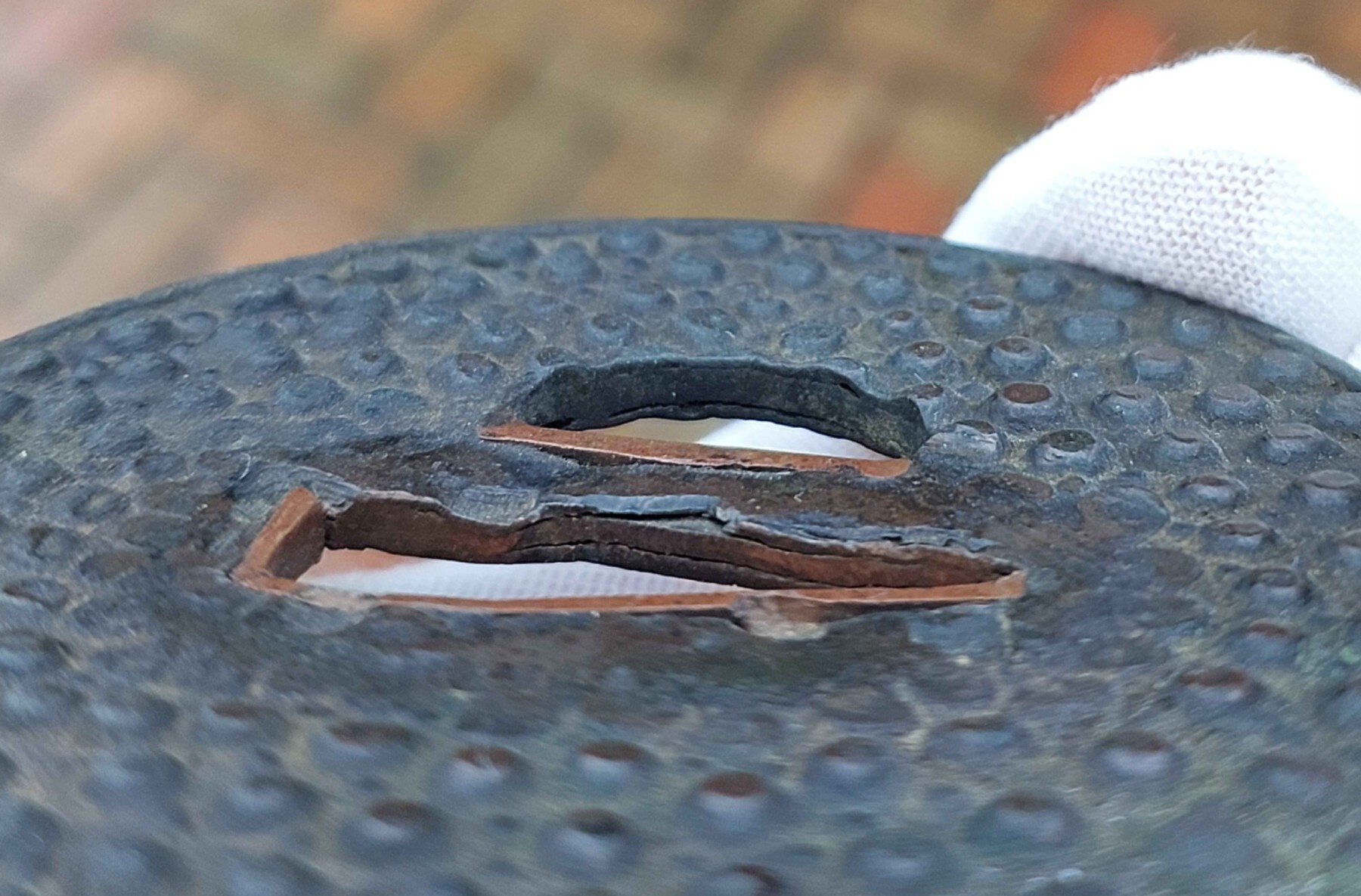
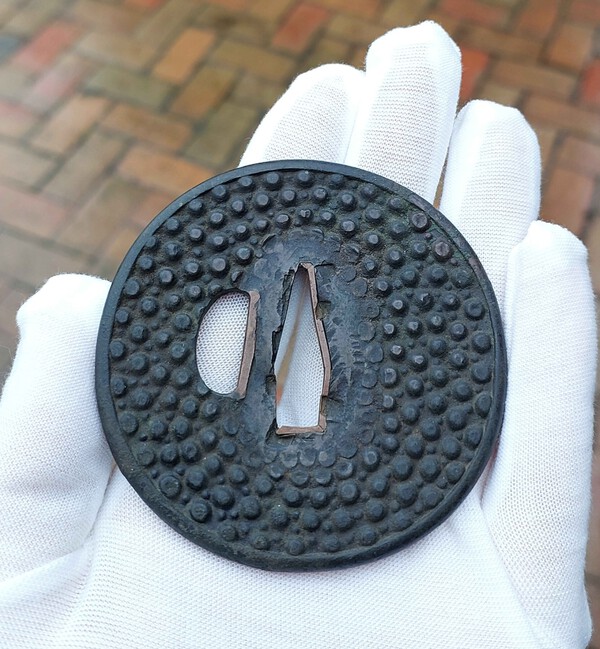
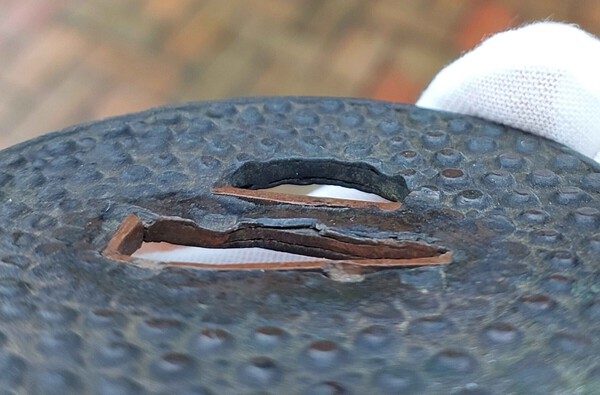
Here is the cast San-mai. The top and bottom plates have been cast and are held in place by the Fukurin.
-
Well summerised, I could not agree more.
-
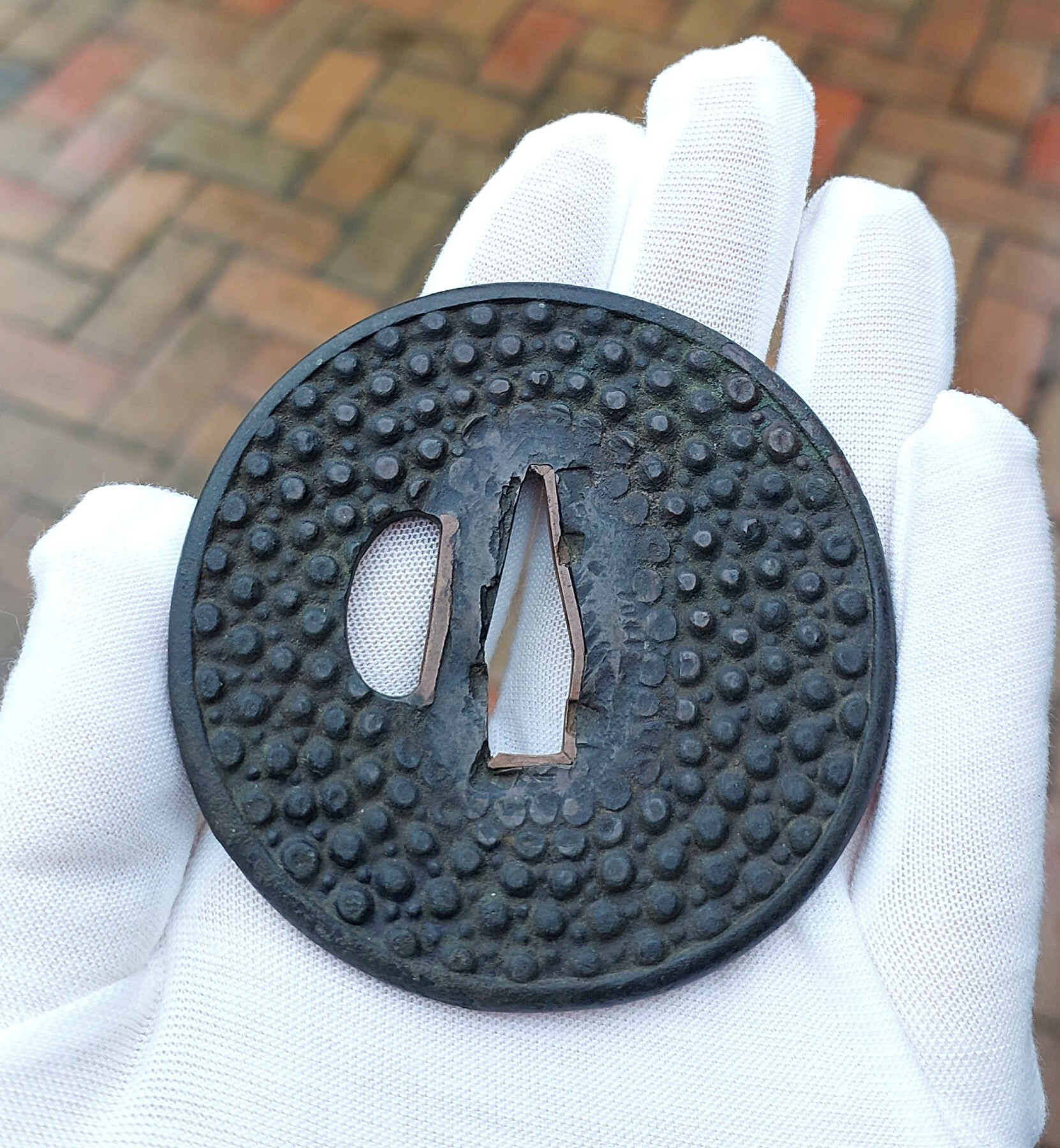
Generally pre-Edo San-mai would fall under the categorisation of Ko-kinko, like Mauro said. That being said, I actually have a cast San-mai Tsuba, the only one I have seen (so far). I will add some images when I get a chance. I actually do not like the term Kagamishi and instead use Ko-Chūzō Tsuba, which I think is more fitting. This example is actually not cast, and only mimics the visual characteristics that were popular in that period. It would therefore fall under Ko-kinko.
-
That is a famous published example and very nice, whoever picked it up is going to be very happy. I have seen a few others in a similar style, but I have not personally seen another with exactly that design, that does not mean that others did not exist, only that we only have one surviving example to draw from (so far). I have a Tsuba that is very similar to that in construction, I find it very hard to determine if it was cast and worked, or made using more conventional methods, generally I look for casting flaws/artifacts and then confirm with XRF analysis to determine the material, because cast fittings are always bronze and will not be Shakudo or Yamagane. The soft details and lacquer on Ko-kinko examples can sometimes give the effect of it being cast when it was likely not.
-
Kagamishi are all cast in bronze. The several similar examples above are likely from the same workshop. There are enough examples with the same designs that we can establish that they were likely created in batches and were cast from masters.
-
Sadly It is quite common for NBTHK Tachi Kanagu-shi attributions to be aribtrary and incorrect, often based more on a vibe or feeling than any clear evidence that it was created for a Tachi.