Matsunoki
-
Posts
3,937 -
Joined
-
Last visited
-
Days Won
72
Content Type
Profiles
Forums
Events
Store
Downloads
Gallery
Everything posted by Matsunoki
-
What a strange one. As said, the Mei looks reasonably well cut (but I’m not a calligraphy expert) but the seppadai suggests to me that it’s actually been mounted, more than once.
-
Can we see the actual workmanship/design on the other components please? Looks a very nice koshirae with a popular theme.
-
Site Trouble Yesterday?
Matsunoki replied to Bruce Pennington's topic in Forum Technical Details and Maintenance
Off for large parts of today as well. Hey-Ho. -
Lex, wishing you the very best of luck…but really luck doesn’t come into it. Build and retain a solid reputation and you will do well.
-
Site Trouble Yesterday?
Matsunoki replied to Bruce Pennington's topic in Forum Technical Details and Maintenance
Same here. “Server not found”. Off air for long periods yesterday. -
Just to be clear, it is possible to relocate a yokote. It is a directional change in the use of the stones that can create that razor sharp line.
-
Ok,thanks. Obviously easier to see in hand than on that image. How about the Ha?
-
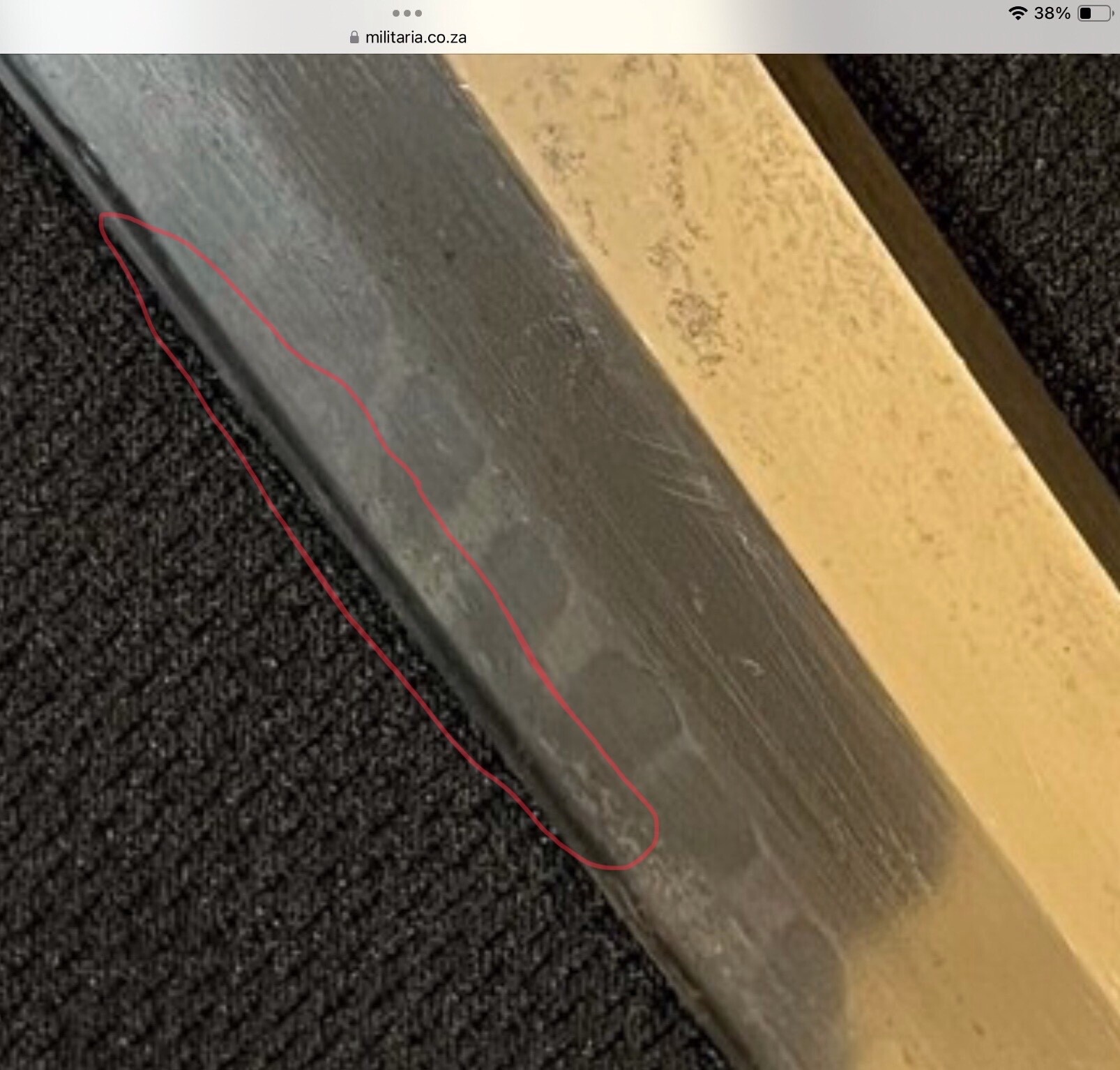
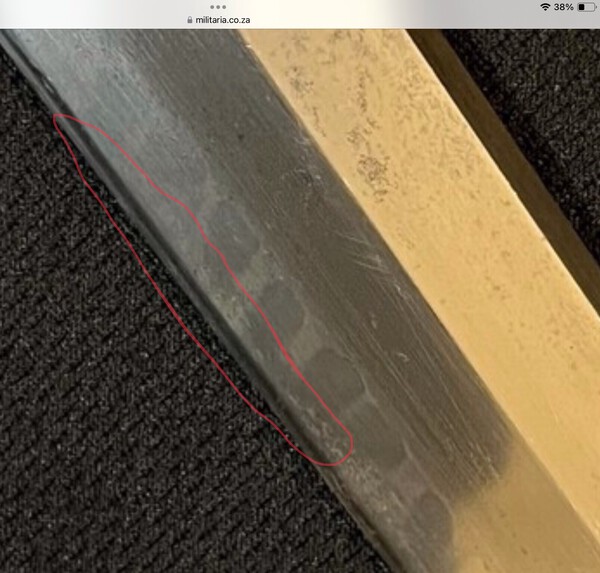
Nothing wrong with my eye. I still cannot see a boshi. What I can see is marked with a red line in this image.

-
Can you try another image…….i cannot see boshi, just where someone has ground the kissaki edge. Please explain what this feature running along the ha is.
-
Antique netsuke translation please?
Matsunoki replied to Prescott patina's topic in Translation Assistance
Doesn’t matter what it says, it’s fake as you were told on your other thread. -
Interesting and informative comments from @uwe Again stressing my beginner status on armour, the use of nerikawa during the peace times of Edo was popular because you got the look but not the weight or the cost. Parading around on horse or foot in a heavy iron yoroi, especially the Kabuto, Menpo and Sode would be rather uncomfortable on neck and shoulders I think? So the lighter nerikawa was widely used (or so I have read) including by higher ranking Samurai. Couple that with the more luxurious lacing and a Kabuto/shikoro and Menpo that I personally found attractive with its high central ridge (ignoring condition) and you may have bought something that was once really quite decent. But of course I could be spouting rubbish🙂…..someone correct me if I’m wrong please.
-
Dealing with seller djcollection
Matsunoki replied to 2devnul's topic in Auctions and Online Sales or Sellers
What I find surprising is that a collector/dealer did not notice a chip to the kissaki mune…..the kissaki is one of the first things you look at very closely. Also the mune ware are clearly visible…ok, not massive but they are there. That rust looks to have pitting, ok again not a massive area but does not look a few weeks old imo, especially as the sword was shipped oiled. And afaik an Iai koshirae is not an assembly of Frankenstein adapted parts but one that can be safely used for Iai As said above….lessons to be learned by both parties. A dealers reputation is hard won and easily lost. Buyers have to ignore all the sales BS and focus on asking the questions that are not answered in descriptions. Bottom line…..if you are going to buy from images you’d better know and be able to trust the seller. ……and the best way to deal with a rightfully aggrieved customer is to apologise and refund his money….as Alex says above. But then I’m very “old school” with an exaggerated sense of transparency and fair play. -
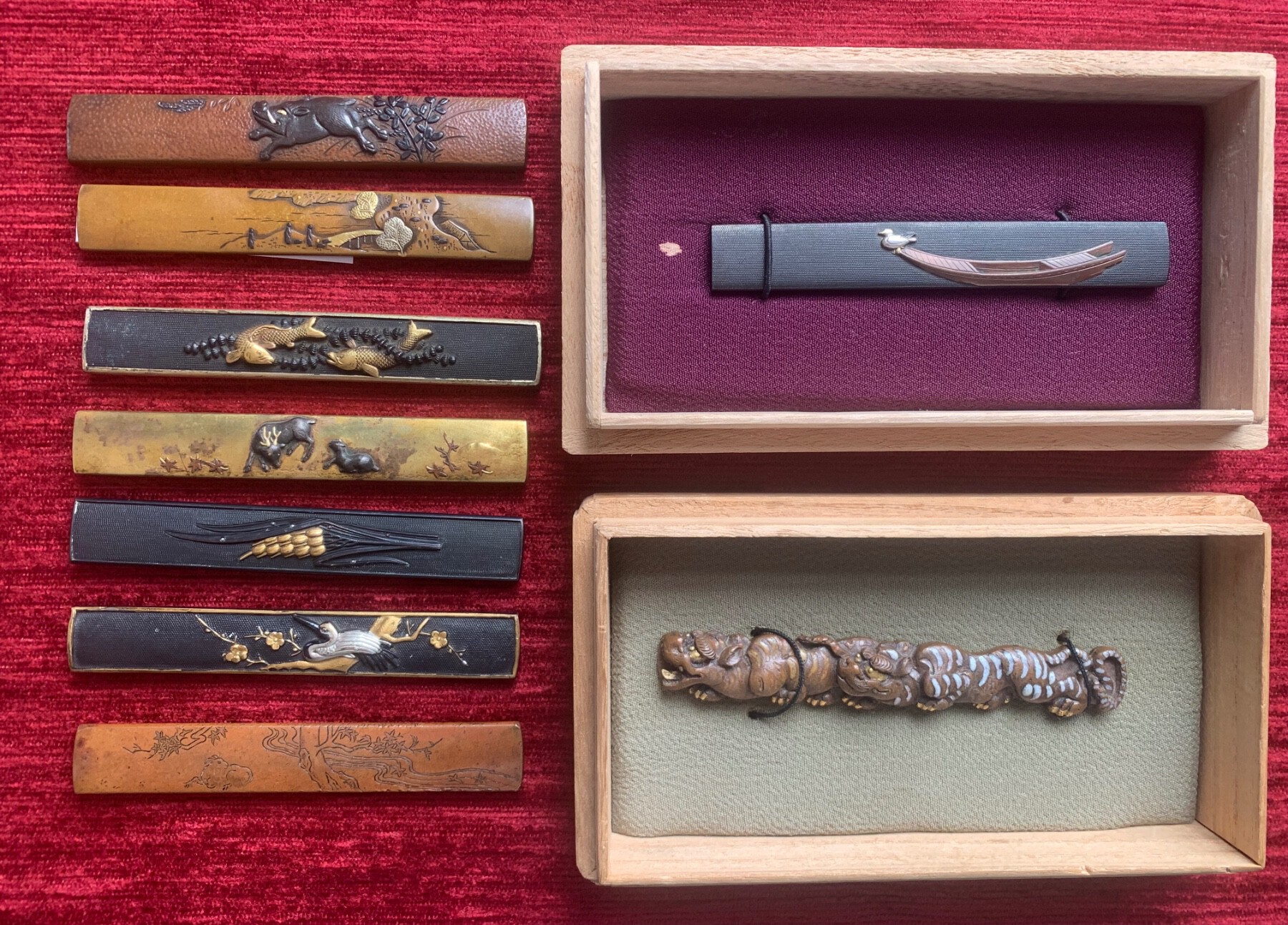
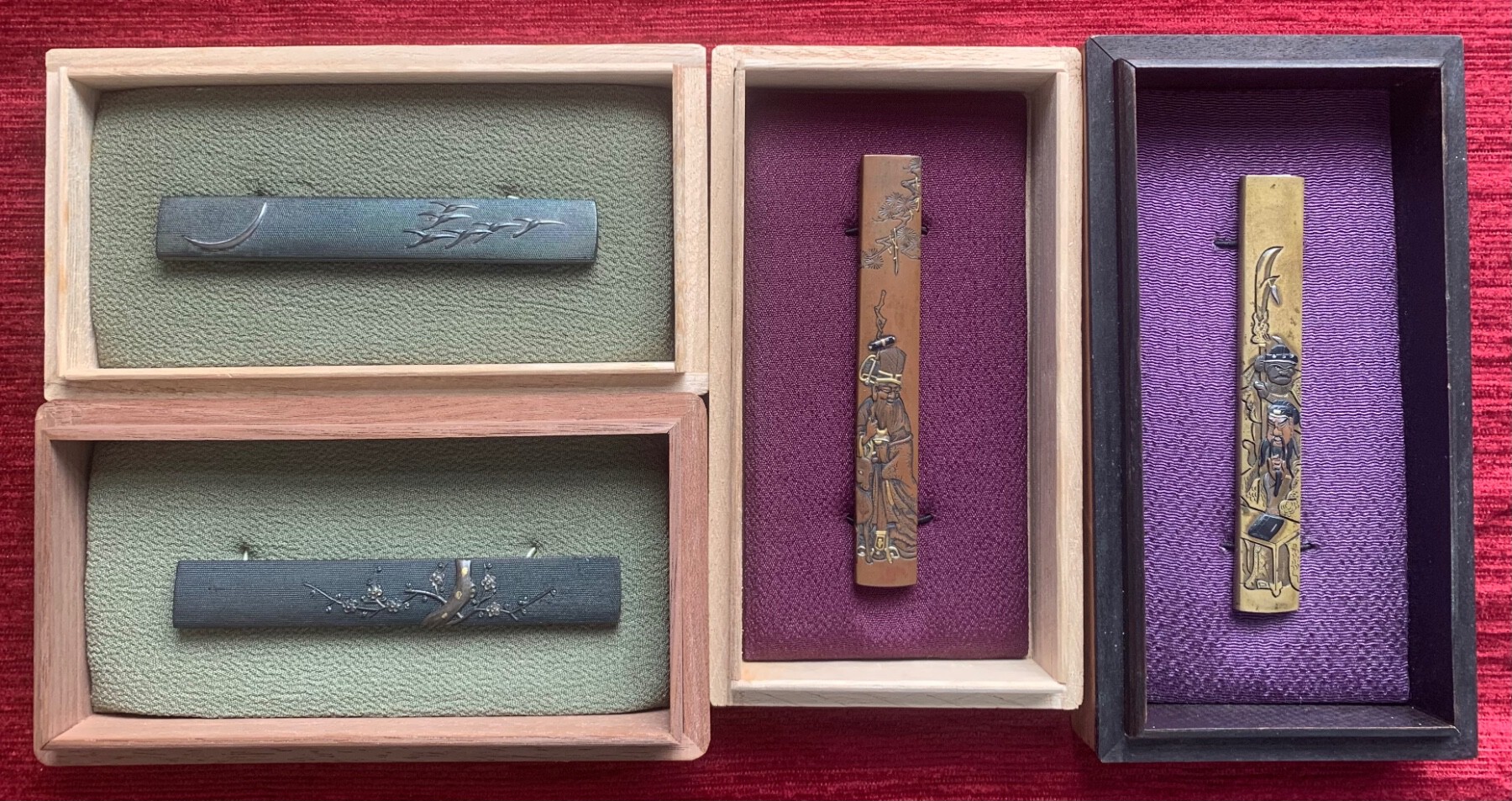
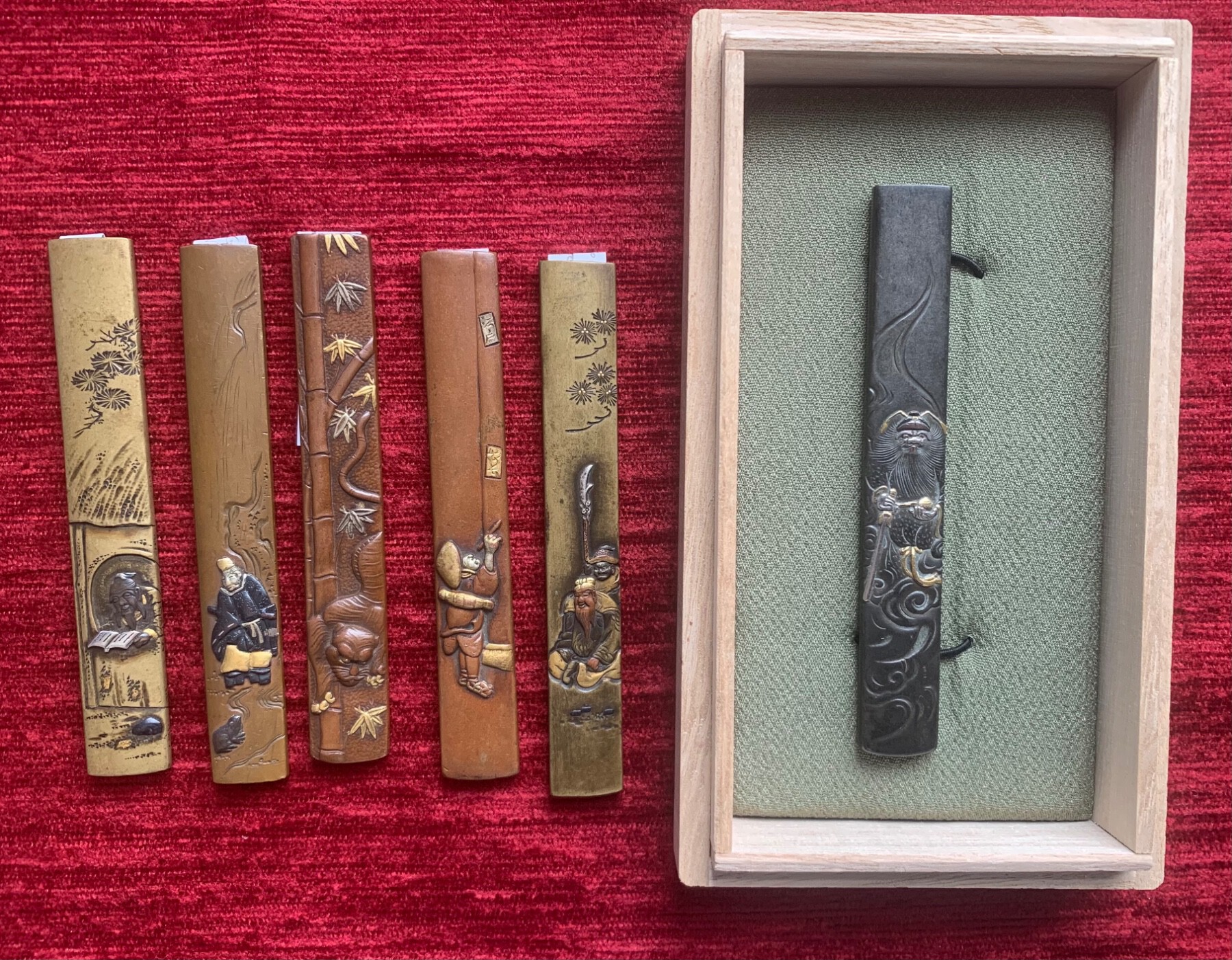
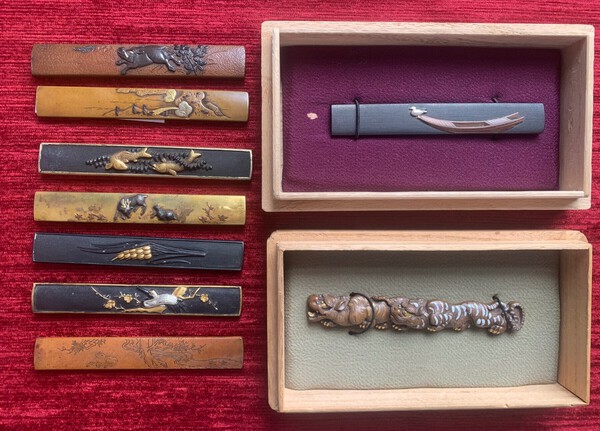
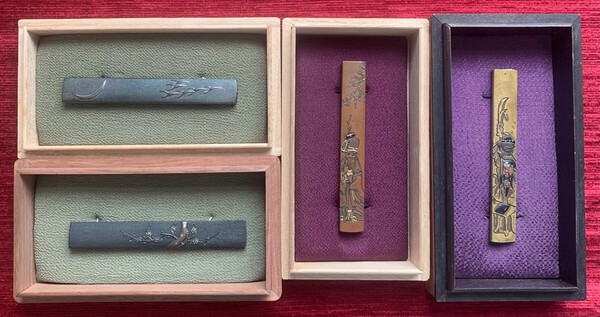
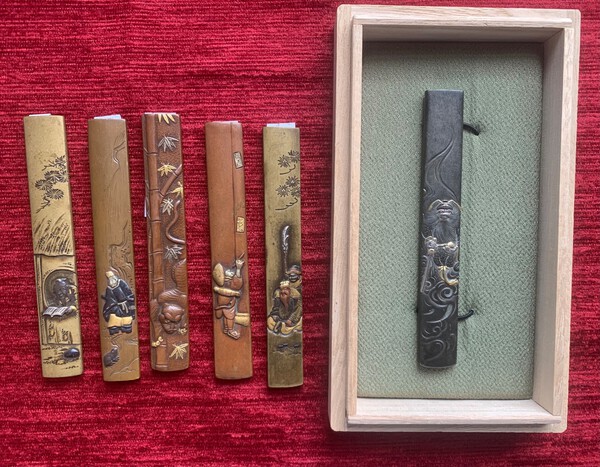
The Birmingham Arms Fair is coming up (14th June) so here are some poor images of assorted kozuka that I will be taking (Table 81) Mei include Goto, Hamano, Issando Joi, Hirata (the incredibly rare enamelled tigers) etc. Quality ranges from “OK” to very fine (imo🙂) Hope to see some of you there. All the best. Colin
-
- 9
-

-

-
I am just a beginner on armour so this is just an unreliable opinion. Others on here will hopefully chime in. To me this looks a genuine un-messed with Edo era armour however the condition, especially the Kabuto and Menpo is pretty rough and unrestorable without considerable expenditure. It would require specialist knowledge and ability to fix it. The sleeve lacquer looks badly damaged also. Given that the bulk of the value usually rests on the Kabuto and Menpo it is not something to go mad on$ I’m interested to hear what others say….so don’t rely on what I’ve said🙂
-
These menuki look cast and then hand finished…imo.
-
Hi Grev Was he talking about mercurial gilding? That is indeed a lost process mostly because it can kill the user due to the release of mercury vapour during the firing process.
-
Yep, it is Chinese. Well outside of my knowledge! Looks old but the Chinese are masters of ageing things including ivory.
-
As Piers suggests……. “Signature” is not a Japanese one. Crudely carved and awkwardly orientated. The underside is not finished to Japanese standards. Can we see the okimono please? I feel this could be Mammoth tusk.
-
Not quite the same as our local horsetail grass but if it’s the same family…..it gets used in cosmetics for skin and hair. Perhaps I should try it 🙂
-
Accessories for the Tanegashima
Matsunoki replied to Bugyotsuji's topic in Tanegashima / Teppo / Hinawajū
Sometimes it is not the importance or rarity of an object that warrants restoration or saving but it most definitely is the pleasure and peace that so doing brings. Reward of a different kind. -
Bob and I have discussed this elsewhere but just to be clear this is definitely not shibayama mei or work as @Bugyotsuji correctly infers.
-
Piers, can you make it a bit trickier next time?🙂
-
Arghhh, I can’t play ……don’t know what a Genbu is (without cheating) Guess….something to do with one having a very hairy tail (minogame) that the other does not?
-
……….the proud new owner of these comes on here asking for opinions?☹️ https://www.the-saleroom.com/en-gb/auction-catalogues/lawrences-auctioneers-of-crewkerne/catalogue-id-srlawre10245/lot-a702559b-d2ea-481e-afb4-b43500bfb46e or https://www.the-saleroom.com/en-gb/auction-catalogues/lawrences-auctioneers-of-crewkerne/catalogue-id-srlawre10245/lot-a483c013-6d87-4afd-83ea-b43500bfb46e ….and others in the same sale all with misleading descriptions.
-
- 2
-

-
-
👍