Matsunoki
-
Posts
3,484 -
Joined
-
Last visited
-
Days Won
65
Content Type
Profiles
Forums
Events
Store
Downloads
Gallery
Everything posted by Matsunoki
-
Do anything you can to avoid auctioneers. With their massive buyers premium and sellers commission they will keep between 40-50% of what someone pays and you will probably have to do all the descriptions anyway or risk their lack of expertise ruining results. The advice above re trying to work with a trusted dealer is good advice. You might even find one to buy the whole collection but choose carefully.
-
Maybe Lewis is referring to the yawning gap that appears to exist below the shikoro to the back and sides where tare and nodawa offer no extra protection? Lewis …..anything else you can tell us? Location, age etc? Looks in near perfect condition
-
Indeed depending on your local laws. Illegal to sell in UK.
-
Hi Mal Agree with Piers…..elephant ivory and fairly “modern”. As for function….most likely (imo) a tourist souvenir of modest quality. Is there a small hole going into the mouth in which case could be pendant or a key ring having lost its loop.
-
Possibly……you ask em? I’ve never had dealings there……🙂…..bit too posh for me…
-
Is that really the reverse Piers?….seems strange if it isn’t seen…..but I know nothing about this type of netsuke
-
And…….?🙂
-
Accessories for the Tanegashima
Matsunoki replied to Bugyotsuji's topic in Tanegashima / Teppo / Hinawajū
B4me🙂 -
Gunpowder flasks/primer flasks antique or vintage?
Matsunoki replied to arilar's topic in Tanegashima / Teppo / Hinawajū
Sometimes, searching and then finding “stuff” like this is far more enjoyable than shelling out big bucks for something that was sitting highly visible in the spotlight. Wish I woz there🙂 -
I give up.
-
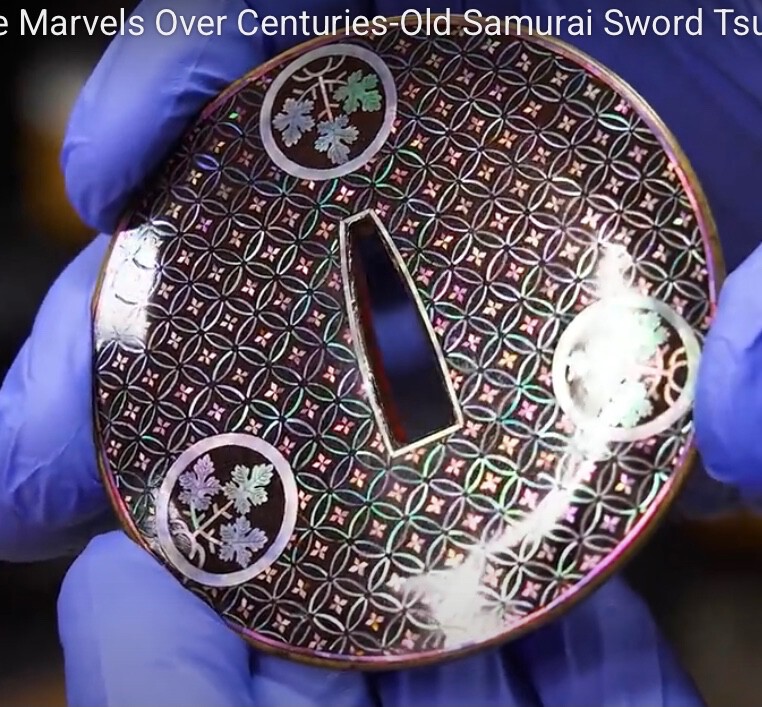
Well maybe you have now? Please read what I have said. I have never said that these tsuba were made in Ryukyu. I agree with you that they were not…..but they were made elsewhere using Ryukyu techniques and borrowing Ryukyu subject matter (these geometric Shippo designs) and this tsuba viewed against the other images I show are pretty solid evidence of that (imo) I agree…..it is best to be accurate when discussing such things.
-
In the light of the images above do you still stand by that statement?
-

-

-
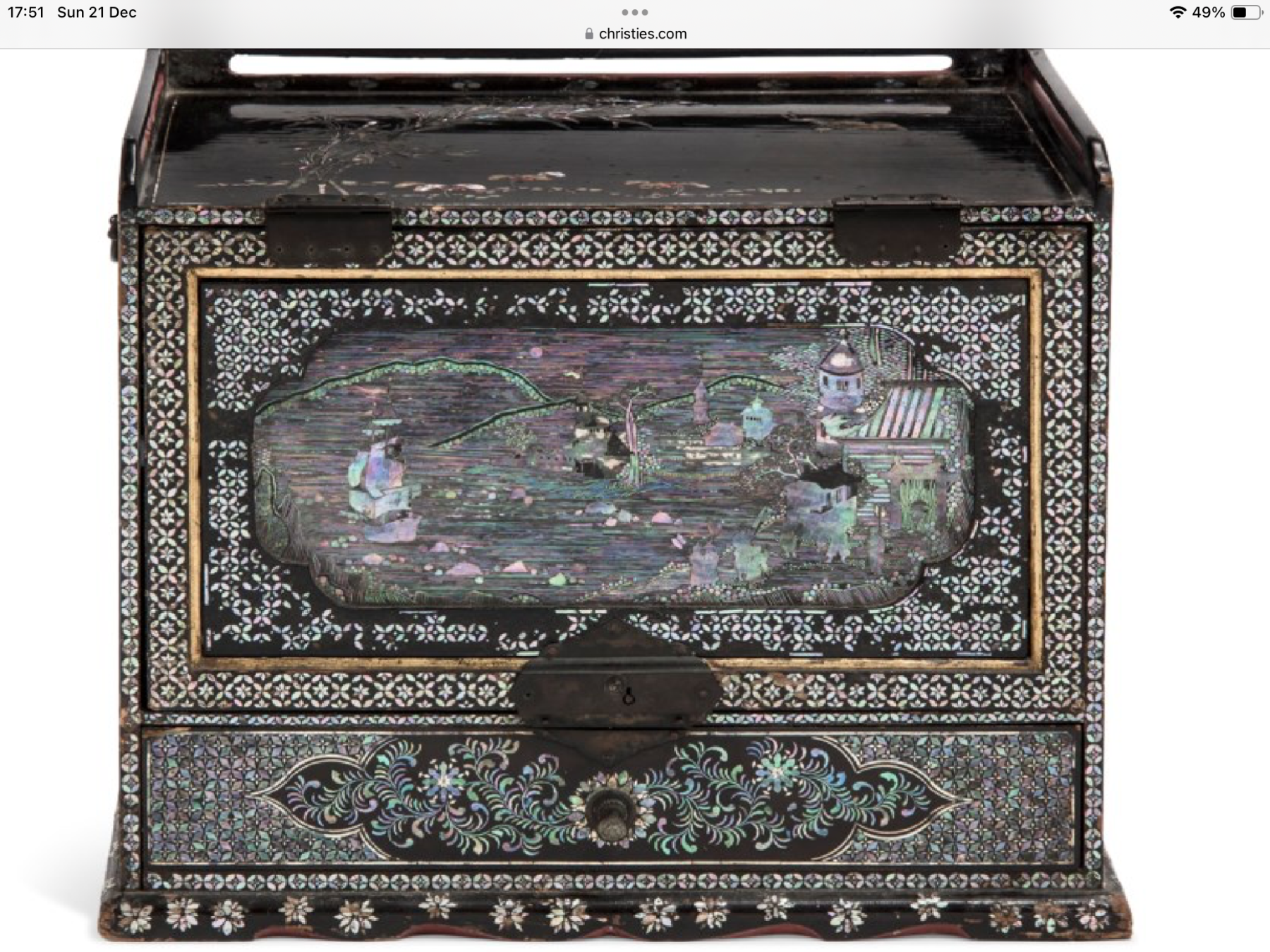
No, most of them refer to Ryukyu lacquer, not “style” OK…compare the tsuba (shown first) to the other images of items described as Ryukyu lacquer. How on Earth can you say there is no match in style? The use of the small geometric inlays is a major characteristic of Ryukyu lacquer and I simply said ………

-
I’d have bought it. Love these wild looking hirazukuri wakizashi, something rather “lethal and menacing” about them.
-
Have a peruse of these links….if the phrase is happily used by the worlds major auction houses then it’s good enough for me. Anyway, my main objective was to point out that the tsuba in question was lacquer, not to have some stupid argument over semantics or to try and look smarter than the average bear. https://www.bonhams.com/search/?chronology=past&query=Ryukyu+lacquer https://www.christies.com/en/search?entry=Ryukyu lacquer&page=1&sortby=relevance&tab=sold_lots
-
Thanks Rohan, but using unnecessary kanji on an English speaking website makes it difficult for many to follow the conversation and I suspect many will just move on….like I will in future. If @Charlie C reads what I said…..I never said the tsuba was Ryukyu lacquer, just that the technique is generally referred to as Ryukyu. It (the technique) originated in Okinawa back a few hundred years ago. I was simply pointing out how it was made. Another feature is that sometimes the base of lacquered and inlaid tsuba is wood. This is because metal can expand and contract enough to crack lacquer and dislodge any inlay. They were usually never intended for combat usage but looked great strolling around town in times of peace. Probably more popular with merchants than Samurai. See also shibayama tsuba.
-
You keep using kanji which many on here will not read, including me (unless I keep translating which simply isn’t necessary). So, are you saying this is shell directly inlaid into an iron or soft metal base?
-
It was not a school as far as I know…..not in the traditional sense. The technique was borrowed from the earlier Ryukyu pieces in the late Edo but also into Meiji. I used to restore such pieces for the bigger dealers including shibayama style tsuba and other works of art so I am very familiar with how they were made and how difficult they are to restore. I live in the UK…we don’t have many kantei events here!
-
I’ve owned several pieces including a tsuba and fuchi kashira and koro stand.
-
If this is the one you refer to the black background is lacquer. It is not inlay into metal. The technique is generally referred to as Ryukyu lacquer.
-
So true. I watch a lot of Japanese TV (NHK) especially if any sort of history or craft is involved and it is clear that many of the old ways are dying driven by cheaper alternatives or simply a lack of young interest in continuing. Of course there are exceptions here and there but the overall impression is that money talks first….and tastes are changing. Many of the finest restorers of many of the Japanese Arts are actually non Japanese and not living in Japan. Of course again there are exceptions. Maybe I (we?) are being harsh on these later tsuba….at least someone is trying but in the absence of a skilled tutor I guess it’s pretty difficult.
-
The Mei is pretty. The rest is horrible but having said that, I couldn’t make it. Not worth that sort of money in my opinion. very crude compared to the real deal……
-
I have no knowledge on Kanzan or his inscriptions and I’m very confused. I would have bet that this tsuba did not exist in 1964 and it certainly isn’t something that a tsuba expert would hype up (imo) so is the box inscription fake or Did the tsuba really exist in 1964 and Why did it deserve such a prestigious box inscription, and why did Kanzan do it? one further obsevation….the way the tiger is portrayed is nothing like the ones encountered on traditional works from the 19thC ….interesting!