reinhard
-
Posts
812 -
Joined
-
Days Won
1
Content Type
Profiles
Forums
Events
Store
Downloads
Gallery
Everything posted by reinhard
-
Two colour Tsuka ito bind, a sign of rank/status?
reinhard replied to mfarrar's topic in General Nihonto Related Discussion
Sorry Peter, for hijacking your thread. It was just such a nice opportunity to start a discussion overdue. What I'm aiming at is the particular history of Japan. Secluded from the rest of the world until mid-19th century and never been colonized like the rest of east Asia, Japan maintained its unique "medieval" society longer than any other nation. This included a system of values different from their neighbours', not to speak of our "modern" one. Enforced opening of the country resulted in serious decline of quality in arts and crafts. Particularly swords and their fittings, all of a sudden obsolete and exposed to a much more primitive market than before, were strongly affected. From a present point of view, some people tend to mix ancient Japan with Edo-culture with Satsuma-rebellion with Meiji-period trade with ShowaTo with GunTo. They are trying to excuse lousy craftsmanship by times of emergencies in the past. This attitude is preventing people from understanding quality levels in the context of Japan's history. reinhard -
Two colour Tsuka ito bind, a sign of rank/status?
reinhard replied to mfarrar's topic in General Nihonto Related Discussion
Aftermath: During Meiji period Mr.Spoerry, a Swiss merchant in Yokohama, collected Japanese objects of everyday use: Tools for craftsmen, combs, ordinary baskets, weir-baskets, cages for birds and insects and a thousand other things. They are now under custody of the museum of history in Bern, Switzerland. All these simple objects, once made for ordinary people and craftsmen of low rank, were made with utmost care without exception. They were made by people striving for perfection beyond economic criteria, which is hard to believe from a vulgar-Darwinist point of view, called neo-liberalism. - If cages for cicada were made with utmost care, displaying a breathtaking sense for aesthetics and supreme craftsmanship, what can we expect from people fitting the supreme symbol of the warrior elite? reinhard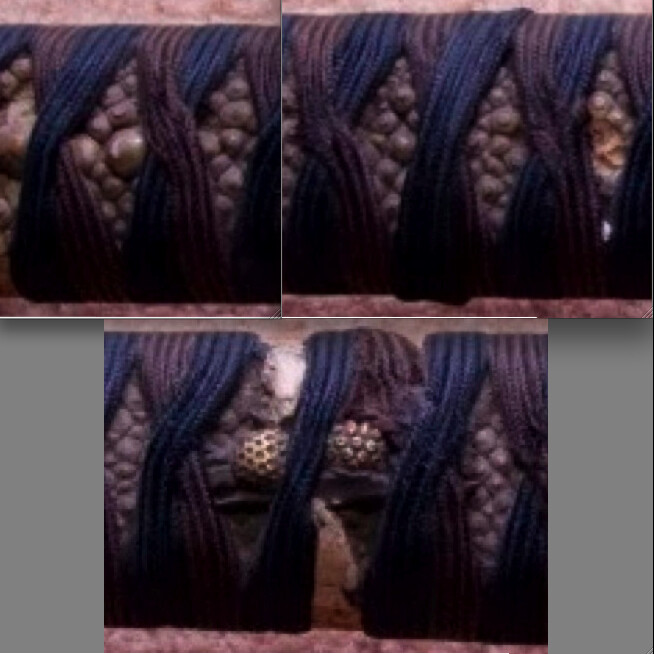
-
Two colour Tsuka ito bind, a sign of rank/status?
reinhard replied to mfarrar's topic in General Nihonto Related Discussion
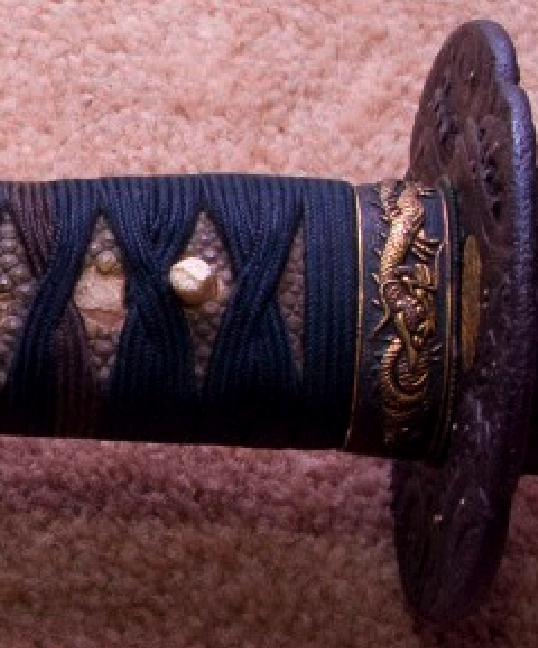
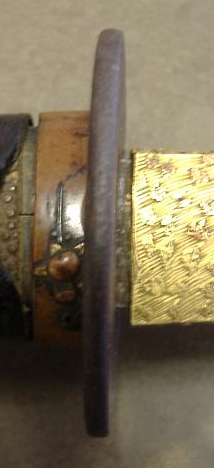
Ian, Inferior to what? Additional to Martin's points, one could mention: Diamond shapes are asymmetrical. Damaged same contains an ugly gaping spot never repaired. Protruding mekugi doesn't fit the hilt properly. Ito was damaged during the attempt of replacing menuki. (New) Menuki are too small and were inserted carelessly. - All in all, this tsuka contains most elements of a "home-made" handle, made with some stuff at hand, but without any ambition whatsoever. The "two coloured"-wrapping looks accidental, artificial and is far from Japanese aesthetics and perfectionism. The whole tsuka looks like so many attempts of reassembling old stuff without understanding basics. reinhard -
Two colour Tsuka ito bind, a sign of rank/status?
reinhard replied to mfarrar's topic in General Nihonto Related Discussion
The "two-coloured" ito starts to be two-coloured about three crossings above fuchi. Not good. reinhard
-
Ford, I agree with Mr.Torigoye not because of his reputation. You should know me better by now. My conviction was established a long time before I read his book. Nevertheless it is quite stunning to see a man dedicated to art in the true sense of the word, a lover of Natsuo and his sophisticated ways, breaking a lance for neat and meaningless "Shingen tsuba". Go ahead, I'm still willing to learn. reinhard
-
Ludolf, Returning to your question for a second: The signature reads: "Ko-FU no ju Nobuharu". "FU" representing a newer system of prefectures established at the very end of Edo times. Therefore this particular mei cannot predate late Edo period. Takeda Shingen lived in Kai province and if there were any surviving examples from those times, they would have been signed in another way. Since Takeda Shingen's personality was a myth from the start and was later associated with mukade tsuba for some reasons, many of the mukade tsuba were tried to bring into relation with him later, mostly by dealers. As for Mr.Torigoye's estimate: I agree with him. None of the so-called "Shingen-tsuba" display any artistic qualities. They are just neat at the most and not really worth collecting. reinhard
-
That's what it is all about and not "Puritans vs Modernists". BTW every hadori-finish will disappear after decades/centuries of sword care anyway. reinhard
-
Hello Moriyama-san, I see your point. The paper says "nami kuruma sukashi tsuba", but your assumption sounds perfectly reasonable to me as well. reinhard
-
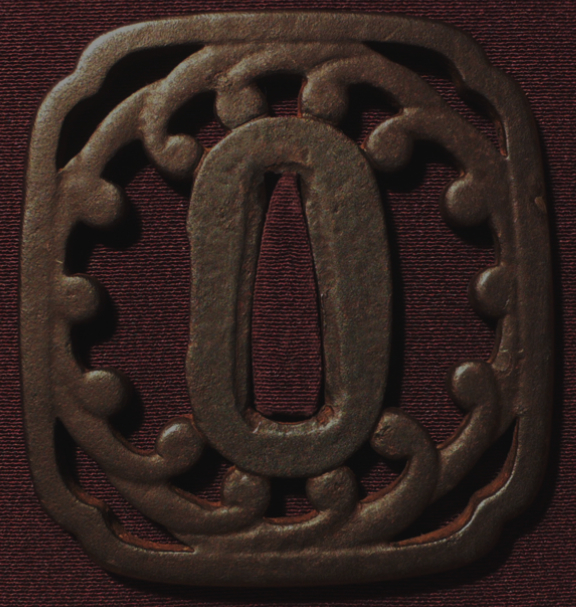
Guido, NBTHK's paper is describing this Yagyu tsuba as "nami-guruma"-design. No rising sun nor any (cart)wheel are visible. It is just depicting a circle of waves. Nami-Kuruma is refering to waves in the first place. reinhard

-
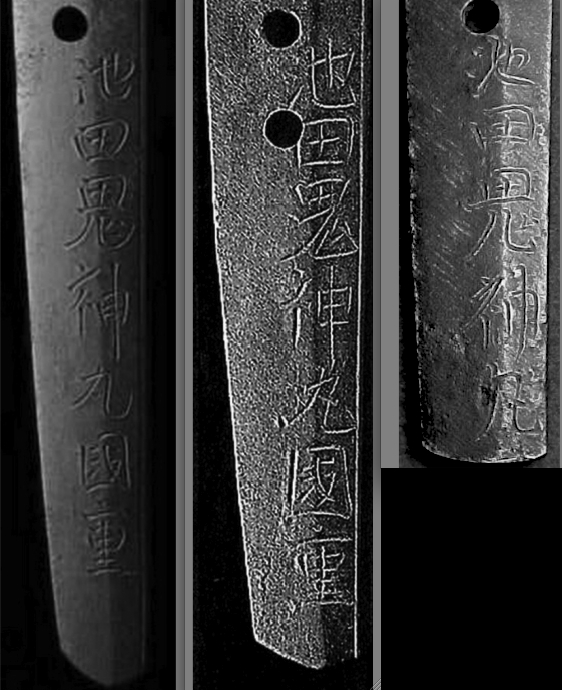
Hi Eric, KUNISHIGE was not consistent as far as his mei are concerned. If you want to make sure, you better submit the blade to Shinsa. Among the three mei you've posted, one is quite close to the one example in Fujishiro's ShinTo Hen (considered to be a very reliable source of information). It is the one on the left in my attachment. From here we could go on speculating, but it won't make much sense, I'm afraid. reinhard

-
The mei reads: Ikeda Kishinmaru...(cut). This signature is usually associated with Ikeda Kishinmaru KUNISHIGE, working in Bitchu and Osaka during Kambun era. This is just a translation. I haven't checked its possible genuineness. reinhard
-
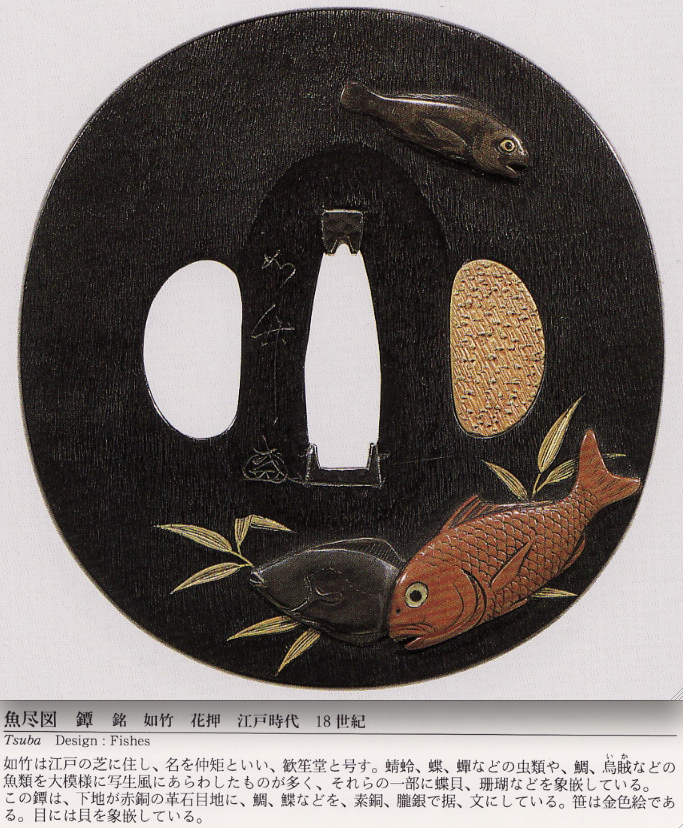
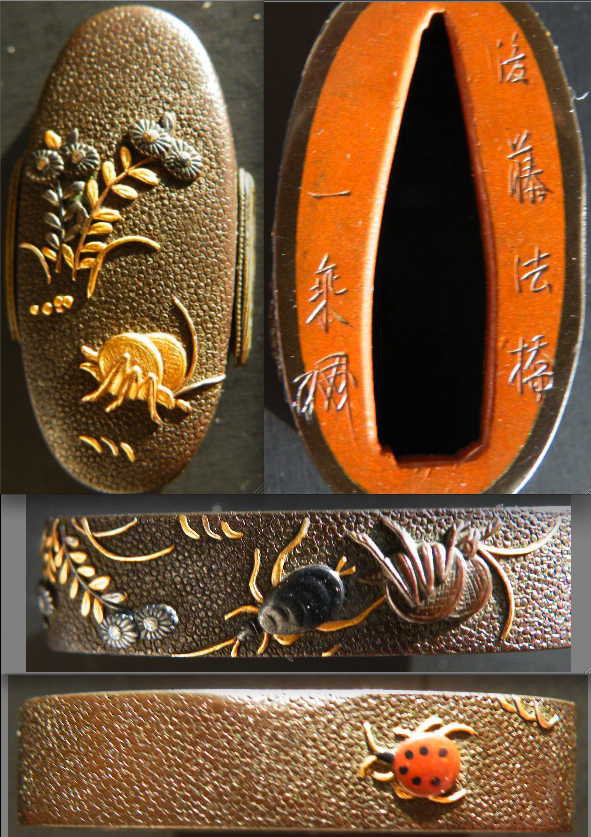
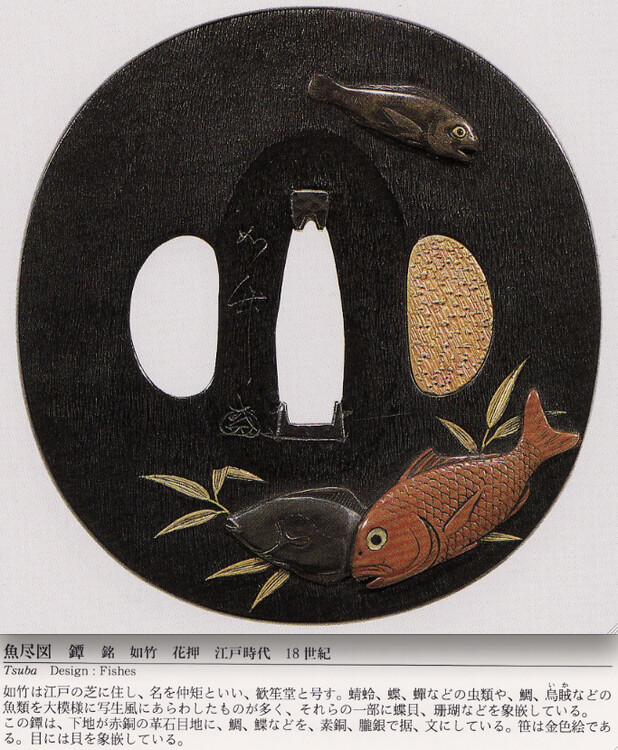
Hi Ted, The mei reads "JOCHIKU" and Kao. Since it's a very VERY big name I would love to see more of this fuchi. Little is known about Murakami JOCHIKU, but you find some infos in "swords of the samurai" by Harris & Ogasawara on pages 109 and 153. Any fish there? reinhard
-
What a shame. It looked quite nice before it was "cleaned". reinhard
-
I agree with Jacques. Transition from KoTo to ShinTo did not take place from one day to another. Transitional period was Tensho to Keicho era. Development of swordmaking cannot be linked to history alone. Division between KoTo and ShinTo cannot be settled at a particular year. reinhard
-
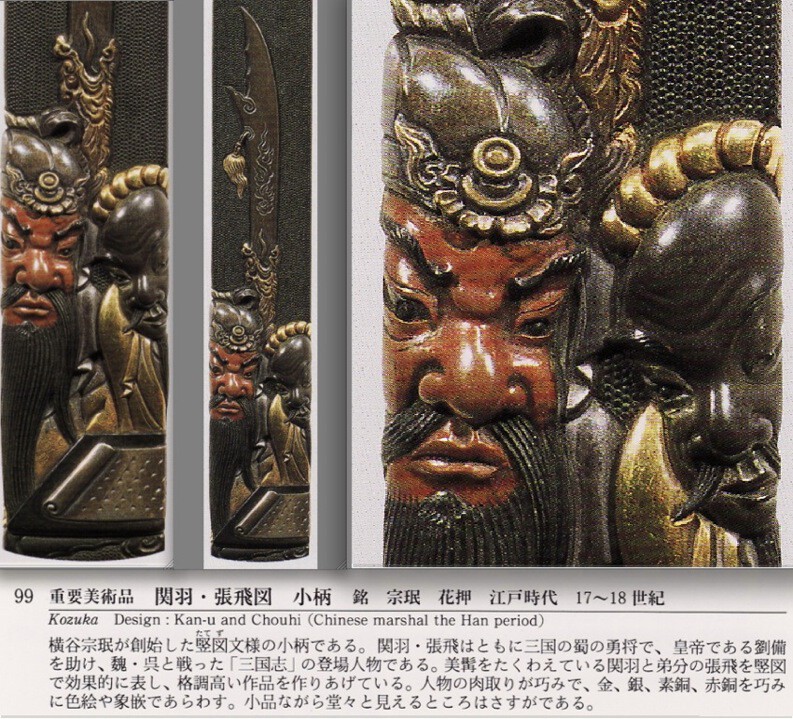
This one might help. reinhard
-
It's HIDENOBU for sure. - Some people know what they are talking about and others are just teasing for their ego's sake. Wasting our time and board's bandwith. reinhard
-
Don't go for the signature alone. Try to compare design and workmanship with some of the established, genuine examples. Afterwards you will probably not be so optimistic anymore, I'm afraid, but this is part of a learning experience and will do you some good in the long run. reinhard
-
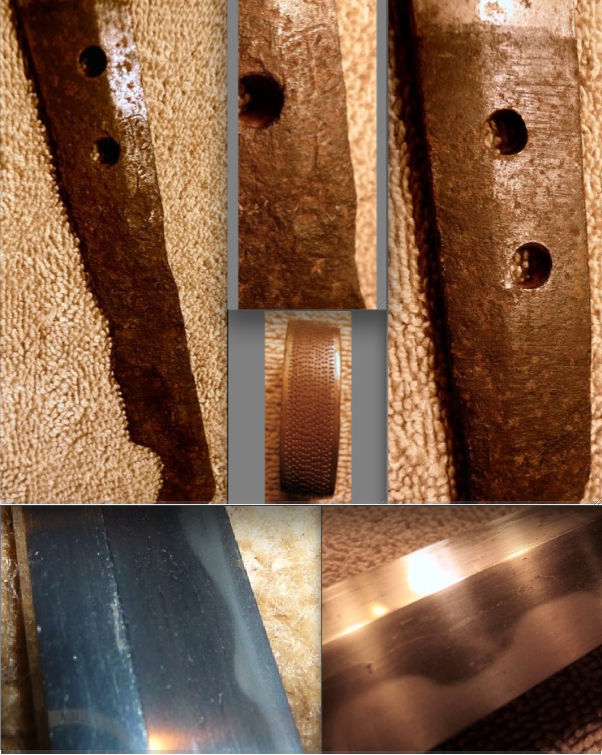
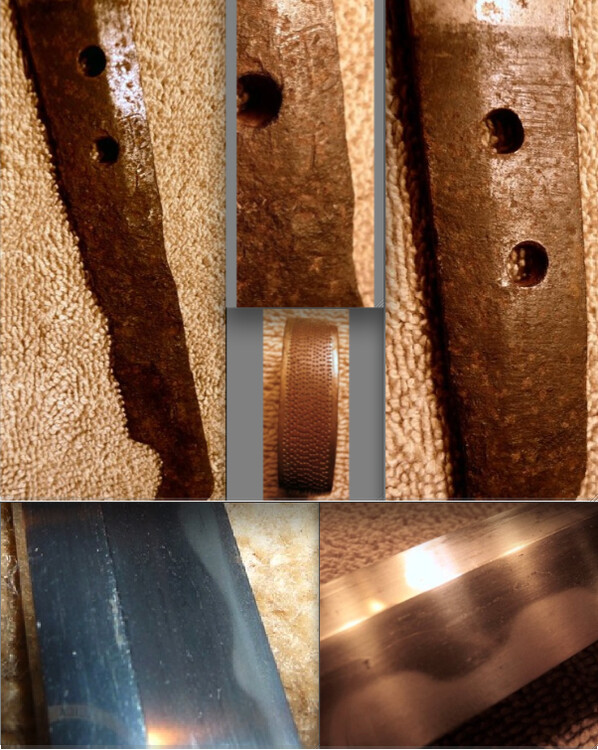
Tliston, the sword is signed on the sashi-omote. This should also be mentioned in accompagning paper(s). I suspect it to be a niji-mei (two-character signature) probably starting with "KUNI", but deterioration and quality of pics make it difficult to see. Better ones might help. For those wanting to join in I post a compilation of your pics, if you don't mind. Searching for pics on linked pages everytime you need them is circumstantial. Well then, any ideas? reinhard
-
Like Guido I'm waiting for an explanation why this expertise is supposed to be a Chinese fake. You haven't answered this question yet. The paper looks perfectly alright to me. As long as you don't present us with any kind of proof for your theory, all your doubts concerning this tsuba's qualities are meaningless. - There's no way back to the "wild frontier" when amateurs made their own rules. reinhard
-
Before this is getting out of hand one more time I wonder what Ted has to say about this matter. Telling from my very limited polishing-experience I realized great difficulties in telling earlier, deeper marks from later, finer ones when moving a blade over various stones without changing the angle of movement. This is how Kissaki-section is polished traditionally. Apart from theoretical armchair-philosophy, I'm really curious to get some feedback from practitioners. - And for the record: my few polishing attempts were limited to blades of no real importance during my early years of enthusiasm. No important katana was harmed during the making of this film. It was an important lesson for me nevertheless. reinhard
-
Proper polishing of NihonTo basically consists of replacing coarser marks by finer ones. By doing so the angle of the sword is slightly changed in relation to the stone from stage to stage. Proceeding like this helps the polisher in wiping out coarser traces from previous stones. He can tell by the angle of the scratches. Polishing Kissaki is different though. All stages are performed within the same 90 degree angle. This makes it very difficult to see wether all of the rougher scratches are really eliminated. Using abrasive Uchiko for sword-care for a long period of time, some of the finer stages will partially disappear and reveal some of the coarser, overlooked scratches one more time. - This feature is not uncommon to be seen on blades in very old polish. reinhard
-
Don't get me wrong on this one. There might be some nice parts here nobody can tell by now. All I'm saying is: With the Mekugi plugged in (as shown in Thomas' pic) the Fuchi was definitely added later for it takes more than one Seppa to fill the gap. The same goes for the space between Habaki and Tsuba. The Habaki seems to fit the blade quite well though, but Tsuka and Tsuba are wrong in proportion to the blade. I've come across an awful number of loosely fitting Koshirae pretending to be what they are not. The practice of changing parts or even entire fittings for commercial reasons started 150 years ago and as long as taste and craftsmanship are involved there's nothing to say against it. Things got worse however when Westerners started to change Koshirae according to their "refined" taste or what they held for it. The worst examples are still to be sold as "Satsuma rebellion swords". This seems to be (in Western terms) the equivalent of "anything goes". reinhard
-
This koshirae is an assembly of parts not fitting the blade properly. Nevertheless it is a textbook example representing Western attempts of quickly reassembling Koshirae with any kind of stuff at hand. - There is empty space between Fuchi and Same/Tsuka-Ito as well as between Habaki and Tsuba. Furthermore Habaki (and blade) are way off the centre of the Tsuba/Tsuka. Japanese craftsmen never worked like this, not even in "cases of emergency" such as the Satsuma rebellion. You better focus on the blade and forget about Koshirae. reinhard

-
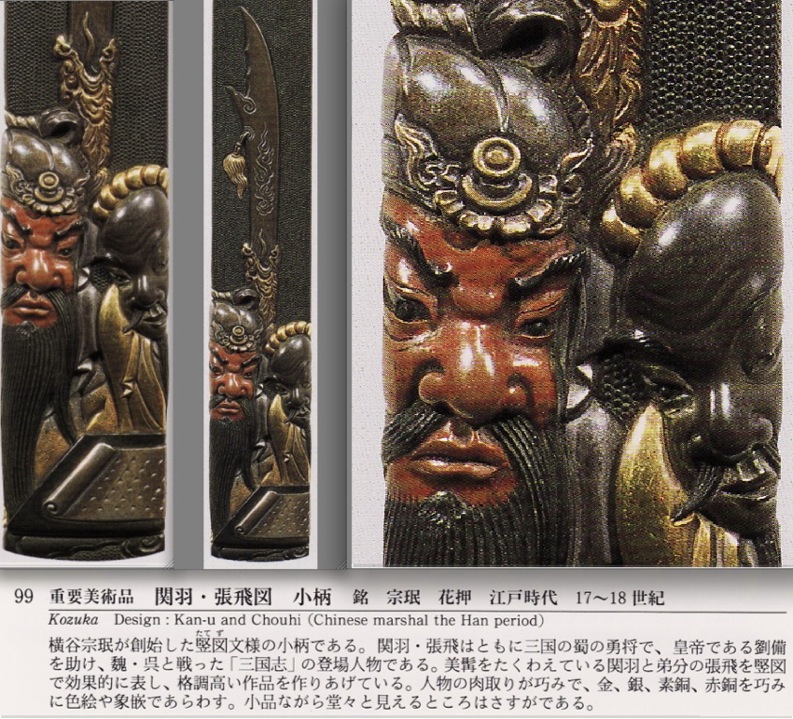
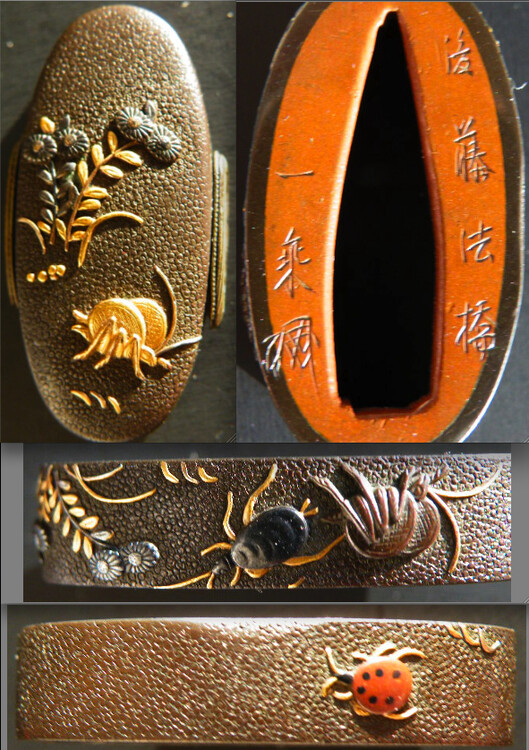
It is quite difficult to do this on the basis of poor two-dimensional pictures and I agree with Mike on this matter, but I would like to try nevertheless. Comparing the Fuchi/Kashira in question with a genuine example might illustrate some of the things discussed before. - What struck me in the first place was the the very poor treatment of the surface ("nanakoish"), the lack of quality in details and the uninspired design. I second Franco and Ford here. Goto Ichijo was one of the greatest artists of all time in the history of sword-fittings. Works carrying his mei should be analyzed with utmost care. He was an artist in the true sense of the word, remaining always original and keeping his level of craftsmanship at all times. Have a look. reinhard

-
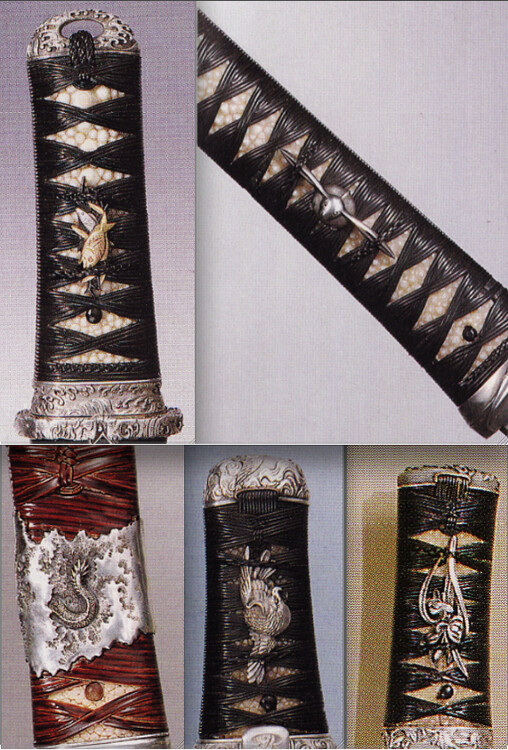
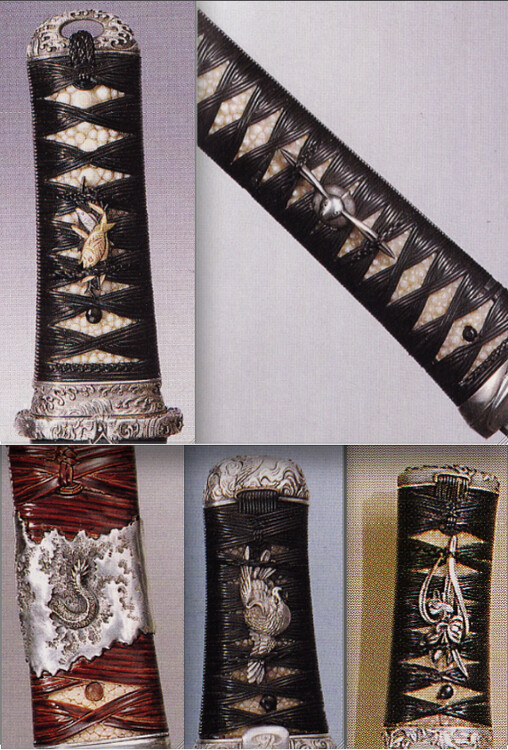
I guess Ian (and Ford) have very important points here. Baleen-wrappings, or what is held for it, look quite different occasionally and I've always wondered wether they are made from the same material or not. "Baleen"-wrappings seem to be a phenomenon dating from late Edo, early Meiji period and are not uncommon. I suspect true baleen wrapping to be quite popular for swords never meant to be used for frequent practice nor fighting but for representation in the first place. Leather, silk, uncovered ray-skin are much more resilient to permanent stress factors than "whale-bone". During late Edo-period true "baleen wrappings" were made for swords never meant to be used for a practical purpose. However during early Meiji period western demand for highly decorative features like "baleen-wrapping" increased and Japanese craftsmen eventually filled this gap with other materials than baleen. I add some examples for illustration without commenting their value. All of them ended up in Western shops finally. - BTW I saw some of the swords belonging to these mountings in hand and none of them was worth any further investigation. The whole thing is about koshirae and western taste. reinhard