reinhard
-
Posts
812 -
Joined
-
Days Won
1
Content Type
Profiles
Forums
Events
Store
Downloads
Gallery
Everything posted by reinhard
-
Sorry for confusion. I was referring to the shape(s) of the seppa-dai. In order to create a well-balanced set of fittings for koshirae, the seppa-dai of the tsuba should have a symmetrical shape (let's put Ko-Akasaka aside for the moment). Otherwise it will be covered by the seppa only partially and will produce an ugly impression of carelessness. Another possibility consists in making the seppa-dai area part of the (sukashi-)design and not defining it by intention. That's OK too. Following these rules was probably quite natural for TsubaKo making tsuba which were eventually to become part of a koshirae. When there was no need for good koshirae anymore, approximative and careless shaping of seppa-dai became possible, for these tsuba didn't need to harmonize with seppa or even an entire koshirae anymore. This is a much simplified explanation of a complex matter. Seeing many good tsuba and koshirae will give you a feel for it. reinhard
-
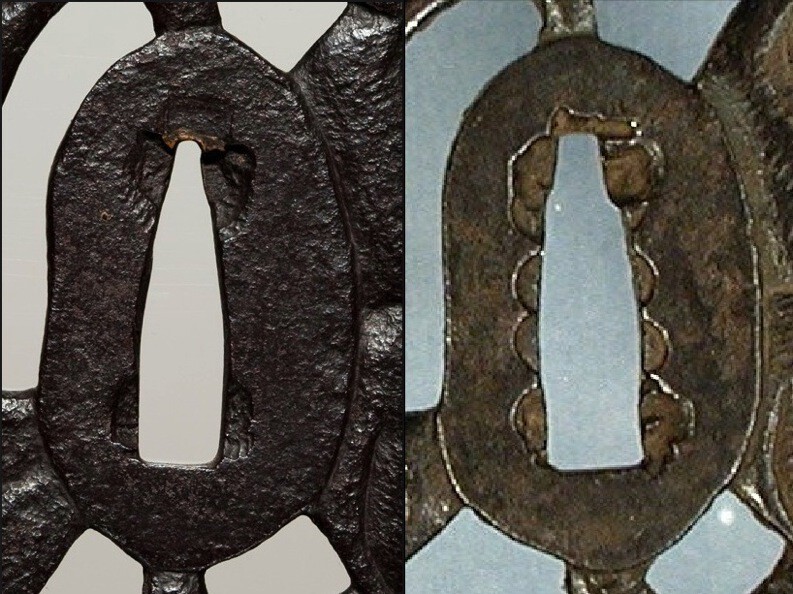
For consideration: Works predating Meiji-period don't look like this: reinhard
-
The "good old days" won't come back by howling like this at the gates of serious appreciation of NihonTo. In fact they won't come back by any means and that's good. Making a quick buck with the myths surrounding samurai-culture is slowly coming to an end. Sad for those who refuse to realize. reinhard
-
Where and how to start
reinhard replied to Ford Hallam's topic in General Nihonto Related Discussion
My dear Hobbit-friends, Strange things are going on in the Shire. Posts are deleted without comment or PM and threads are mutilated (like this one). You better prepare for what's to come. Bye. reinhard -
Quoting from "Myths and legends of Japan" by F.Hadland Davis: "The Japanese cat,..., is very far from being popular, for this animal and the venomous serpent were the only two creatures that did not weep when the Lord Buddha died. Nipponese cats seem to be under a curse. ..... The Japanese cat is said to have control over the dead." Unless a twisted samurai wanted to express his strange personality and attitude in public (not very likely), there was no demand for cat-design on koshirae. reinhard
-
Where and how to start
reinhard replied to Ford Hallam's topic in General Nihonto Related Discussion
That's what makes this book a danger and a waste of time, especially for beginners. They are sitting in front of bad pictures apparently depicting blades of the most famous smiths of all time without knowing that most of them are not genuine. Some, if not many of these blades are not even typical for the big names they are supposed to represent. It's true: Mr. Robinson did not comment on authenticity. Unfortunately he took it for granted. reinhard -
Can "high end" coexist with "low end" ?
reinhard replied to estcrh's topic in General Nihonto Related Discussion
Doug, my latest post wasn't adressed to you in particular. It just happened you posted while I was still writing. reinhard -
Can "high end" coexist with "low end" ?
reinhard replied to estcrh's topic in General Nihonto Related Discussion
What was this all about? A "general NihonTO discussion" (i.e. a general discussion about Japanese swords)? Certainly not. A promo stunt? Maybe. A waste of time? Certainly. There are boards where Japanese armour is discussed and Eric is eagerly participating there already. That should do. There is much confusion and a big need of basic knowledge when it comes to swords alone on NMB, which is what this particular forum is dedicated to. Let's stick to this main topic. Discussing a Ashigaru-style armour from mid-18th century won't get us anywhere. BTW There seems to be an increasing tendency of reducing reasonable questions to: "Do I like it or not and what does does this particular specimen mean to me, emotionally?" Nobody cares. Quality is not a subject matter. reinhard -
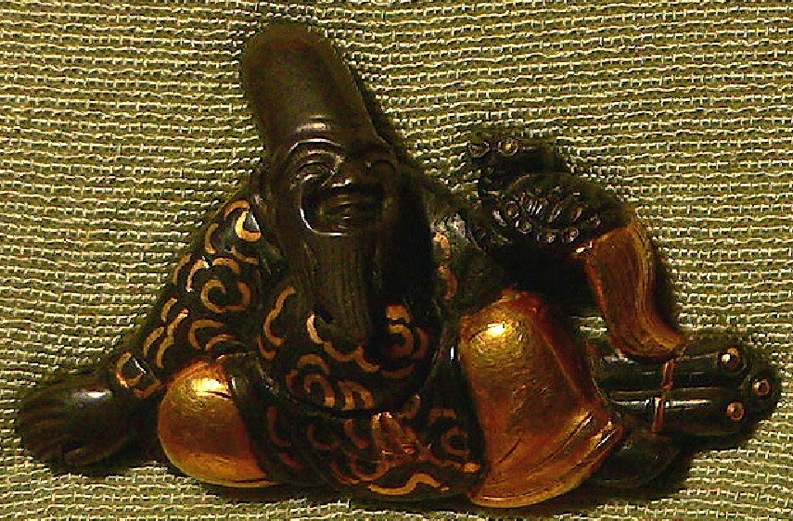
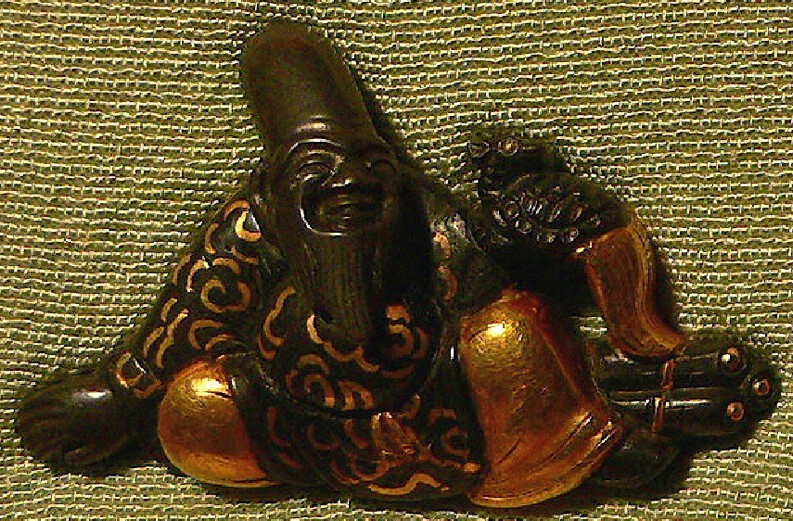
Fukurokuju (one of the Gods of luck) is attended by crane, deer or tortoise. Giving a hint to the well-educated samurai by showing the attribute only and omitting the main subject was common practice. Tortoises standing alone are quite rare though. reinhard
-
Supposed this blade was a ko-dachi, its mei should be on the haki-omote. Unfortunately it is not. reinhard
-
Can "high end" coexist with "low end" ?
reinhard replied to estcrh's topic in General Nihonto Related Discussion
I can't see any "high end" here. It looks more like "end" than "high". - Whenever you go to Kasuga Taisha in Nara you'll find a small museum on the left just before entering the main temple area. Go in there. It is worthwhile. It is containing some real "high end" armour. The small museum being part of the Tsurugaoka Hachiman Gu in Kamakura also displays some real "high-end" armour. reinhard -
Miike MITSUYO Imperial Household Sword
reinhard replied to Ed Hicks's topic in Military Swords of Japan
This is what made the "catalyst" going. Remember? After some more or less entertaining salti and pirouettes I'd like to go back to this particular statement. It is suggesting there is something like a "textbook MITSUYO". - Very little is known about the MITSUYO working around late Heian/early Kamakura period. Actually "O-Tenta MITSUYO" (treasured by the Maeda) and "Miike MITSUYO" (treasured by Kunozan Toshogu) are the only two reliable examples we can refer to. At least one of them must be known (i.e. studied in hand) to make a valid statement. Anything else is just ridiculous. - You can read all the books and study all the hi-res pics in the world. They are just preparing you for what's to come. No less and no more. They are no substitutes for the real thing. A few things can be said about the pictures of the nakago however and Guido pointed them out very well. reinhard -
Miike MITSUYO Imperial Household Sword
reinhard replied to Ed Hicks's topic in Military Swords of Japan
What did you expect? Appreciation of NihonTo is a harsh way to go. It was never meant to be a cozy place for everybody. reinhard -
Miike MITSUYO Imperial Household Sword
reinhard replied to Ed Hicks's topic in Military Swords of Japan
That's why "99.999% of the members" better shut up when it comes to big name blades. reinhard -
Miike MITSUYO Imperial Household Sword
reinhard replied to Ed Hicks's topic in Military Swords of Japan
There's something I've never really understood: Why is Nakadai starting to bleed while Mifune's sword is still hanging in the air? Akira Kurosawa was very eager for making action look realistic. Thank god SFX improved in the meantime. reinhard -
This sounds familiar to me. Didn't we have a similar thing like that before? I don't have the time to search through the archives, but maybe someone else has. reinhard
-
Miike MITSUYO Imperial Household Sword
reinhard replied to Ed Hicks's topic in Military Swords of Japan
Wrong question. Wrong answer Reinhard..."I am not sure how many swords you've seen"...is not a question. Implicitly it is. Nevermind, it's not the number that counts, but that's another thread. Mr.Hicks comments started like this: "It's textbook Mitsuyo (very interesting habaki similar mon as on O-Tenta)". Remember? Then there was a group-hug and many congratulations. First of all I congratulate Mr.Hicks on being one of the very few experts on Miike MITSUYO. He must have seen most of them in hand in order to call this blade a "textbook Mitsuyo". As for the habaki: "O-Tenta" was given to Maeda Toshiie by Toyotomi Hideyoshi and became one of the most treasured possessions of the Maeda family and still is. That's where the mon comes from! The present mountings of O-Tenta were made on the orders of Hon'ami Koho during the time of Maeda Toshitsune (1593-1658). - There is, of course, a very small, almost non-existent possibility the Maeda family possessed another MITSUYO blade, kept it in secret and told nobody about it. reinhard -
Miike MITSUYO Imperial Household Sword
reinhard replied to Ed Hicks's topic in Military Swords of Japan
Wrong question. reinhard -
Miike MITSUYO Imperial Household Sword
reinhard replied to Ed Hicks's topic in Military Swords of Japan
Franco, this is, of course, exactly where this blade is pointing to. Being one of the five Tenka Go Ken, "O-Tenta" is one of Japan's most famous swords. Even less educated sword-lovers (and most fakers) heard of this sword. It is published in almost every beginner's book about NihonTo. - Now, and all of a sudden, its "twin brother" pops up out of nowhere... and even with a similar habaki! - It's like an acryl-painting of the Mona Lisa within an old-style frame from Ikea appearing just like that and some people are wondering: "Could this be the real thing?" It's not the amount of mekugi-ana that matters. It is their quality and their placement. On this particular example the intervals are too regular all over the nakago. Somebody tried to fulfill certain expectations without knowing much about the history of shortening blades. He succeded to some extent as it seems. reinhard -
Miike MITSUYO Imperial Household Sword
reinhard replied to Ed Hicks's topic in Military Swords of Japan
Remember the golden rule: It takes one mekugi-ana for Hozon Token two mekugi-ana for Tokubetsu Hozon Token three mekugi-ana for Juyo Token four mekugi-ana for Tokubetsu Juyo Token five mekugi-ana for Bijutsuhin six mekugi-ana for Bunkazai seven mekugi-ana for Kokuho But seriously: This nakago is a laugh. Not because of the number of mekugi-ana but because of their shapes and placement. Old nakago don't look like this. BTW the kinzogan-mei is quite new and the habaki looks brand-new to me and not even of Japanese origin from a distance. reinhard -
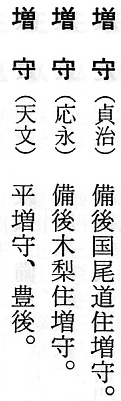
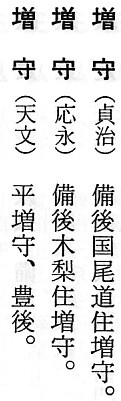
This seems to be very rare group of smiths almost forgotten. Meikan says: reinhard
-
After all the "I like.... because of...."- babble, it might be interesting to know what a person, who really knows what he's talking about, has to say about this matter. Mr. Nobuo Ogasawara, retired Head Conservator of the Kokuritsu Hakubutsukan in Tokyo, held a lecture about "MEITO or What Makes a Masterpiece?" in 2002 in Solingen, Germany. Text (ger. and engl.) can be found in: "Ausgewählte Japanische Kunstschwerter"/"Selected Fine Japanese Swords" published by NBTHK-EB and the Klingenmuseum in Solingen. If you want to understand what makes a slim and elegant Rai KUNITOSHI tachi a MeiTo and a 300'000 US$ blade and what makes a huge and heavy Bungo Takada-sword from later Muromachi-period with impressive, long kissaki just a simple weapon worth only a couple of grands, I strongly advice this lecture. Appreciation of NihonTo won't come to you easily. You have to go there, sacrifices included. reinhard
-
Keep it up, Carlo. You are on the right track. Neither swords nor tosogu nor any other kind of Japan's old culture allow short-cuts. "Fresh, unconventional, new" approaches to old Japan's culture (usually sermonized from a Western point of view) have old tradition, going back to Meiji-days and before. They are leading serious students to nowhere. reinhard
-
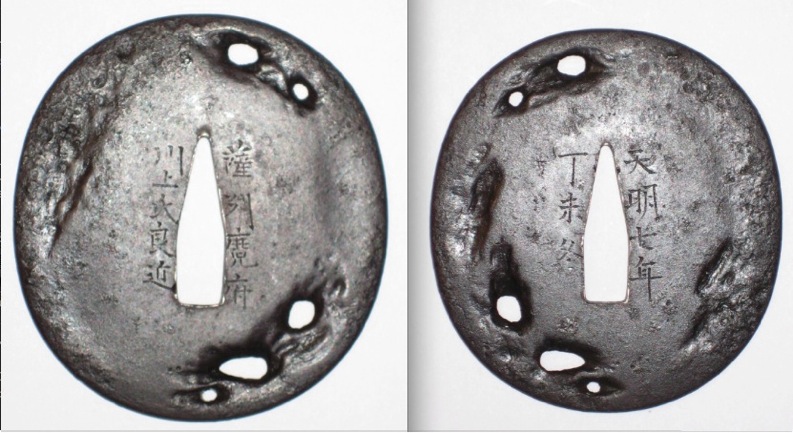
Here you go. My guess would be: "Tenmei shichi-nen/ hinoto-hitsuji fuyu" on one side. This was translated already. "Sasshu Ka-Fu/ Kawakami (or Kawaue) TAKEYOSHI tsukuru" on the other side. Meaning "Kawakami/Kawaue (family name) TAKEYOSHI made this in Kagoshima prefecture in Satsuma province" reinhard

-
Do we have a new moderator? BTW he should work on his orthography. reinhard