Scogg
-
Posts
2,148 -
Joined
-
Last visited
-
Days Won
24
Content Type
Profiles
Forums
Events
Store
Downloads
Gallery
Everything posted by Scogg
-
It's wild isn't it? Glad I got mine when I did... It seems I just barely beat the price hike. For the last year or so, i've noticed that they've been commanding ~$1000 bottom dollar. Good ones seem to be listed for $2000, pretty regularly. Just a few years ago, you could find them for $500-$750, and that now seems impossible.
-
Sounds like our wives might get along Personally, I believe any weapon, especially one with an unknown history; deserves respect as a potential "death dealer." It can be tough to convince someone, especially a partner, that a blade has “never seen blood.” I usually explain to my wife that it’s impossible to know the full backstory of any weapon. It might have taken a life, but now that it's in my hands, I treat it with the utmost respect and care. In my experience, especially with the “hippy-dippy” types, intention matters a lot. Framing it as a tool you're honoring and caring for can make all the difference. (For context: I live in Oregon; beautiful, green, and the land of tree huggers. ) Anyway, here’s a thread I started a while back in the Izakaya. Might be worth a read, or even something to show your wives.
-
Thanks! Ya’ll are the best Much appreciated, -Sam
-
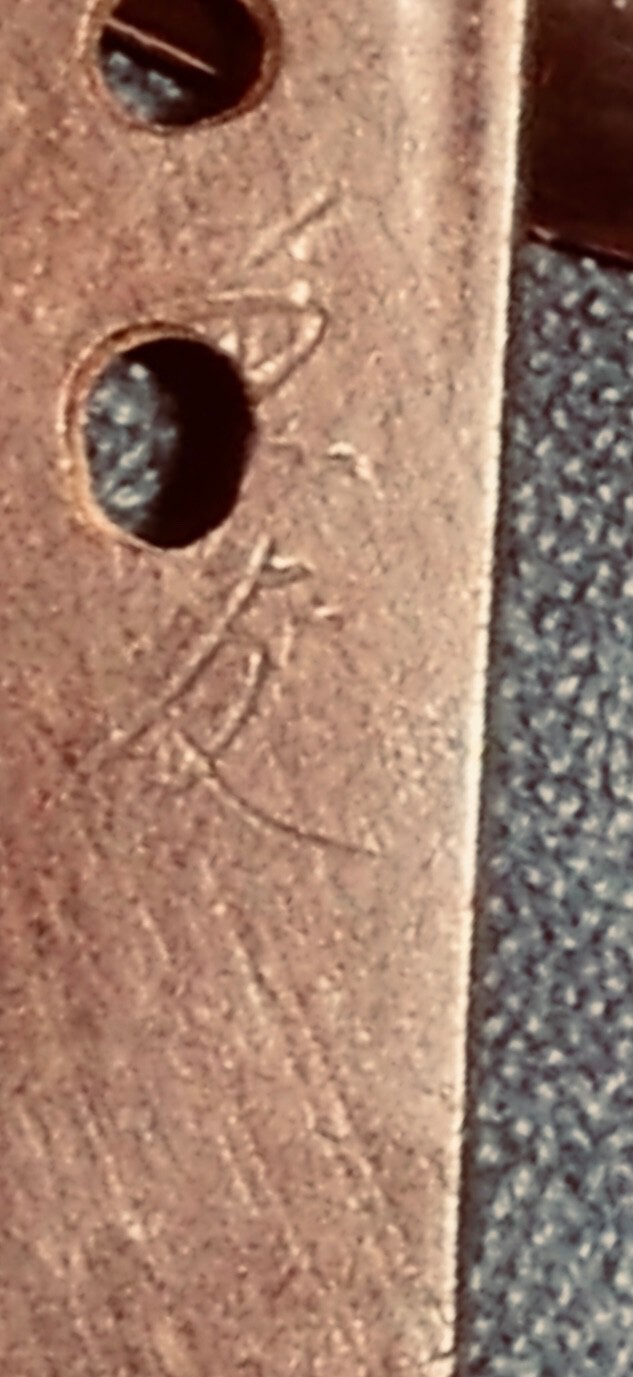
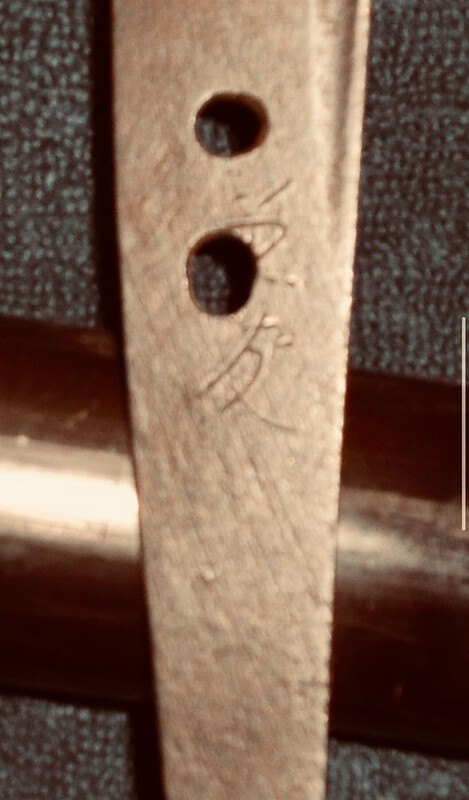
A friend sent me these pictures, and I was hoping to get him a translation. Apologies for the picture quality. Thoughts? -Sam

-
Really impressive Jussi! This is an extremely valuable document, and I wonder if Brian can add it to the downloads section. As someone who’s recently picked up some cataloging myself, seeing this work of yours is inspiring. I can’t imagine the eye strain you must have experienced during days of heavy data entry Thank you so much! Sincerely, -Sam
-

Is this an authentic WW2 Japanese sword?
Scogg replied to TroyUT's topic in Military Swords of Japan
I agree with the above, and Bruce’s assessment; and I would personally jump on that opportunity for a cancelled order. It’s not a bad price if it’s real, but I think you can find something that will satisfy your interests more, if you give it time. IMHO, All the best, -Sam -
Hi Edward, congratulations on your first Nihonto! Must be very exciting. Your observations on the sugata being similar to Kanbun era, are reasonable. It does appear to have little sori, and resembles Kanbun blades. I wonder though if there are signs of machi-okuri or suriage, but hard to tell from these photos in this light. I'd say chu kissaki. I would also look closely at the jihada. It might be the photos, but personally, I see a blend of masame and itame. Maybe some spots of mokume, too. Does the boshi have any turn-back? Your sword is what some might call an 'old soldier'; it may be a bit tired, but it sounds like you are well aware of that, and it does speak to it's history. More photos with some better light might help the more knowledgeable. Congrats, and thanks for sharing! -Sam (enthusiast and not an expert)
-
Council
Scogg replied to Pritajeni1's topic in Sword Shows, Events, Community News and Legislation Issues
Be careful not to blindly trust the analysis on what appears to be a forged authenticity paper; and be aware of the possibility that an old piece of scrap metal could be repurposed. Nothing about this item is genuine, and I'm sorry to be the bearer of bad news. -Sam -
Council
Scogg replied to Pritajeni1's topic in Sword Shows, Events, Community News and Legislation Issues
It's very clearly a fake Japanese sword, and there's absolutely no doubt in my mind. The fact that it's been disputed for ~10 years would imply that someone is not trying very hard. Here is a helpful link to spot fakes in the future: https://www.jssus.org/nkp/fake_japanese_swords.html I am in no way trying to be rude, although I can see how it might seem that way. The fact is, it does not require an expert to tell a pigeon from a falcon. -Sam -
I do enjoy that first one! -Sam From the museum's website description: "Sword fitting. Tsuba. Sentokudo. Squarish. A wolf seated on the ground among reeds, gold and silver zogan, turning round and baying at the moon, silver, among clouds. The wolf's teeth beautifully cut in gold. On the other side a kasa lying on the grass all gold zogan. Signature: Ichiiriuku Hisamitsu. Gold, silver, height, whole, 8.4 cm, width, whole, 7.5 cm. Japanese." https://data.fitzmuseum.cam.ac.uk/id/image/media-661628556


-
BILL Rannow
Scogg replied to Stephen's topic in Sword Shows, Events, Community News and Legislation Issues
He was at the San Francisco sword show the last year or two. Very friendly and knowledgable! He had a Hosho katana in shirasaya+sayagaki that I still think about -Sam -
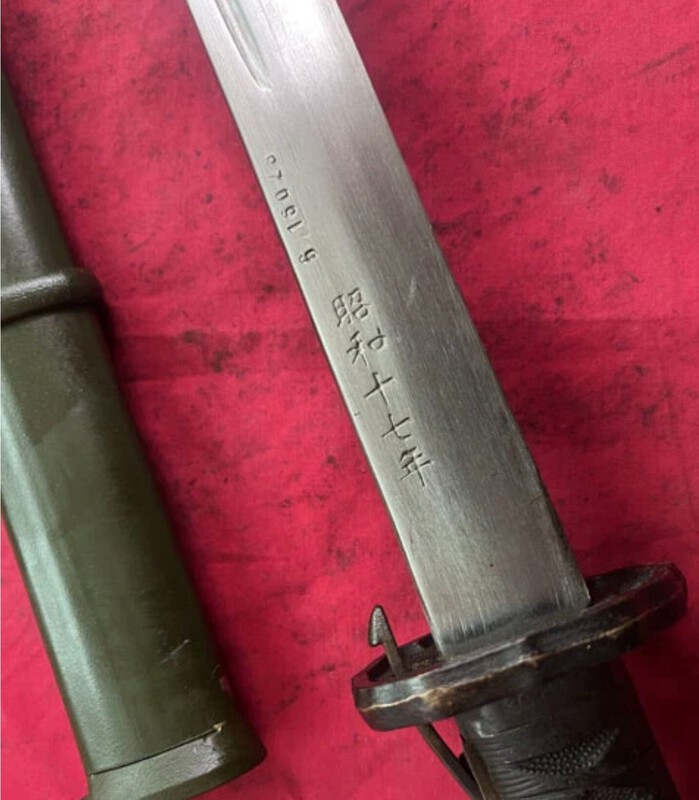
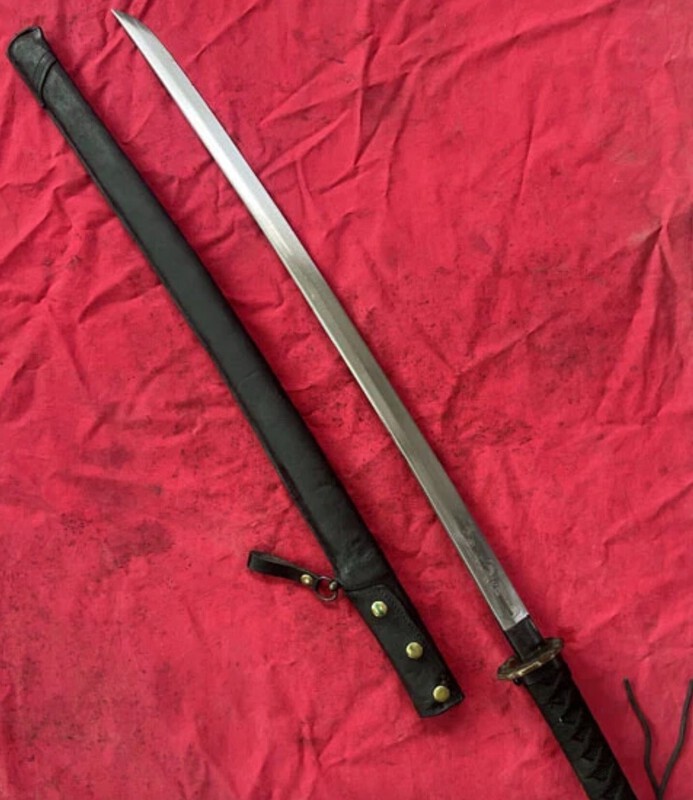
Good eye @Rawa https://www.ebay.com/sch/i.html?item=336037970198&rt=nc&_trksid=p4429486.m3561.l161211&_ssn=wangjuan58 Interestingly, the 95 fakes seem to have the same miss-stamped serial number. It seems only the Saya color that differentiates them. His fake swords are so alike, it's hard to tell that they are even different listings... Are they? Or is it the lighting? I cannot say for certain. -Sam

-
An Honest Type 95 I Couldn’t Pass Up
Scogg replied to Kaigunto230's topic in Military Swords of Japan
Careful, before you know it you'll want an example of all the different patterns (that's what has happened to me) For a deep dive into some of the nuance of these swords, Nick Komiya's contributions to the warrelics threads below taught me a lot; along with some very generous forum members here on NMB: https://www.warrelics.eu/forum/Japanese-militaria/short-development-history-type-95-gunto-676112/ This is a good one too: https://www.warrelics.eu/forum/Japanese-militaria/ija-type-95-nco-sword-info-228172/ -
Welcome to the forum Kyle @PhillyKid53! Nice to see new members interested in Yari. Best of luck in your journey! -Sam
-
An Honest Type 95 I Couldn’t Pass Up
Scogg replied to Kaigunto230's topic in Military Swords of Japan
Bruce is correct, it's definitely an old myth. Iijima in particular seems to have produced "pattern 2" swords until near the end of the war, while other arsenals transitioned to "pattern 3" earlier. It's easy to assume "pattern 2 is earlier than pattern 3", but it really depends on the specific arsenal and company. All the best, -Sam -
An Honest Type 95 I Couldn’t Pass Up
Scogg replied to Kaigunto230's topic in Military Swords of Japan
It's a good question. @Kiipu would be the one who might have a good detailed answer; as my focus has been mostly on cataloging and dating. (But I am getting there! ) It's my understanding that Kokura administered the 95 program, but did not directly make or even supervise the making of the swords. Therefore your sword was presumably made and stamped at the Tokyo First Arsenal rather than traveling to Kokura to be stamped. Cool sword, and thank you for sharing! -Sam -
Likewise, I'm being sincere and not trying to be smart. It's my understanding that the intention of Torokusho is to adhere to the sword laws, but that does not mean it's a perfect system. The licensing is done by the education board, and not an entity like the NBTHK. https://www.jssus.org/nkp/japanese_sword_laws.html Personally speaking, it's not something I would put all my faith on, and I trust my eyes first. Again, I’m no expert! -Sam
-
An Honest Type 95 I Couldn’t Pass Up
Scogg replied to Kaigunto230's topic in Military Swords of Japan
Great looking 95, and nice flag too! Nice condition of the blade, a lot of times you see these with big scuffs and scratches, whereas yours looks relatively pretty clean. Bruce is correct about the fuchi stamps. I would estimate the date of your Type 95 to be between March 1942 and September 1942 Can't beat that price these days! Well done. All the best, -Sam -
I’d say some form of nokogiri-ba or saka choji I have big doubts about the authenticity of this particular blade. Looks like either a fake or something that’s been severely messed with Just my non-expert opinion from the photos provided. -Sam
-
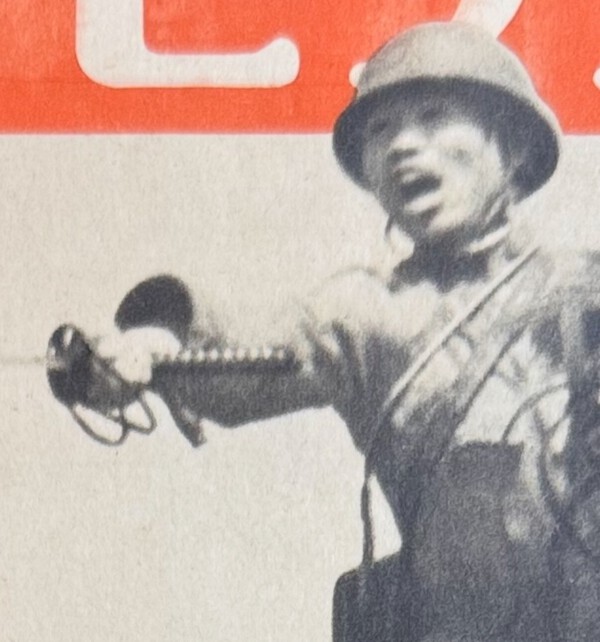
Wanted to share this, but wasn’t sure where to post. Decided to revive this older thread. I’ve got this wartime magazine showing “Horseback slashing attack by students of the Army Preparatory School”. I picked up this magazine at a show because I liked the cover so much - I think I will have it framed. Look closely at his sword. It appears to be a civilian fitted sword and with a leather saya cover. Also, I believe that’s a NCO leather tassel. Just some show and tell, -Sam

-
Thanks Brian, that makes sense. Great idea for a new section. Looking forward to seeing how it develops. -Sam
-
Brian T is the individual I previously contacted with this question. He's a really great guy. This one might be a good question for someone like Mr. Sesko
-
@Brian @Bruce Pennington What do ya'll think about relocating the Fake 95 Thread, to this section as a pinned thread? Is it possible to have in both locations, or would it branch into two threads if we were to do that?
-
Very cool swords Ashley, and welcome to the forum. I’ve taken a recent liking to these type 32 sabers, as I picked one up myself just the other week. Photos of the serial numbers and blades could help too, as we always like to see swords! We’ll have to wait for Brian to relocate this thread because I cannot affect this section, but you’ve got the right eyes on your swords for now All the best, -Sam
-
@Rawa relocating this to “forum technical details and maintenance” section and tagging @Brian. He should be able to assist when he’s online