Scogg
-
Posts
1,717 -
Joined
-
Last visited
-
Days Won
17
Content Type
Profiles
Forums
Events
Store
Downloads
Gallery
Everything posted by Scogg
-
In my limited experience, sourcing the parts isn’t what takes the most time. In most cases, the parts are already gathered before a craftsman is even brought in to do the fitting. The real delay comes from the waiting lists of qualified craftsmen. Even if you find parts that almost fit, you can still expect a very long queue before a craftsman can get to your work and fit everything properly. It’s not simply a matter of “find the parts and someone will put them together.” It’s more like “find the parts, then wait years on a craftsman’s list until your turn finally comes.” All this is not meant to be a discouragement; but rather to prepare you - so you know what you're getting into. Hope that makes sense, -Sam
-
3 years and counting for me, on just a habaki/shirasaya It's a long journey. Be prepared for some serious patience. -Sam
-

Inherited Sword Captured in Burma During WW2: Looking to Learn More
Scogg replied to CarstairsCowboy's topic in Nihonto
Hi Connor @CarstairsCowboy, I will relocate your thread to the Nihonto section for more input on the signature. More photos never hurts, preferably on a dark non reflective background. Close ups of the tip, full blade profile centered from above, both sides of the tang. It’s best if pictures are oriented so tip is north and tang south. Welcome to the forum, and thanks for sharing your sword and family story with us. My journey into Nihonto started similarly; with a small nugget of a story and an inherited sword. Best of luck, -Sam -
My guess would be: Kaen More photos may help, tough to see the kaeri
-
Hi Nick, Decent looking Type 98 with non traditional blade. You are conveniently located for some hands-on sword viewing. I would recommend maybe getting your hands on a few swords before you decide what you'd like to buy. I would first encourage you to read (so that you don't offend anyone handling their sword): https://swordsofjapan.com/nihonto-library/nbthk-etiquette/ Then I would maybe reach out to @ChrisW about his regional sword club: https://indianatokenkai.wixsite.com/indiana-token-kai Also, this is coming up, I'm not sure how close you are, but much closer than me! : https://www.sosovms.com/Show_of_Shows/ Best of luck in your search! There's no shortage of things to learn along the way. My only advice there would be to be patient, and go slow. Sincerely, -Sam
-
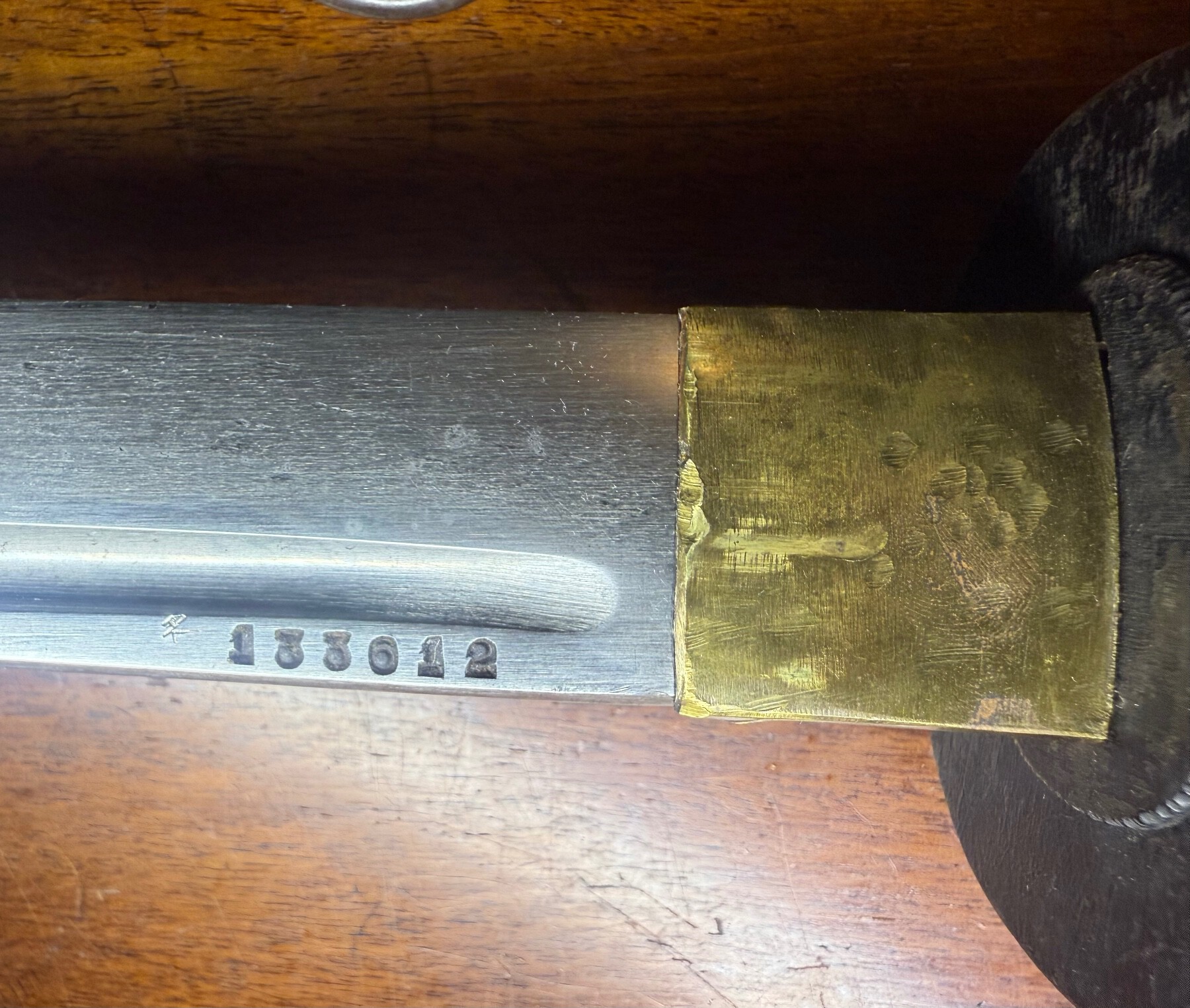
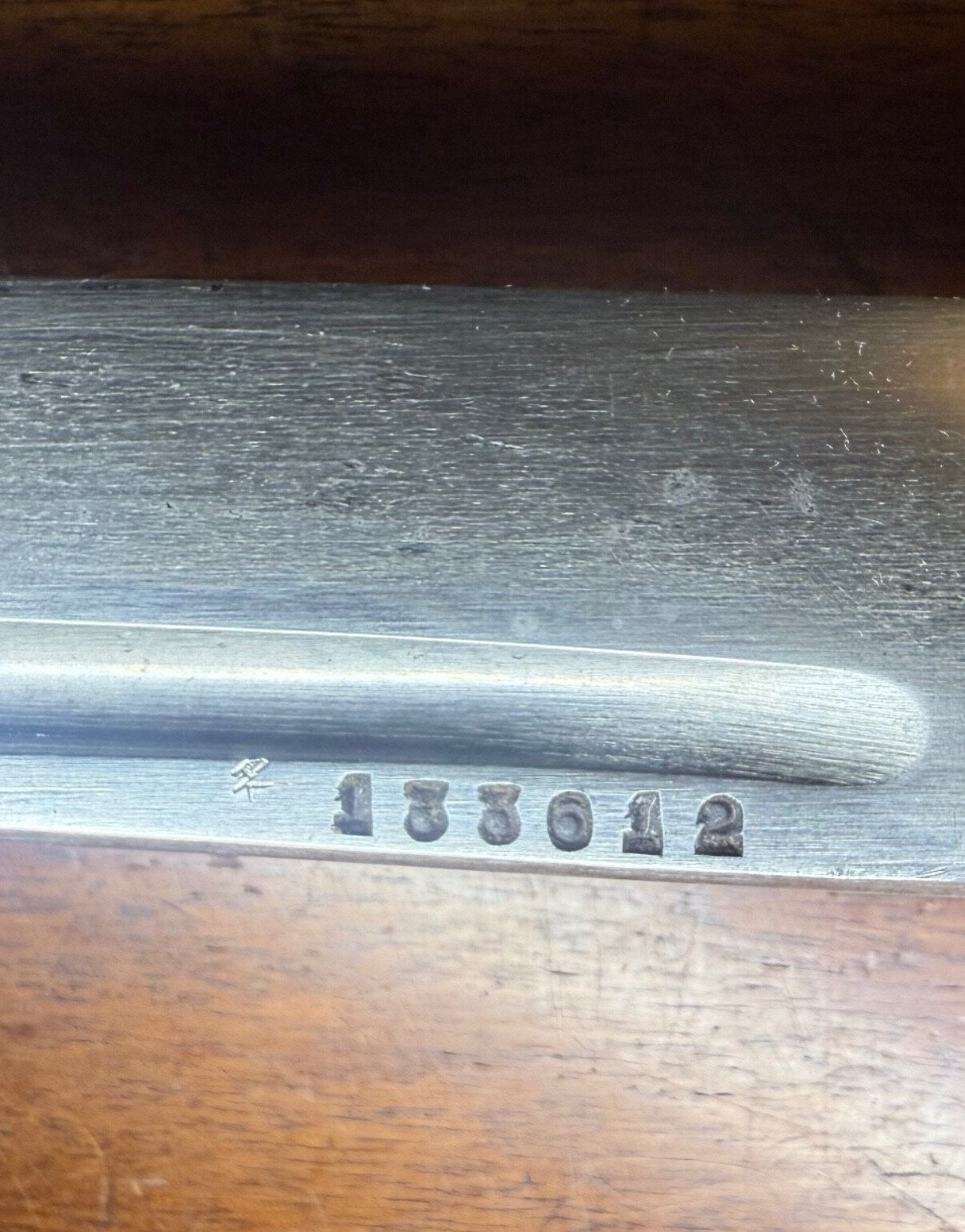
Here’s an example of a shallow Nagoya (名) blade stamp found on another genuine example. You can imagine how it might look after being chromed


-
A little tough to see, but the bohi and kissaki look good to me. On a lot of fakes, you see the fuller (bohi) end early, sometimes a few inches before the kissaki
-
Looks like the habaki was painted gold and some got onto the blade. I suppose that could be a reflection though. I’d like to see how the bohi terminates near the kissaki. Typically that’s a big tell for fake blades. I suspect the blade was buffed before being chromed. Just a theory, -Sam
-
Unfortunately these swords are often incorrectly identified. I’ve seen real one be called fake, and fake ones be called real. One of the unfortunate things on Facebook, is the impossibility of knowing which comments to value and which to discard. A few too many cooks in the kitchen sometimes
-
For $895 I think you could get a pretty good and untouched example. Id steer clear personally. While I don’t agree with much of the feedback on Facebook, I think that their reaction to the sword will be repeated if you were to ever show it off, or try to sell it someday. Which can be a frustrating reality with these swords. People are quick to skepticism. But for that price some nice examples are out there; and if you’re interested in the Type 95, I think you can find a good one if you shop around. All the best, -Sam
-
Hi Nick, I agree that it looks genuine to me, and I’m sorry you’re getting such a mixed response on Facebook. There’s a lot of nuance with these swords that few people fully understand. I’d like to address a few of the points that were raised there: 1 - All nagoya stamped blades have the serial number oriented this way, with the edge up. This is standard and not upside down. 2- The iron ferrule did not take stamps particularly well, and this specific range of Type 95s is known for weak or poorly struck markings. 3- There is some variation in serial number fonts, and the one shown here looks consistent and correct to me for this range. 4- the Nagoya blade stamp does look very shallow, but that’s also been observed before, and could be exaggerated by whatever has been done to the blade. What I think we’re looking at is an example that received some buffing, and then maybe been chromed; although I’d like to see better pictures of that spot for any level of confidence diagnosing what that is. I generally agree with Conway, that there are better examples to be had, unless the price is “too good to be true”. -Sam
-
Woody will be able to restore it to its true glory. Lovely sugata, and once polished properly; I imagine all that masame is going to be stunning. Sorry to see and hear what's already happened. Still, I would be excited for the future of this blade. Best of luck, -Sam
-
Raymond Yan sells a lot of affordable nihonto, and related items. He's a good seller, in my opinion. Beware though... He has very little patience for questions. He puts a great deal of effort into his descriptions, and he recommends you study his photos and writing. At these prices, he has no issue offloading items, and has little time to discuss each individual piece. I've followed him for some time, and I've gathered that he must like polearms. Lots of yari go through him. He also knows what he has; so you're not going to find a forgotten treasure or anything . You will find reasonable and fair deals. And as always, you get what you pay for. -Sam
-
Increasing Gold Membership numbers?
Scogg replied to Brian's topic in General Nihonto Related Discussion
Sounds like quite the book Maybe it could be published, and some percentage of the proceed could benefit the NMB. (just thinking out loud) Lots of work though... My 95 document alone is over 70 pages. I'd buy it -Sam -
A very similar nakago feature was discussed recently in the thread below.
-
Any information on this would be appreciated
Scogg replied to blueblue's topic in Military Swords of Japan
Hi @blueblue, Darcy, Thank you for the photos of the tang. You have an interesting WW2 non traditionally made blade. I would read into care and maintenance on this website to help preserve your item for future generations. https://www.militaria.co.za/nmb/faq/1-care-and-maintenance/ Now that we know it's all WW2 era, both fittings and blade, I'm going to relocate this thread to the "military swords of Japan" section, and delete that other one. Very nice sword, and thank you for sharing with us. All the best, -Sam -
Increasing Gold Membership numbers?
Scogg replied to Brian's topic in General Nihonto Related Discussion
I’m working on a Type 95 patterns and variations document. Im not sure when I’ll be finished, and I have to be very careful to be accurate and factual. I hope to have some people proofread it before I call it “complete”. Whether or not it’s up to the standards of the NMB will be entirely up to Brian, though. We’ll see when we get there -Sam -
Are these military or just practice replicas?
Scogg replied to Nervous's topic in Fake Japanese Swords
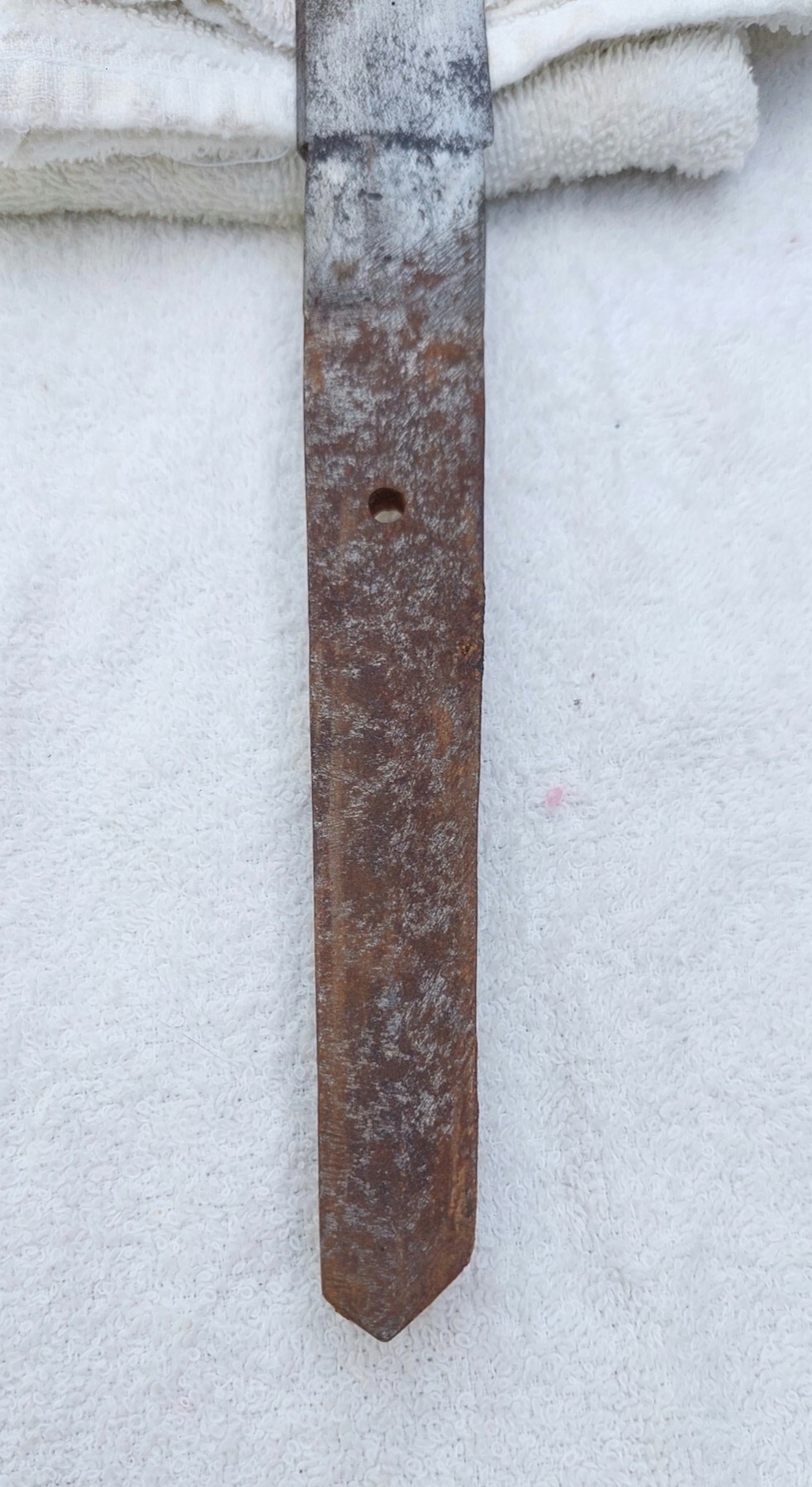
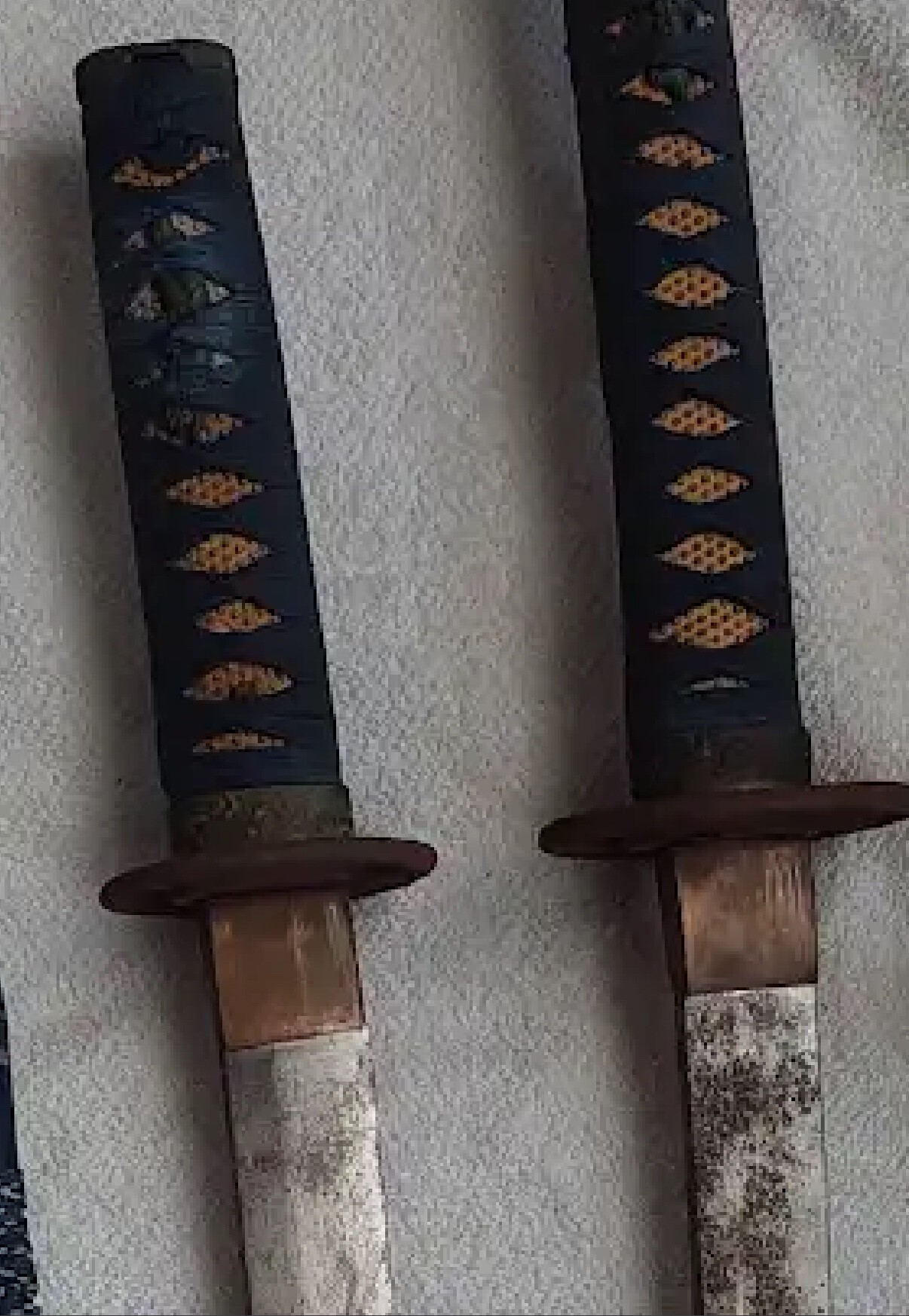
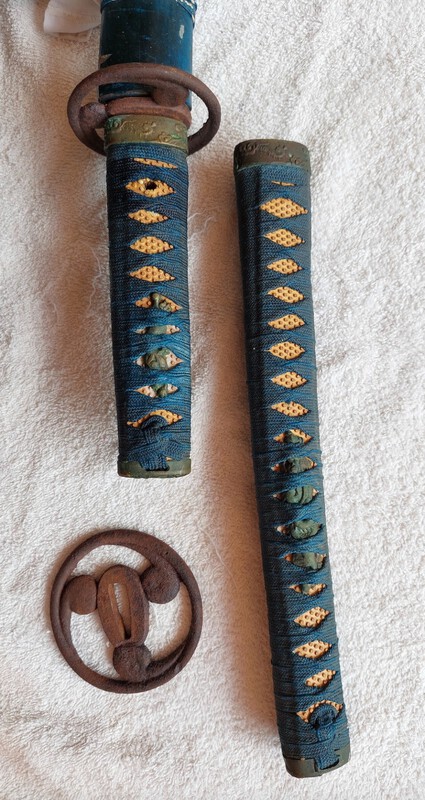
Hi Eliaz, Your new photos confirm my suspicions. I believe these are not genuine Japanese swords. I've attached a couple of your photos to my post for others to see and for reference. It's good to hear that it's their memory that counts. Sentimentality like that is where many of us began in this hobby. Some of us even began with fake swords, but the journey to learn inspired us to get real examples. Here's some features that point toward them not being genuine: - The fittings are very low quality, lack seppa, and the samegawa (ray skin under the handle wrap) appears to be wood, plastic, or otherwise a material i've never seen on a genuine example. - The way the blade bulges larger than the habaki on the small sword. - The lack of refinement of the tang (nakago) on the long sword, from the shape of the end (nakagojiri) to the yasurime (file marks) to the overall form; all of which do not represent the fine craftsmenship seen on genuine Japanese Sword tangs (nakago). Overall, they both show a lack of refinement, precision, and quality seen on even lower quality genuine Japanese swords. All these factors lead me to believe them to be made outside of Japan - probably as a matching set to be sold as display items or practice swords (I cannot determine if they are hardened blades or not). Others might have more to add; but these were the big red flags that I personally see. All in my opinion... -Sam This link is helpful for spotting fakes in the wild: https://www.jssus.org/nkp/fake_japanese_swords.html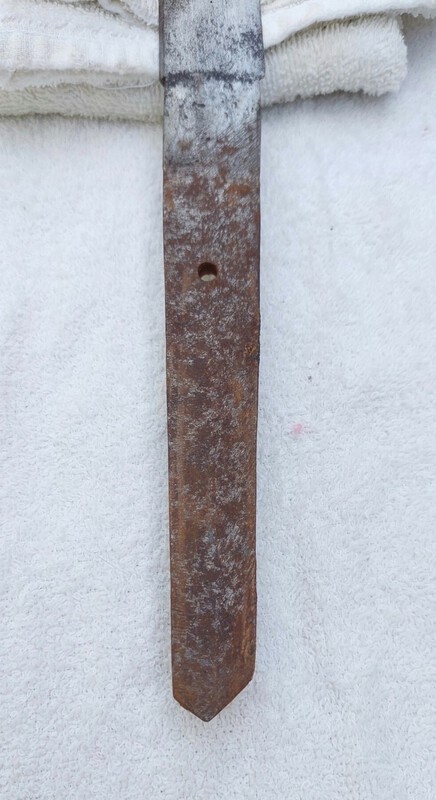


-
Perhaps the blade is older than the Satsuma Rebellion. My non-expert collectors guess; I would say no earlier than shinto period. The hamon, sugata, and nakago, give me a strong shinto to shinshinto impression. Other opinions may vary... Take mine with a grain of salt. -Sam
-
Any information on this would be appreciated
Scogg replied to blueblue's topic in Military Swords of Japan
A pleasure Darcy! Welcome to the forum. I totally understand your reluctance to dismantle it. I myself, owned an old katana for nearly 20 years before I had the courage to take it apart; due to my reverence for history and my grandfather who gave it to me; also inexperience with Japanese swords. You are not alone in that hesitation! But like Rohan said, it's totally safe, and normal to take it apart. My advice would be to take some good photos beforehand, so you can be sure to re-assemble it correctly. (sometimes people mix-up the seppa (washers around the guard). Be very careful, and understand it might be a little "stuck" after being mounted that way for ~80 years. Just go slow, and be careful. Kind of a long video, but worth watching before you try: (Skip to the 6:30 mark, for disassembly of a sword in fittings) -
Any information on this would be appreciated
Scogg replied to blueblue's topic in Military Swords of Japan
Hello Blue, is that your name? We do ask members to use at least a first name so we can address one another politely. We're old school like that As Rohan mentioned above, there’s unfortunately very little we can determine from the photos. For more info, you’ll need to share clear images of the tang (nakago) and the blade removed from all of its fittings. That said, based on what is visible, you appear to have a World War II era Type 98 Shin-guntō. Notable features include a scabbard with a leather combat cover, what looks to be a surrender tag (the white cloth with writing), and a company-grade blue/brown officer’s tassel. At first glance, everything appears consistent with genuine WWII-period components. Seeing the tang is critical. Swords mounted in WWII fittings like yours can house: 1. An arsenal-made blade. 2. A traditionally made wartime blade. 3. A traditionally made older antique blade (often referred to as a “family blade”). 4. Or something else entirely . The blade and the mounts are two separate components of a WW2 Japanese sword, and the tang will reveal a great deal about the blade part. Best of luck, -Sam -
Are these military or just practice replicas?
Scogg replied to Nervous's topic in Fake Japanese Swords
Hate to be the bearer of bad news, but I also believe both swords are not Japanese. But still, they hold memories of your father and his friend with a shared interest in martial arts. So that’s something to cherish. Sincerely, -Sam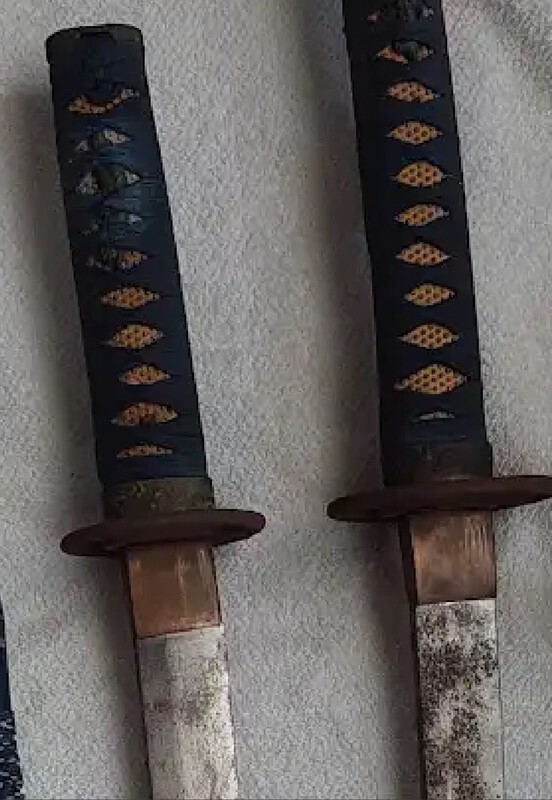
-
Speaking entirely personally, the Sho-Shin website took some time to get used to. The variety of fonts and colors, and unclear what is and isn't a link, felt very busy at first. I’ve gotten the hang of it now, and it's an awesome resource. Your project would be much appreciated, and it’s something I’ve wanted for a long time. Looking forward to it! It already looks great. -Sam
-
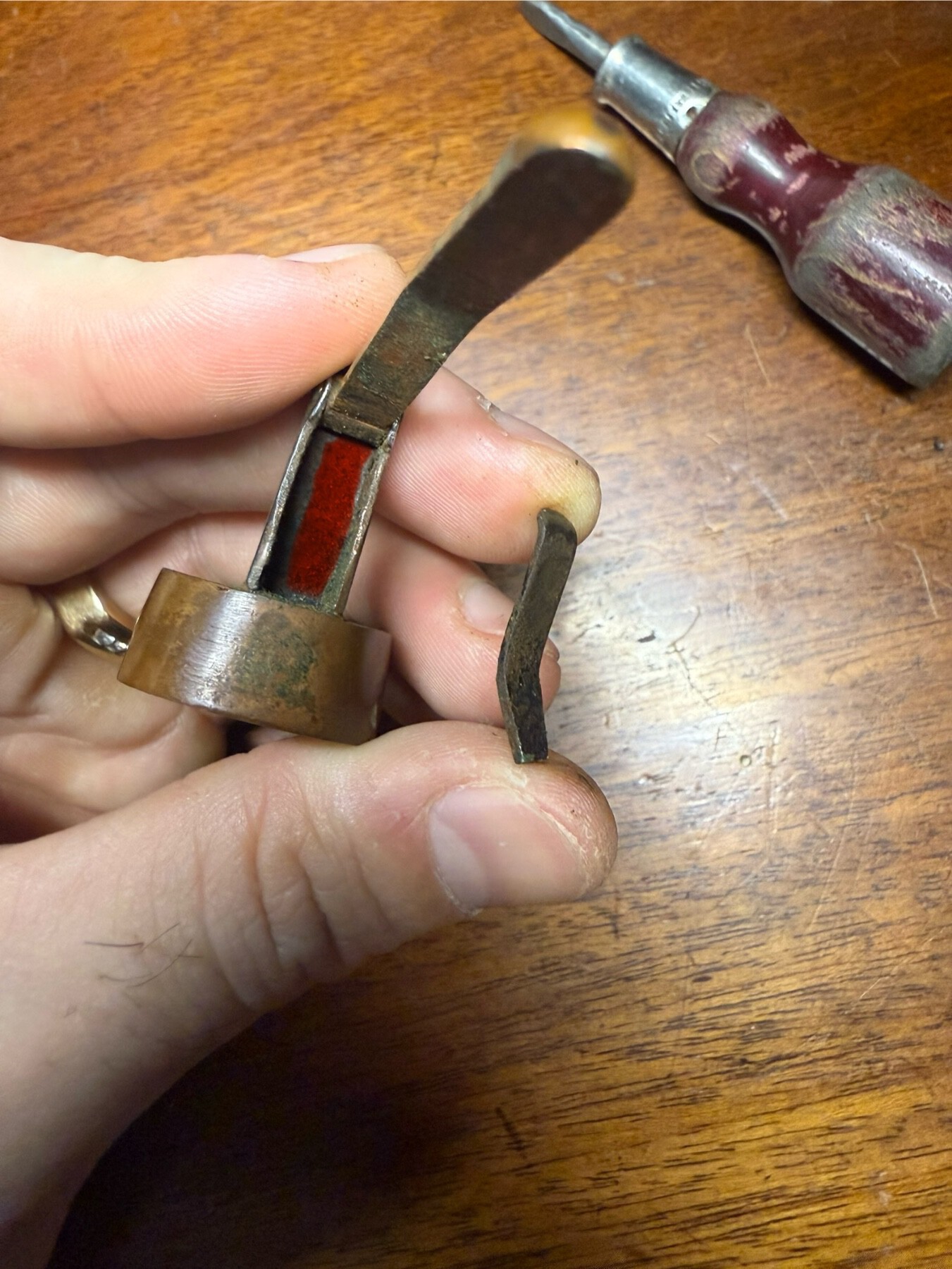
Thank you so much. Mine must measure 4.5mm. I was curious what was meant by “diameter” so I measured everything I could. I hope this is the right area. Much appreciated for your continued help. It means a lot. -Sam

-
Can you help me understand what the “Chyukan” is? You said the “U shaped part”, but I’m having a hard time identifying what/where this piece is. Is it this recessed area, the area that holds the spring, that I’ve highlighted with red?