Scogg
-
Posts
2,237 -
Joined
-
Last visited
-
Days Won
28
Content Type
Profiles
Forums
Events
Store
Downloads
Gallery
Everything posted by Scogg
-

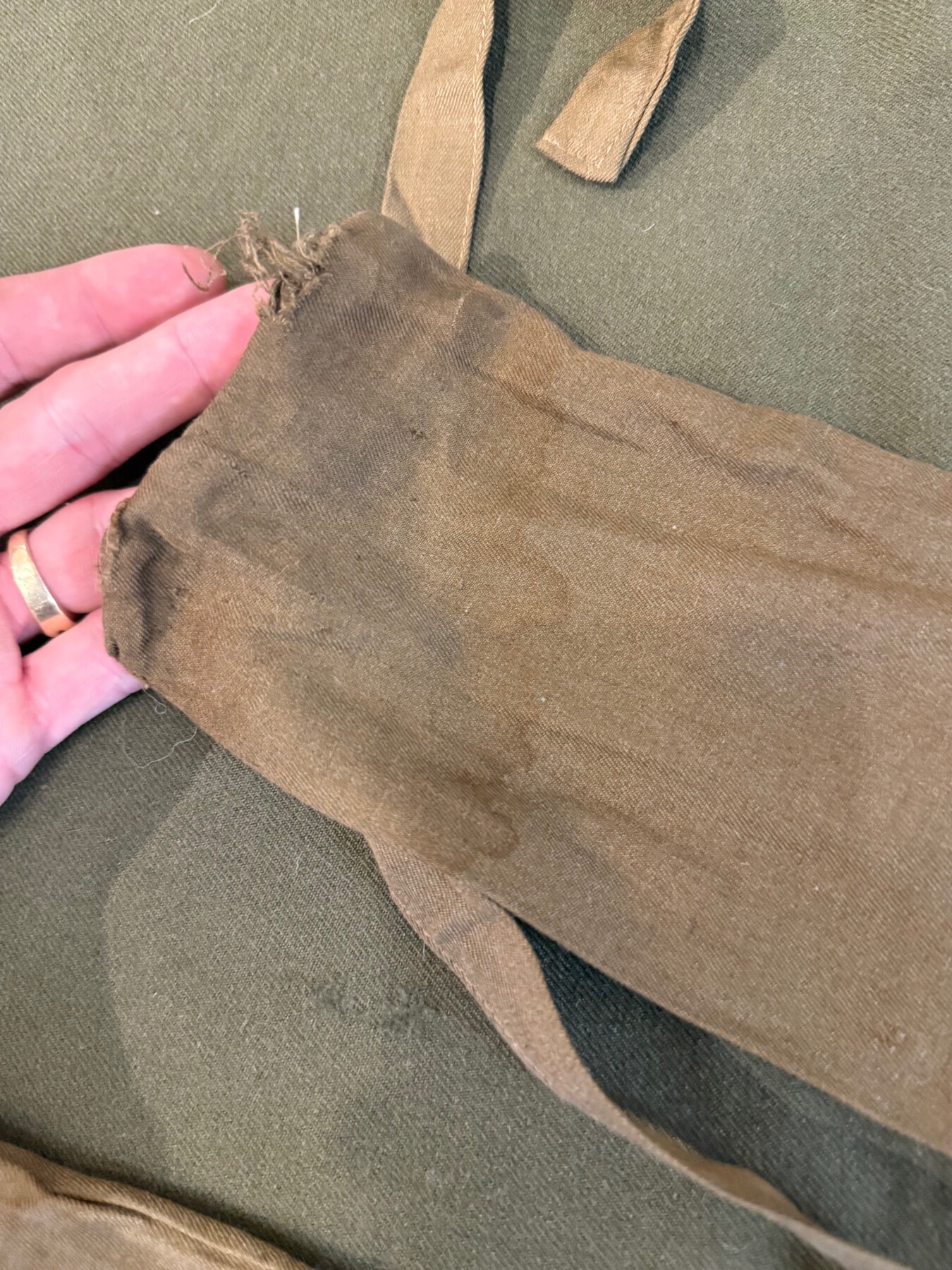
Original WWII army sword bag value?
Scogg replied to george trotter's topic in Military Swords of Japan
I see those unsigned flags go for around $100 at the militaria shows. Sometimes more, sometimes less. You've got 5 of them there, plus, I presume, some kind of liner. In my opinion that's around $500 in flags, maybe $50 for the liner. ~$550 in materials alone. Add the "cool factor" of it being a sword bag and accessory to a gunto? I agree with Bruce, that you can probably choose your price. I would not be surprised to see something like that go for around $1000; or add a premium to the sword. IMO, As someone who really likes these kinds of accessories. -Sam -
Thanks @ChrisW! I hope to attend the Chicago show either this year or next. I still need to do the Orlando show too. Trying to do all the USA based shows at least once, and then hopefully to DTI In the short term, looking forward to the Vegas show. -Sam
-
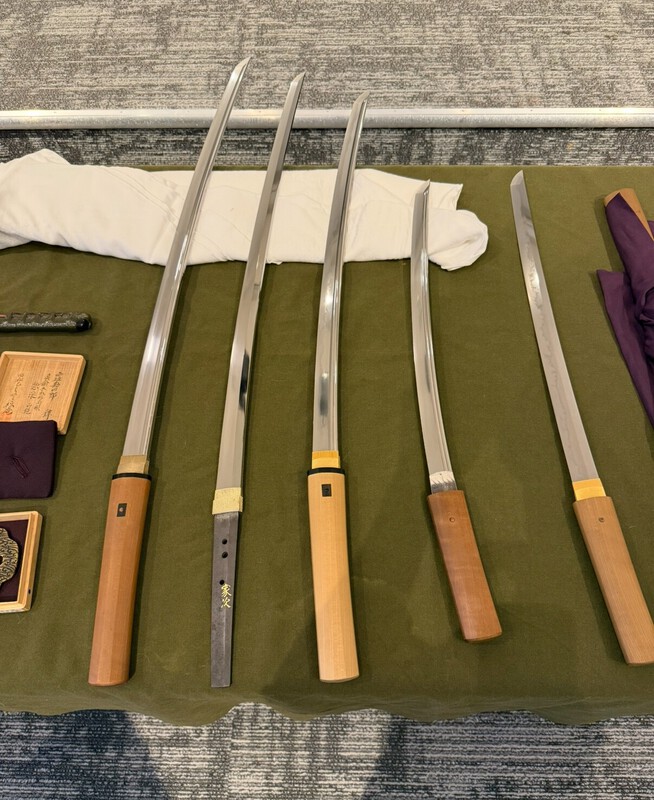
Each member had a table where they could display their items. Rules basically were, you have to ask to handle anything, and it's up to the sword owner to decide how that happens. Etiquette was instructed when necessary due to the wide range of experience of our members; ranging from people I consider expert, to entry level individuals with questions about their inherited blades. There was a huge variety of items, and some very high-end blades; including probably the best Aoe blade i've ever seen, and also a Tametsugu. Huge thanks to the more seasoned members and attendees for bringing such incredible swords to study - my only complaint is the lighting in the venue that I chose, and that I didn't have more time to admire those blades. I hope to smooth out those wrinkles on the next meetup, and be more prepared. I'm very excited people were able to make it, and support my efforts to get a club going out here again. Feeling very grateful, and humbled. -Sam
-
The first meeting was a huge success! Big thanks to everyone who made it, and brought swords to show. Hope to have our next meeting this spring/summer 2026 in Washington state


-
Original WWII army sword bag value?
Scogg replied to george trotter's topic in Military Swords of Japan
Had our PNW Token Kai this evening, and a friend of mine and club member has what I believe to be a wartime sword bag. The owner noted that it’s made of a very similar material that he’s observed on some Japanese uniforms. It definitely appears to have some age


-
@drb 1643 great collection! Those are great photos, thank you so much! This helps me very much and nearly completes my lists. Yes, I’d love to see your ito wrapped example too, if time permits. Thank you again! I owe you one! These will go into my document promptly. All the best, -Sam
-
@Nazar, I’m always amazed when people remember what books I’ve got in my reference library Yes, I’ve got what you’re looking for. I only found Kiyonobu in one of the three, and it’s the same one from that old thread. I’ll include all the pages relevant to Kiyonobu below. Something that immediately grabs my attention, is the abrupt change in nakago-jiri on the arsenal setting example. I hope this helps, Best regards, -Sam


-
Both sides were definitely ground down, for reasons I fail to imagine. Bruce's theory makes as much sense as any, but then, why stop half-way through the conversion? Have you seen any others with this "machi-okuri situation" @John C?
-
Spotted on eBay https://ebay.us/m/HpCkpX


-
I saw him at the SF show, and he explained that he does not come to the forums much anymore. Although, he had heard through the grapevine that I admired one of his swords; and let me study it under some lighting. He’s a real great guy. So if you’re lucky, in time, he may hear of this thread and reach out to you. Best of luck, -Sam
-
Sorry To Report
Scogg replied to Grey Doffin's topic in Sword Shows, Events, Community News and Legislation Issues
This is terrible news… I had recently gotten to know Richard via email correspondence, talked about photography, and hoped to put face to name someday as we live really close by. He had said he was recovering from a procedure. His photos of tosogu are really stunning. Condolences to his friends and family. https://www.rkgphotos.com/articles/ktk_photo_document_2019.pdf https://m.youtube.com/@rkgatteleport/videos -
You can probably imagine how difficult it would be to draw a sword straight off your back over your head/shoulder. Try the motion now: reach behind your head as if grasping a tsuka, then raise your arm as though you’re pulling a blade free. You’ll notice your arm doesn’t travel very far. With anything longer than a short blade, a significant portion of the sword would still be stuck in the saya on your back. The longer the sword, the longer your arms would need to be to clear the entire blade from the scabbard. Here's an example. You can see that even video game animators struggle with the physics of how this might work: (Note: this is just a silly video game, and is simply demonstrating how this would look and how challenging/awkward the action would be. Sorry about the song, I recommend muting it... not my video .)
-
New York Token Kai Presentation
Scogg replied to Soshin's topic in Sword Shows, Events, Community News and Legislation Issues
Sounds awesome, David! If you are able to upload it to your website, I would love to share it with the PNW Token Kai members. Best of luck, -Sam -
That really depends on the boshi. The kissaki can certainly be repaired, but it’s unclear whether it can be repaired without compromising the boshi. If the boshi is absent, it's considered a fatal flaw. Can we maybe see some close-ups of the nakago? -Sam
-
Some people unable to access the forum?
Scogg replied to Brian's topic in Forum Technical Details and Maintenance
Both links are currently working for me on an apple computer via google chrome Have not had issues lately, but when I do, they typically resolve within an hour or two. -Sam -
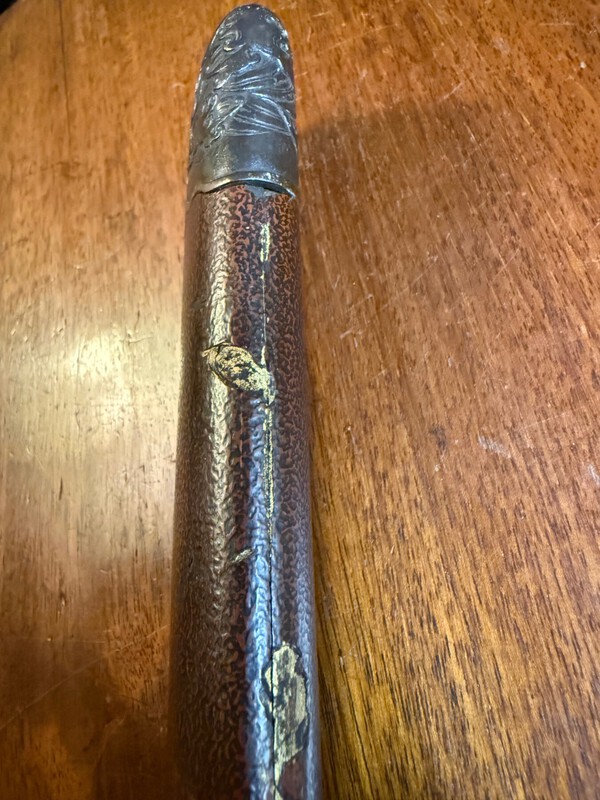
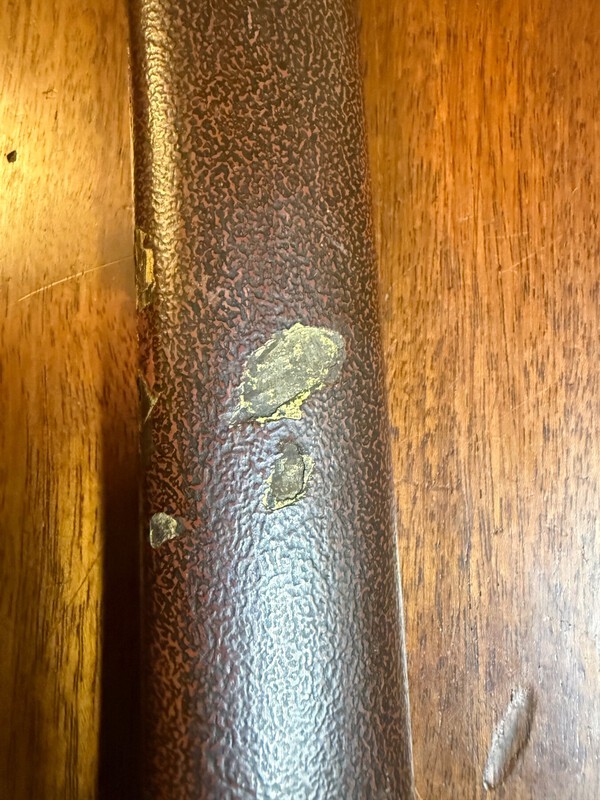
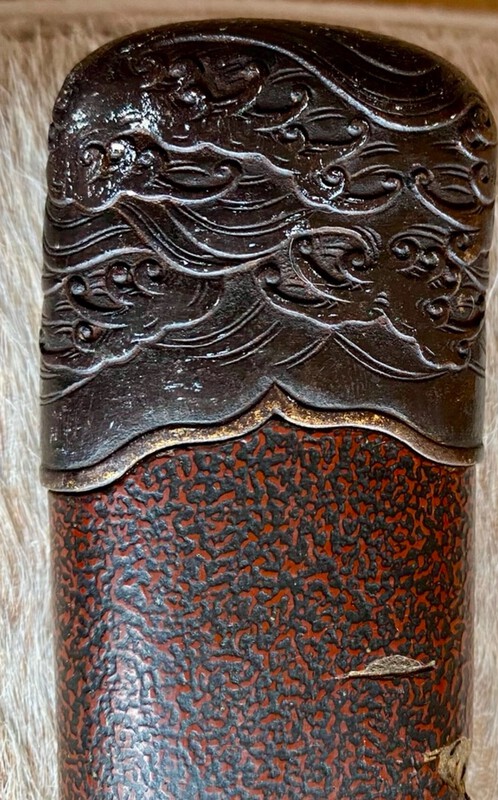
You are not alone! I have reason to suspect that gold was "trendy" after the war. My grandfather applied gold spray-paint to the saya of my Edo period katana in the late 1950s or early 60s. He had acquired the sword from a World War Two veteran who had taken it home after the war. I cannot say if gold paint is wartime or not, some examples above seem more period than others... I can say that my own katana received its gold paint after the war, because my grandfather told me he painted it. Thank goodness the paint did not stick to the lacquer very well; and has since (mostly) flaked away. I'll see if I can get a photo of the paint remnants when I get home from work today. -Sam Edit: adding photos. I know it’s not a gunto, but I felt it’s relevant considering it’s a bring back and was painted shortly thereafter
-
I have adjusted my pattern type list reflect @Kiipu's more detailed variation list found at the link below. I'd love some feedback if time allows, as I have changed some wording so it fits better with both the variation list and pattern list. https://www.militaria.co.za/nmb/topic/54210-type-95-military-sword-variations/#comment-567821 I still need photos of the patterns that are not crossed through: - Pattern 1 copper handle (but Bruce is working on this one for me) - Pattern 3 aluminum handle, suya, without bohi - Pattern 5 wooden handle with bohi - Pattern 5 wooden handle without bohi - Pattern 6 wooden handle with wooden saya Thanks again everyone, -Sam Pattern# = Handle type - Tsuba type - Latch - Bohi - Ito - Saya - Kiipu variation number. - Copper Tsuka Initial Pattern: Pattern 1 = Copper handle - 11mm Brass tsuba - Top Latch - With Bohi - Asymmetrical ito - Metal saya with brass cap. Variant 1. - Aluminum Tsuka Patterns: *Transitional Pattern 2, (Suya) = Aluminum handle - 9mm Brass tsuba - Top Latch - With Bohi - Asymmetrical punctured ito.- metal saya - ( TO 東 ). v2. * *Transitional Pattern 2 (Gifu) = Aluminum handle - 9mm Brass tsuba - Top Latch - With Bohi - Asymmetrical ito adjusted around mekugi. Metal saya - ( NA 名 ). v2. * Pattern 2 = Aluminium handle - 9mm Brass tsuba - Top Latch - With Bohi -Symmetrical ito. Metal saya. v3. Pattern 3 = Aluminium handle - Steel tsuba - Top Latch - With bohi - Symmetrical ito. Metal Saya. v4. *Pattern 3 variant blade (Suya) = Aluminum handle - Top Latch - Steel Tsuba - No Bohi - Symmetrical Ito. Metal Saya. v6.* *Pattern 3 modified tsuba = Aluminum handle - Steel Tsuba - Top latch with side latch cutout - With Bohi - Symmetrical ito. Metal Saya. v4.* Pattern 4 = Aluminium handle - Steel tsuba - Side latch - With Bohi - Symmetrical ito - Metal Saya. ( NA 名 ). v5 . - Wooden Tsuka Patterns: Pattern 5 = Wooden handle - Steel Tsuba - Side Latch - With Bohi - Metal Saya with drag - (NA名). v7. *Pattern 5 variant blade = Wooden handle - Steel Tsuba - Side Latch - No Bohi - Metal Saya with drag - (NA名). v8.* Pattern 6 = Wooden handle - Steel Tsuba - Side Latch - No Bohi - Wooden Saya with chape - (Jinsen / HE ヘ). v9.
-
Additionally, if there is any information about Togishi from the 50s, I would be very curious to know. Looking for: 君山研廣 Kimiyama Kenhiro
-
@Conway S Iijima stopped producing in March 1945, when American B29s bombed it out of commission. Their last batch switched to steel tsuba around 160075. My latest observed iijima brass tsuba is in the 159k range on my notes. Big thanks to Kiipu, Bruce, and Stegel for helping so much. So many little nuances with the type 95, it can be hard to digest. But it’s very interesting stuff All the best, -Sam
-
That stands to reason. Or perhaps 7 preceded 6. While 6 and 8 were congruent for some amount of time
-
@Kiipu, I've digested your notes, and edited my list to more closely reflect yours. In addition, I adopted the wording "asymmetrical/symmetrical" and removed the "2a, 2b, 3a" because I had not realized those terms had been coined in the past for other features (Thank you @Bruce Pennington). I think the "Transition" or maybe "interim" identifier is less intrusive to preexisting pattern list. Let me know your thoughts. -Sam -Copper Tsuka Initial Pattern; plug on end of saya: Pattern 1 = Copper handle - 11mm Brass tsuba - Asymmetrical ito - Cap but no drag on saya. -Aluminum Tsuka Patterns; drag on end of saya: * Transition Pattern 2 (Suya) = Aluminum handle - 9mm Brass tsuba - Asymmetrical ito - punctured ito. ( TO 東 ).* *Transition Pattern 2 (Gifu) = Aluminum handle - 9mm Brass tsuba - Asymmetrical ito - adjusted ito around mekugi. ( NA 名 ).* Pattern 2 = Aluminium handle - 9mm Brass tsuba - Symmetrical ito. Pattern 3 = Aluminium handle - Steel tsuba - With/Without(Kokura) bohi - Symmetrical ito. *Transition pattern 3 (tsuba) = Aluminum handle - Top latch steel tsuba but with side latch cutout - Symmetrical ito.* Pattern 4 = Aluminium handle - Steel tsuba - Side latch - Symmetrical ito - ( NA 名 ) . -Wooden Tsuka Patterns: Pattern 5 = Wooden handle - Steel Tsuba - Side Latch - With/Without Bohi - Metal Saya with drag - (NA名). Pattern 6 = Wooden handle - Steel Tsuba - Side Latch - Without Bohi - Wooden Saya with chape - ( HE ヘ , Jinsen). *Author noted transitional patterns with asterisk*
-
Thank you, Thomas, that’s an excellent list and really helps illuminate some of the changes surrounding the bohi. I also like the symmetrical vs. asymmetrical terminology for the ito. Bruce, I’ve noticed the differences in seppa on a few swords as well, but it’s not something I’ve formally cataloged. The main reason is that it’s rarely shown clearly in photos, and it’s such a minor variation (among so many small variations) that it didn’t feel significant enough to define a new type. I feel the same about the side-latch cutout tsuba on top-latch aluminum tsuka swords. The change is so subtle that it’s both hard to spot and hard to justify giving its own category. I will need to revisit some of my wording and verbiage to make sure my efforts align with previous work. I want to be sure my work is supplemental rather than unhelpful; even if those efforts remain with me as my own references. Thanks Thomas, -Sam
-
Hi @John C, precisely! That’s a great example of a “Pattern 2,” and it’s exactly what I need photos of. If you’re willing, I’d be very grateful for as many detailed images you can send via message. I’m especially looking for full-sword shots, close-ups of both sides of the tsuka, the clip/tsuba area, any stamps or serial numbers, and the saya drag. When I say “mirrored ito,” I’m referring to how the ito meets the fuchi. On Pattern 1 copper tsuka and the transitional aluminum types (what I call patterns 2a and 2b), the ito at the fuchi looks like the example below (an aluminum pattern 2a from my collection). On June 24, 1939, the ito pattern at the fuchi was changed so the folds on both sides matched (like on your sword). This let the mekugi pass through the samegawa instead of the ito, and supposedly allowing a tighter fit. I use terms like “offset ito” or "mirrored ito" in my notes to distinguish the copper and transitional tsuka from the Pattern 2 and all later aluminum tsuka. For better or worse (probably worse), some of the terminolgy and phrasing i'm using comes from my shorthand notes, so while it's clear to me, it might not be intuitive for others. Thanks everyone for your support during my efforts! It means a lot. -Sam

-
When people ask what we mean when we say the steel looks "wet", this is a great photo example. Well done, -Sam
-
Thank you Thomas @Kiipu, that's a huge relief actually. Makes a lot of sense, as they don't really "fit" with the rest. I was not sure how to catalog those ones anyway, and I encounter them vary rarely. Phew! Thank you so much, -Sam Updated: Copper Tsuka Initial Pattern: Pattern 1 = Copper handle - 11mm Brass tsuba - Offset ito at fuchi - Cap but no drag on saya. Aluminum Tsuka Patterns: *Pattern 2a = Aluminum handle - 9mm? Brass tsuba - Offset ito - punctured ito. SUYA, 東 .* *Pattern 2b = Aluminum handle - 9mm? Brass tsuba - Offset ito - adjusted ito around mekugi. GIFU, 名. * Pattern 2 = Aluminium handle - 9mm Brass tsuba - Mirrored ito. Pattern 3 = Aluminium handle - Steel tsuba - With/without bohi(rare without) - Mirrored ito. *Pattern 3a = Aluminum handle - Top latch steel tsuba but with side latch cutout - mirrored ito. Pattern 4 = Aluminium handle - Steel tsuba - Side latch - Mirrored ito. Wooden Tsuka “Last ditch” Late War Patterns: Pattern 5 = Wooden handle - Steel Tsuba - Side Latch - With(rare with)/Without bohi - Steel saya. Pattern 6 = Wooden handle - Steel Tsuba - Side Latch - Without Bohi - Wooden saya.