Okan
-
Posts
575 -
Joined
-
Last visited
-
Days Won
10
Content Type
Profiles
Forums
Events
Store
Downloads
Gallery
Everything posted by Okan
-
What does my age have anything to do with this?
-
@Dan tsuba Unfortunately, people in the West often romanticize the samurai. In the late 18th and 19th centuries, they didn't care much about their sword fittings—or even their swords themselves. Low-ranking samurai were struggling just to feed their families, let alone worry about the fittings. If they owned more than one pair of tsuba, they would sell them at second-hand markets to make ends meet. In Tokyo, markets in areas like Kanda and Honjo were especially popular for this. It was very easy to find a set of tsuka, tsuba etc… In the 18th and 19th centuries, samurai made up about 5-6% of Japan's total population, but a quarter of them were jobless. There are records of samurai buying swords from second-hand markets in Kanda, finding proper fittings, and reselling them for profit—just like Japanese dealers do today. High-ranking samurai usually owned more than one daishō. Instead of changing out their tsuba, they would often have more than one set, allowing them to wear something fancier, or maybe a tachi, when appearing at court. Some of them also collected swords and I’m sure they had some daisho tsuba sets as well. Also, gift-giving was common among high-ranking samurai, and they often received gifts from their lords. Head of the house and their sons typically received “very good" swords and most of the time in a very good koshirae. That being said, these type of questions won’t help you move "onward" in your tsuba studies. Instead, focus on the tsuba itself—time is precious. Okan
-
@GRC @Tcat Yup, I had one from late edo..1853 to be exact...
-
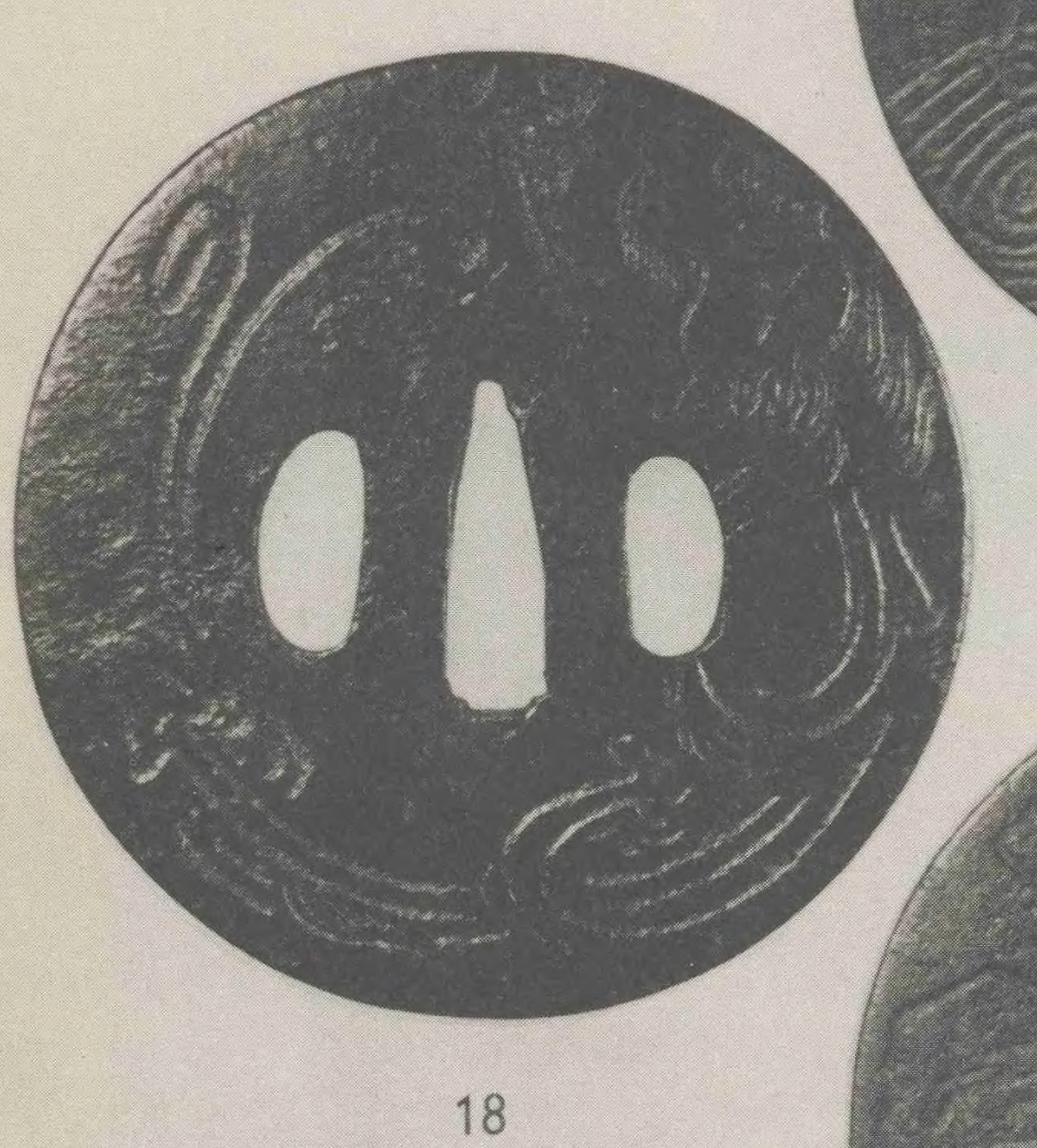
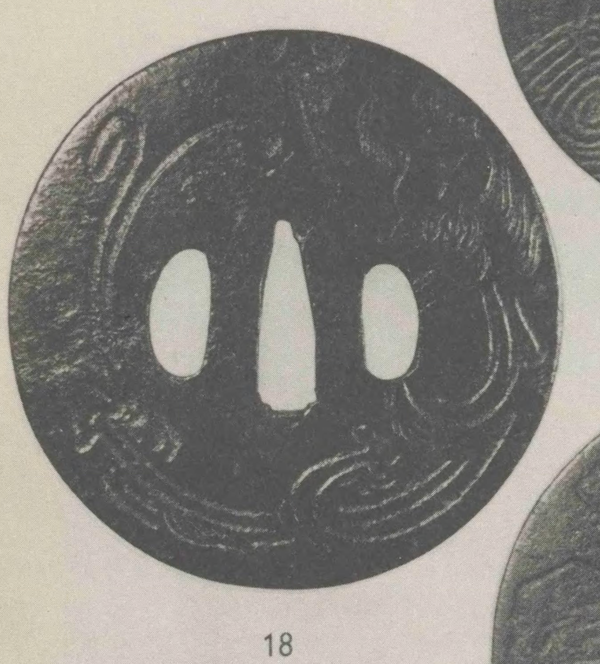
No worries. Here is another Kamakura piece looking similar to yours.(no other info just the period) Picture is not the best quality but it's from an old book. Oops..this was already in Tsuba Kansho..Nevermind
-
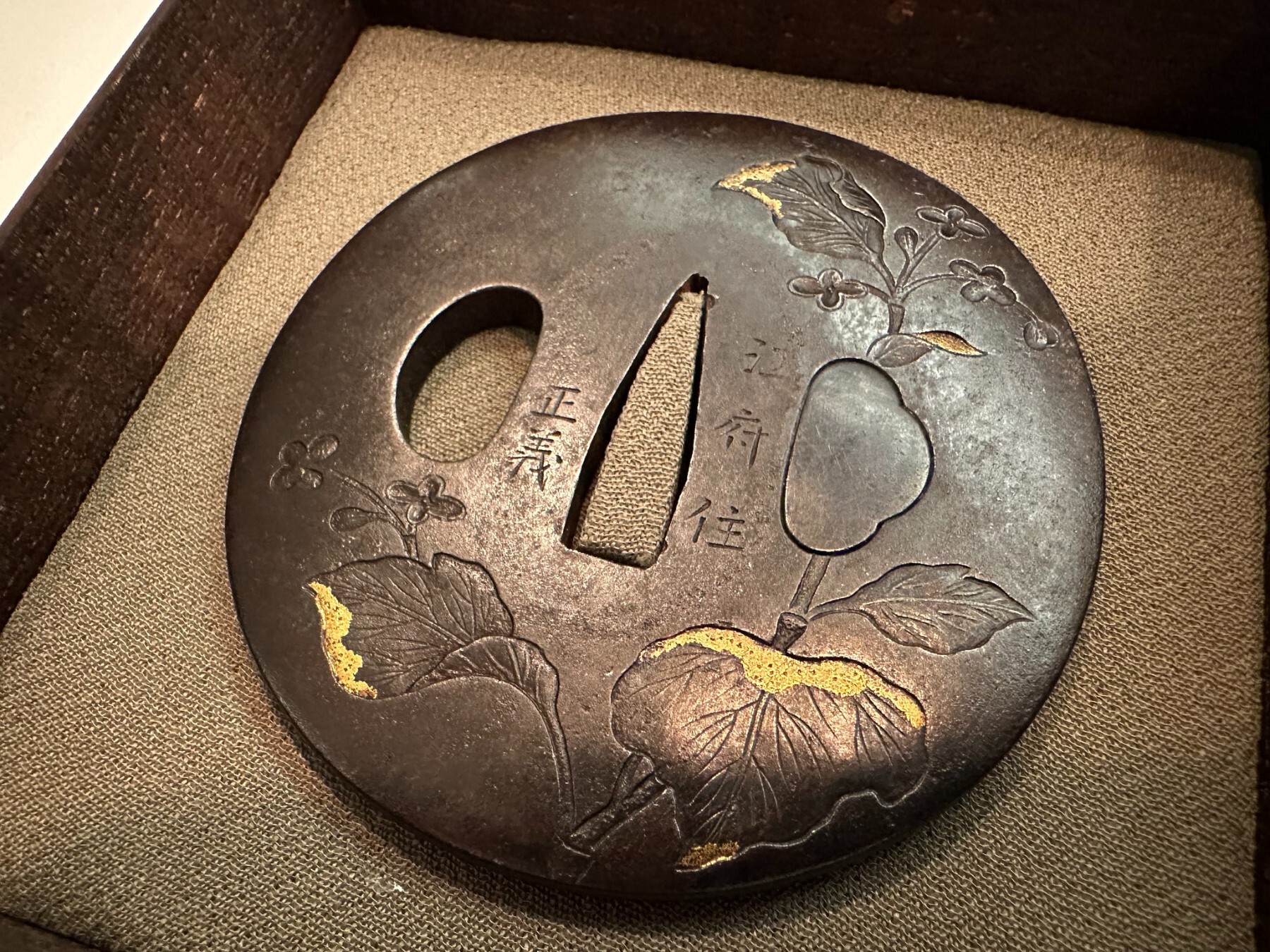
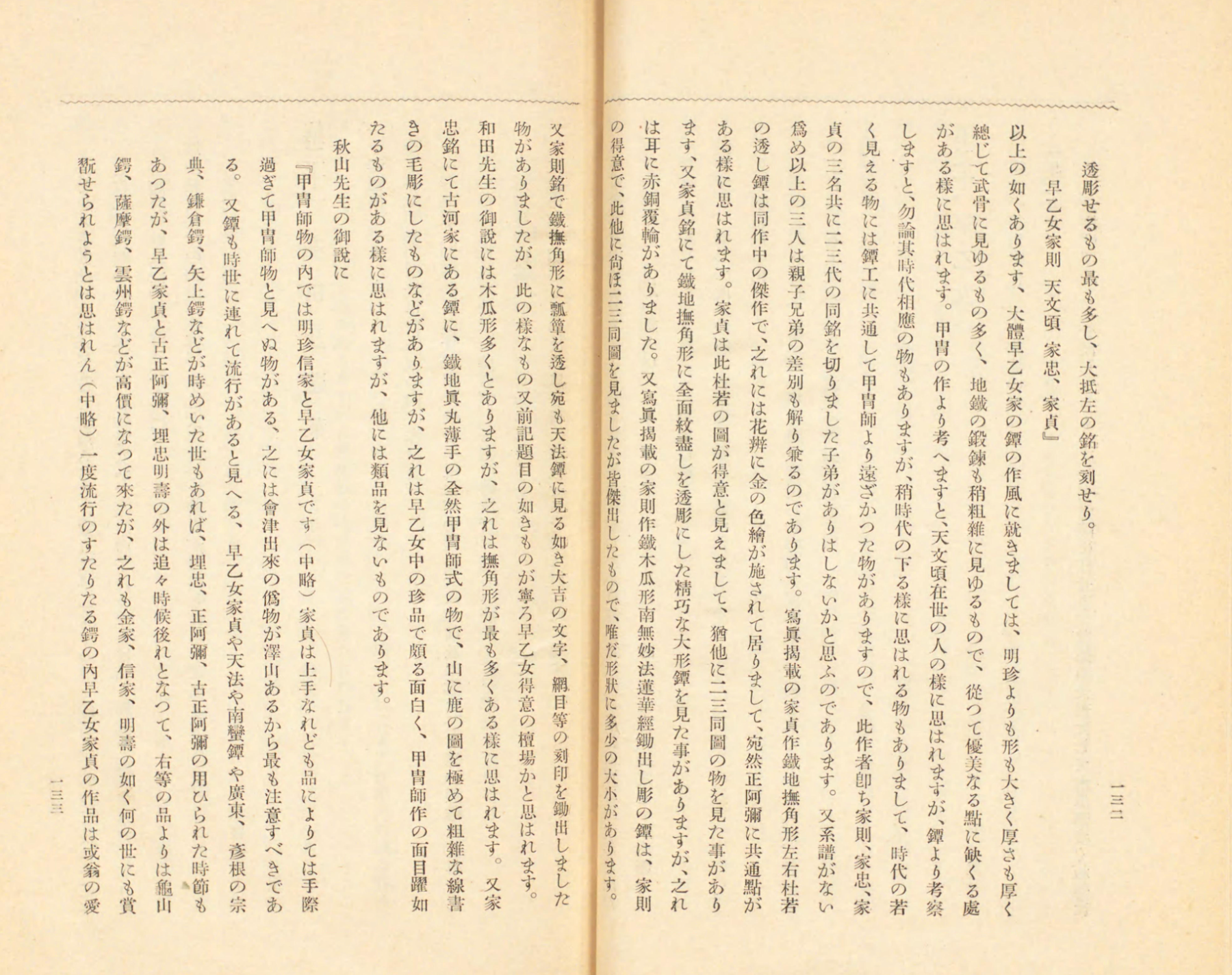
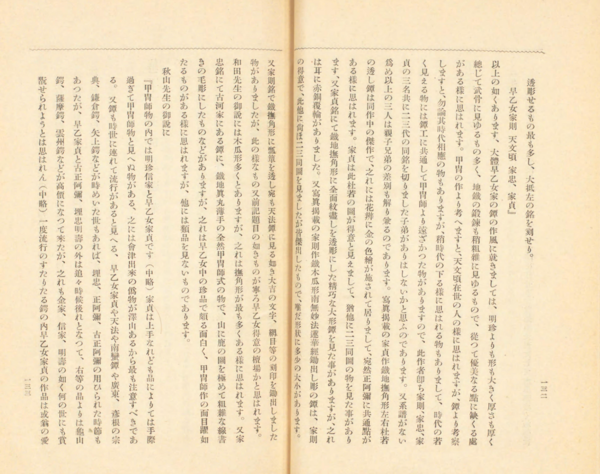
I've used an AI for the translations, so I don't know how accurate they are (though they should be okay to some degree), but I'm sure you'll be able to get something from them. 1. Ietada, often inscribed with the signature "Saotome Ietada" or the five-character signature, also appears as "Jōshū-ju Saotome Ietada" in some works. He was the son of the first-generation Kō, and there are various theories about his role, including the claim that he was the second generation of the Saotome school. However, he is considered a prominent craftsman of the Saotome lineage, alongside Iesada, and it seems likely that he was active in the same period. Ietada was a maker of demon (oni) motifs, and works attributed to him from the Momoyama period, as well as a kabuto bowl inscribed with a 15th-year Genroku (1702) date, are confirmed. There are also records of kabuto signatures from the Tenbun, Eiroku, and Tenshō eras in ancient texts. The name Ietada appears in works from different periods, including the Momoyama period and the mid to late Edo period, and several people with the same name are believed to have existed. The "mai" (the dance) is typically made from a muscle-style kabuto bowl shaped like a mokkō (melon), with twenty-four or sixteen overlapping pieces, showcasing a typical technique of armor craftsmen. Many of these works are thought to belong to the mid-Edo period. In the late Edo period, there are works that include chrysanthemum-shaped designs, sturdy patterns, hammer-textured surfaces, as well as ear-flaps made with rope patterns, and other styles like the Tenpō style or copies of family works. Ienori is inscribed as "Saotome Ienori" or "Jōshū-ju Saotome Ienori". The "mai" of this school is mostly seen in mokkō shapes, angular-less shapes, and chrysanthemum shapes, though the round forms typically associated with the Meijin school are rare. The chrysanthemum-shaped raised patterns and piercing techniques are likely derived from the same ideas and methods used in the kabuto bowls. Ienori's works can also be seen from the mid and late Edo periods, with more examples from the latter period. The designs often feature chrysanthemum motifs, crests, patterns of auspicious plants (Hōrai), leaves, and the sun. Occasionally, there are rare examples incorporating unique techniques such as patterns of paulownia vines or variations on the Nō-style inlays. In the past, there was a relatively young piece signed "Jōshū-ju Saotome Iesada, 19 years old," which featured a steel-based, angular-less design with pierced patterns of leaves and paulownia. Iekyu, signed "Saotome Iekyu," is known for a small number of pierced tsuba (sword guards) and works in the Tenpō style. Furthermore, other members of the Saotome school include Ieyoshi, Ietaka, Ietomi, and Iesada. 2. Saotome Ienori and Ietada were active around the Tenbun era. As mentioned above, when it comes to the style of works from the great Saotome family, compared to the Meijin school, the shapes are generally larger, thicker, and appear more robust overall. The forging techniques of the base metal seem rough and somewhat hasty, suggesting that they were less refined. As a result, there are certain aspects where the works appear less elegant. When considered from the perspective of armor-making, it seems likely that these pieces were made by individuals who lived during the Tenbun era. However, further examination shows that while there are certainly works from the same era, some pieces seem to belong to later periods. Among the works that appear more recent, there are those that share characteristics with works by needleworkers (shinkō) and that show a departure from the traditional armor-making craft. These works may suggest that the authors, including Ienori, Ietada, and Iesada, had apprentices or descendants who continued to make works with the same signature for two or three generations. The lack of detailed genealogies makes it difficult to definitively separate these individuals and their familial connections, but the differences between parent and child or sibling are distinguishable. One of the masterpieces of Iesada is a pierced piece with a stylized design of "Kiri" (paulownia) and "Tōka" (a specific geometric pattern) on the "right and left" of the piece, which demonstrates the skill and refinement of the maker. The piece has gold coloring on the flowers, and it appears to have features in common with works by the well-known artist Seiami. Iesada seems to have specialized in such designs, and I have seen several similar works from the same school. Additionally, I have seen an intricate, large piece by Iesada, featuring a pierced kabuto bowl with a geometric face pattern, where the ear is surrounded by a copper rim. Another piece by Iesada, a mokkō (melon-shaped) tsuba featuring the inscription "Nam Myōhō Renge Kyō" with a carved-out design, is also typical of his work. I have seen a few similar pieces, and they all stand out for their refined elegance, though they vary in size. There is also a piece signed by Iekyu, featuring a mokkō shape with a pierced design, including elements such as the "Daikichi" (great fortune) characters and net-like patterns, which resemble the Tenpō style. These kinds of works, as well as the previously mentioned designs, seem to be the particular specialties of the Saotome school. Professor Wada’s theory suggests that mokkō-shaped pieces are common, but I believe that the pierced (nukagaku) pieces are the most prevalent among them. Additionally, there is a piece bearing the signature of Ietada in the collection of the Furukawa family, featuring a thin, armor-like design with a deer’s head carved in a rough, simplistic manner. This piece is an exceptional rarity among Saotome works, and it is a fascinating example of a craftsman’s true talent. There seems to be a clear distinction in style here, demonstrating the unmistakable qualities of an armor maker. Professor Akiyama’s theory notes that "Among armor makers, the works of Meijin Nobuie and Saotome Iesada stand out." He continues by saying, "Iesada is skilled, but some of his works appear too polished, almost losing their connection to traditional armor-making. Many counterfeit pieces from Aizu exist, so one must be especially careful. Fashion trends in sword guard designs change with time, and there were periods when styles such as those from Saotome Iesada, Tenpō, Nampō-kyō, Keitō, Hikone’s Munetora, Kamakura, and Yagami tsuba flourished. At other times, the works of artists like Ritsuchū, Seiami, and the older Seiami school were more popular. As time passed, however, the works of Saotome Iesada, along with those from the older Seiami and other schools, gradually fell out of favor, and styles from other regions like Yamato, Satsuma, and Unsu began to command higher prices. Nonetheless, the works of artists like Kin’ya, Jōya, and Meiji will likely always receive some level of recognition, though it seems unlikely that they will ever achieve the level of acclaim they once had."

-
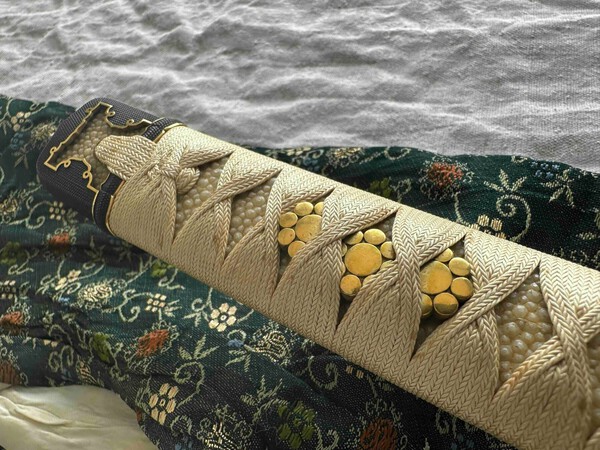
Pretty nice, Piers! I especially like the saya very much. I'm scared of lobsters, so that fuchi is a no-go for me.
-
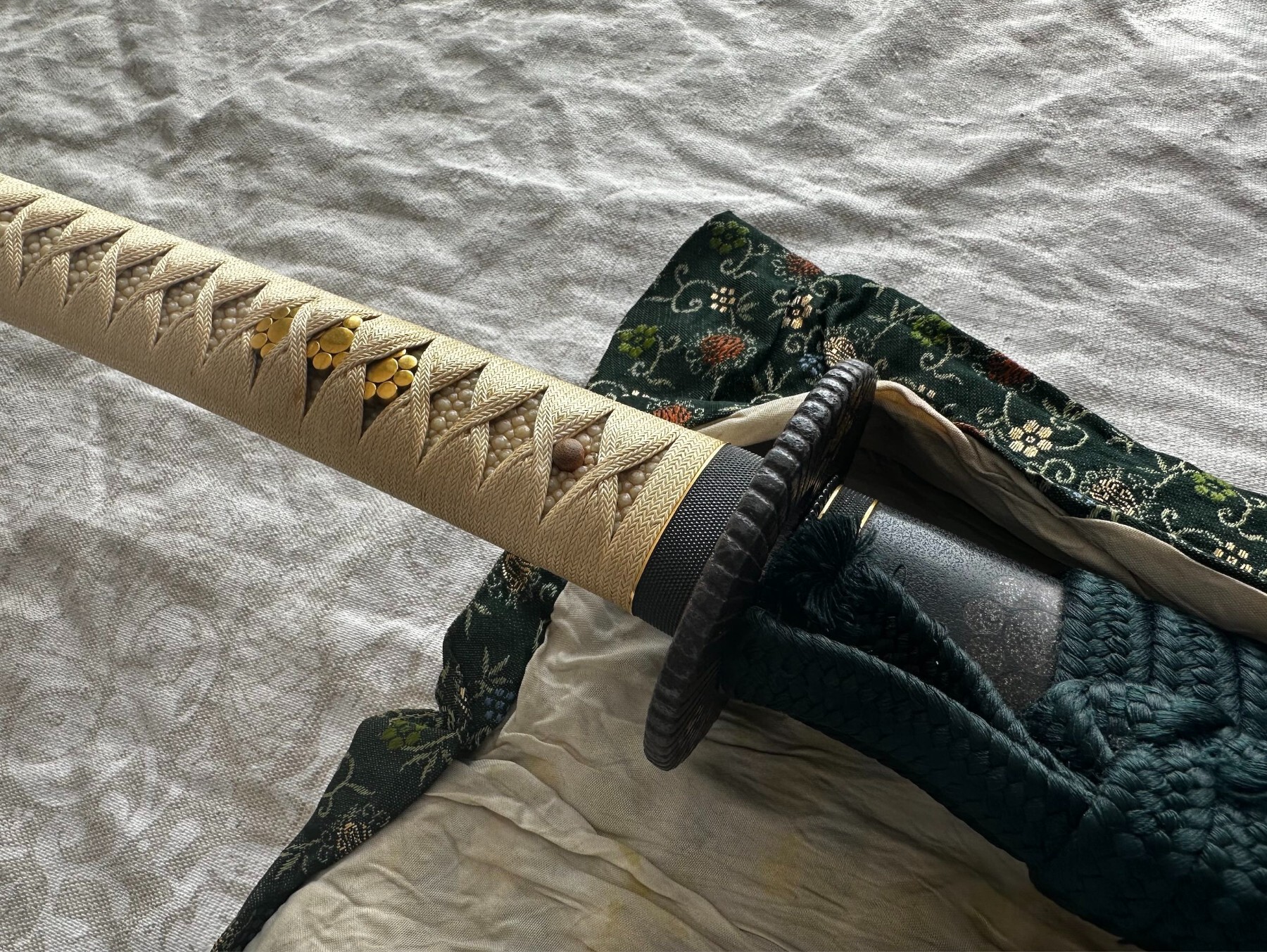
Hi guys, Yet another TH koshirae I would like to share. I acquired it recently, slight chance it might be original to its Sukesada. It has a pretty simple design, but I think that's what makes it elegant.




- 3 replies
-
- 13
-

-

-

-

-
Can you share the picture please? Cause the one you've shared is a screenshot from the ebay link.
-
You don't have to address this, that only one person's opinion is the most significant one when it comes to collecting and studying. I get that you may not afford expensive tsuba on a month to month basis, but some of the beginner collectors might want to wait a couple of months, even years, before making a new purchase... Like most of us do here.
-
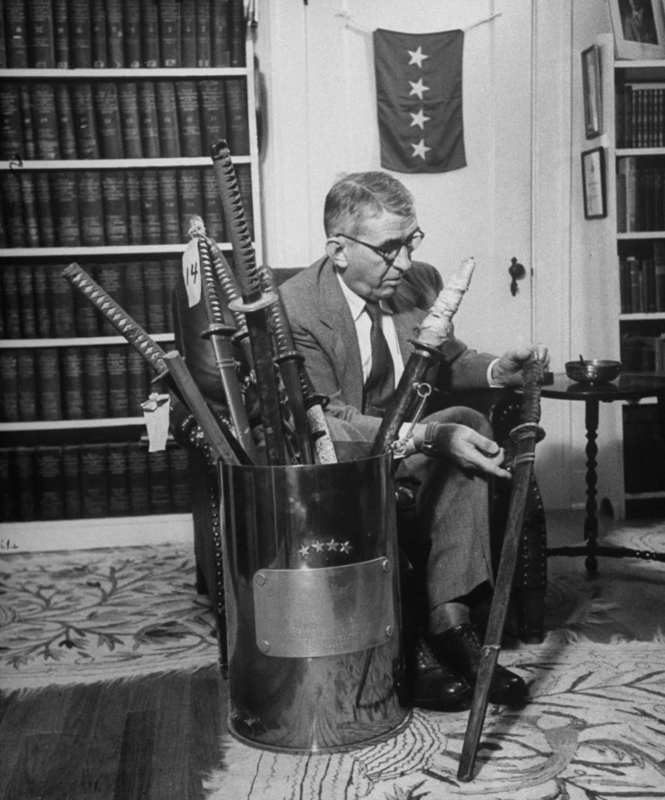
Krueger could have easily kept the Masamune for himself and given Truman a Gunto like MacArthur did to Roosevelt..I think that’s what he was thinking in the first picture.
-
Here’s some excellent advice for new collectors from the late Darcy. Thought I’d share it here in his memory! "For a collector, this small range in valuation differences between the mediocre and great is something that can be taken advantage of, no matter what your spending level, as small increments in valuation give rapidly increasing rewards for rarity, interest, and quality. This is the primary reason why it is a mistake to accumulate large numbers of items, because concentrating the same funds into fewer and more important works yields excellent results in these collecting domains. There has to be a reason to buy something. More than just liking it, because there are a lot of things out there to like and they do deserve being liked. Owning is a different set of criteria however. If you end up with the dreaded accumulation of stuff you will have missed much more interesting paths in exchange for simple quantity. "
-
Not sure if you’ve seen this photo before, but I thought I should share it. This is General Walter Krueger, who presented a Masamune to President Truman.
-
“My friend bought this, and I took a picture of it.” Did you mean, “I found a s**t tsuba on eBay, took a screenshot of it, and am now fooling some idiot forum members so I’ll be the first to buy it in case it’s a treasure? Go ahead, buy it, it's an authentic treasure. Here is the link: https://www.ebay.com/itm/365186018162
-

ROBERT HAYNES
Okan replied to BIG's topic in Sword Shows, Events, Community News and Legislation Issues
Thank you Peter! -
Expert knowledge and experience
Okan replied to Lukrez's topic in General Nihonto Related Discussion
That’s not entirely true. High-quality items are still available in the market; it’s just a matter of knowing where to look. However, their very high prices often make them unaffordable for most collectors. Japanese dealers naturally prioritize their loyal customers. If a Japanese collector is searching for a specific sword or has a focused collection, they’ll be the first to know about it—which is completely normal. Some old collectors don’t even use the Internet, so their business are conducted the old-fashioned way. With that being said, some very high-end Swiss collectors are often among the first to hear about specific swords entering the market. I also disagree with the common saying, “If it were a good sword, it would have been sold in Japan.” Just because a Japanese passes on a particular sword doesn’t mean it’s a bad one. In fact, I’ve seen high-quality swords leave Japan, often worth much more than their perceived value, yet overlooked by Japanese collectors. When buying a sword, thorough research is essential. Since you often don’t have the opportunity to examine the blades in person, it’s crucial to find a dealer you can trust. As you mentioned, some dealers(maybe most of them) may hide some flaws. Always ask if there are any imperfections. If they claim there aren’t but you later discover one, don’t hesitate to address it publicly—start a discussion, post about it on Facebook. It could impact their reputation and hold them accountable. -
Since you asked for an opinion: Mei looks ok(although not perfect), sword itself does not. (I'm not saying it's a bad sword, it's just not Tadayoshi..I've seen quite a few) I wouldn't waste time/money to send it for shinsa as I'm %100 sure that it's been there already. (Japanese dealers are not idiots)
-
Ayanokoji Sadatoshi with TH papers
Okan replied to Gerry's topic in Auctions and Online Sales or Sellers
What happened is exactly as you described @Jussi Ekholm -
@Spartancrest Added some waves..you'll see it better now

-
Looks like he's surfing...
-
It takes roughly a month these days. I just received my export permit today, which was applied for exactly 28 days ago.
-
Perhaps this is a matter best left for the Japanese people to address, as they are the true custodians of their cultural heritage.
-
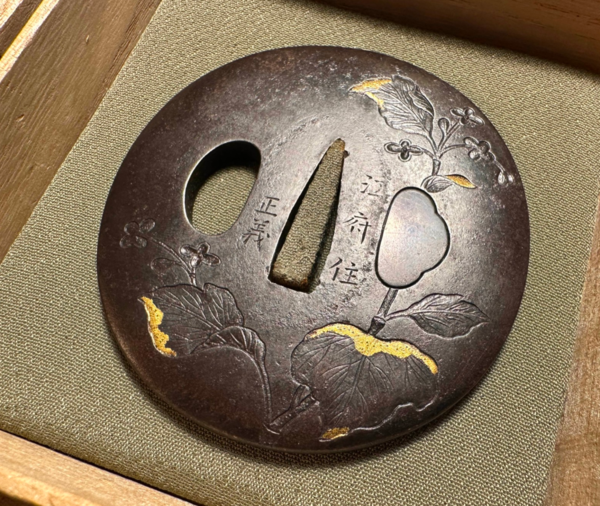
Knotweed...(or maybe Wasabi..who knows.)
-
Hi Simon, It’s most likely a cast tsuba made for tourists in the 1970s-80s. It’s not genuine, but don’t worry—buying a cast piece will help you learn and differentiate between fake and real ones in the future.