kaigunair
-
Posts
732 -
Joined
-
Last visited
-
Days Won
1
Content Type
Profiles
Forums
Events
Store
Downloads
Gallery
Everything posted by kaigunair
-
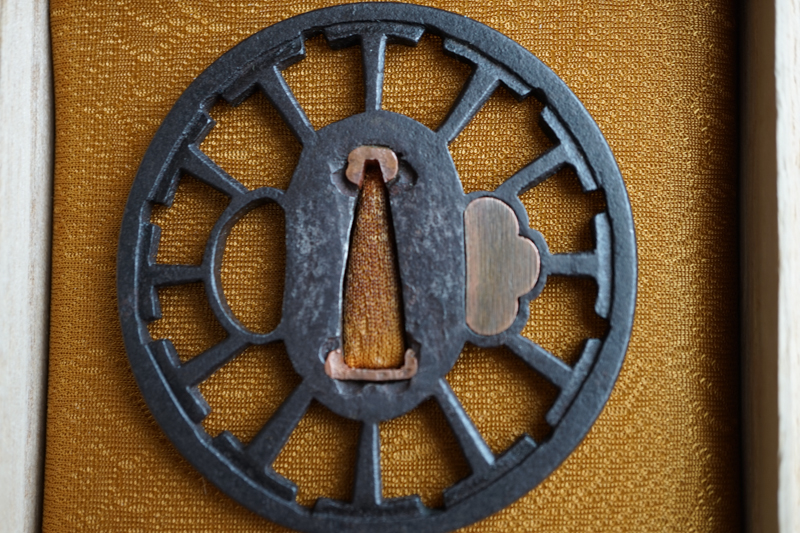
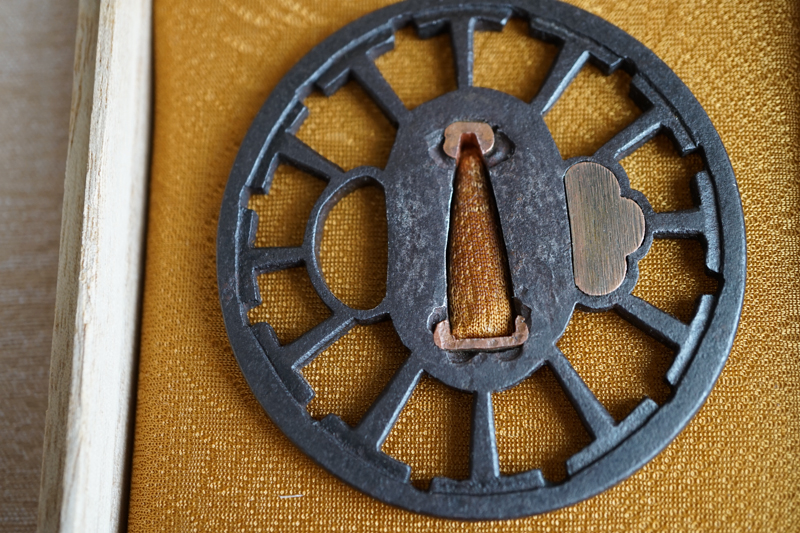
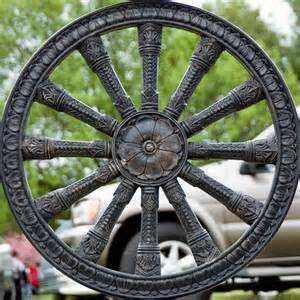
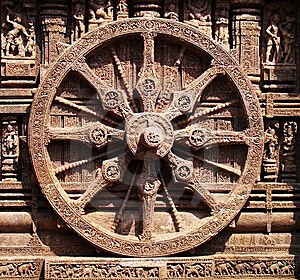
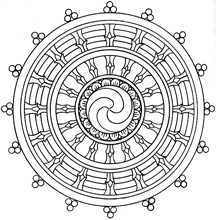
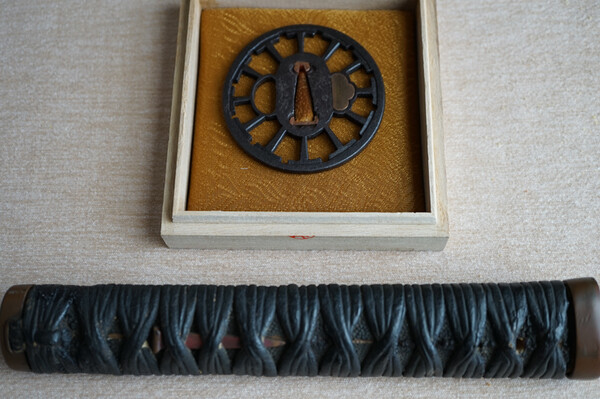
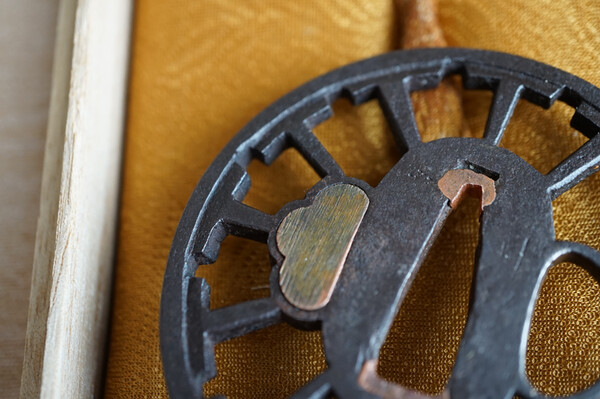
Thanks John. That could definitely be the theme. 12 spokes for the 12 foundations? Any idea of school or possible age?
-
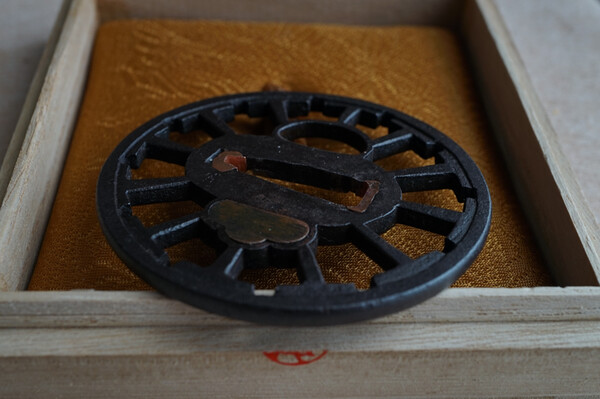
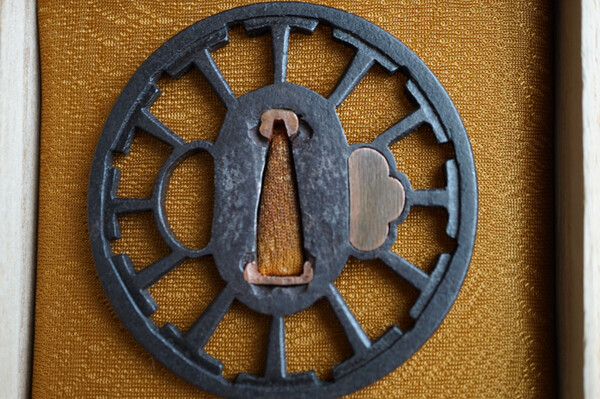
More pics: Have a Good Friday nmb members!


-
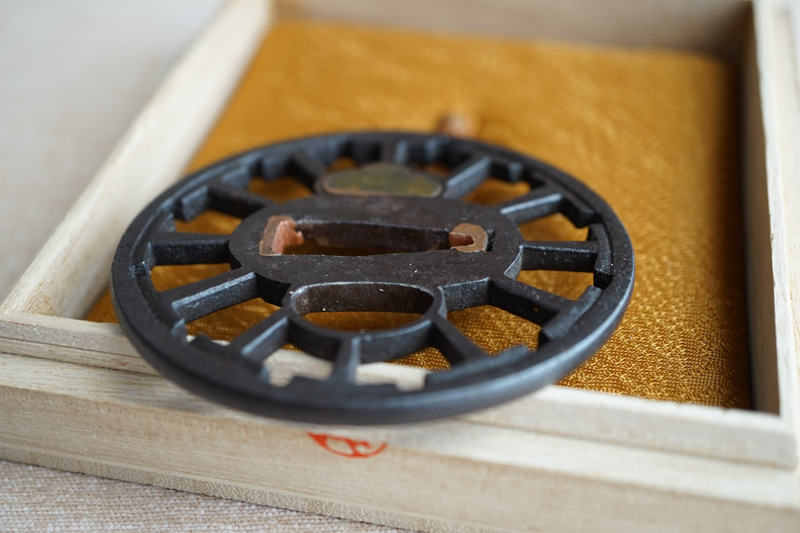
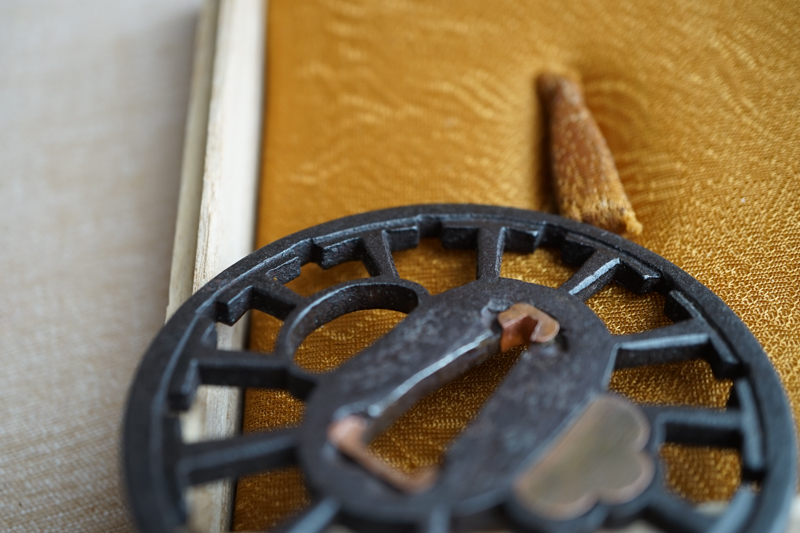
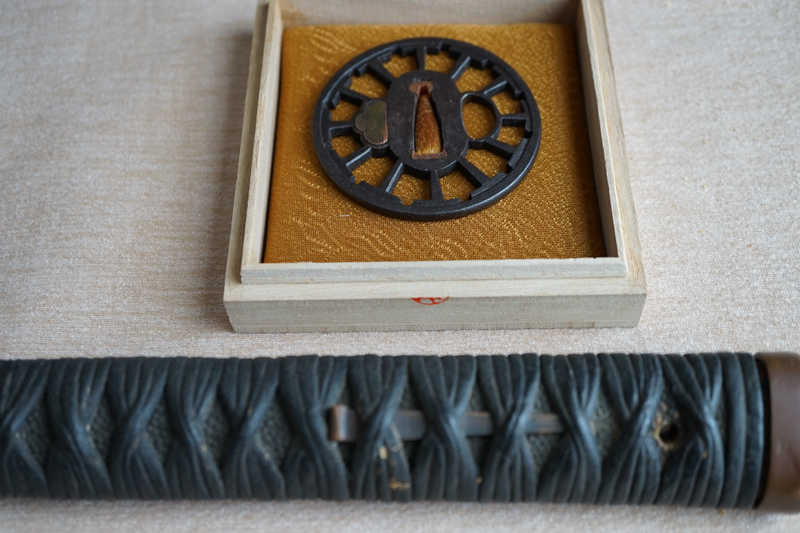
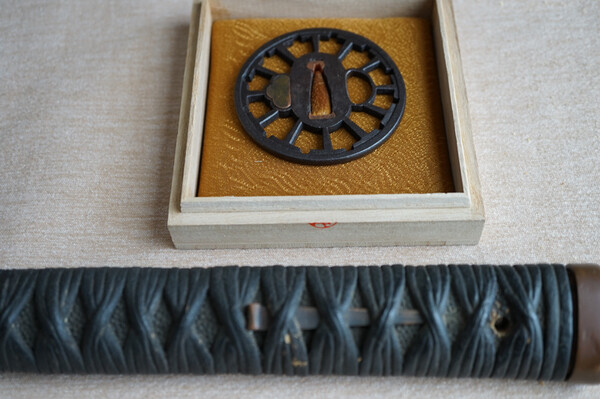
Just received this tsuba in the mail. Yes, a fleebay purchase that was EMS'd from Japan. Yes, I am not a tetsu collector, and so would really love to know whether this is a modern day repro, late meiji hamamono, repatinated, other condition problems I should have picked up on. As a disclaimer, I had been looking for a tsuba with this theme to match a tsuka I picked up a few years back (pictured below). Absent a yamagane/shibuishi version, this was one of the more pleasant designs in iron I've come across. Why was I drawn to the tsuka? Well, the two yamagane menuki interested me. They and the tsuba theme probably represents some connection to construction or carpentry (a Japanese John Henry type reference would be interesting too ). What I'm 99.999% sure it did not represent was anything related to Kakure Krishtians at the time it was made. No please! However, from my perspective, it wouldn't have been such a bad theme to have, if I had been a Kakure Krishtian at the time: the two menuki conveniently aligning with the palm areas of both hand when held. Somewhat of both an outward sign, and inward reminder when the sword was drawn. The age of the tsuka (no idea about the tsuba) would appear to be momoyama/early edo, so somewhat when there was a need to be "hidden". Any assistance on the theme or whether the tsuba is "legit" would be much appreciated. Not even sure what school it falls into... (maybe the tsuba is just a wagon wheel....?) Thanks in advance!


-
For the sake of accuracy, the example painting would be a better lesson in proper restoration, and more appropriate for people wanting to restore their own nihonto (or pay the SF "sword society" or a guy in santa cruz a few hundred buck to do theirs)...*yikes* But what's more troubling is how many people are willing to pay to go and see it! What does it say about a society that loves to rubber neck (or youtube) traffic wrecks?
-
2014 SAN FRANCISCO TOKEN KAI?
kaigunair replied to hxv's topic in Sword Shows, Events, Community News and Legislation Issues
they are usually placed in local restaurants by members. I've also seen them on ebay!? PM me and let's see if we can get you what you need. -
Bonhams 30th April Knightsbridge, London
kaigunair replied to Alex A's topic in Auctions and Online Sales or Sellers
For those not close by, note that shipping is unreasonably steep since they outsource it. Over $220 to ship a few pieces of tosogu last year to the US from London. I think it was $75-$100 for a small item from one coast to another that would be around $10 if purchase from ebay. :x Wouldn't be surprised if they get a cut of the shipping costs. Completely turned me off to their auctions. Given their outrageous shipping costs, I'd only consider the local auctions where I could pick up in person.... Would be nice to set up a NMB network for shipping from these auctions. Since I'm close to one of their auction houses, would be willing to trade services.... -
Medina san, FYI, not all cast tsuba are reproductions & therefore modern. This is actually a topic that has "exploded" a few times on the forum. To keep things short, kinko or soft metal (non-iron) tsuba were known to be cast pre-edo. Some types of Namban tsuba may be considered cast. And maybe some enterprising or backwater tsubakos experimented with casting in their spare time or during times of war. Anyhow, the caveat to the idea that cast = modern should emphasize iron tsuba; make that any desirable iron tsuba from the known schools. That being said, the examples which you are posting which appear iron and cast, combined with their style, are most likely modern copies. It also seems that determining whether something is cast or not is not as easy as you'd think. It looks like you're using flash when photo'ing your tsuba, which will wash out a lot of the all important texture of the iron surface (if it had any in the first place). Try using better ambient lighting or take them outdoors for sunlight to keep the camera flash off. I think there may be a tsuba from your second set that looks cast but might not be if the lighting were better. The artifacts made by a camera's flash really does not help when you're posting for identification. My $0.02...
-
I should be in bed by now but just had to comment on how beautiful the work is. Especially the iris and butterfly. (of course, the two which are NFS... :D ) Hope the move goes well!
-
!
-
its now being hosted by Brian! It is listed in the links -> information http://www.japaneseswordindex.com/nihonto.htm
-
You can goggle urushi to read about the dangers of using the real stuff. Any design would actually be a build up of many layers of urushi, and involve sanding and polishing. The whole process is pretty time intensive, so unless you are using some of the new cashew lacquer stuff, basically you're loosing any study value of this possibly genuine nerikawa tsuba, and putting $ and lots of time towards making a new tsuba. If this is an edo period or older nerikawa tsuba, it still can offer opportunities to learn in this condition...like construction. But looks to be beyond any worthy restoration (designs like the one shown by marisk would also have been done through maki-e techniques on the leather surface), so perhaps it would be better to buy a new tsuba? Maybe sell this one off to cover part of the cost? Else, you probably don't want to play with urushi, so whatever you do would probably be just the same as dipping this in house paint or putting on a layer of ceracote or rustoleum, which would be a little sad....
-
,joking aside, I believe I saw this theme on an iron tsuba on the nihonto.com site a while back. Was listed in the "most expensive" D-category; had two warriors grappling, with the ura side depicting a garden (stone pestle if I recall). Since it sold, doesn't seem to be listed any longer. Was by a Yoshi*? Can't find pictures but maybe someone saved some reference pics... The one on nihonto.com was levels higher in quality and workmanship, but again, I think this indicates this theme might be from a famous story/fight. Edit: thanks to a tip from Barry, found the info on the Tsuba I was describing : Musashibo Benkei and Yoshitsune
-
Welcome. Looks to be a late edo piece. Nice that the ground is iron with brass or possibly copper inlay. Theme seems familiar, but can't recall specifics at the moment. Two warriors fighting / grappling in a pine garden. Skill level wise, on the lower spectrum. But I'd guess genuine and not a Chinese repro.
-
Quick report back. Got to do the set up today. Didn't get as much use as I hoped since it was set up off to the side, but what use it got was positive (or maybe those who thought it was unnecessary didn't bother to let me know ). I did have to assure a few people who asked, that I wasn't taking over Bob McCoy's job, and it wasn't an area set up for photographing (no way I want that job!). One person did use it to help photograph some hard to make out lacquer inscription on an old mirror he brought... People liked the low watt LED lamp and some good comments about the uber bright 300watt halogen. I thought the latter was a bit too powerful. The low watt LED might have approximated the "full moon" idea; more than one of the members mentioned the moonlight was was the best light to see uttsuri. Too bad I don't have such a blade to play with in the moonlight! The kantei blade was used on it toward the end of the meeting, and I believe the 53watt halogen inside a normal bulb fitting was used to get the most out of that blade. It was a nambokucho bizen with what I thought was some sort of ko-gunome/choji under normal lighting but turned out to be kataochi-gunome-midare in suguha. Also had high uttsuri which was hard to see under the normal lighting. I wasn't paying attention when the final smith was released, but it may have been Kanemitsu. One member mentioned it was good to have different lights because different aspects would come out under each type. So if anything, just getting different perspectives on the same blade using different lights was a good thing. Might be a hit at the august show for just such a reason. Tom made a suggestion that perhaps in the future, might want to try different colored lights to see what effect, if any, that might have. Knowing it does nothing would also be, well, something. So I have some research and brainstorming to do. I think it goes up and breaks down fairly easily enough, so hopefully will get a chance to set it up again and get more feedback. Just weighs a lot altogether and I don't usually get close parking! I might try to have two such stations for the august show, but probably with only 2-3 choices versus all 5 options....
-
any links to working videos? seems like all the old ones were taken down...
-
2014 SAN FRANCISCO TOKEN KAI?
kaigunair replied to hxv's topic in Sword Shows, Events, Community News and Legislation Issues
The fliers and discount cards have been out since last month. There will also more than likely be a dedicated table/booth for tosogu and nihonto inspection. Would love to meet any NMB members in person. Feel free PM me if you are looking for restaurant recommendations or other things to see/do in the bay area. -
Away from my books, but by the work itself, it looks pretty convincing! Very nice collection, all three of them.
-
Thanks Henry for the pic and info. Much appreciated.
-
lovely tsuba!
-
#4 might be considered a generic "shippo" (possibly 3 also). Probably dock work/export tsuba, with mid grade shippo work. I'm thinking late edo, even possibly meiji. Theme of #2 (skull) I believe is called nozarashi. sort of an "impermanence of life" idea.
-
Very interesting! I wish I had known more (and what to really examine) when to Hosokawa daimyo exhibit was in town a few years back. What is the theme of the gold menuki?
-
FWIW, since no one else has responded, all three look legit to me. not modern day repros. nakago ana punches seem real, iron too. not quality work, but not fake. I believe the eggplant and mice are good fortune symbols (could be raddish/daikon, maybe a new years theme?). Other two themes may be ginko leaves + dew drops (like musashino plains grass and dew drops), and ginko leaves/ferns/bamboo. some condition problems, but since its iron, some bone work and care could bring back a nicer patina. no idea about prices, but hopefully your friend got them cheap. look at me, talking about iron tsuba...
-
Thanks Ford. Make a lot of sense. I was thinking that perhaps signed Rinsendo examples might have that "something" which set them apart from Kaga works, such as the particular composition of the shibuishi. Since I believe Kaga works were usually unsigned, might be hard to go the other way around for the very reason you pointed out. The Baur mentioned a bluish tinge in the base shibuishi with the Kaga, so I thought perhaps this was a kaga vs rinsendo kantei point... Don't want to rush greatness, but definitely looking forward to Mt. Fuji!
-
Reviving this thread because I found something while going through the baur collection catalogue tonight. There is an example on page 319, D2053 described as rinsendo work with a theme of tanuki and palaquin. However, there is another example on p 252, D359 described as Kaga work. This one states that it is a procession of demons and monstrosities in silhouette, probably part of the "Hundred Demons walking in the evening". Notes a bluish tinge. So my question is: what's the kantei difference between Kaga and Rinsendo works in Sumi-Zogan?