kaigunair
-
Posts
732 -
Joined
-
Last visited
-
Days Won
1
Content Type
Profiles
Forums
Events
Store
Downloads
Gallery
Everything posted by kaigunair
-
The first picture, referred to in the article, is different from the second piece. Definitely had a different kissaki shape. The interest in this new find, esp for the Japanese public, is probably because of the manga reference. I recall that HANAGATANA have tips much like the second picture, almost like a reverse Japanese hatchet blade, and not generally shaped more like a reverse nihonto... Really wish there were more detailed pics of this one, and possibly a professional polish...
-
beautiful piece. love the poem too. thanks for sharing the pics!
-
I still have a few questions regarding ezo tosogu which I can't seem to resolve. Note that I am discussing early period ezo works: Is the current thought that the early ezo menuki fittings shown in this thread were made in the true ezo style and NOT once part of o-yoroi armor that had been repurposed? If the ezo menuki represent true ezo style tosogu, then are there full early koshirae which are not gusoku/armor put togethers (i.e. composed of parts from o-yoroi gusoku that have been repurposed as tosogu)? I'm alittle confused as it seems that most (all?) of the early period ezo koshirae shown were pieced together and therefore from a later time period. Are there any examples of early period ezo kozuka or kogai which are similar in uniqueness to the ezo menuki, and NOT considered o-yoroi/gusoku/armor repurposed pieces? Last Question: Is there any reason to think that at some time in the past, nihonto koshirae were designed to match the gusoku? Like how a kabuto was an accessory to the dou and not a separate piece, is there any older traditions where the koshirae would been seen as an extension of the full armor (vs. just complimenting it like some tiger tail styled koshirae coverings). I wondering if one possibility of ezo koshirae looking similar to o-yoroi parts could be because they were done to match the o-yoroi, not just because they were assembled after the o-yoroi went out of style post mongul invasion... (note: so as we don't get side tracked into a discussion about armor, my understanding about o-yoroi is that originally, most of the armor is made ensuite and matching. Not talking about later put togethers where the family was recycling treasured pieces when upgrading or modernizing, or lower grade armors. )
-
there is an article in Bushido Vol 1, Issue 1 on ezo fittings where the opening of the article talks about the traditional Japanese path to study, as well as the sensei-student relationship. The gist of it is that it would be very difficult for a student come up with an original idea or question the sensei's belief while under his tutelage, and even harder after the sensei's death. The author concludes that being unencumbered by such an upbringing, western students can bring in valuable insights into studies such as nihonto/tosogu. I don't know how true this is, but I've heard somewhat similar type discussions during my studies of ww2 Japanese military technology development and combat techniques, usually related to why the Japan lost...
-
Just saw the wonderful post by Henry. I see that "ezo" fittings is being associated with early tachi. I think this may cause some confusion. Some of the examples are brought up in the Koshirae book by sesko but not in relation with Ezo fittings. (the cup comparison from persia/china/Japan is pretty neat. But I can't really see a strong connection between the ezo menuki theme *I forget name of flower* and the layered leaf design on the persian cup. While the overall shape of the ezo menuki flower is also somewhat similar to the overall "lumpy" shape of the drinking cup, I am thinking that wouldn't be a good basis to say the designs influenced one another.) While ezo fittings are "early" and the idea is that they may be the pre-cursors to ko-mino and ko-goto, I think its important to keep them separate from the other early and more extensively studied styles, such as tachi kanagushi. Maybe because its so easy to group them together, that the study of ezo fittings has been overlooked as a very unique and different style from that of the southern court.....
-
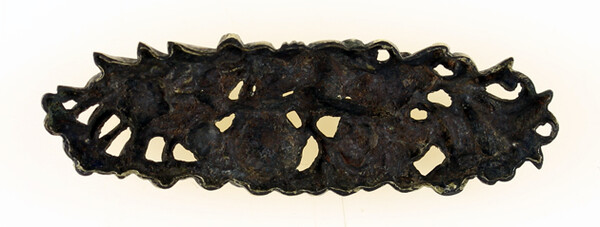
Finished reading through the KTK and the Bushido articles. Prior to Boris' most recent posts, I was about to say the Bushido magazines and the 2009 KTK had the best pics for study. I hope people realize how precious the photos Boris uploaded are! Really, thanks Boris. If I could regurgitate some of what I just read regarding the "outside influence (beyond Japan)" of ezo fittings, the bushido articles make the point that it is a mistake to think that Ezo fitting were of Northern origin. The idea is that when the fujiwara side family took over the northern area including Hiraizumi (from the emishi?) and obtained the wealth from trading gold and other natural resources with them, they used that weath to create nihonto adorned with fittings that included the regional flare. I believe the craftsmen were taken from the southern production areas like kyoto & kamakura. So while the early "ezo" fittings had themes which may have been influenced by the northern honshu area, they were fittings made by non-northern, southern trained craftsmen, with local themes. I'm thinking the question would be more towards how much of Emishi art vs Yamato Court art, at X period in time, reflected one outside source, such as persian metal work or buddhist iconography, at least with regards to discussing "Ezo" fittings (with tachi kanagushi or ko-mino or ko-goto having much less northern influence in the design). I am some what unclear if at some later time when these designs when out of favor, these items were traded Northward, and then at some other later time, when they were traded back, they became known as Ezo as associated with the Northern peoples. I am also unsure how the original origin transmission story tracks with idea that certain ezo fittings were repurposed from the old o-yoroi post-mongolian invasions when that style was no longer ideal for the new "mongolian style" of fighting of mass infantry. Maybe I'm confusing this (or have the time periods mixed up), but perhaps there should be two different "Ezo" categories, one reflecting the early Ezo style that is believed to come out of the Fujiwara conquest of Hiraizumi and a second reflecting the style or actual re-purposing of O-yoroi armor elements into koshirae and tosogu. Or I'm completely off because of information overload and its late . Quick question for ezo fittings: I'm trying to see the "silver sheen" that is supposed to be seen in the early phase of ezo fittings, due to the lack of adequate technology to homogenize the shibuishi mixture. Can someone point that that out in any of the pictures posted? Second question: does the black coloration in the backside of ezo fittings indicate anything?
-
thumbing through a book purchased a while back but alas, not really read through till now: Koshirae Japanese Sword Mountings by Markus Sesko. Some really great info on early mounts. Pics are adequate (black and white scan quality). I know I've seen the photo quality versions in various Japanese publications here and there, but this is probably the most comprehensive English language book I know of (please tell me if there is any other!). Lots to read, so little time....
-
Chinese fakes or Japanese tourist pieces!!! j/k! Thanks so much for the pics Boris. Will read through the Bushido magazine and check if I have the 2008 KTK cat. this weekend. Wow, definitely don't have the eye for the ezo aesthetic in koshirae. Definitely looks like old court tachi mounts, if not the fantasy pieces we see coming out of china at first glance. I am seeing why some members of the local club talk about a Persian or Mongolian connection with nihonto... The education is much appreciated!!!
-
I believe the theme is shoki the Oni slayer. Not sure if the original legend/god myth was developed during the three-kingdom era, but not really a historical character... http://www.onmarkproductions.com/html/shoki.shtml These stamped + cast repros are probably the ones that catch the new collectors off guard. I believe there is an original of this exact design. I've come across ebay auctions where the original, genuine tsuba is picture but I've seen knocks off. When I email the seller in China asking whether I will be sent what is picture or a link to the repro, I'm inevitable told it is one the pictured, but it has been since sold and the auction listing is pulled..... scary. edit: guess this might be real! I would say this borders on hamamono / dock work for export. I'm still not completely sold on it being original, because that patina/verdigris really makes me think artificial aging. But the mouth work and the hair details did/do sorta point towards real....
-
(we really need a thumbs up smiley) very appreciated of the most recent posts. very informative and thought provoking. thanks all!
-
thanks for the additional great info on ezo menuki Boris! turning out to be a very informative thread! thanks for the pic of the hakogaki attributed menuki Bazza - could you post a rear picture? Requests for future examples: 1) please try to post papered/attributed examples for discussion; 2) please post pictures of front and rear. the thread is going great, so hopefully trying to keep it to very good examples of ezo work (preferably pre-edo works), and not devolve into something with tons of fakes or a conglomerate of hard to navigate posts. anyone have nice early ko-mino menuki to share?
-
Looks like ezo menuki from the second phase. Are these papered? (Boris has pointed out that NBTHK papers might not be the best in this area, but still, the idea is that the pieces posted here would have some additional confirmation of authenticity, or we end up with a bunch of photos of really unrepresentative pieces, like the flower kozuka posted a little while back....)
-
Antti, I think you're the exact person to write this article! You have listed quite a few of the aspects on your most recent post for such a post. As one neophyte to another, its because you're looking for this specific info, that you've been focused on this question about Chinese fakes and are aware what the most common pitfalls are. Therefore, you can write about it. You've already compiled photos, and I'm sure for each of the photos, there are characteristics which you've committed to memory that indicate its a fake. More experienced collectors probably don't even think about those since its second nature to them. What the forum could do is PIN your article up to the top of the tosogu section, which would help those looking for "how to spot a fake tsuba from china". Just make sure "Fake" and "Tsuba" and "China", "Chinese" and Japanese Sword Guard" is on the topic title. It would be easier for the more experienced members to chime in and add corrections to your initial article through posts, and which you can incorporate into your original post. I think you'd come up with an excellent post/article on how to spot fake chinese tsuba. Your concerns about lack of experience might be more apropos if the article started to stray into the gimie signature area, but that's not dealing with Chinese fakes...
-
How I wish there was such a "course" available at the local college or even nihonto club! Problem is, hard for neophytes to know who are the local "professionals" when there are no such certifications. the NMB Board is a great source locating such persons because you can at least read through past posts. But it also would also be hard for anyone just reading through the forum to feel there was anyone qualified, given the level of critiques and comments regarding certifying organizations such as the NBTHK and NTHK, as well as the "mistakes" made and pointed out in the forum by the giants in the collecting fields, as found in their books and writings. Like the deference given to the teaching doctors, those studying under them must give them great deference for the knowledge and skills imparted in their fields, but I'm also sure the "student" doctors also know their mentors are human, having preferences and opinions, and prone to the occasional mistake. Its sad that it is often the lack of such respect shown during nihonto forum "consultations", especially among the "professionals" to on another, that pushes the more knowledgeable away. Yes, there are some fakes/frauds/uninformed or plain bad apples that should be unmasked and exposed for the falsehood they perpetuate, but probably not nearly as many as we think we see.... Oh, and regarding Chinese fakes, once they get to a high level of reproduction, they absolutely have a chilling effect on the level of collecting as well as value of the real stuff...
-
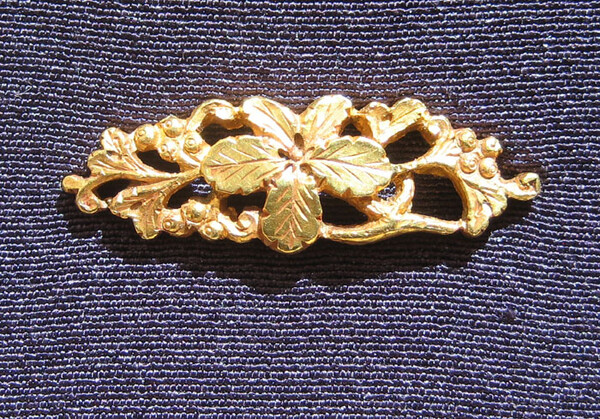
Another example of ko mino in gold from curran:
-
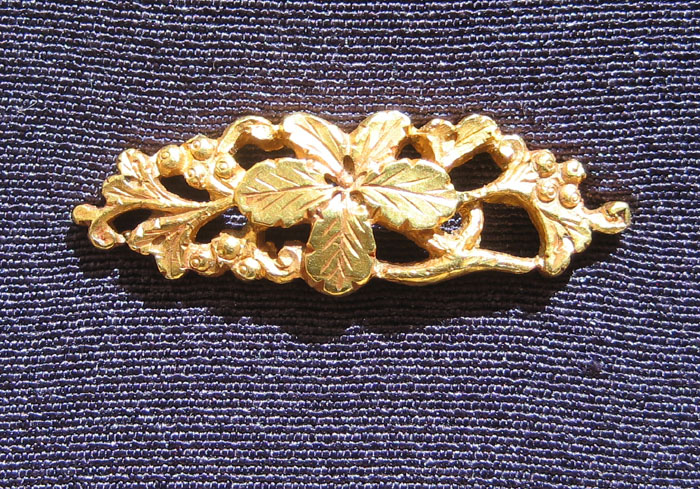
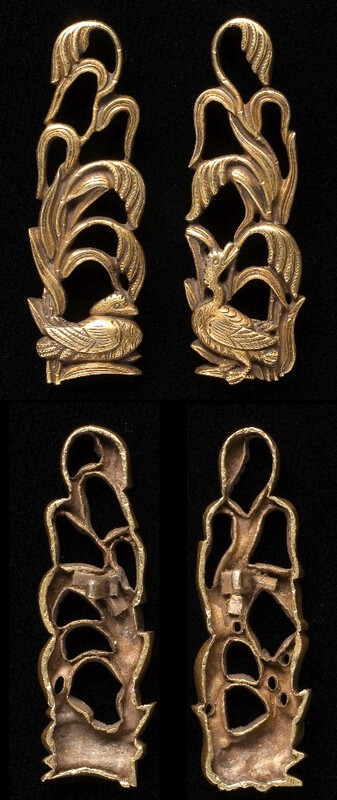
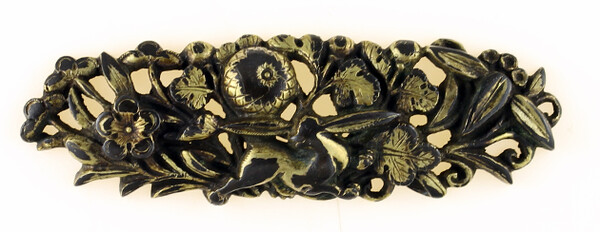
Pics of Ko Mino and Ezo: Ko Mino (39.2mm, JPY450,000 Ginza Choshuya 2008): Ezo (54mm x 17mm, JPY 750,000 Tsuruginoya 2014):
-
Wanted to create a possible reference thread for early fittings, so here's one on early menuki. Hopefully the selection of informative quotes and papered examples is helpful in this area of study: Ezo fittings: 1st Phase vs. Second Phase: Links: Ko Mino Info: http://home.earthlink.net/~jggilbert/kodogu.htm Ezo info: http://kodogunosekai.com/2009/04/10/ezo ... %E8%B2%AB/ NBTHK Juyo Ezo: http://tsuruginoya.com/mn1_3/b00114.html Tosogucollection website: http://tosogucollection.com/2013/05/06/ ... of-shishi/ Literature: KOKUSAI TOSOGU KAI, 2008 INTERNATIONAL CONVENTION, Nick NAKAMURA et al (2008), "Ezo Tosogu - An Enigmatic Group of Early Fittings" by Boris Markhasin
-
I'm a new member but I have been attending the monthly meetings and everyone is very approachable. That being said, I don't want to stir any pots that don't need stirring... Please keep the ideas coming for layout or items of such a tosogu exam booth. I know that the hotel charged the Nthk shinsa team a daily rate of something like $30+ for just a simple easel for a sign. I don't think I will be approaching the hotel to rent anything. I definitely don't want the booth to be a bother to adjacent vendors, but being in the hall vs in adjacent room would be nicer as it would out it in the "thick of things". Guess we'll see how this pans out.
-
Keep the ideas coming (though pm is ok too). I wanted to make sure I have a well throughout and complete plan before buying a table. Fred already has more than enough on his plate so let's keep it to things I can possible do as a table holder and plan from there. Extension chords and maybe some sort of booth covering are all good ideas to consider and easily borrowed. I've seen led lamps at craft stores but might be costly for several; I'm not sure I like battery powered ones if they will see a lot of use but supposedly Costco carries them so I will check. Pm me if you have a portable video microscope or video projector. My LCD monitor is about 22". (The hotel might have a large screen LCD on wheels, but I'm positive there would be a significant charge to use it)...
-
Wow, thanks rkg for the info! I've had similar thoughts during club meetings and while walking around the august show. It's a bit much for someone not really interested in selling a lot, but I may just have to put up for a table at the next show in August to bring my stereoscope and perhaps a modest camera/LCD screen set up. Maybe lug some of the reference books too and it's the beginnings of a "tosogu corner" club booth. If you plan to attend the august show, maybe pm me about equipment ideas for such an examination booth (or other items) and perhaps I can try to scrounge around or coordinate an equipment "potluck" among attendees. Maybe this is the year I can help make it happen... Maybe a pocket projector against a back wall would be better than a 20" LCD screen...
-
Pete, ah! Thank you for the info on shibuishi base of ezo menuki's! Makes sense that similar type wear in ko mino might indicate a relationship between the schools. Fascinating!
-
maybe Matsuyama ikko? (looks like a pretty stylized signature, and the poor level of focus doesn't help....)
-
I believe the lobster and grass decoration are symbols for New Years (or more generally for good luck or for a merry celebration). Couldn't locate the official name of the type of decoration, but a modern day example:
-
:D (couldn't find a b-day cake smilie) Here's a photo pulled from the 'net of a set up identical to mine. The black circle on the viewing head is where I've seen the models with CCD or camera attachments go. Its a beast, but thankfully I have a large desk and it makes me feel "serious about tosogu" when I see it. A kind member PM'd me some low cost digital magnifiers...might be a good option, since those extra pieces I'm looking for might cost me many multiples of what I paid for the whole thing. Anyone have a good sized x-y table/sled lying around?

-
Thanks Curran! :D Very helpful post...and its helping to drop (or at least jostle) the scales from my eyes, so to speak. Thanks so much for the example and explanation. Imagining the lovely posted menuki's depth from your description, I see the need for another parallel with nihonto: a set of photograph techniques or guidelines, like those created to properly photo the details of nihonto jigane and hada. The photo posted is a very good macro shot, but definitely can't feel the depth perspective. (No disrespect intended I have minimal photography knowledge; only recently by moving from cellphone cameras and point & shoot canons, to a sony NEX with zeiss glass did terms like "depth", "bokeh" as well as the importance of aperture control become meaningful and "real" to me). Speaking of magnification for tosogu study: I recently got back a lab grade stereoscope (found off the local craigslist for practically nothing). Being able to zoom in on individual nanako is pretty amazing, as is seeing specs of pollen stuck in between crevices. I hope can find the parts on ebay for the ccd or camera attachment so I can take photos of what I'm seeing! Lugging the thing to the club meetings each month would be a bear, but I am seriously thinking about trying to set it up at the August show. At the same time, this is still only looking at the "surface", and not taking in the full sum-of-parts (i.e. historical and artistic significance ) , the latter of which I am only beginning to understand by studying examples like these Juyo with assistance of the NMB community. Thanks much.