Brano
-
Posts
573 -
Joined
-
Last visited
-
Days Won
6
Content Type
Profiles
Forums
Events
Store
Downloads
Gallery
Everything posted by Brano
-
Yes - it's almost certainly a umegane Remember, the blade passed through Juyo over 50 years ago Anything could have happened in that long of a time
-

Possible Paul Martin National Treasure Sword Book
Brano replied to ckaiserca's topic in General Nihonto Related Discussion
I wrote to Paul two days ago via Messenger to confirm if he is actually planning new HiRes photos or if he will use the existing photos and make a new book from them No response from him -
I totally agree with you Jacques However, the reality is that access to studying the blade in hand is very limited Just look at our European collectors (and not only them) Many don't even share photos of their collections - including you Not to allow the study of their blades in hand Great photos or video are not the same as a blade in hand However, they can please the eye of a nihonto enthusiast
-
Regarding Soshu Den Meisaku Shu
Brano replied to Dealwizard22's topic in General Nihonto Related Discussion
Also - since many Japanese booksellers do not ship overseas, Buyee often offers to purchase through them and then ship anywhere in the world -
I hope this isn't against the rules Here is a better translation of setsumei for this blade: 45th Juyo Token Katana Mumei Unjū Heisei 11 Designated: October 29 Measurements Nagasa: 69.4 cm Sori: 1.8 cm Moto Haba: 3.1 cm Saki Haba: 2.3 cm Kissaki length: 4.3 cm Nakago length: 18.3 cm Nakago sori: 0.1 cm Description Sugata: Shinogi zukuri, Ihori Mune, wide Mihaba, with sori, and an extended Chu-kissaki. Kitae: Itame mixed with mokume, with ji nie attached, chikei well entering, mixed with jifu, with midare utsuri standing, and in places streak-like utsuri standing, giving a dan utsuri-like appearance. Hamon: Suguba, with slight ko-ashi entering, ko-nie well attached, kinsuji entering, and with a slight nijuba appearing around the mono uchi area. Boshi: Straight, returning in ko-maru at the tip. Nakago: O SURIAGE, tip KIRI, yasurime KIRI, two mekugi ana, MUMEI. Artisan Swordsmiths such as Unshō, Unji, and Unjū resided in Ukan-shō of Bizen Province, and because in later times “Ukan” was also written as “Ukai,” this group is called the Ukan school, or alternatively Ukai-mono; moreover, because their names bear the character “Un,” they are also referred to as Unrui. Era mid-Nanbokucho period Explanation Their workmanship shows a style somewhat different from contemporary Bizen works, and has the flavor of the Rai school of Kyoto and the Aoe school of Bitchū, making them distinctive. This blade presents a grand Sugata, with wide Mihaba, sori, and an extended Chu-kissaki; the Kitae is Itame mixed with mokume with chikei entering, the utsuri is midare utsuri with, in places, streak-like utsuri standing to create a dan utsuri-like appearance, and the Hamon is Suguba with ko-ashi entering and a slight nijuba appearing, so that the characteristics of the Unrui group, in which Kyoto character and Aoe style are intermingled, are well expressed. From the above robust appearance, it is appraised as Unjū of the mid-Nanbokucho period, and with both ji and ha being healthy, it is an outstanding work even among blades appraised as Unjū.
-
Supreme sword country Bizen sold For sale - Gokaden no Tabi by Tanobe Michihiro ( original Japanese ): set of 3 books - Yamato Den, Yamashiro Den, Bizen Den ... 90 EUR ... 60 EUR
-
Sa Yoshisada versus Den Iwato Ichimonji
Brano replied to Elias6677's topic in General Nihonto Related Discussion
Without good relationships, you won't see 10 TJs on the table even at the best dealer in Tokyo Probably not one Utrecht is honestly mostly about average quality blades But it's an opportunity to see dozens of blades in one place and start training his collector's eye. Elias is in a euphoric state where he is willing to spend a significant amount for average Juyo level blades I also think he would do best not to rush and if he has the opportunity to travel to Utrecht, let him do it - not to buy anything. It's only a few hundred kilometers from Germany and the atmosphere is much more homely compared to DTI -
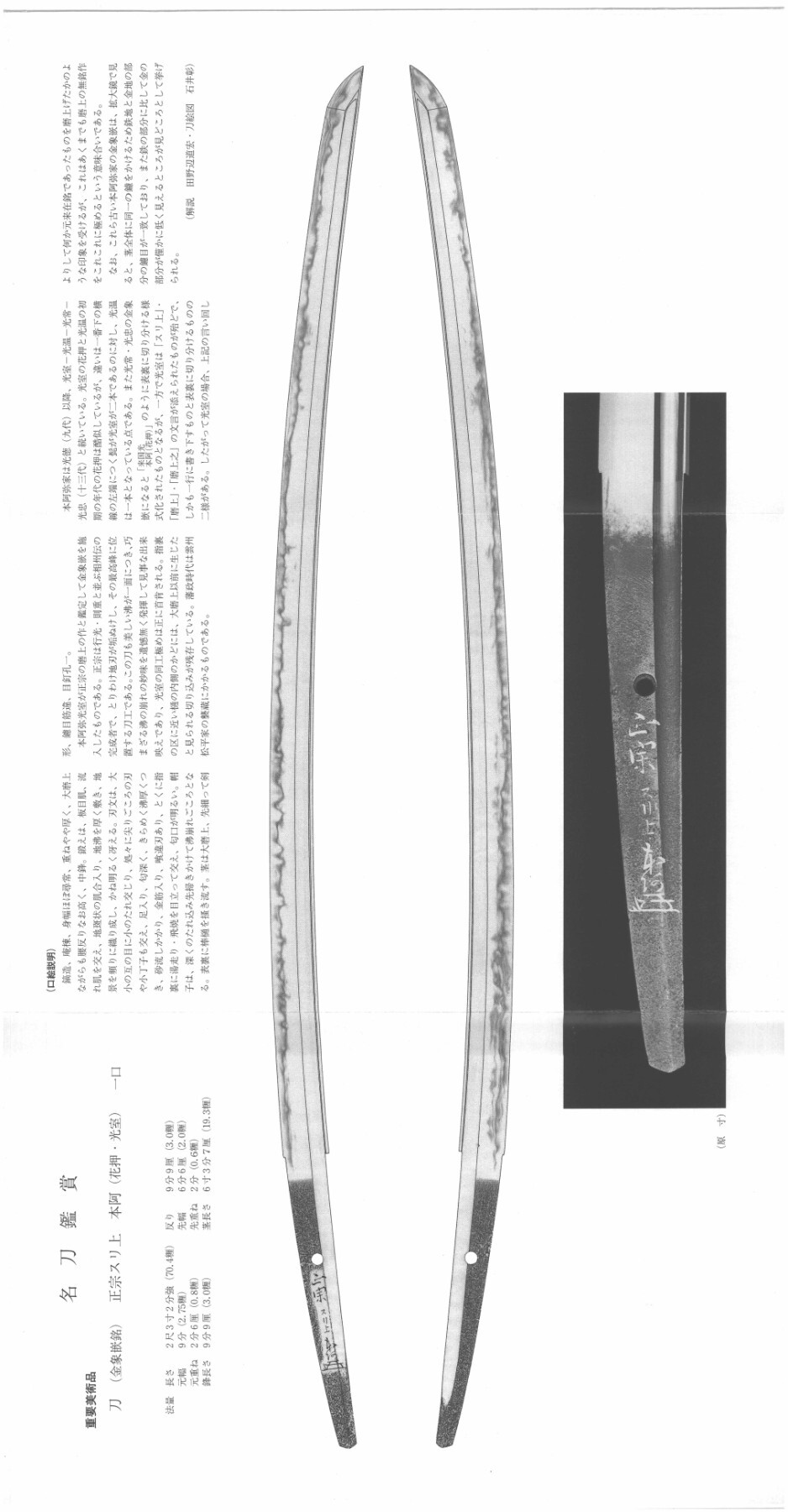
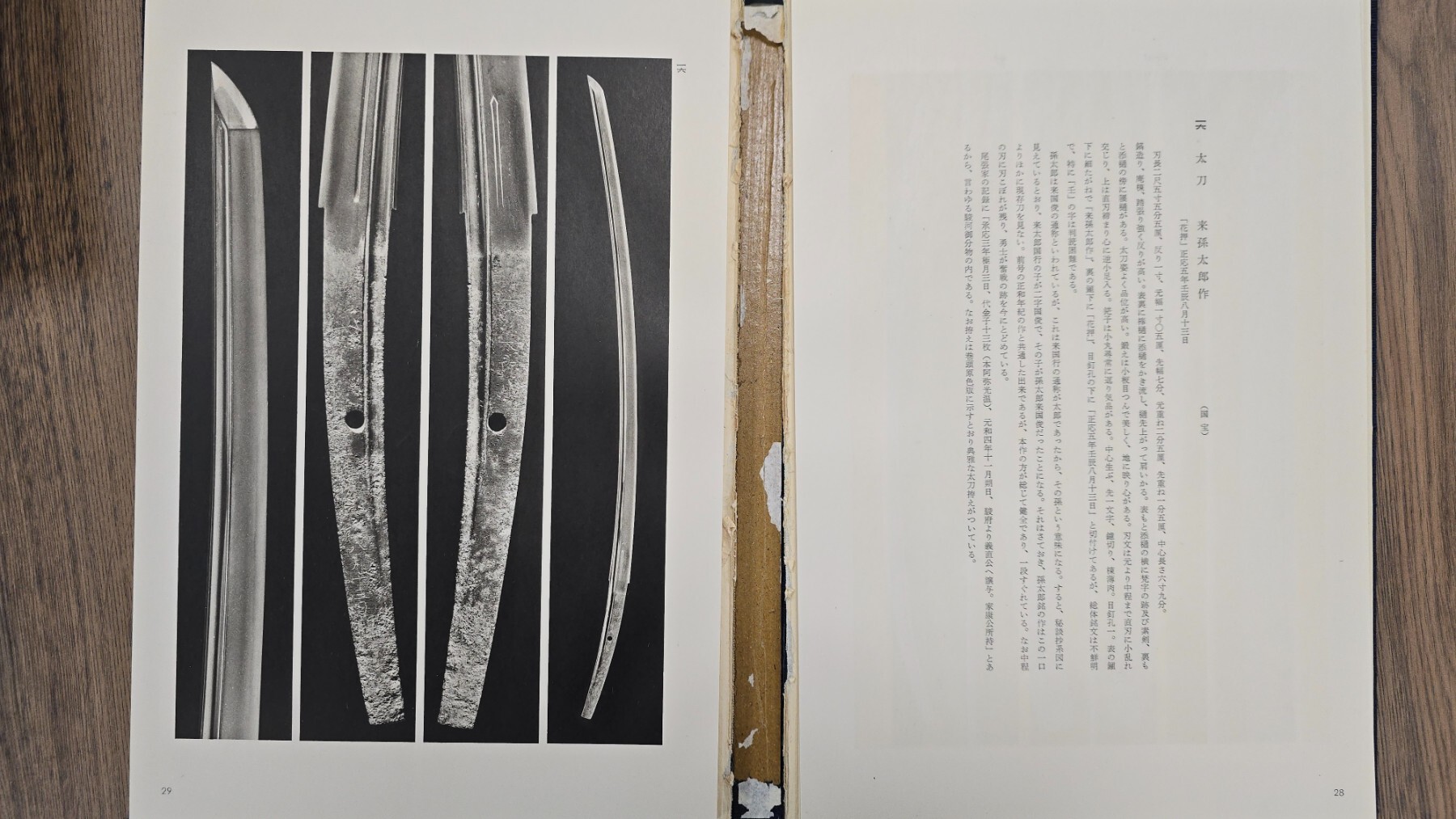
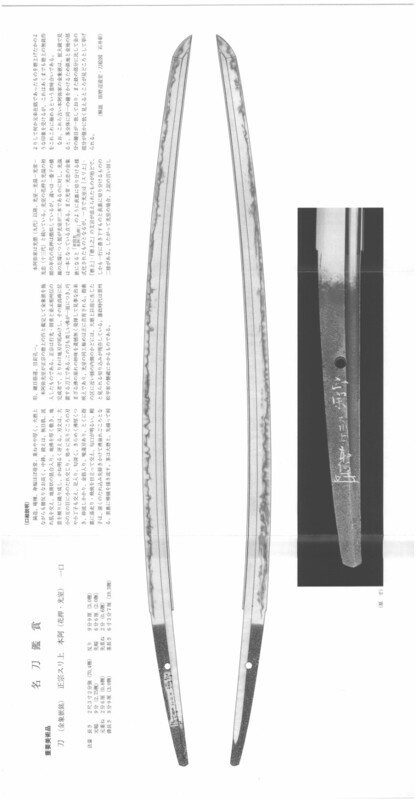
It is this JuBi Masamune However, we must realize that the blade is an o-suriage and we do not know its original length, which was also adapted to the kasane.
-
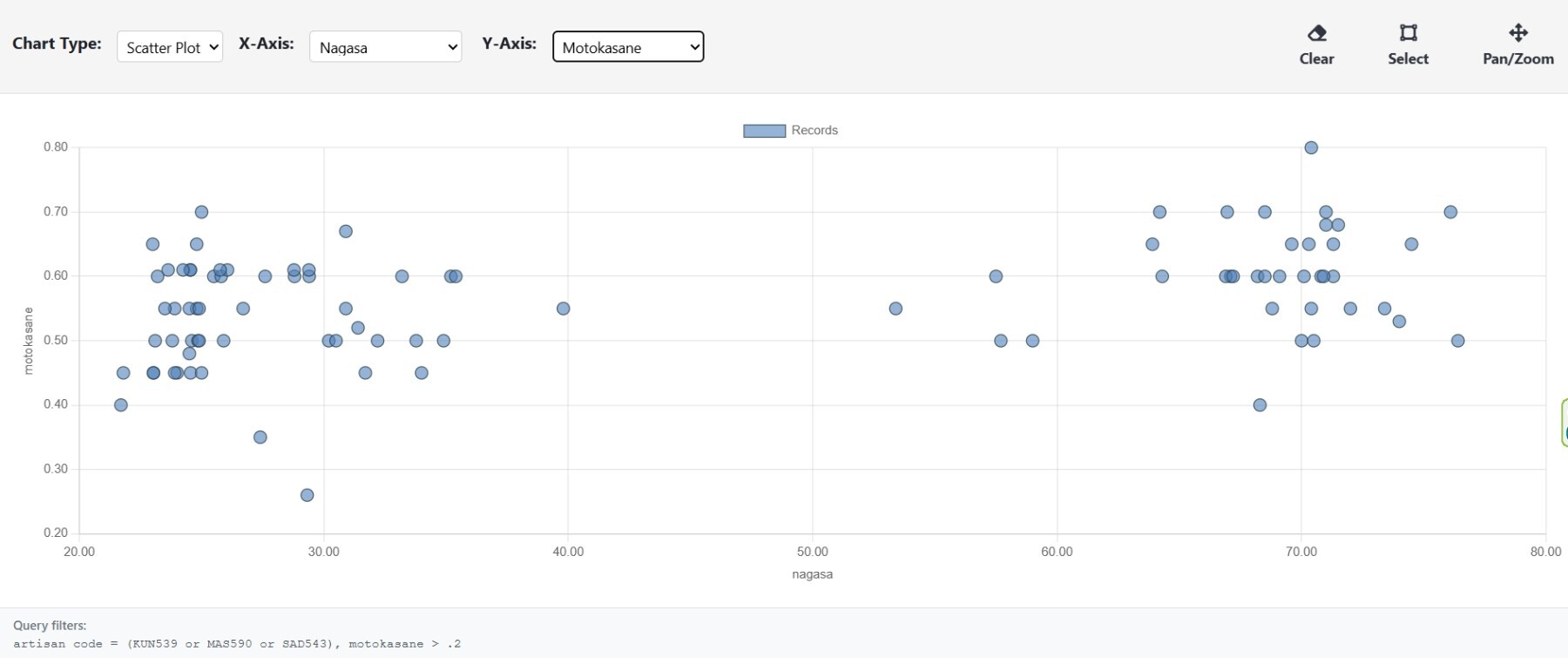
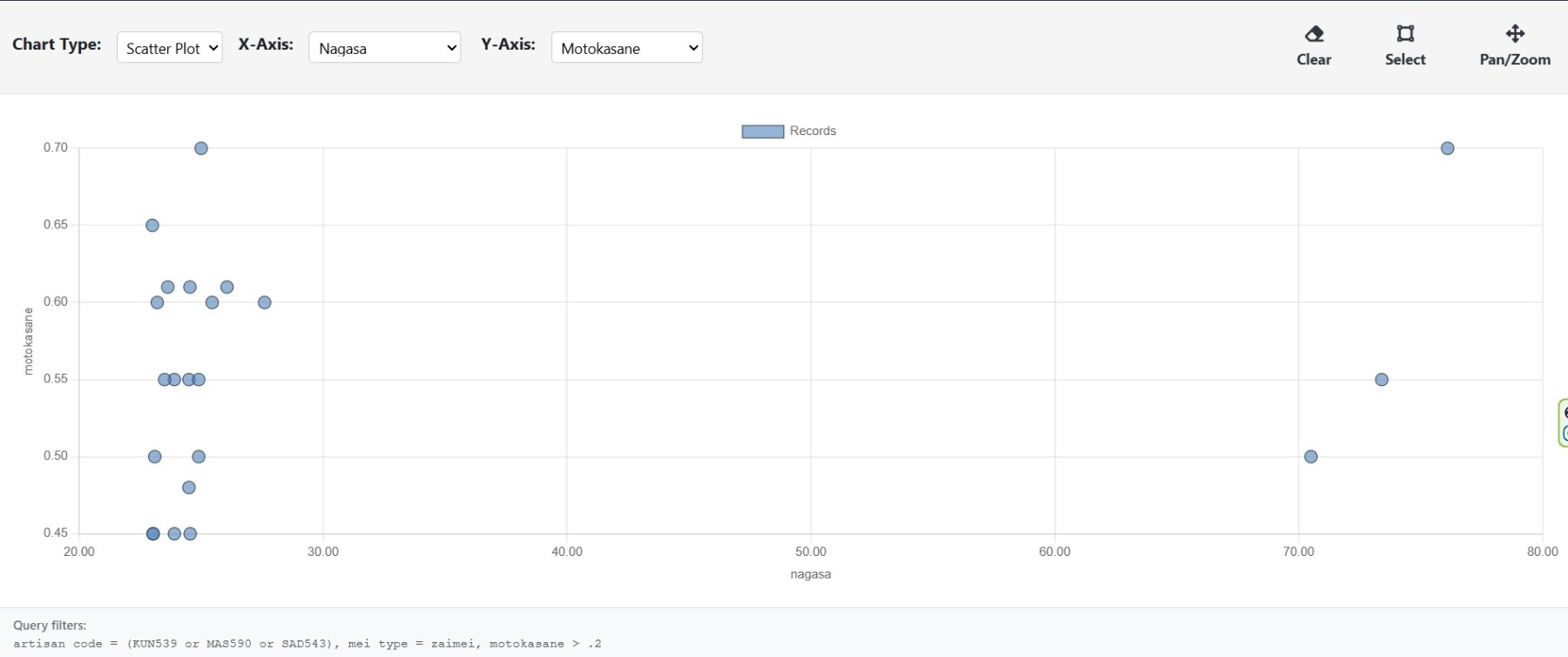
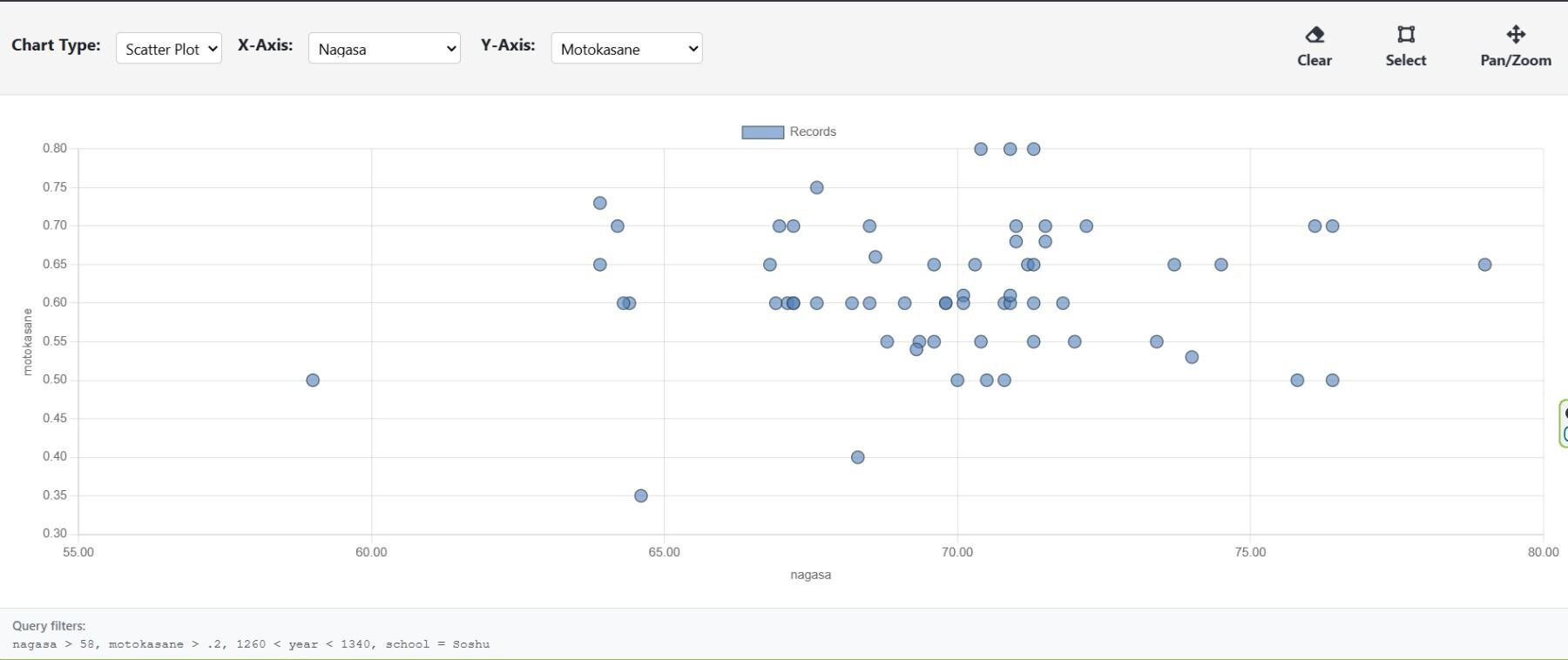
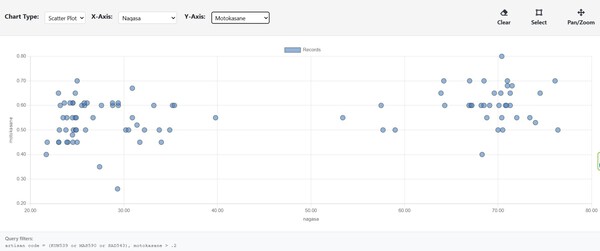
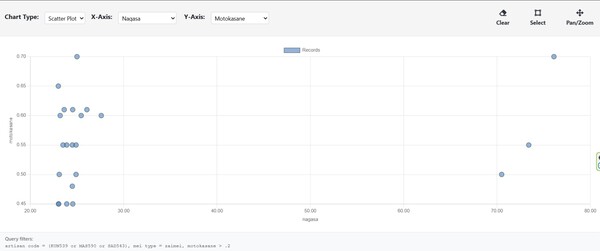
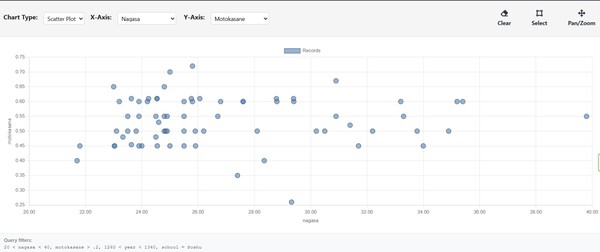
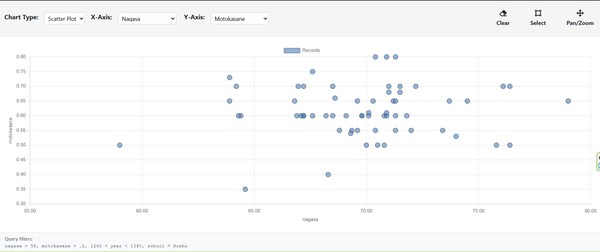
Same goes for Yukimitsu... Here are the data reduced for Shintogo, Masamune and Sadamune All blades vs. zaimei
-
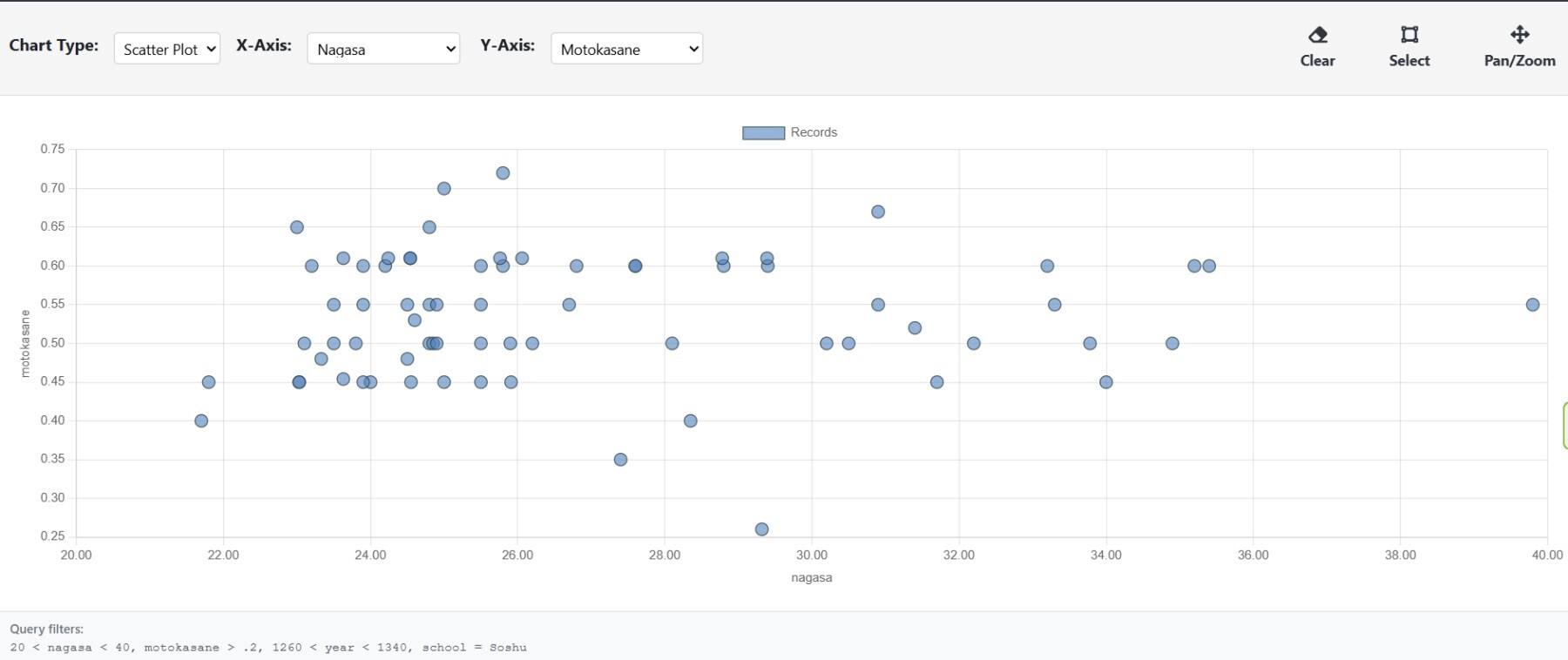
Here you are Time span to 1340, Soshu school Short blades separately and long blades separately
-
Just as an example JuBun Fukuoka-Ichimonji Tachi ubu nagasa 77.1cm and motokasane 0.6 / Sakikasane 0.3 I would take it without a second thought

-
Here is a graph of the ubu Tachi for the Ichimonji school and blades from the time period ca.1200 to 1300 I have kasane data for 46 blades in total, almost all of them are important blades with goverment designation This Tachi is relatively short, so a 6mm kasane is fine in my opinion

-
Even from such a poor quality photo it is clear that the blade is in unusually good condition for a Kamakura blade, which is clearly visible in the shape of the nakago and the moto area Therefore the price also takes into account the exceptional condition of this blade - just my opinion
-
What does mukansa have in common with full education and training from a traditional togishi? ( BTW - such education takes 5 years or more )
-
Honjo Masamune found!! (well almost... maybe)
Brano replied to Adrian S's topic in General Nihonto Related Discussion
Another blade without a designation is the Sozui Masamune which is part of the Imperial collection.
-
2. Masamune no Sono ( 1961 ) sold
-
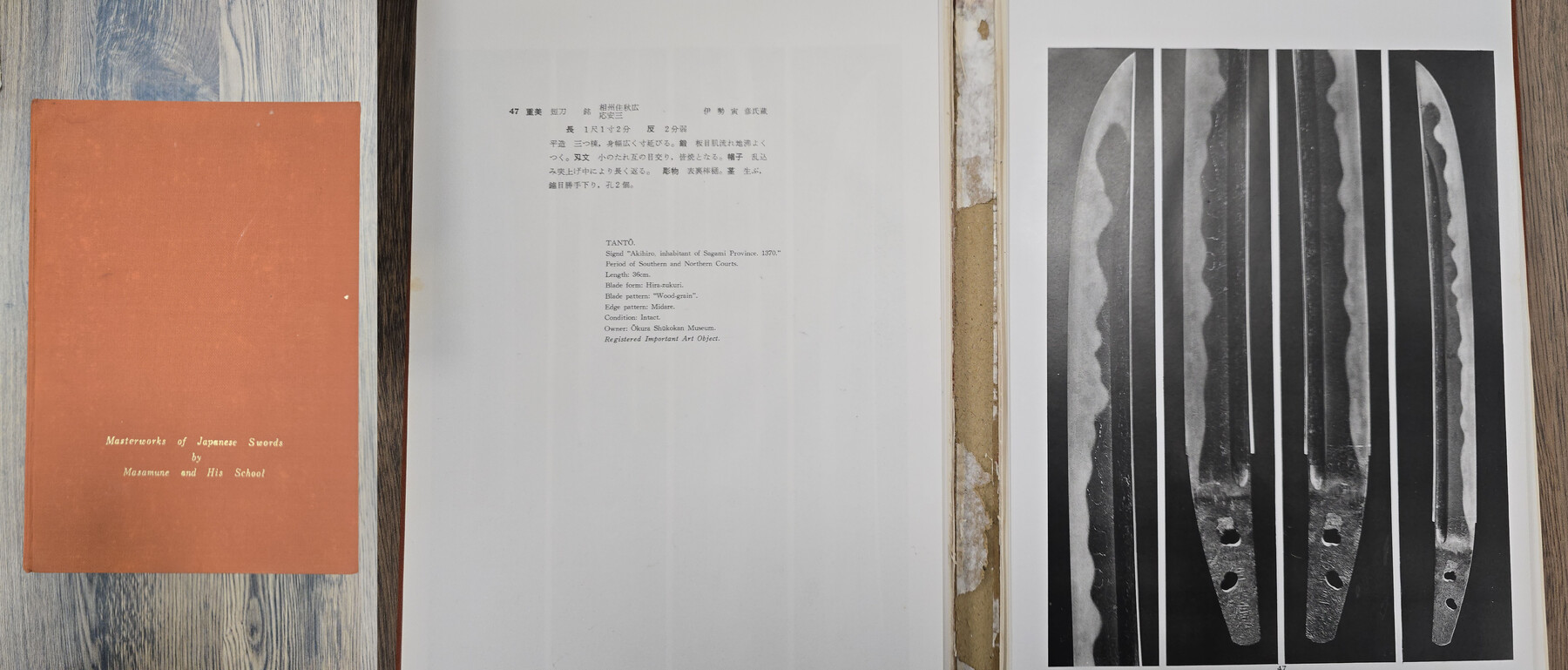
I am offering for sale a few more books that have been digitized ALL BOOKS HAVE CUT BOOKBINDINGS (outer cover is intact) 1. Reimeikai Meitō Zuroku (1960) - Tokugawa museum of Art, selection from the collection, 100 blades. The best of the Tokugawa collection, Japanese, B4 format ... 100,- EUR 2. Masamune no Sono ( 1961 ), book published on the occasion of the Masamune no Sono Ichimon exhibition in 1961, 96 blades. Undoubtedly the best Masamune exhibition ever. Japanese/English, B4 format ... 90,- EUR 3. Meito Shubi ( 1948 ), 152 blades. The best of Nihonto. This is exactly one of those books where you can see blades in polish that are lost forever. Japanese, B4 format ...80,- EUR 4. Imperial collection oshigata. Consists of Koto part (242 blades) and Shinto part (88 blades). Japanese, B4 format ... 120,- EUR 5. Kurokawa Institute of Ancient Cultures, 111 blades. Japanese, B4 format ... 90,- EUR 6. Nihonto Taikan VI - Tsuba/ Kodogu part. 675 items. Japanese, B4 format ... 120,- EUR 7. Encyclopedia of National Treasures and Important Cultural Properties 6 - Crafts part. The book contains all items with Juyo Bunkazai and Kokuho status. 909 items for the Nihonto part. This book is really rarely for sale Japanese, A4 format ... 140,- EUR Photos follow the order of the books Shipped from Slovakia + postage ( + PP fee )


- 1 reply
-
- 1
-

-
Japanese Regulations regarding export
Brano replied to Leigh's topic in General Nihonto Related Discussion
... In addition - the Japanese seller will offer 60-70% of the market price. Which is logical, because he is a businessman. In addition, it is necessary to add the cost of shipping and the fee for the import permit If your sword is not designed as a Juyo Bunkazai (Important Cultural Property) or Kokuho (National Treasure) then there is no need to worry about not getting your treasure back. -
The power of a good polish...
Brano replied to MassiveMoonHeh's topic in General Nihonto Related Discussion
Can you please tell us more about this blade Kirill? Ha with nagare in Soshu-den Tight ko-itame in Ji - but I don't see ko-nie or chikei I would say it's a later blade than the Sadamune period -
The power of a good polish...
Brano replied to MassiveMoonHeh's topic in General Nihonto Related Discussion
If it is an engraving, then the patina in the mon engraving looks similar to the surrounding area In addition, I would assume that the original location was in the habaki area
-
The power of a good polish...
Brano replied to MassiveMoonHeh's topic in General Nihonto Related Discussion
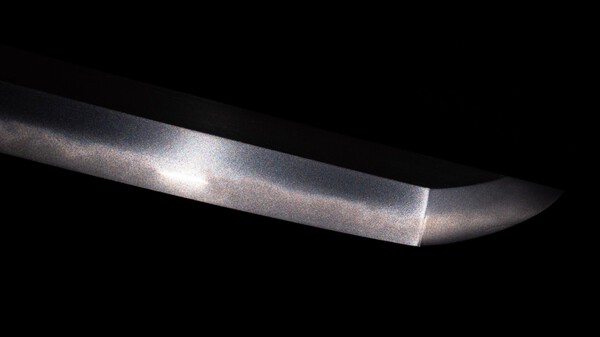
Just for you Kirill NBM has a limit for image size Despite the fact that I resize it under 1MB, the uploaded image is compressed Here you can find Kikko Sadamune in HiRes scans https://eu.zonerama.com/Nihonto/Album/15049121?secret=1W37te8is5MJ7Ai7XC0x8c4w5#check-duplicates @Jussi Ekholm I saw this blade at TNM during the Kokuho 150th anniversary exhibition and I have to say that it looked humdrum through the glass for me -
The power of a good polish...
Brano replied to MassiveMoonHeh's topic in General Nihonto Related Discussion
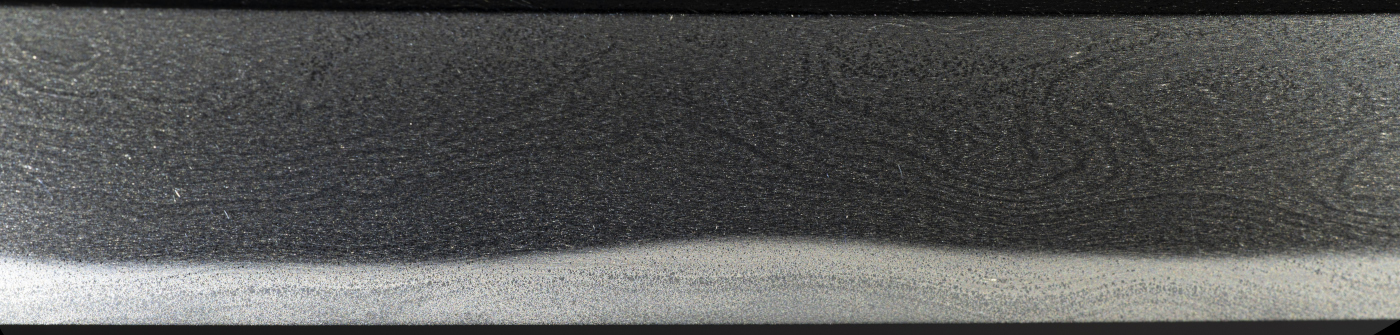
I have several blades in my collection that have been polished in the Takeya Sashikomi shiage style (traditional Sashikomi). I assure you that the reflection of the martensitic structures is unmatched.

- 34 replies
-
- 10
-
-

-
The power of a good polish...
Brano replied to MassiveMoonHeh's topic in General Nihonto Related Discussion
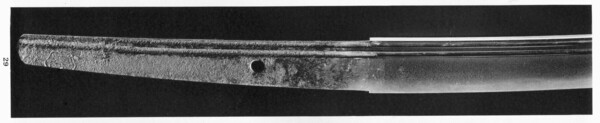
My choice would be the original condition without a second thought Here are better photos from 1961
-
Paper level for big names / attribution
Brano replied to klee's topic in General Nihonto Related Discussion
I went back to my database once again and it turns out I wasn't being thorough I did find two blades at Juyo level One is an ubu Tachi with mei "Mogusa" (Ichinoseki city Bunkazai) The other is an o-suriage According to the setsumei, both are dated to the late Kamakura The JuBi Tachi Toshiyasu (some read it as Yoyasu) is descripted in detail in the Nihonto Taikan The dating is also late Kamakura