


Carlo Giuseppe Tacchini
-
Posts
2,121 -
Joined
-
Last visited
-
Days Won
8
Content Type
Profiles
Forums
Events
Store
Downloads
Gallery
Everything posted by Carlo Giuseppe Tacchini
-
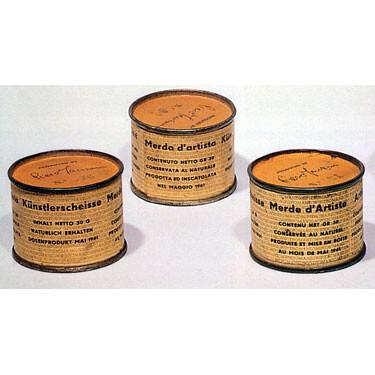
Once I said the same (somewhere else) about the following one, and was beated to death. So no more arguing about taste or what art is on my part. About Tate gallery : http://www.cbc.ca/arts/story/2002/07/02 ... 20702.html
-

This Week's Edo Period Corner
Carlo Giuseppe Tacchini replied to Bugyotsuji's topic in General Nihonto Related Discussion
Entering that room in the dark have to be a little scary... :D -
This Week's Edo Period Corner
Carlo Giuseppe Tacchini replied to Bugyotsuji's topic in General Nihonto Related Discussion
Seems indigenous Taiwanese tribes have a long story of resistance to chinese power. They were supposed to be headhunters and wore a short sword. Japaneses were very impressed by these tribesmen and hired them as Elite units in Imperial Guards and paratroopers. The Japanese equivalent to Gurka... -
This Week's Edo Period Corner
Carlo Giuseppe Tacchini replied to Bugyotsuji's topic in General Nihonto Related Discussion
John, you'll find these ones interesting. Very early Chinese wooden armor : -
Thanks for your efforts Darcy. Wish you all the best for your work.
-
This Week's Edo Period Corner
Carlo Giuseppe Tacchini replied to Bugyotsuji's topic in General Nihonto Related Discussion
Paul, sorry I wasn't able to give you this link from work. Scroll down and you'll find an excerpt about the book : http://www.shogun-yashiki.blogspot.com/ -
This Week's Edo Period Corner
Carlo Giuseppe Tacchini replied to Bugyotsuji's topic in General Nihonto Related Discussion
"Weapons and fighting techniques of the Samurai Warrior - 1200/1877 a.D." Thomas Conlan. -
This Week's Edo Period Corner
Carlo Giuseppe Tacchini replied to Bugyotsuji's topic in General Nihonto Related Discussion
This is often forgotten. Japanese armies were rised on a feudal basis even in recent times, with the limitations this imply. -
This Week's Edo Period Corner
Carlo Giuseppe Tacchini replied to Bugyotsuji's topic in General Nihonto Related Discussion
A friend from another board is getting an interview with Conlan and asked about this very matter. Reply by Conlan hereunder : quote... "Thank you for the comment about the armor plates ('sane'). Yes my statement is misleading and should be revised. Sane, or kozane (the small plates) were made from hardened leather, metal, wood and paper (washi). Leather is most common for the older suits. The main point that I wanted to make regarding the "sane" is that they were lacquered and relatively light. I thought it would be easier to explain lacquer to a general audience by describing the sane as being made of wood (as is generally the case with lacquer). Metal sane were rarer in the oldest suits of armor (those located at Oyamazumi shrine) and used mostly to reinforce the torso region region. (I wanted to contrast with later suits, which were in fact mostly made of metal). I see, however, that my explanation only sows confusion. In the interest of accuracy, I should revise this passage, and state that sane were mostly constructed from hardened leather." ...unquote. -
they keep coming and coming..........X'mas presents
Carlo Giuseppe Tacchini replied to Bungo's topic in Tosogu
Nice... -
A Porche ? Your ambitions have grew up from that tsuka by Tsukahei... :D
-
Milt, finally you stopped to mediate the price of your shares and decided to use your money for something that will not be used as wallpaper/tapistry... :lol:
-
This Week's Edo Period Corner
Carlo Giuseppe Tacchini replied to Bugyotsuji's topic in General Nihonto Related Discussion
Still a nice one, Piers. -
This Week's Edo Period Corner
Carlo Giuseppe Tacchini replied to Bugyotsuji's topic in General Nihonto Related Discussion
No sources given ? Strange for Conlan... Let discuss this on the proper board... -
This Week's Edo Period Corner
Carlo Giuseppe Tacchini replied to Bugyotsuji's topic in General Nihonto Related Discussion
Hi John. Guess you're thinking to the statement by Conlan in his last book about later armor made of wood. I'm intrigued too, but it's a big . Waiting to read it to discover bibliography and original sources. -
This Week's Edo Period Corner
Carlo Giuseppe Tacchini replied to Bugyotsuji's topic in General Nihonto Related Discussion
So, maybe it never had a grill. I wonder how the rest of the armor would have looked like... -
This Week's Edo Period Corner
Carlo Giuseppe Tacchini replied to Bugyotsuji's topic in General Nihonto Related Discussion
Hi Ian. Can't help on this one. AFAIK The "grill" that likely was put into the now empty rings is either missed or never acquired. Might be the item was originally european (dutch from Nabeshima trade?) and adapted (lacquered) to Japanese taste ? There are quiet a few nice Momonari Kabuto but I've to search for shots, as I took them when digital cameras weren't available yet (yes, I'm that old)... -
Please do, good ol' Mike from Sunny Israel. :D
-
This Week's Edo Period Corner
Carlo Giuseppe Tacchini replied to Bugyotsuji's topic in General Nihonto Related Discussion
To you too Piers. Here a very unusual one. Looks like a polish "Winged Hussar" flew over Japan losing it and somebody adapted it to the new environment... :lol: -
Thanks Ted. As very interesting swords still pop-up even today, and so also important historical records, let's me wish you and anybody else involved in the research the best luck.
-
Ted, can you elaborate a little this ? Why nobody can be sure of ? Were's the problem with this blade ?
-
Ebay swords
Carlo Giuseppe Tacchini replied to ilikesword's topic in Auctions and Online Sales or Sellers
If you ask, he honestly say the papers are not reliable and suggest to have the Mei removed and re-submit for shinsa. Prices alone should ring a bell in any half-brained mind. -
Samurai & sword polish during battle
Carlo Giuseppe Tacchini replied to Mark Green's topic in Nihonto
My dear Milt, "History teaches that history teaches nothing". And are not words of mines, even if they can be applied to almost everything. -
I'm Carlo . So many thanks Henry. I think Morita San will join me in thanking you for your kind efforts as soon as he'll lurk this post. He's making researches about these blades by quiet sometime.
-
Samurai & sword polish during battle
Carlo Giuseppe Tacchini replied to Mark Green's topic in Nihonto
Hi Brian. Mmmm.. You should read "In Little Need of Divine Intervention" translated by Conlan. Available here : http://www.amazon.com/Little-Need-Divin ... 188544513X I agree on the rest you stated.
