Curran
-
Posts
4,830 -
Joined
-
Last visited
-
Days Won
26
Content Type
Profiles
Forums
Events
Store
Downloads
Gallery
Everything posted by Curran
-
It is a Kao. It would be a lot of work to match it up with the artist, unless you see a name elsewhere. Still, it is possible if you have the Haynes Index. Just.... a lot of work. Koshirae looks nice, from what I can see. Don't lose those nice seppa.
-
Saw that. Even briefly thought about bidding on it. Someone either wanted an Ishiguro or Ishiguro style piece at a discount (as I was considering), ~~~ or a art restorer / dealer saw it and this will appear in a kogai some time in the next year or two. If Cary Condell was still alive, this would be on Ikkyudo.com (sp?) in 1 year's time. I know a lot of people hated him, really hated him, but guess I was one of the few who appreciated his aesthetic sense of restoration jobs.
-
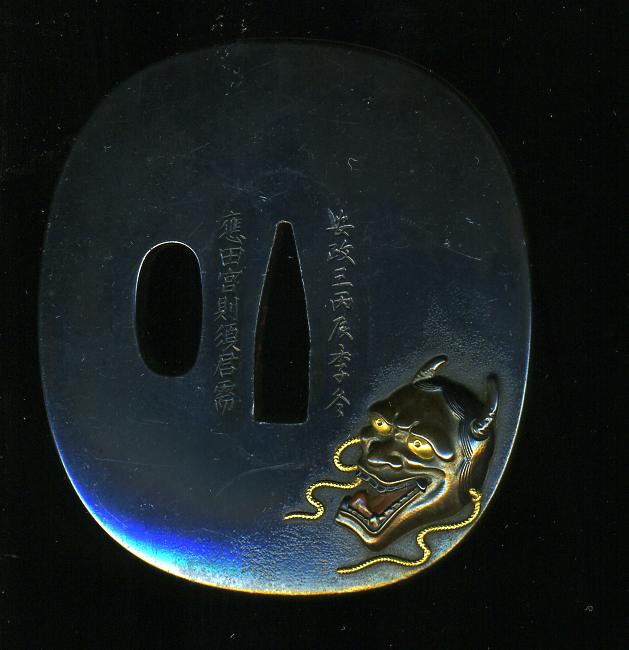
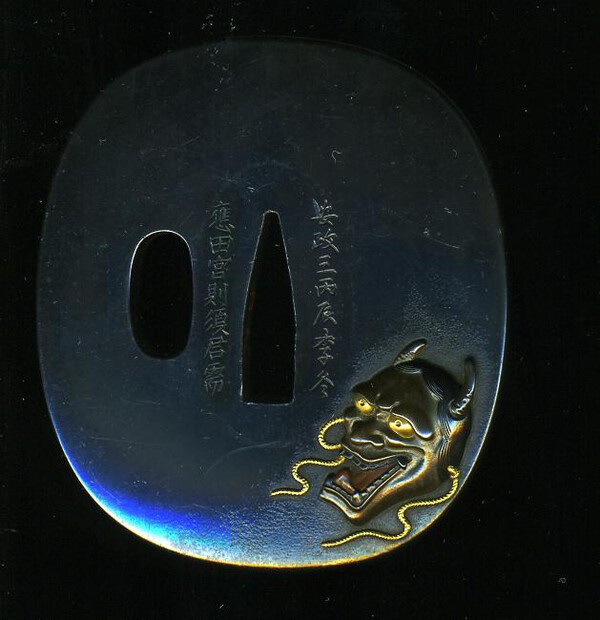
Junichi- Yes. Saw quite a number in the 1850s & 1860s. Attached: NBTHK Tobuketsu Hozon Commissioned piece for Mr. Taima c.1856(?) Signed on the back on the open area: Yasuchika w/ Kao (6th gen Yasuchika, aka Masachika. Took over the school. not to be confused with 1st Gen. Gen 2 to 5 were in decline, then revival as with Ichijo of Goto school).
-
Maverick just buzzed the Control Tower.
-
Higo? Possibly Nishigaki? Good match up with the design of the one in the Boston MFA. Major museum attributions are usually decent, but not infallible. Looks right, but then again we have the problem of weird pitting in places and the applied grey w/ wax coat? This guy's stuff is either real or would fool a lot of us who have been collecting a while, but the condition is something to ponder. Tsuba might be fine underneath whatever was applied, or might not.
-
No need to tease me Pete. There is no risk of me being a shinsa judge any time soon. On the other hand, the NTHK might recruit you if Jim Gilbert decides to pitch in and pursue bird photography full time. Before Storm Sandy, he announced he was giving up the NY club presidency for at least a year. I would have voted for making Chuck the official Emperor of the club, though Chuck probably is too smart to take the job. As to the tsuba and the seller- there is something funny about a lot of his pieces. I don't know what he does, but he does (mystery XYZ) to many of them. They look lightly sandblasted and greyed somehow, then possibly given a light wax coat applied. While some people, including shinsa judges, advocate use of light wax coating- I hate the stuff and will try to gently remove it if it won't damage the tsuba in any way. Tsuba isn't Higo. I'd be inclined to pin it to a specific Shoami school. Pete said Kyo Shoami, so it works for me.
-
Throw in my two yen here, though I don't think I should be doing translating work. Leave that to Super Markus Sesko. "A 'plum and bamboo' sukashi tsuba". I wouldn't have identified it as bamboo either. But then, have seen tsuba identifying 'first bamboo' and new growth that renders bamboo something like this. Don't know my bamboo well, other than to know there are many types and that some shouldn't be planted here in Florida. Not knowing plum blossom's cycle, I would guess this to be a Spring theme? Like I said, just a 2 yen opinion.
-
Nothing unseelie meant. Pretty sure this one will pull TH.
-
Went fast. I was told there was a line for it, by at least two of the guys in line for it. I hope it stayed in North America, but the Europeans tend to be quicker on the draw when it comes to nice kinko examples. Now that it is *Sold*, With these nicer 'Umetada' condition is very important. Should be handled w/ cotton gloves. These ones are relatively easy to damage. Finding a good antique one with inlay intact, different metals at different thicknesses, etc.- very rare. Point in case is even the best preserved antique ones often have seppa dai wear. Careful though, as there are some late Edo copies, mostly in smaller size by a particular skilled artist (cannot remember name off the top of my head... want to say "Jo____". Lucky for us, he signed a few of them and largely stuck to one or two designs. I have seen one of his 'Umetada' tanto tsuba get by the NBTHK with Hozon papers to Umetada. Attached are two. I purchased the Tokubetsu Hozon one a few years ago. I'm pretty sure the one Grey sold would get Tokubetsu Hozon too.


-
Yes. It did. Previous papers said 'Higo'. Current papers say 'Hayashi'. It was painfully obvious that it was Hayashi school. Like I said, green papers are often '1 off' of accurate. The tsuba was sold to a member here on NMB, thought he is MIA at present. It leaves me in an awkward position on another purchase.
-
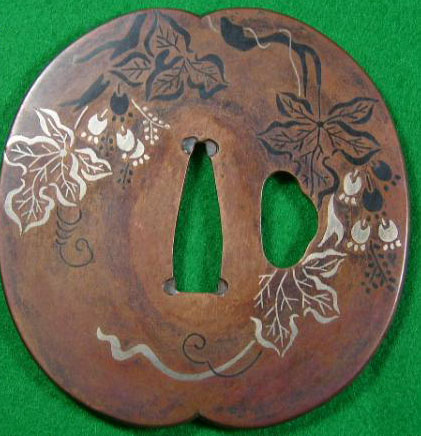
Send a picture, and I would give my opinion. I've never had anything fail Tokubetsu Hozon shinsa. I am a little hard ass judge on such things. For Mito school, unsigned, it would probably need to be top quality. If the small black shakudo basket weave one with two tone clematis vine, then I would say 65-70% chance of pass. If it had a signature, then a definite pass. But, does it justify expense? TH adds significant expense. My own feeling is that than papers should represent no more than 30% of value. Cost of tosogu papers has climbed 75% in the last decade years. For me, something must be 'boreline' Juyo to bother with Tokubetsu Hozon now. I Google translated Kunitaro-san's post and did some spot translations. I have a tsuba I think deserves Juyo, but hesitant to bother. The translation makes me think maybe I should submit my favorite koshirae too. I had intended to wait 5 to 10 more years, since it is a late Edo piece.
-
giles, Is this a Microdear cloth? If so, I think Darcy had a write-up of them here on NMB.
-
"Tadatoki saku" Without books, I couldn't say which generation Akasaka. Would guess 5th gen on. Some gnarly fresh looking rust there. I'd say my guess is it would clean off easy, but I'm struggling with cleaning rust off a "Tadashige saku". I swore ~no projects~ this year, but here I am working away with ivory tools that were once piano keys. For what it is worth, yeah... this one looks more Akasaka. I haven't been much studying Akasaka tsuba for a few years now, but it seems I've been looking at a few interesting ones recently.
-
Jack, Not much to provide. ~~ With green papers turned in, you could receive a discount on items sent into shinsa for Hozon or Tokubetsu Hozon. ~~ With fittings, I believe you could also just submit directly to the tougher Tokubetsu Hozon shinsa. This may be mistaken. I never tried. ~~Don't know if it was this way with swords. After 25 years of grace period on the defunct papers, NBTHK said 'No Mas!". You turn in green papers now, and no discount. I also think you probably cannot go directly to TH shinsa from greens. The last tsuba I submitted with green papers, they gave no discount and kept the green papers.
-
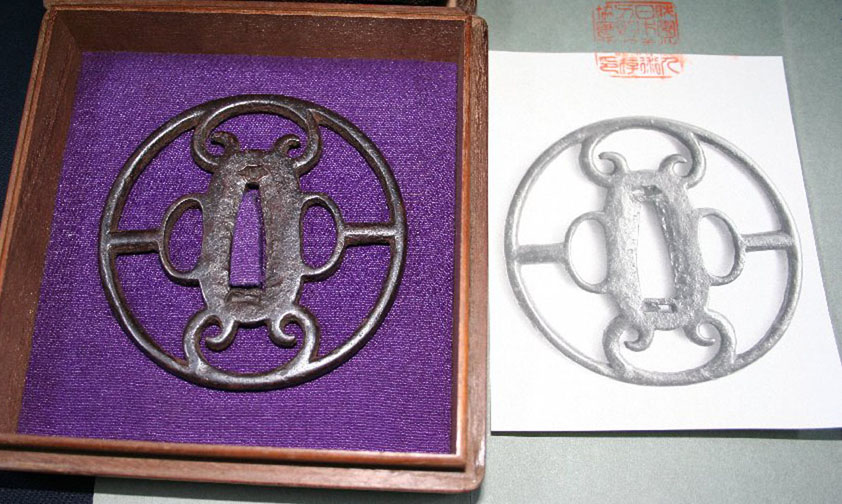
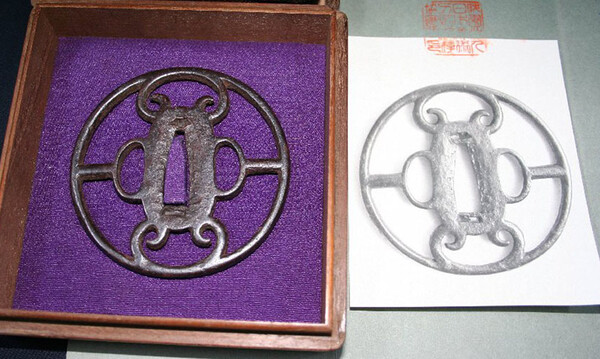
Grey nailed it. Jean- the "Tochibata" tsuba as they were once illustrated were more of a "twist and pull" iron worker's school. Not high brow Art, they are a bit simple and heavy in comparison to other schools, I still like their simple honesty. I seem to recall they had something to do with being influenced by foreign ironwork. I think the one on Grey's site is too refined aesthetic and not the blacksmith worked feel to get the 'Tochibata' classification, though I understand the reasons for the former owner's call. The mimi is often 'twisted rope', like Gunichi's example. Fern bracken and tansu drawer pull bending shapes are common elements of the design. Attached is an image of the one I was looking at. It isn't the one in the books. Just similar. Been a while since I saw one. In further look at the photos of the tsuba, I see patina issues where someone might have doctored it a bit. The high flash hides a lot. Not sure. ~~The tsuba comes with old NBTHK green papers saying 'Owari'. My feeling on old green papers is they seems to often be 'one off' either attributing the tsuba to something similar but not right in the post 1970s views. Ie. (1) def. don't trust them for signatures (2) sometimes they too favorably attribute a tsuba (3) sometimes they are too vague and the tsuba would be get a better valuation these days. I'd say this Tochibata has a (#2) with old papers stating 'Owari'. Since 2012, NBTHK no longer even acknowledges the green papers.
-
Tochibata Tsuba: (Iron Drawer Pull Tsuba) Anyone able to copy the images out of Afu (Harry Watson's) translation of the Nihonto Koza for me? I know we don't see this attribution any more in modern papers- but I've always liked them. Maybe due to love of nice tansu. Their simple designs spilled into other schools. I'm looking at one that I think is very similar to the ones in the book.
-
For what it is worth, Fuji_5005 is a scumbag Japanese seller. Yes, I meant "scumbag". #1 avoid of two or three on Yahoo!Japan that I won't deal with. I wouldn't be surprised if he is somehow connected with japanese_premium_seller. Of course.... this "arbitrage" is practiced by two american dealers. So the 'sloppy americans' comment applies equally here.
-
Christian, I confess that I did not know that site. Yes, some fine things there. There is a Juyo tanto that I wish I could own. Many of his fittings are 'for reference only': Ichijosai Hirotoshi, Kunitomo Teiei, Ikkin, etc. Sort of similar to pieces I own or have owned. I really like that Hirotoshi, though the Teiei is not one of the better pieces by him. Doesn't come through in the photo why it is a desirable piece. Must say I've never seen a rabbit set of Omori fittings like that. Patrick: Your question is more difficult than you would believe. Much of the best fittings trades privately. I collect at the 'upper middleclass' level, but the high class stuff goes almost entirely privately. The upper middleclass guys are: http://ginzaseikodo.com/englishhome.html http://www.choshuya.co.jp/ http://www.tsuruginoya.com/index.html http://www.tetsuguendo.com If you ask nicely, they have provide Juyo level fittings- but really there is a burden of proof that you are serious and collecting at that level. Mike and Cyrus at tetsuguendo.com are probably the best bridge to that level for non-Japanese speakers. Also, remember there are a lot lot less Juyo fittings than Juyo swords. The supply/demand vs affordability expresses itself not so much in price as in what comes to market and when.... Like I said, your question is more difficult or complex than I can convey. Just understand there is a private marketplace above the level of the links I posted. I only have a glimpse into it, and Mike Y sometimes post something from that level~ usually not for sale, just emerged and photographed as it privately changed hands. Otherwise your best bet is the Dai Token Ichi in Japan.
-
Patrick, Not sure what to say there. Tsuruta-san and his shop have been around for ages. He does good service, but high volume. Mistakes will be made. There _are_ some cast and some burned fittings on his site. Those are without papers. He is *right next* to the NBTHK. Anything he has worth owning probably should have papers. Since he doesn't really list higher end fittings, I haven't dealt with him much. In my few transactions with them, I received a set of menuki where one was a copy. Wasn't happy. The ying-yang: bought another set described as "brass" and at a brass level price. They showed up and were solid gold. Excellent work. If careful in what you can buy from him, and you will probably be happy.
-
Jean C., You are absolutely correct. When David posted it, I would swear it said "Kodai Jingo". Now it just says "Kodai Higo". I checked the Japanese version of the site and it too says "Kodai Higo". I don't know whether it was corrected, or I made a mistake. But Tsuruta-san speaks/reads excellent English and is a lurker here. (Edit:) David may have meant to link to this similar one at Aoi Arts: http://www.aoi-art.com/fittings/tsuba/F12242.html
-
David, Yeah, let us harken back to those of us geeky enough to admit to having played D&D. We'll say it is +2 for getting the 'Jingo' attribution, but -1 for the Kodai handle. Not too my liking. But then the NBTHK sometimes muffs it up. This one at Aoi Arts: http://www.aoi-art.com/fittings/tsuba/F12134.html My feeling is it should have gotten a specific school attribution. Patrick- thanks for the recognition that we try to help.
-
I agree with Mr. Malteere when he says it looks cast. This is a fairly well known Higo tsuba. I'd even go so far as to say the originals are famous. From experience, I'd seen quite a number of cast and moderns in Japan. There are places inside the sukashi that look bit jagged, and the whole tsuba looks a little neotenized or stunted in its finishing. THe kogai and kozuka hitsu-ana sort of scream "wrong, wrong, wrong" at me. I wouldn't know until I held it, but I wouldn't bet on this tsuba. For what it is worth, I've always liked the design but think I've only seen one real example of the originals on display at the Chicago Show in 2004.
-
Nope. The antique Mino-Tokugawa one is on an Oei Bizen blade.
-
Still waiting for someone else to reply before I do.