Bugyotsuji
-
Posts
15,009 -
Joined
-
Last visited
-
Days Won
321
Content Type
Profiles
Forums
Events
Store
Downloads
Gallery
Everything posted by Bugyotsuji
-
What happens to collectons?
Bugyotsuji replied to Peter Bleed's topic in General Nihonto Related Discussion
There is no defined age cut-off point. When do you stop driving, for example? Everyone is different, though health and advancing years do play an increasing part. Some of the people I know in Japan have been discussing decluttering, and letting go of some of their collections. I know people who have gradually narrowed it down to their two or three favorite blades, wishing then to either pass them on to an interested relative or to donate them to a museum. Personally I am not yet ready to give up driving, but I have found that my general enthusiasm and desire to collect in various fields has gently begun to evaporate. Having said that, if I see something nice... -
Mount Fuji (富士山) painting and calligraphy by Kobayashi Taigen
Bugyotsuji replied to Iaido dude's topic in Other Japanese Arts
Try for line 2 曇りても佳し and hiragana is used for the okurigana 変わらざりけり -
What makes you think it is gimei, Francis?
-
Hizen Jakushi link sounds reasonable. Here’s one I had until recently…
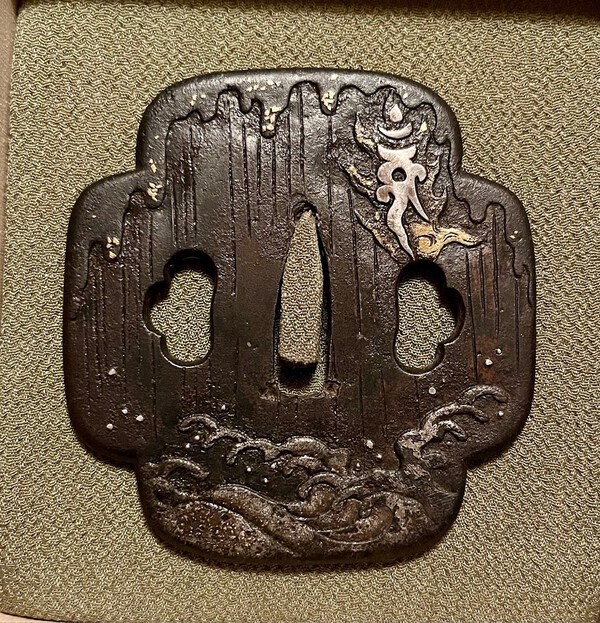
-
Why i dislike this dealer
Bugyotsuji replied to lonely panet's topic in Auctions and Online Sales or Sellers
Rawa, re “paper”. (if it has papers, it’s papered.) Etymology: papyrus -
If you look at a Noh stage you see pine trees and a passage or landing leading off left to where the gods resided. Golden eyes on a Noh mask indicate a godly, not human figure. When you see pine trees with clouds, we are in the realm of gods and dragons, begorrah! (In Japanese art we find several species of Japanese pines, each depicted rather conventionally, i.e. not strictly accurately.)
-
Why i dislike this dealer
Bugyotsuji replied to lonely panet's topic in Auctions and Online Sales or Sellers
Never bought anything from Aoi myself, so no expectations to start with. -
Why i dislike this dealer
Bugyotsuji replied to lonely panet's topic in Auctions and Online Sales or Sellers
Why? Hamfish, do we have to read the whole page to find out why you dislike this dealer? -
The rings may be tortoiseshell…(?)
-
New-to-me - interesting, but what is it?
Bugyotsuji replied to Flint62Smoothie's topic in Tanegashima / Teppo / Hinawajū
Yes, Jan, I like this idea. Generally with a matchlock you do not have the cord fitted or the serpentine 'cocked', so touching the trigger is not a problem. With a fitted, burning match, however, a trip or a branch could indeed set it off early. A sniper might also appreciate a trigger guard. As to your colection being 'humble', well, you are just being humble modest! -
勢州住 is living in Seishu (Ise), and the date given in the sayagaki is 天正 Tensho period.
-
New-to-me - interesting, but what is it?
Bugyotsuji replied to Flint62Smoothie's topic in Tanegashima / Teppo / Hinawajū
Interesting! Some guns (Satsuma for example) had no split at all under the stock. -
New-to-me - interesting, but what is it?
Bugyotsuji replied to Flint62Smoothie's topic in Tanegashima / Teppo / Hinawajū
Many of them never had a trigger guard. Some have lost the guard and the inlet holes have simply been filled in. Guns with an extant trigger guard are relatively rare. Good luck if you go the replacement route. I too like to restore anything obvious myself, or find someone to step in if it’s beyond my ability. -
Had a quick search but it’s not here. It must be with the other lot. I’ll get back to you in October! My initial impression was that they are not crimped in place like bezels, but set somehow with… glue(?) and the curved sides simply act to protect the stones from sideways knocks.
-
We were not given the sizes, but this figure is just a small figurine really, (almost like a decorative chess piece) as it is not within the traditional Japanese Netsuke/Okimono remit. If we had to choose a definition, then Okimono would be closer, which literally means ‘an object for placement’ or static object. Okimono from Japan became popular from Meiji onwards, tending to be rather larger decorative figures. (But Stefan’s above is more like an NLO, or a Netsuké-like object.)
-
It is iron, a large Namban, with a silver fukurin. Four and three, for seven amber cabochons. I am imagining early to mid Edo, when Namban were fashionable.(?) The reverse


-
Hi Stefan. Thank you for posting. These rather better quality Chinese figures, Okimono, are not so old, (1900s), sadly made of ivory for the tourist trade. As ivory is illegal to buy and sell in most countries today, it is of little worth in the west. With no obvious Himotōshi holes they would not function as or qualify as Netsuke. The name Gyokuseki 玉石 has been added for ‘Japanese’ style cachet. The classical figure is probably Shoki the Demon Queller
-
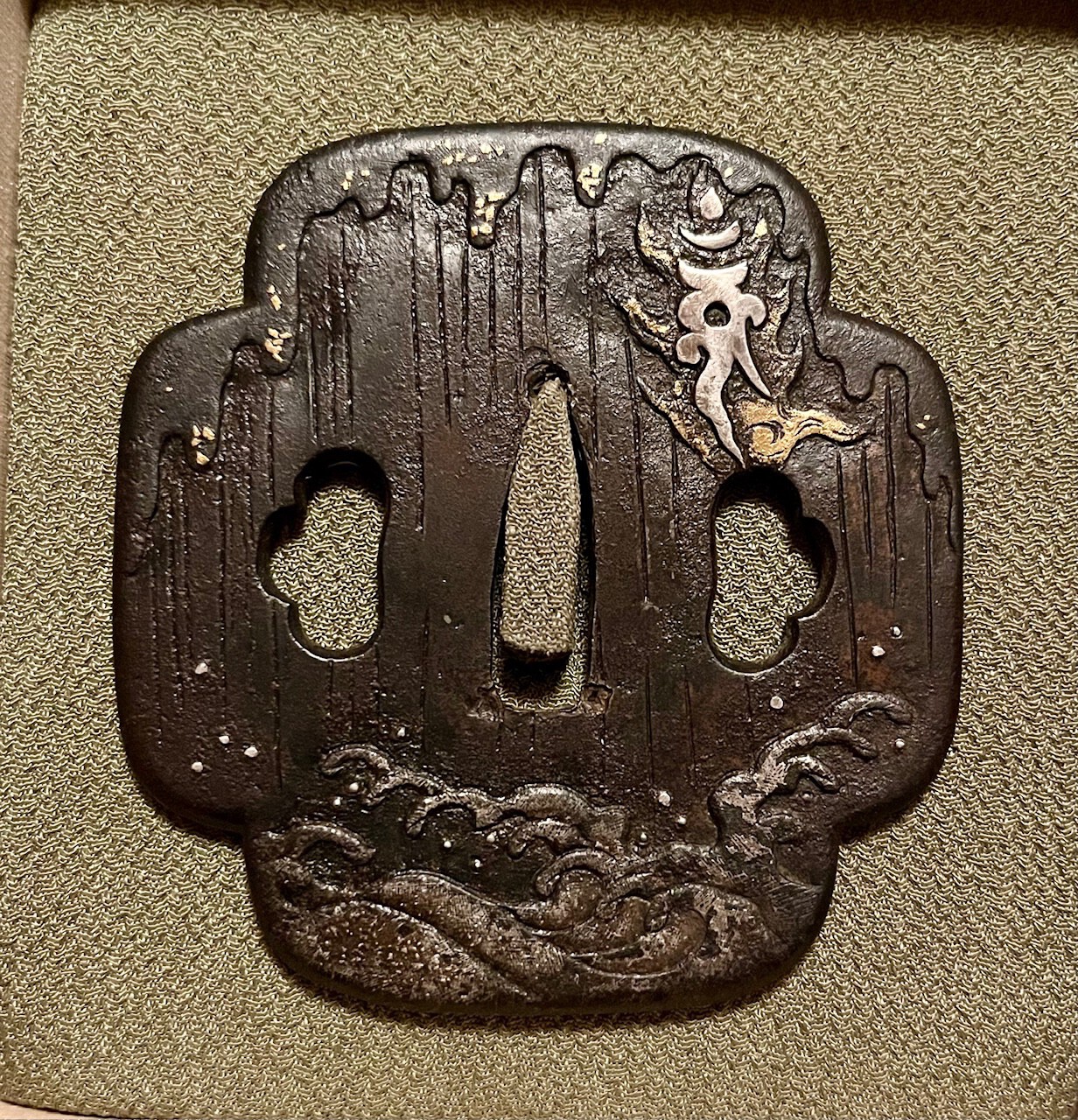
I have a tsuba decorated with small rounded amber cabochons, but not exactly stones or jewels per se. They are set on circular rimmed presumably flat bases.
-
“Pre-1920” tells us that it cannot be a real teppō as they finally went out of use around 1860. As to “Netsuke” I cannot see it, but it is not my place to criticize auction descriptions, which can vary wildly. Size, weight, smoothness and roundness in the hand, functionality as a Netsuke?
-
Ah yes, ormolou, that was the other word I was looking for. Hmmmm... As to the DTI, that weekend the whole world is scheduled to descend upon me demanding attention in different directions. Aaaaarrrrgggghhhh..... Sadly once again the DTI ends up a no-go. I was also offered a one-off fat-cheque job around that time, but because of visiting relatives I have had to turn it down, and I haven't the heart to tell them!
-
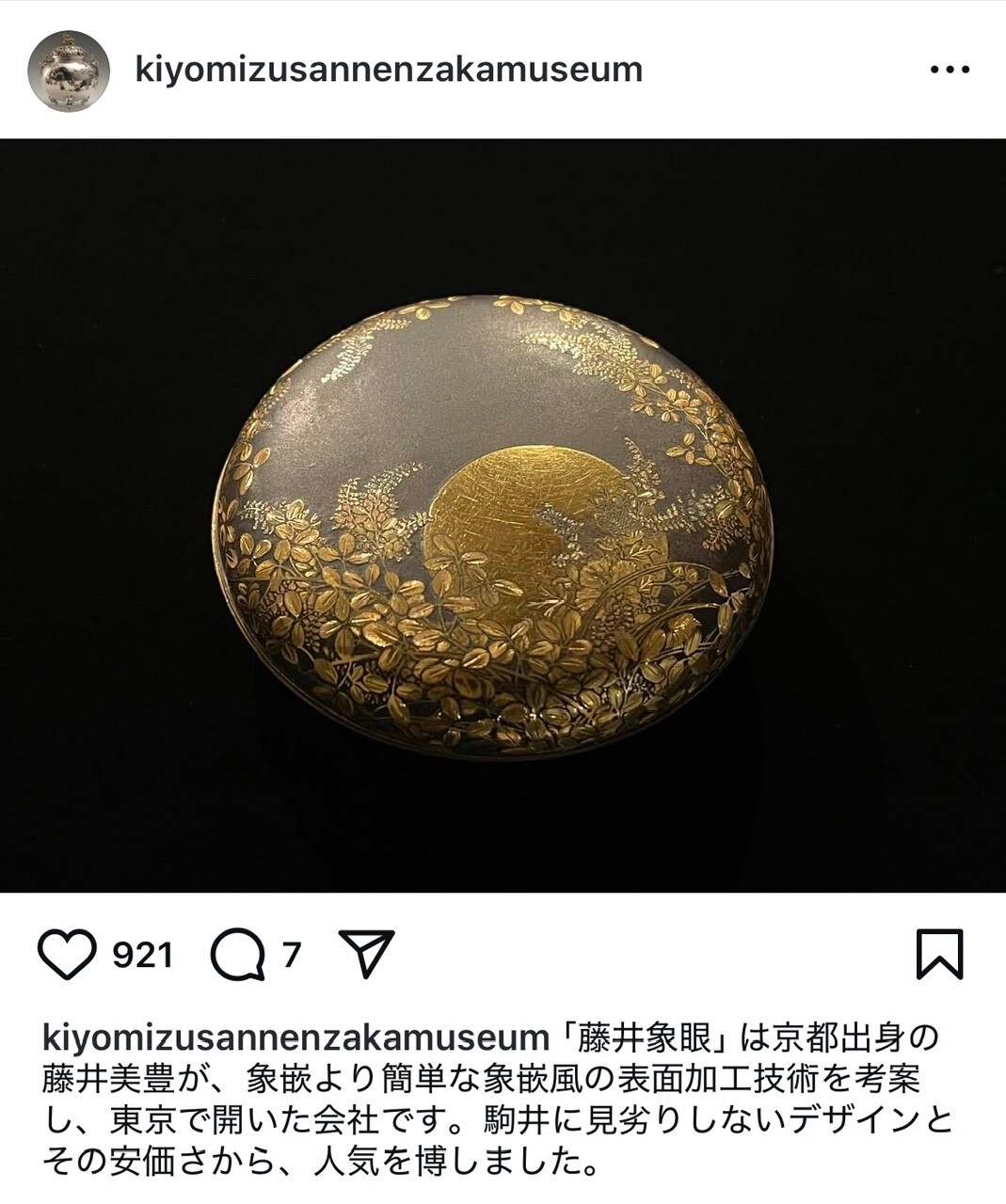
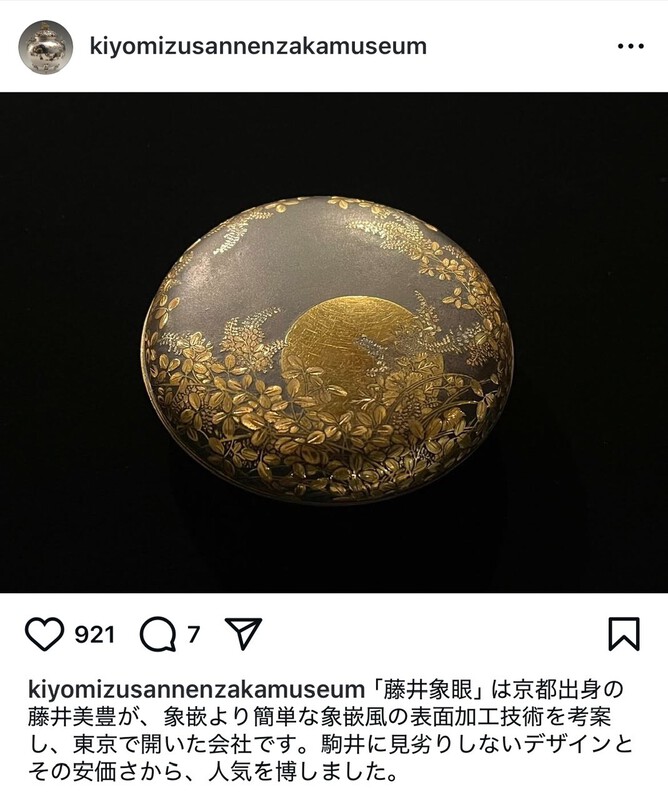
Amalgam gilding seems to have alternative possibilities like ‘mercury gilding’ or mercury paste gilding, etc. Can we narrow down exactly what it is in English first? Or is this a Japanese process first, to which an English definition has been attached? Which came first? (Added later) Apparently his unique technique of etched Damascene was known as “Fujii zōgan”!
-
New-to-me - interesting, but what is it?
Bugyotsuji replied to Flint62Smoothie's topic in Tanegashima / Teppo / Hinawajū
'sub 40 cal' means about 10 mm +/-? This would make it unusual, a 細筒'hosozutsu' small-bore 射撃銃 'shageki-ju' target gun or small game gun. (Not the typical flashily decorated Sakai merchant’s gun of slightly larger bore.) -
New-to-me - interesting, but what is it?
Bugyotsuji replied to Flint62Smoothie's topic in Tanegashima / Teppo / Hinawajū
Thanks for posting your new baby Dale. Congratulations. An unsigned gun. From what I can see, despite those variations, there is nothing out of the ballpark there for a Japanese Tanegashima, (but I did not fully understand your last paragraph). What is the internal diameter of the barrel in cm? The muzzle surround gets me thinking Sakai but I’m getting other indications too. That butt shape, that water drop trigger, that oval sear guard, etc. Need to hit my books for some comparisons, but I don’t have them here right now. She looks good. Will you be firing her? -
So why are you asking again, David? PS Notice that Nobu is a different character from the literature quoted by Francois quote above.
-
In general you often come across this word 略式 ryakushiji even today, not necessarily related to swords, but as mentioned above it means a ‘simplified’ ‘summary’ or ‘short version’. A Spartan or ‘no frills’ version, just the basics in a simple form.