Daso
-
Posts
270 -
Joined
-
Last visited
Content Type
Profiles
Forums
Events
Store
Downloads
Gallery
Everything posted by Daso
-
Paul, Thank you. I am very excited to have reached one of my goals so soon as well (as many have said, the right sword will find you). Now that I have, I realize I must fully appreciate what I have and study (The hell) out of it and learn from it and to not just have it as a wall hanger. It is just that reason that I have taken advantage of everyone's knowledge here as I am trying to see these points in the sword and only see part of the story so far. An excellent learning experience and a really nice sword to look at to boot :-) Thanks for your help. With each post of advice I look at the sword that night to see the points I might have missed. Best, Darius
-
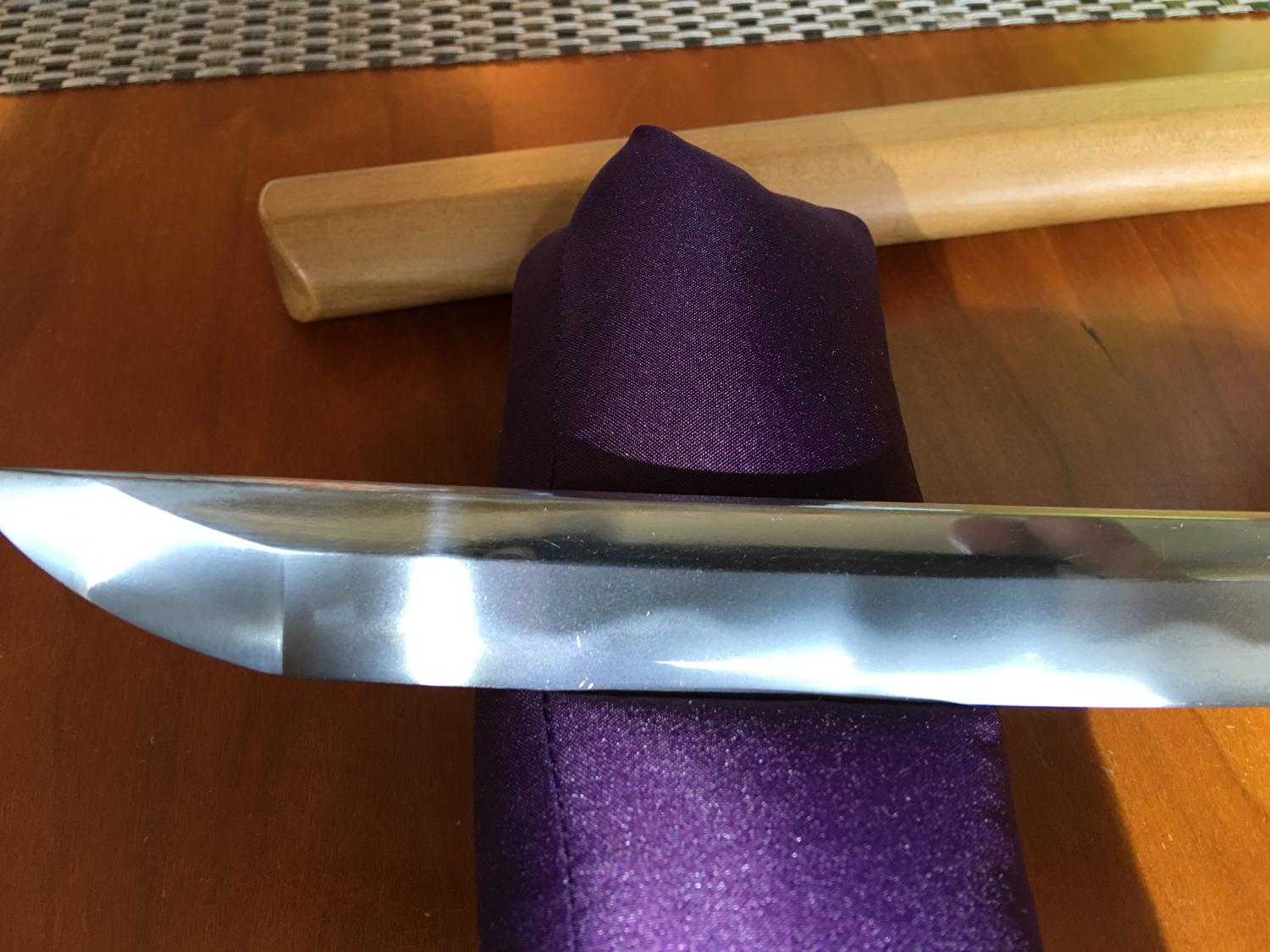
Arnold, Thank you, I will take some better picture of the Kissaki and post. I am slowly undertsnd what I am looking for. In this case it is one of the more complicated mixes and my eyes not quite trained in the intricacies (but learning)
-
John, Thank you.
-
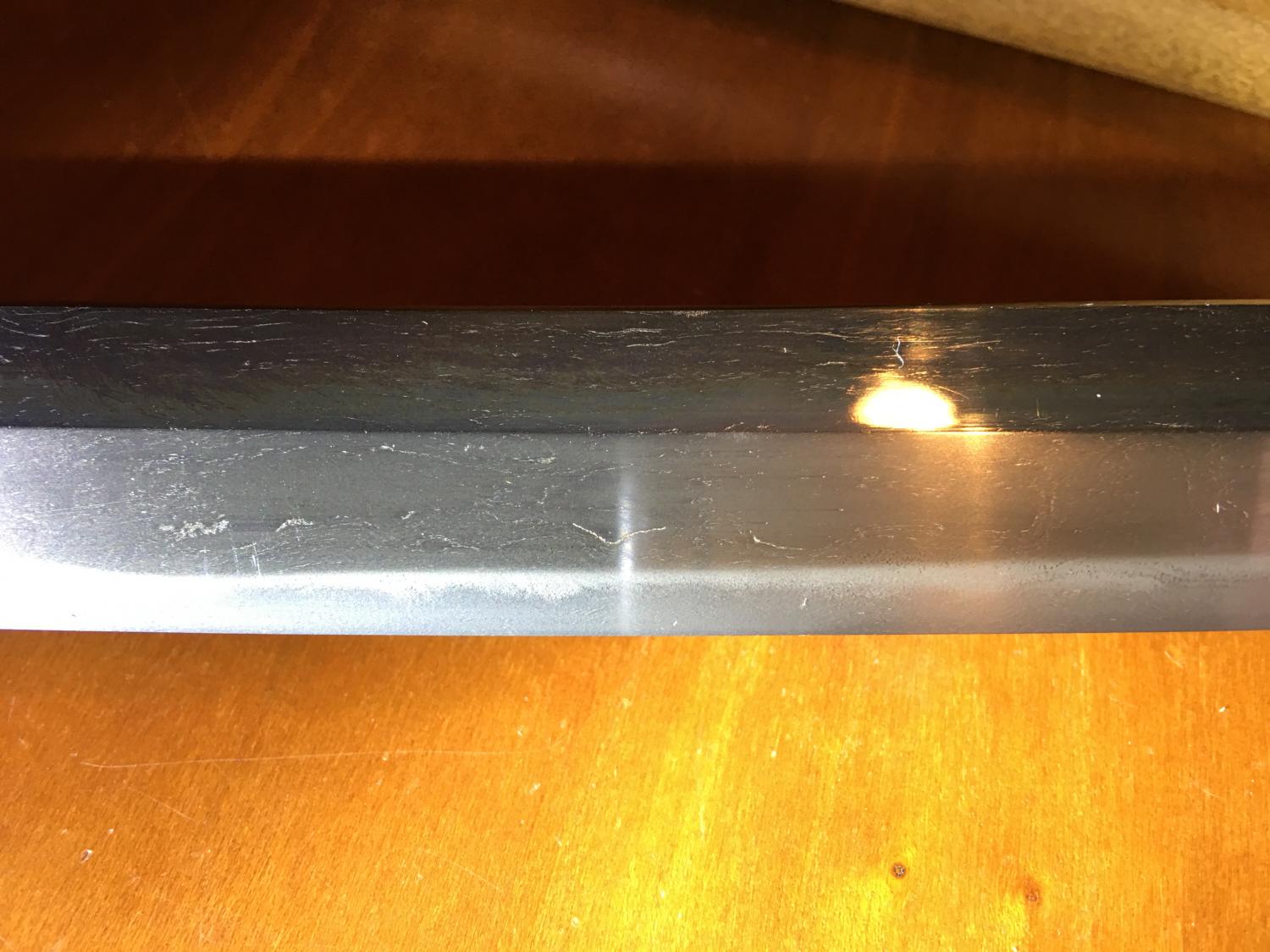
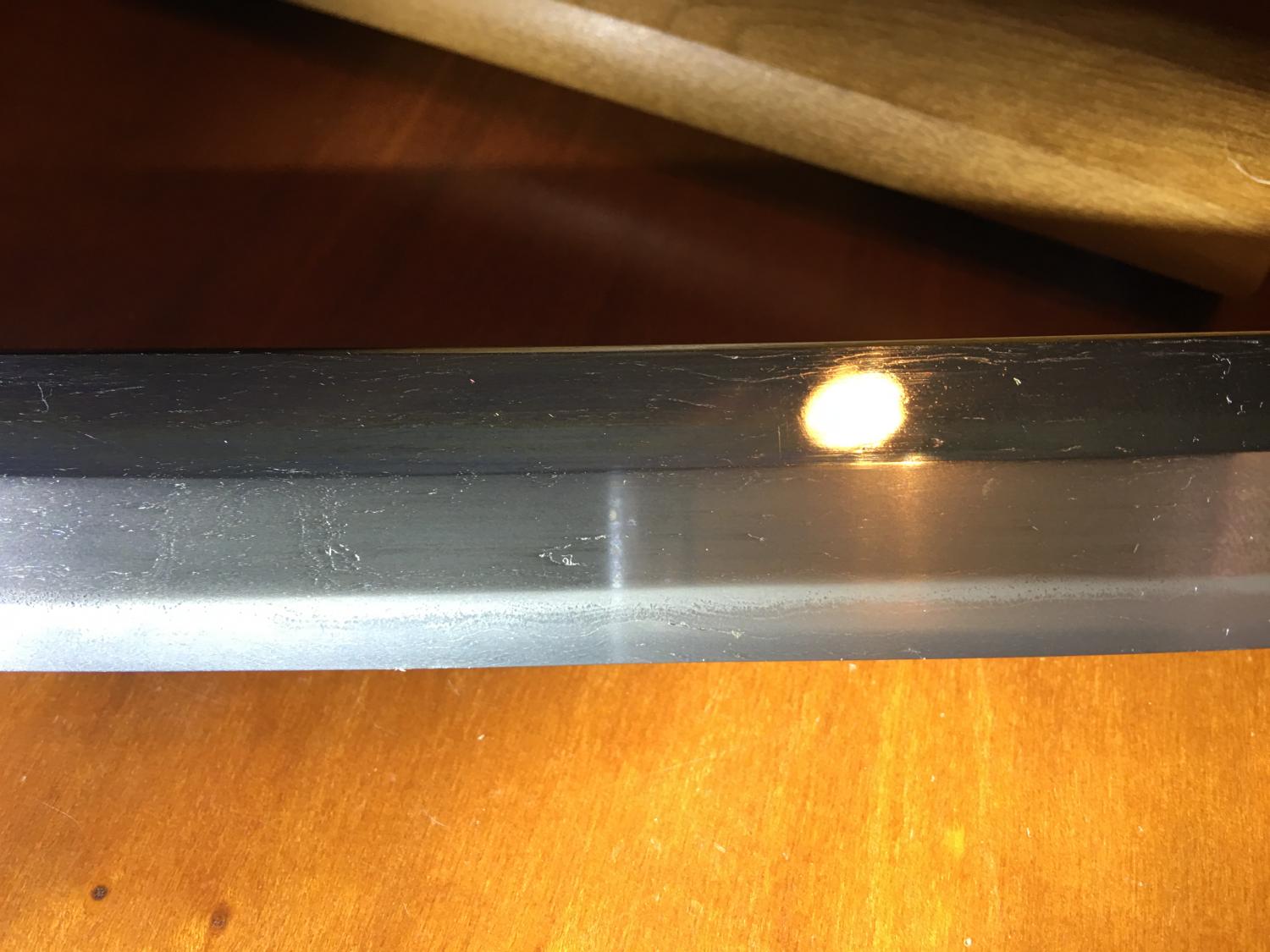
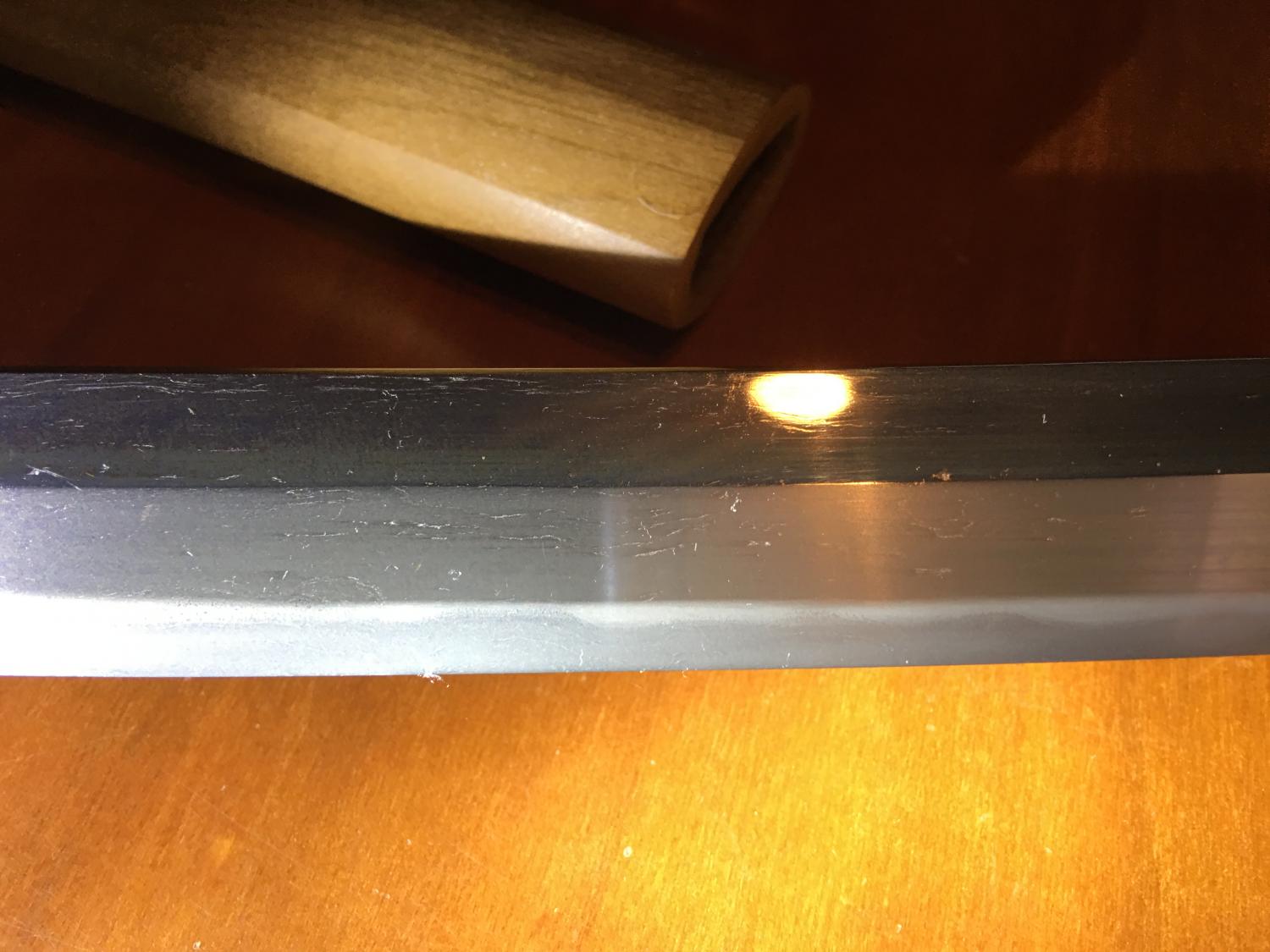
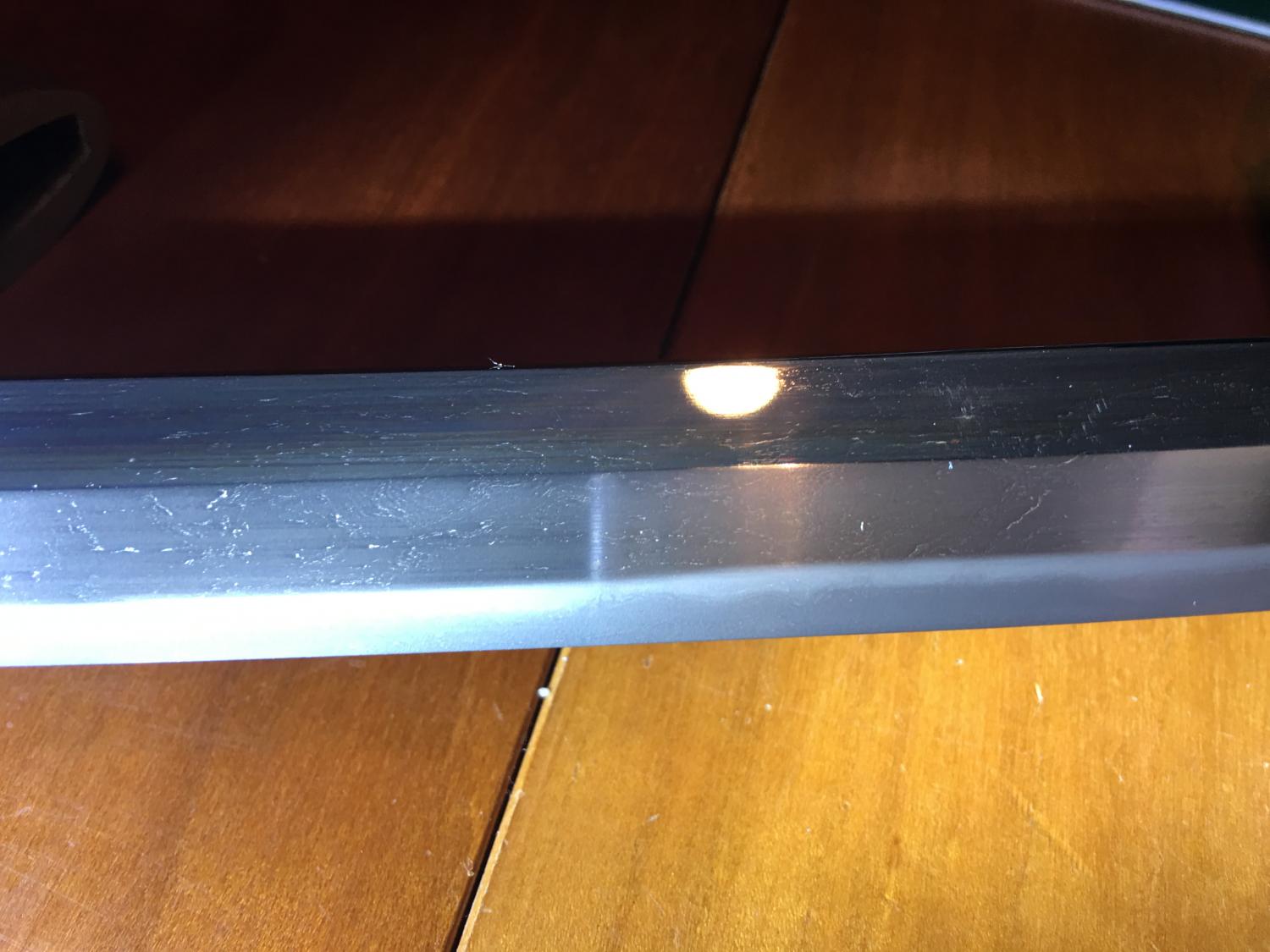
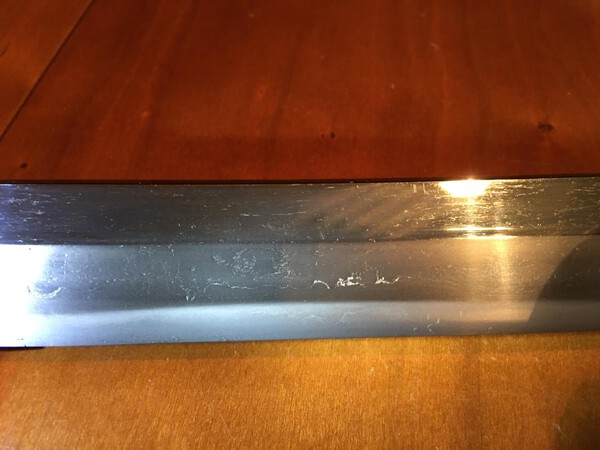
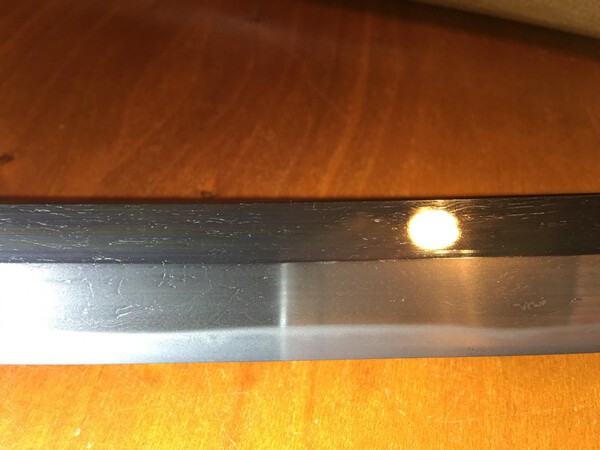
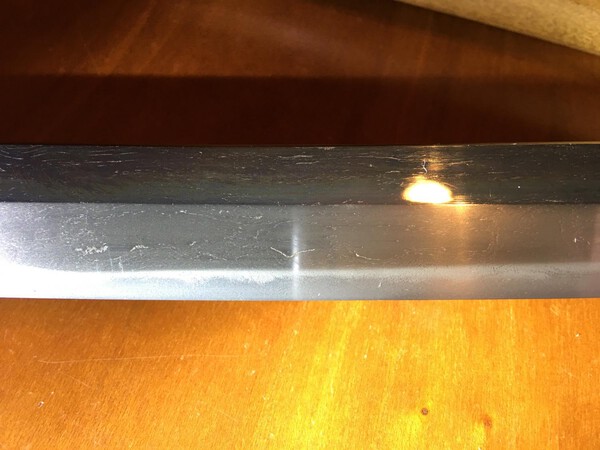
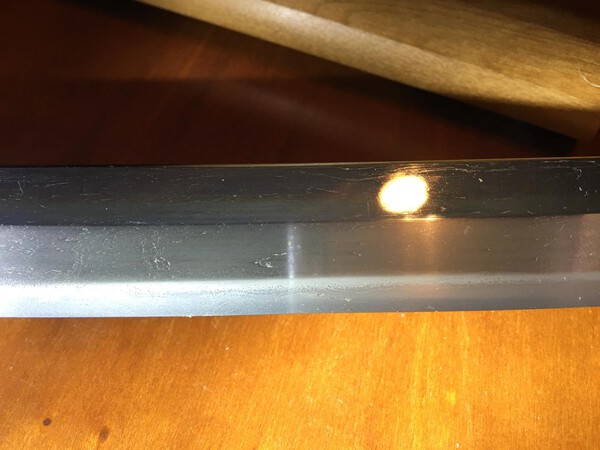
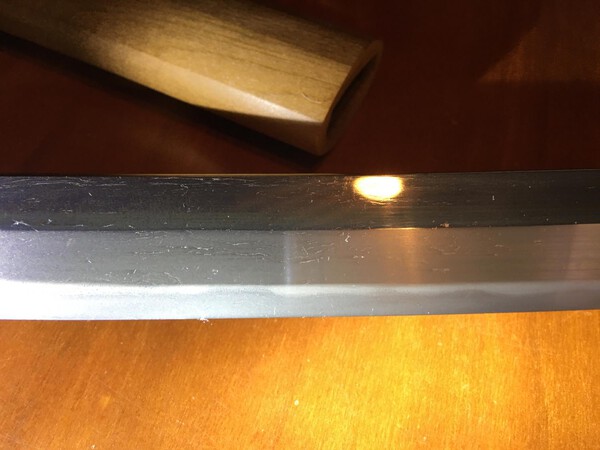
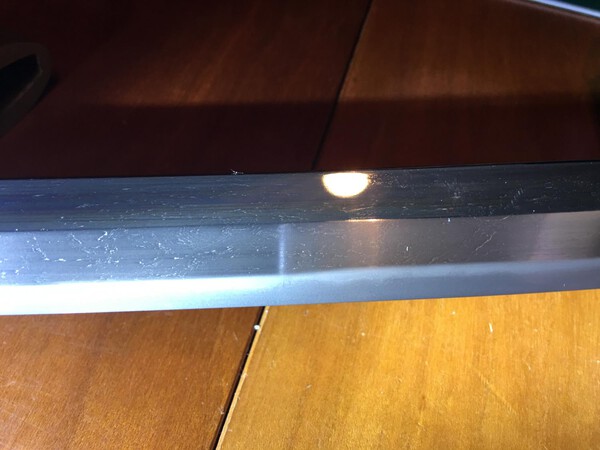
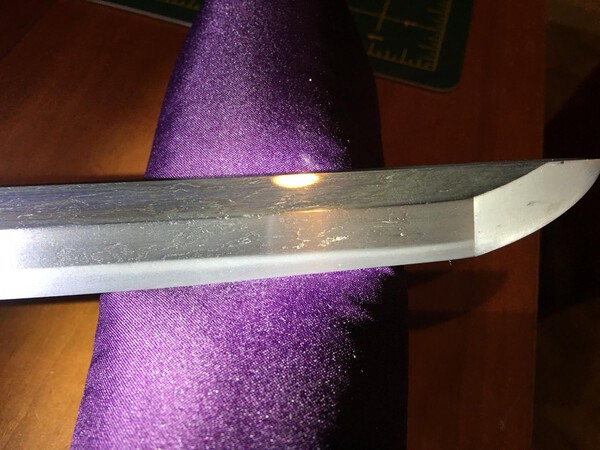
Hello all, I spent a while with my flashlight looking at every angle of my Shikkake katana last night as I wanted to understand the nature of this schools unusual mix of hada. Per the description of the original dealer who had this sword, I still can't quite see the fine points of what is being described on the blade itself. I know it is the same blade :-), so any thoughts in my learning process would be greatly appreciated. I will have the great opportunity to bring it to the next NY Token Kai where many more an expert eye will be able to guide me as well. Dealer description: Two of the most recognizable features of Shikkake are the ko-mokume hada becoming masame in the ha, and the “stacked” habuchi occurring in the yakiba known as nijuba and occasional sanjuba. There are also uchinoke, kinsugi, and inazuma. Earlier works have a brighter habuchi and more vibrant jigane, while in later works the jigane became whitish and the habuchi less reflective. There are also ko-nie and strings of kinsuji mixed among the hamon of ko-gunome/suguha with ashi. The yakiba will have concentrated hataraki, inviting one to search for the activity available. The boshi is typically komaru or yakitsume with hakikake. Understanding that this is a very old blade, the transition from Ko-Mokume Hada becoming Masame in the Ha as a trademark seems erratic and non consistent throughout the blade or am I missing it completely. My photos are not great but to more trained eyes, is this obvious or subtle? Thanks, Darius
-
I have not noticed This video on here, but it's a very short clip showing the reaction of a katana being quenched and how the steel almost comes to life for a second. Eye opening at the least. Just cool to see. https://m.youtube.com/watch?v=HOTKVLZlM8Q
-
Couldn't a friend in the USA just throw a packet in an envelope and mail regular international post?
-
Thank you for the comments, this only increases my desire to study this blade closely, but overall seems very conservative in its design.
-
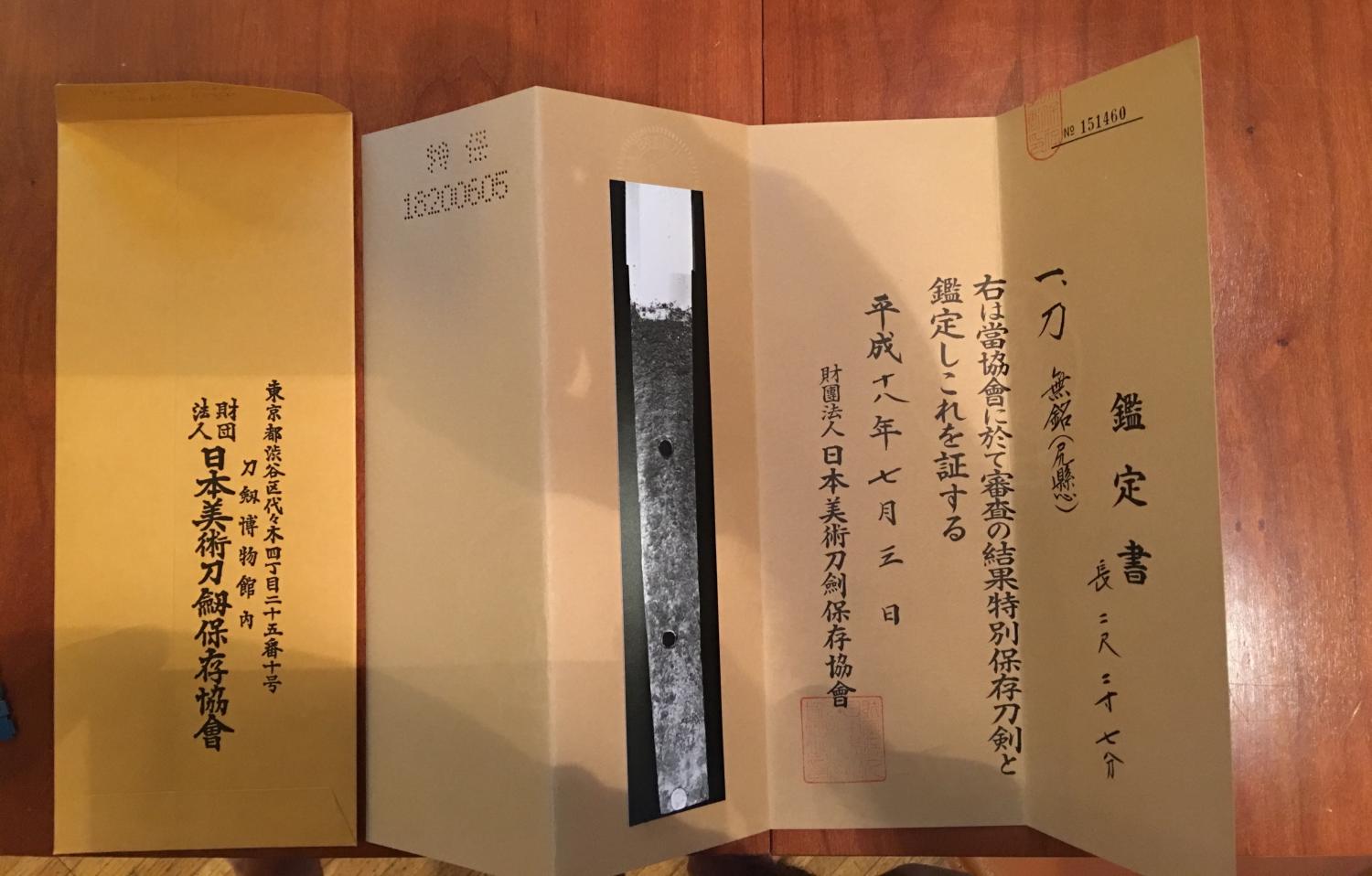
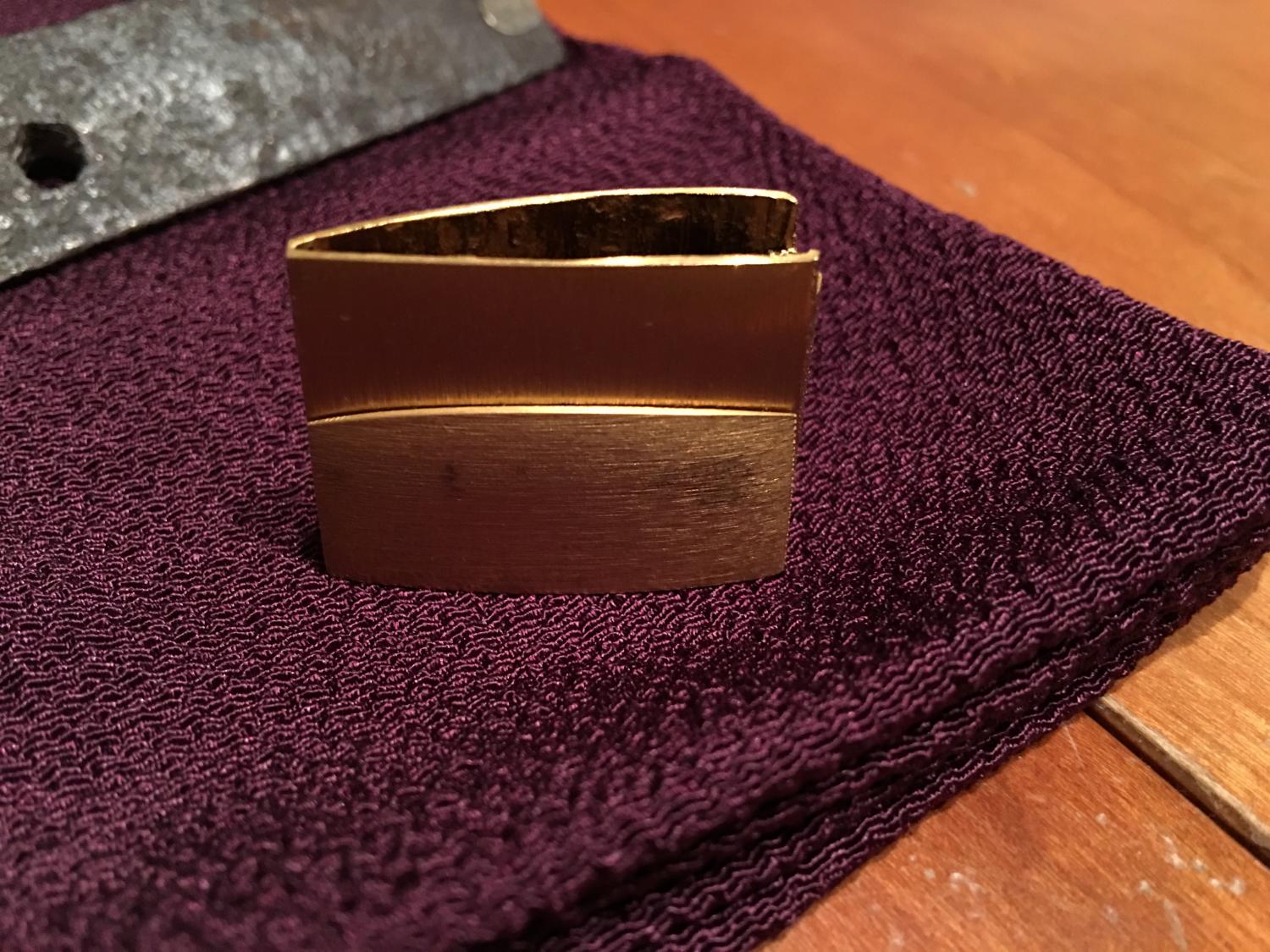
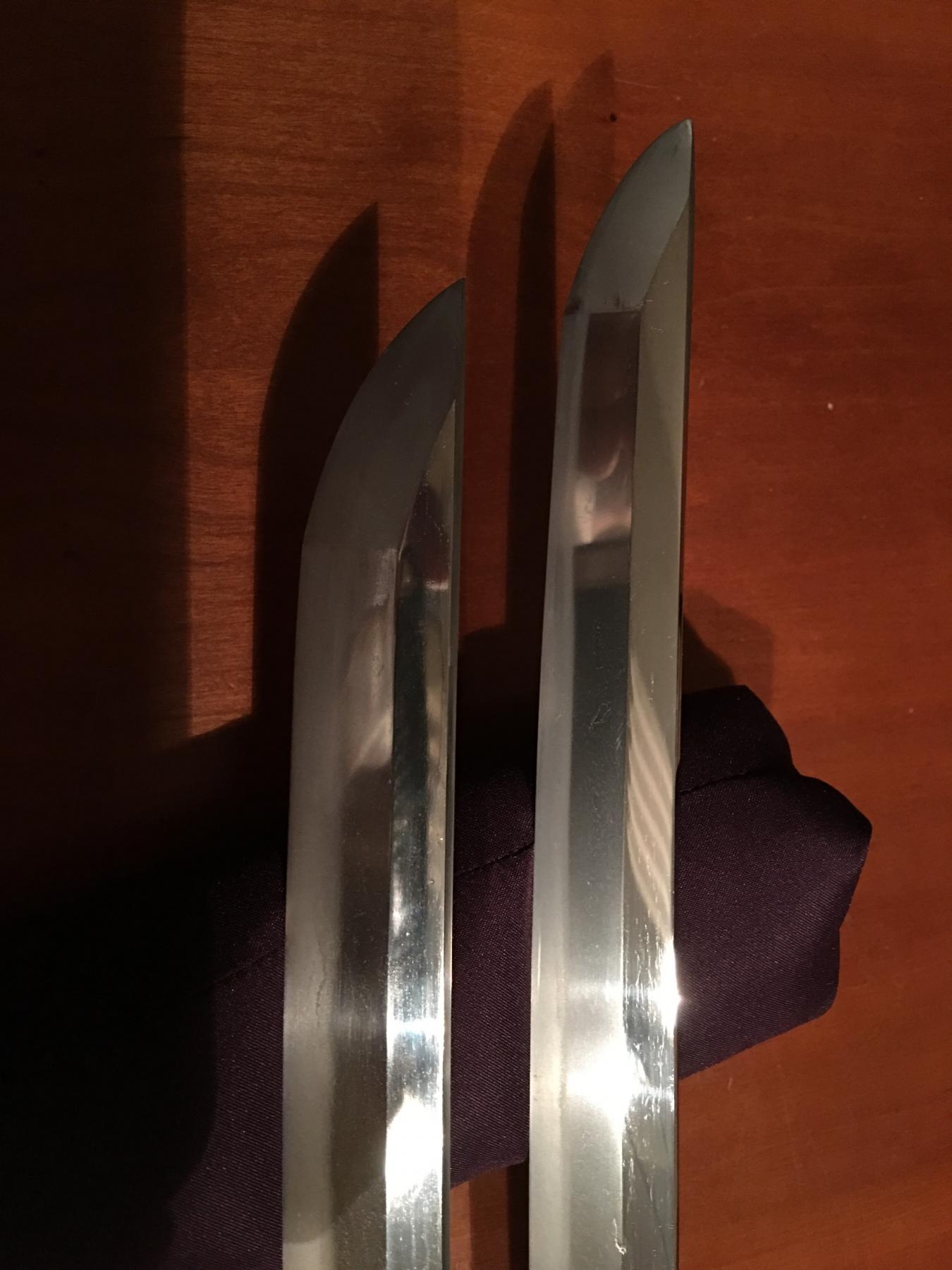
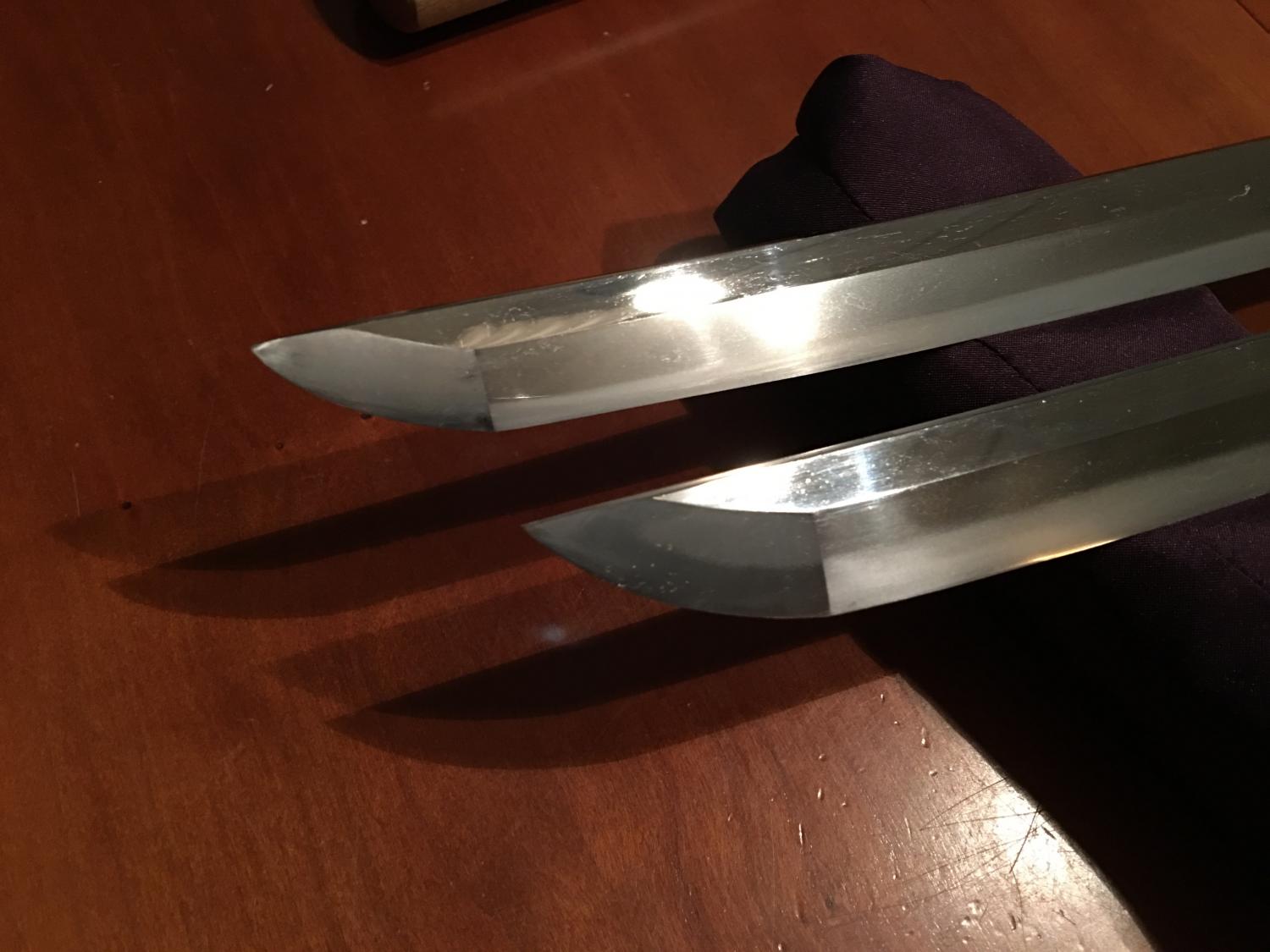
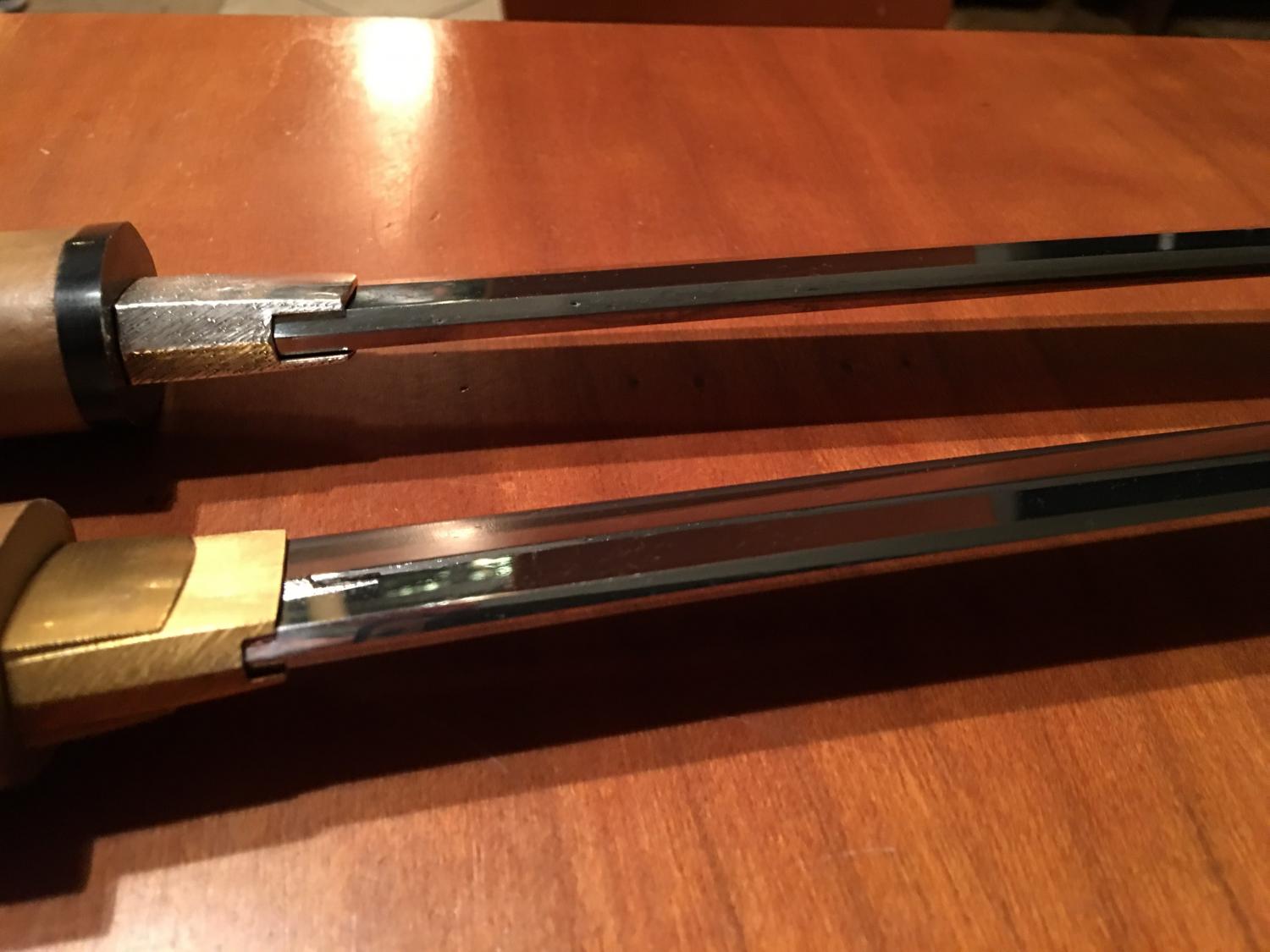
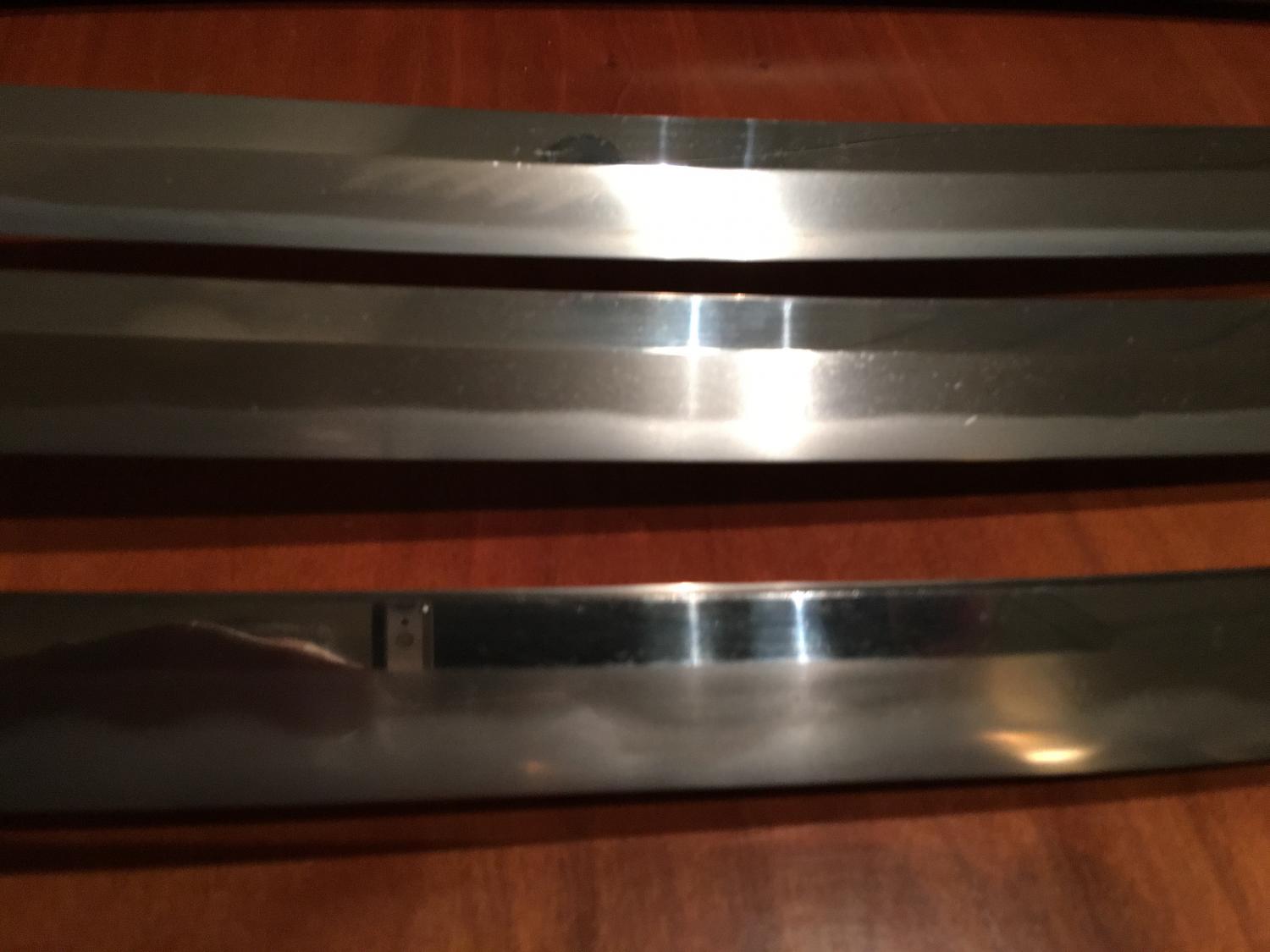
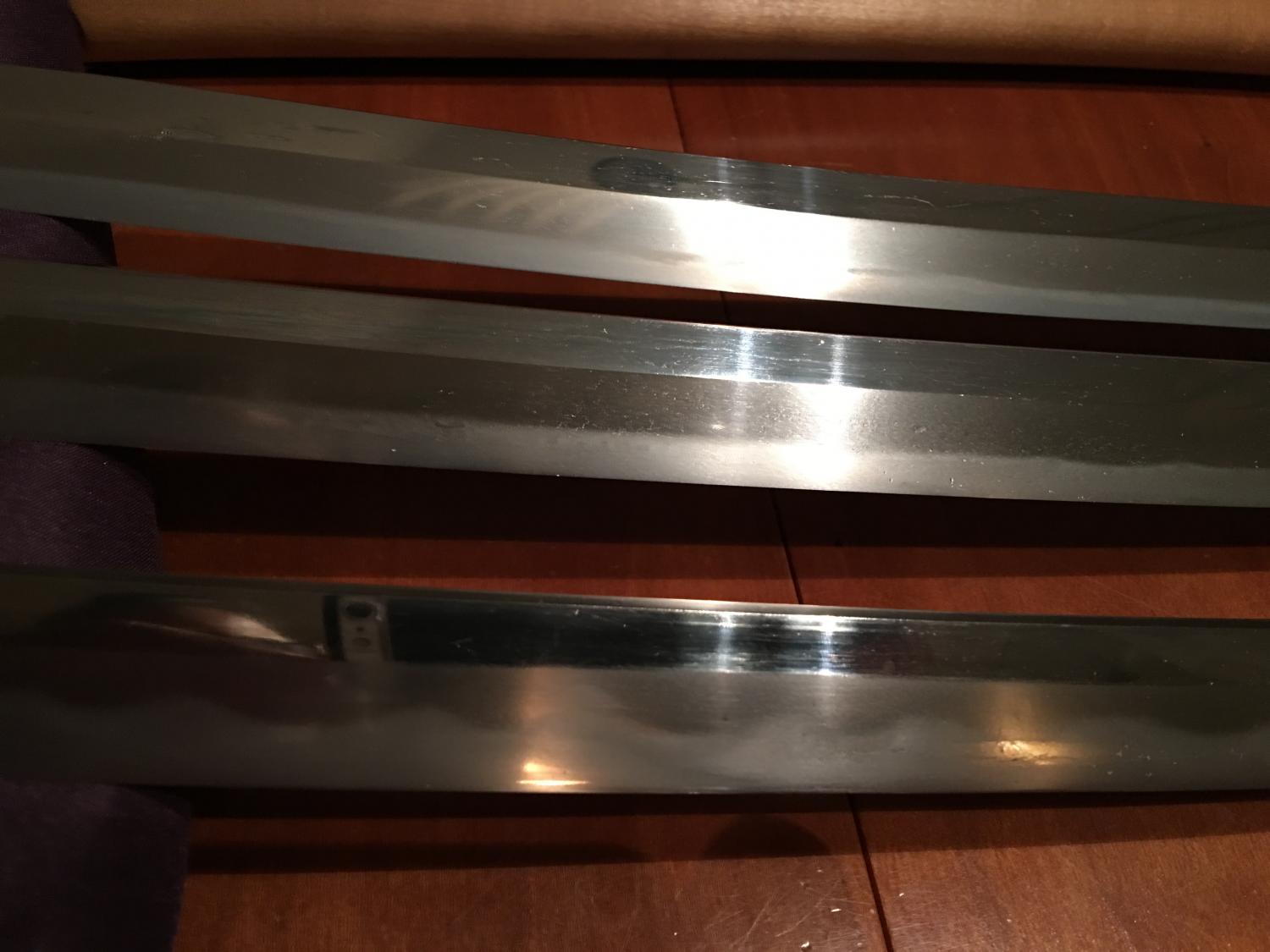
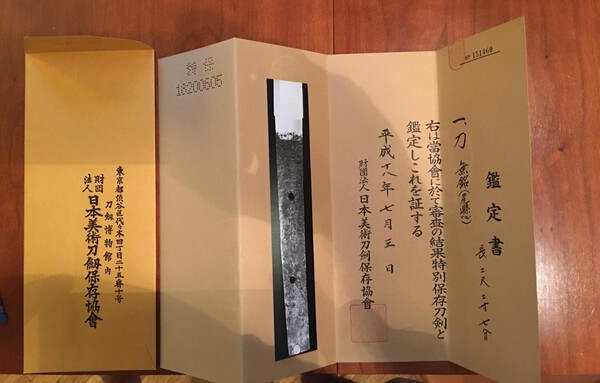
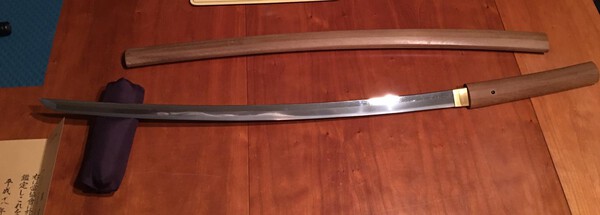
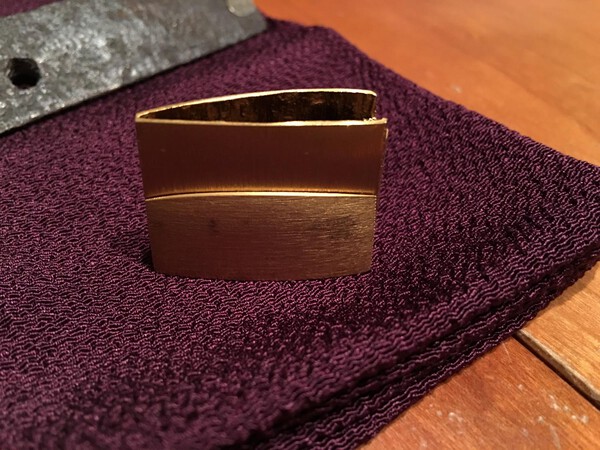
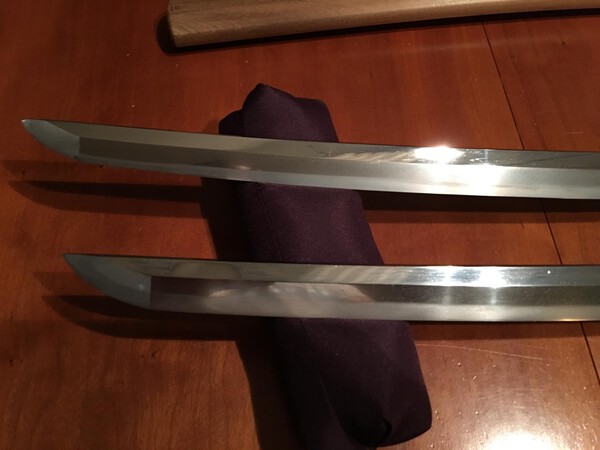
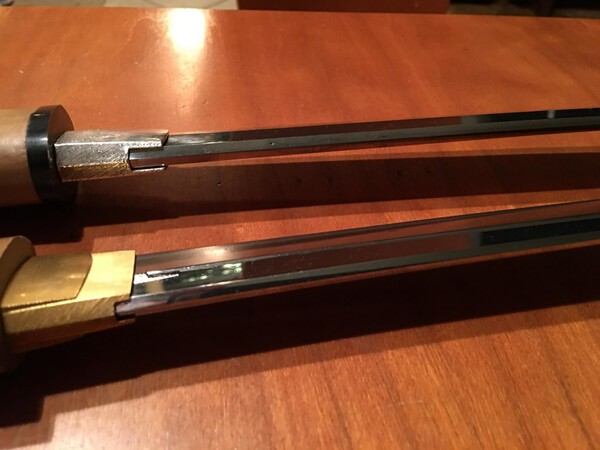
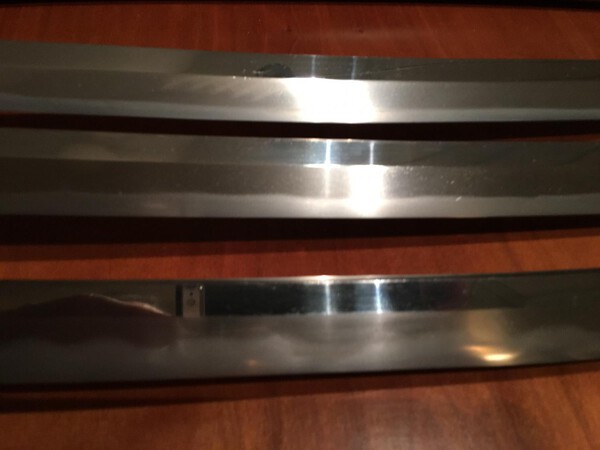
Once gain, I thank all the minds on the board and the NY token Kai for the wonderful guidance in buidling my collection. I feel like I have learned so much yet barely scratched the surface of this addiction. In my desire for the Old I am proud to present for your consideration and review my first Tokubetsu Hozon piece a Likely early Muromachi Mumei O-suriage Shikkake Katana. Also, and although this likely only benefits me as a learning tool, I decided to add photos of the sword itself and direct comparisons to my Koto Kiyomitsu and Shinto Kanemichi. What stikes me about the Yamato Shikkake is the thinness of the blade and the tapering lines up to the kissaki when compared to the much meatier Koto and Shinto blades. I see how the hada also changes along the blade as you move to the nakago. I hope I have done well with this but I am very pleased to be able to look at such an old blade in such nice condition and imagine where it has been. For reference the photos with three blades starts with the Shikkake furthest to the back of the photo, then the Koto and closest is the shinto wakizashi. In the photos where there are two blades it is the Shikkake furthest and the Koto Kiyomitsu closest. I can also say that the 2 piece habaki is beautiful for such a simple part. Just wish I had mounts for this. No swords with mounts yet. To all the more informed, I do realize that I am comparing a very old Tokubetsu Hozon piece to a more run of the mill Hozon Koto and nice Hozon shinto blade. This was a pleasurable learning experience. Thanks, Darius








-
A Hira zukuri wakizashi is on my hit list (unfortunately a much lesser veraion than this for now)
-
Olivier, Listen to the guys here on the board, As a beginner myself, they have kept me on a path to better swords that I am proud of and are good bets. Trust me I understand the temptation, but as I have learned in a little while, there is always another sword around the corner. Darius
-
Franco, yes, this is the Habaki for my second Gen Tango No Kami Kanemichi Grey, I'll take a photo of the Habaki tonight and post. At this point I'm leaning toward just keeping it as it is. Why muss around with it when it doesn't distract from the beauty of the sword.
-
. Sorry, my bad. Copper two piece Habaki.
-
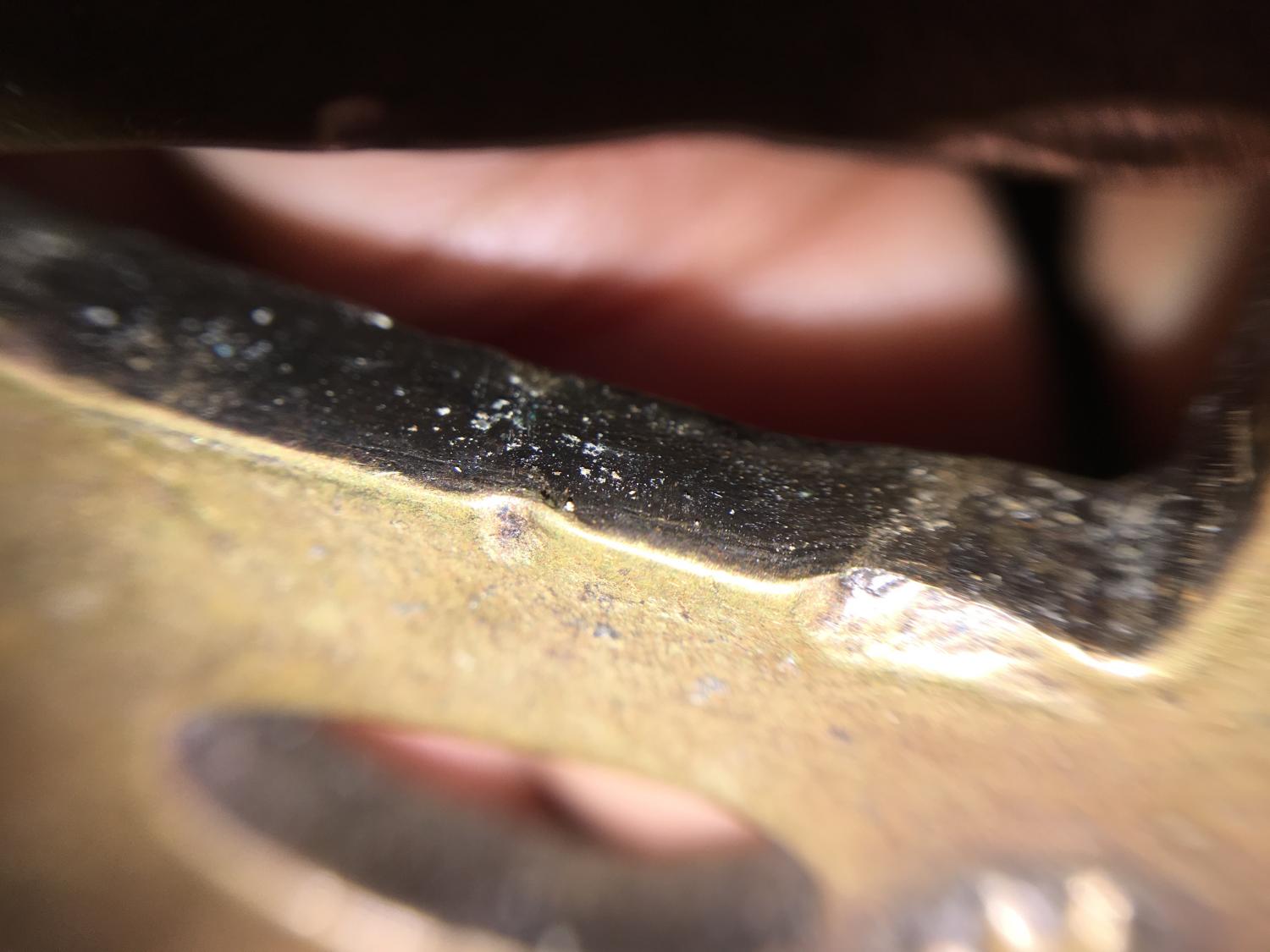
Can one have a brass two piece or any habaki for that matter re-plated or is that a big no-no?? Not looking for any bling but rather just having it look as nice as the blade itself. Thanks, Darius
-
Congrats, Hamon reminds me of clouds. Really nice blade
-
Oops, what did i do now? Sorry. I have to stop using my phone to post.
-
Hi Grev, happy you asked . Tsuba definitely in line but now that i have the Kiyomitsu Katana and added this Wakizashi i have the bug for a Hira Zukury Wakizashi with some simple horimono. Then after that I'll have to look at Tanto. Haha. I'm getting ahead of myself now.
-
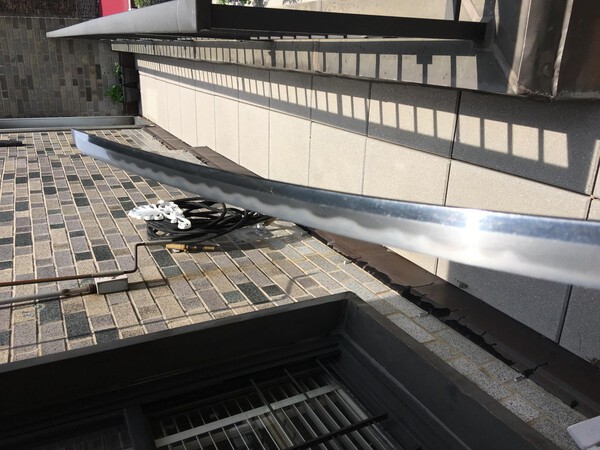
Thanks, was trying every angle to show Hamon. I teied with windo behind me bu cast shadow over sword. Will tey on terrace next.
-
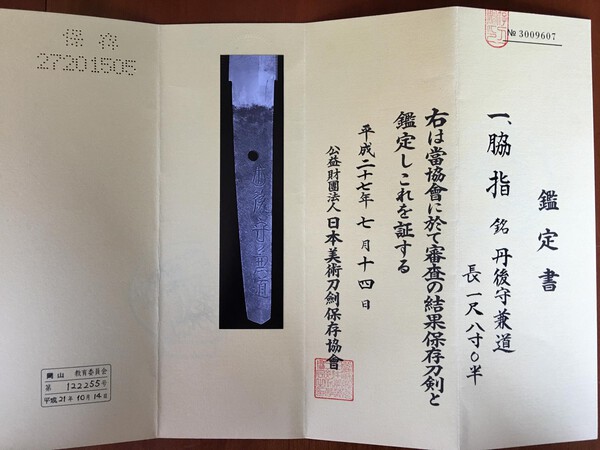
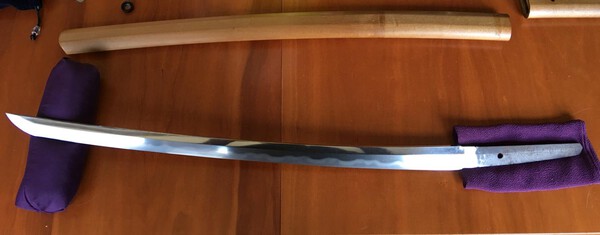
Hello All, As always and following guidance from the very helpful members here and the NY Token Kai, I've added my second sword to my Kiyomitsu Katana. I present for your thoughts my Tango No Kami Kanemichi Kanemichi (2nd gen) 21" nagasa signed ubu nakago. Beautiful wavy Hamon which is very clear but subtle (hard to photo). A very well balances sword in nice polish. Much to study here. I'm not sure I'm a big fan of two piece Habaki's (are they easier to make) Hada is not as apparent as others but have to take some time with it. Sorry for soso pictures. Got rid of DSLR and using cell. Any thougts and coments always appreciated as I learn. Thanks for all the board support in learning and a couple of board members who have gone the extra mile to help me learn and avoid dumb mistakes. Darius





-
All, thank you i have learned more and better for it. Best, Darius.
-
Then I apologize for my rant, i try to automatically throw myself on the block when i know I've been naughty in Nihonto (or junk nihonto) land. I try to listen and learn from all here. I know its ugly but didn't expect that
-
I honestly find your approach At touch extreme. I am attempting to learn and is that not what one should feel instead of being ridiculed in very poor english. You are welcome to express your dissatisfaction with my query but i hope ypur bedside manner is better in your day job. I think you made your point clear and thank you for adding flavor to my simple question.
-
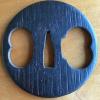
Using this Tsuba which was on a junk blade, I believe its just a cast fake but what do i need to look at to confirm. Dents look like they were cast Thanks, Darius


-
Brian, this further made me believe that it was a broken blade cut down

-
To wrap this up and for perspective on the rest of the blade itself. Here it is. Also, ive attached a shot of an odd circular stamp at bottom of nakago which might have been a clamp or tool mark. Thanks for indulging my momentary lapse of antique junk shop logic as i learn.


-
Proper orientation of images. Sorry all. Junk is junk but I like to correct my mistakes ???? I can only hope it's a real export junk blade over Chinese copy. At least a better coffee table conversation piece Best Darius