DirkO
-
Posts
1,111 -
Joined
-
Last visited
-
Days Won
5
Content Type
Profiles
Forums
Events
Store
Downloads
Gallery
Everything posted by DirkO
-
Help with translation of a Sendai Tsuba NBTHK Paper
DirkO replied to zanilu's topic in Translation Assistance
I was following this tsuba as well, seeing you don't see good Sendai that often, well done Luca! -
Winning Bid: ¥959,000
-
Gassan is a work of Gassan swordsmith before the middle of the Edo period. In the literature, it is said that the swordsmith of Dewa Province in the Kamakura period * Kioumaru is in charge, and it is also said that the inscription is cut into blades, but the existing works that are sure to be inscribed are still inscribed in SR Saki after the Nanbokucho period. Not found. The works from the Nanbokucho period to the early Muromachi period are called Tsukiyama or Tsukiyama work, but after the middle of the Muromachi period, Kanekuni, Konnori, Toshihisa, Kuri, Kunisei, and Abo. .. Some of them, such as Toshikichi, have been cut off from the author's name, and are even more civilized. Years such as Eisho will also be recorded. Most of the existing works are from the end of the Muromachi period, but they declined rapidly in the Momoyama period, and until Sadakichi Tsukiyama revived the Gassan school in the late Edo period, most of the works of this school were not seen. The above I did with Google translate for android with the scan function. The names you can usually find in the romaji bit in the app.
-
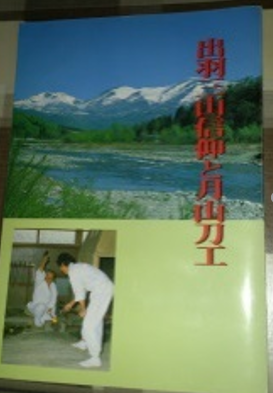
For early Gassan, you need this one as well (only in Japanese though): Dewa sanzan shinkō to Gassan tōkō (The Religous Practices of the Three Peaks of Dewa Province and the Gassan Swordsmiths) It's from the NBTHK Osaka branch - 1988 and it digs deeper into the start of the Gassan tradition.
-
Item No. 168 has strong Onin influence (ten-zogan and the zogan around the seppa), I don't think the iron or brass quality is quite there, but I would put this to early Yoshiro indeed.
-
Sad news, was looking forward to finally meet him in one of the upcoming Bonn NBTHK meetings. My thoughts go out to him and his familly, let's hope he pulls through!
-
Looks like Bamen meets Yagyu
-
Any domain ending with .top is blocked in a lot of countries, simply because there's no valid sites running on it....
-
https://www.tosoguya.com/umetada_gohei_map_tsuba.html please see a very similar tsuba here.
-
Moving it back and forward in the light, I think you nailed it Ray! Thx a lot!
-
Hi, Documenting some tsuba and for some reason lost the original info I had on this one. I think it's signed 則 nori but can't make out the other faint kanji? Any help would be appreciated!

-
Thanks for the feedback - I was indeed looking for the quality of the A3 pictures - the softback is only A4 (I think at around 3000yen) - indeed the larger book comes in at around 32000 yen - but given your feedback, I won't be buying it.
-
Piers, did you happen to browse through the 50 year anniversary catalogue (開館五十周年記念 林原美術館名刀図譜) in the shop? Just wondering if it's worth getting the A3 format or not... Quality of pictures seems good as far as I can see (it's been on my list since long) - but it comes at quite a price
-
Big thank you to both of you! I really couldn't find those last few kanji - although I did have 子地 in my earlier tries, I switched to る地 because it seemed a better fit. As you both undoubtedly know - you're real credits to this forum! I'll make a small donation in your honor.
-
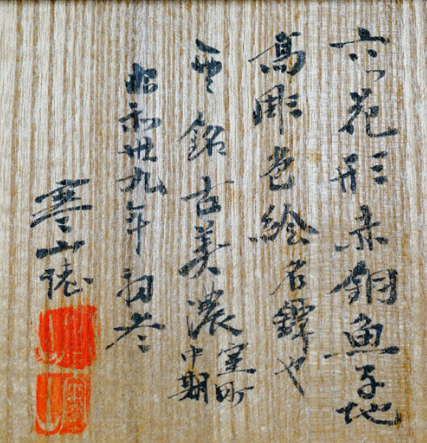
Hi, Did my homework, but wasn't quite able to finish it :-) Any help would be greatly appreciated! 六花形 赤銅 魚る地 Mutsu kikka-gata shakudo niru? ji (where the niru is confusing me, maybe I got the kanji wrong?) 高彫 色絵 x x 也 takabori iroe x x nari 無銘 古美濃 (中期室町) Mumei Ko-Mino (Chūki Muromachi) 昭和 x x 年 x x Showa year (can't really find the right sexagenary cycle, doubting between a few) 寒山誌 Kanzan shirusu + double seal
-
Yes, they're water buffalo (like the ones in my avatar), I once had a small discussion about this with Ford and he was adamant they were water buffalo - I can't go against that lvl of knowledge!
-
What are the odds? When perusing @John A Stuart site, I came across this one - mei is a good match

-
Hi Bob; No idea re the mounting on polearms. Regarding the mei - very uncommon to have Sanshu mentioned, let alone using those 2 kanji. There was a swordsmith with this signature, so it might be worth trying to track his mei down - I don't have it in my books sadly. It's unlikely to be this specific smith due to the mentioning of the Bunki jidai, however, there might've been later generations? However, also note that the tsuba and the swordsmith have different kanji for Sanshu. All I have is this excerpt: ‘Kōzan-oshigata’ lists an oshigata of Nagayoshi with the mei of ‘Sanshū-jū Heianjō Nagayoshi’ (三州住平安城長吉). Swordsmith directories say that Nagayoshi of the Bunki Era lived in Ise and Mikawa provinces.
-
I think the piece has been remounted quite often, meaning it did have some importance to its various owners. It's also a very unique design. After some more searching I think the full signature will be: 山州住長吉 Sanshu Ju Nagayoshi/Chokichi
-
長吉 - Chokichi or Nagayoshi ... can't really decipher the rest I'm afraid.
-
Well it's probably Fukurokuju (福禄寿) - with his staff holding the book in which the lifespan of each person on earth is contained. However, the orb is somewhat puzzling although he is said to be an incarnation of the Southern Polestar (that controlls the dates of death, whereas Northern Polestar dates of birth). But not sure on that.
-
Difference in seppa dai I think just proves it's a late piece. Regarding the ana, they have a Higo feel to them, that Higo influence can also be seen on the missing zogan, it's common for them to have a fabricated 'worn' look. I do stress 'influence' however, this isn't a Higo tsuba.
-
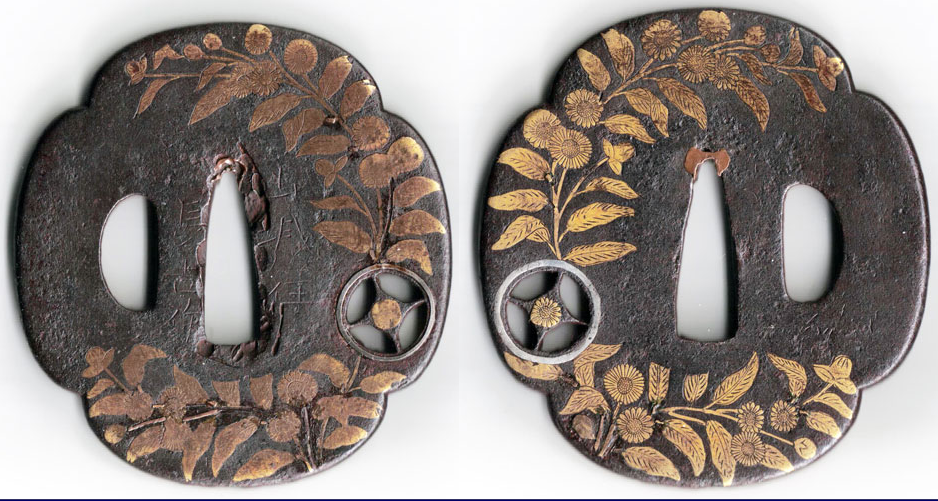
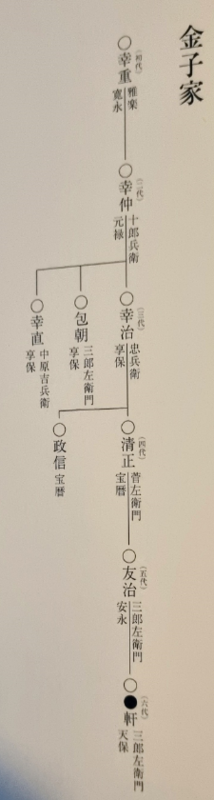
Choshu Hagi ju Kaneko Jurobei Yukinaka - I always thought Choshu to be underrated - they did have some very good pieces, although the general ones are indeed so-so. Of the Kaneko family. He was called Jurobei son of Yukishige. He was skilled at carving plants and flowers. He used a somewhat wide mimi and carefully and tastefully inlaid gold. Kaneko school lineage (yours is the 2nd gen) Other example of the same maker:

-
NIHONTO CLUB GERMANY MEETING
DirkO replied to BIG's topic in Sword Shows, Events, Community News and Legislation Issues
Thanks for the update - good to see some familiar faces in that report and photo! I hope the NBTHK-EB will also resume their meetings in fall.