Alex A
-
Posts
7,256 -
Joined
-
Last visited
-
Days Won
46
Content Type
Profiles
Forums
Events
Store
Downloads
Gallery
Everything posted by Alex A
-
Kirill, Like the Masahiro Naotane……. Sai Jo Naokatsu 1st and 2nd Jo-Saku & Naomitsu (Kajihei) also Jo-saku. Anyhow, I get why you don't like Shinshinto, I never used to either. I like versatile smiths that are capable of working in different styles, bit like some of the more modern day Gassan smiths. Appreciate the positive input. Thanks all.
-
Its not about "are we educated enough", its about discussion/debate...…………...that's how we learn and advance our thinking. With that philosophy Jacques, we would still be riding around on horse and cart. Ps, better ways to get your point across, comes across as childish with the DK remark.
-
Ive had a fukure in a sword by a Jo-saku rated smith, in his prime time. Happens to the best, unless his apprentice made it lol
-
Well, they sure do crop up a lot in conversation, beware the dreaded kazuuchi-mono
-
One more thing about Kazuuchi-mono, Connoisseurs states "rough masame hada". The impression I get is proper junk blades, cheap blades made mainly for the foot soldiers (Ashigaru). Might just be me, but don't see many ? You see Bizen waks on Aoi quite often, never with masame. Always with hozen (worthy of preservation) Obviously not every wak made was an "art" sword, Samurai would have had the better swords, but even then at that time, how many could be classed as "art" swords ? Just a thought.
-
Thanks again, some excellent replies. I suppose there is nothing wrong with the odd "nitpick" now and again. No disrespect to the highly Knowledgeable individuals that put the ratings together, just bumbling curiosity. Kirill, interesting what you were saying about generations. Another good example may be Naotane (Sai-Jo + Juyo) and then Naokatsu ( Jo-saku + Juyo). Naokatsu was an excellent smith, taught the famous forger Kajihei, but I suppose as you mention, goes back to the lineage thing. I was unaware of Japans tradition with ratings, good to know. Cheers.
-
Thanks for the replies Gents. Kirill, I used Yokoyama Sukekane as an example. The hada may look "undistinguished", but then again, you could say that about a number of modern day Mukansa smiths works. My point being, its still highly skilled work. Im obviously having trouble getting my head around this "contextual" idea with Fujishiro,s , I guess I just see blades/smiths, not era. This Nihonto game can be a rather jumbled historic journey. Ps, Muramasa is a name that often arises with my thoughts on this topic.
-
Good point Chris. I suppose hataraki and a neat nioi-guchi would be the last thing on your mind whilst someone was trying to bludgeon you to death. I now have an image of several Samurai at the front of a battle formation with their blades out, discussing and comparing their art works.
-
Yes, that's what has left my mind, I do remember now you point it out, cheers Mariusz
-
Anyone feel some smiths are underrated? You see some smiths listed as "Jo Saku" (fujishiro) but when you look at the work, for me, its not s good as some smiths listed as "Chu-jo". Take the Bizen Shinshinto smith Yokoyama Sukekane, rated as "Chu-jo" (above average). I like his work, also his work is always highly regarded by Aoi, see below. Just wonder why hes listed as "Chu-jo". https://www.aoijapan.com/tanto-bishu-osafune-ju-yokoyama-saemon-sukekane/ https://www.aoijapan.net/wakizashi-bizen-kuni-osafune-yokoyama-sukekane-saku/ https://www.aoijapan.com/wakizashi-bishu-osafune-ju-yokoyama-sukekane-saku1st-generation/
-
Looks a decent made sword with well finished nakago, not something i would associate with junky kazu-uchi mono. kazu-uchi mono seems to be one of those "bracket" subjects that folk try and fit everything into. At that time, smiths were blasting out all levels of swords, some obviously mass produced, and some "good" but suppose they could still be described as mass produced. For the best of the bunch, look for longer mei, although not always the case. I like to see bo-hi etc, and date on sue Bizen. Sometimes you see really good bizen with scruffy mei. Judge the sword on its own merits.
-
Avoid buying from Ebay if your new to collecting. Look at the dealers above or look in the sales section. Sometimes swords on Ebay are advertised along with papers from another sword. If no reply, then you cant do business, so move on.
-
Mekugi-Ana Chiseled Vs. Other
Alex A replied to Blazeaglory's topic in General Nihonto Related Discussion
Some more info Dwain https://markussesko.com/2013/09/14/the-secret-world-of-mekugi-ana/ -
Mekugi-Ana Chiseled Vs. Other
Alex A replied to Blazeaglory's topic in General Nihonto Related Discussion
Mekugi-ana can be confusing sometimes when judging age. If appears punched, then obviously it backs up a good age, but its never straight forward. Look at your books and online, you will find even very old papered UBU swords with just one neat round hole, how can this be? One reason maybe that drilling started earlier than we think it did, in some areas One reason is that if a smith wanted a neat round hole, then it could have a neat round hole, look at sukashi on Koto Tosho tsuba just as an example of metal work at that time. One reason maybe that existing punched holes where eventually drilled to accommodate new fittings. I was only looking at a Nanbokucho sword on Aoi the other day, 2 holes, both appeared to be drilled, always gets me a wondering. -
Hello Paul. Its very difficult to judge from the info available, plenty of info available online. Bare in mind your blade appears to be once longer and it looks to have a decent amount of curve. Im sort of leaning toward early Muromachi, Maybe this may help you. http://www.yamakawadojo.com/The%20Japanese%20Sword%20Historical%20Changes%20in%20Shape.pdf
-
Is your sword in lovely polish with no scuffs ?. If so, buying an old ill fitting saya may well put scuffs down your blade, repairing scuffs professionally is an hassle and expense you will want to avoid. If the swords in old polish, no point getting it polished, as scuffs will eventually show from an ill fitting saya. Maybe there is someone local who makes saya at a reasonable cost.
-
That's great Jussi, cheers. Knew something had to be written somewhere, just couldn't find it.
-
Cheers Kirill & Chris Using the koshirae i provided as just one example. The fittings certainly have decent quality, the tsuka has age, looks great and would make a nice addition to any collection The thing that struck me about this koshirae is that the tsuba has hitsu-ana, but the saya appears to have no allowances. Im guessing the saya is a late addition maybe. Its these little niggles that have me curious, as to where NBTHK etc stand.
-
If anyone knows, or knows where I can find info, would be appreciated. An example https://www.aoijapan.com/katana-bishu-osafune-sukesada-eisho-10-nen-8-gatsu-hi/ Cheers
-
A number of bonsai enthusiasts on here Eric Glad its not an hagire. Looks to be in a decent polish.
-
Maybe a crack in the hamon Eric, middle of 4th pic, https://www.japaneseswordindex.com/kizu.htm Check other side of blade. Nice tree.
-
A good book to own, if you don't already have it http://www.japaneseswordbooksandtsuba.com/store/books/b734-uchigatana-koshirae-translation-tokyo-national-museum
-
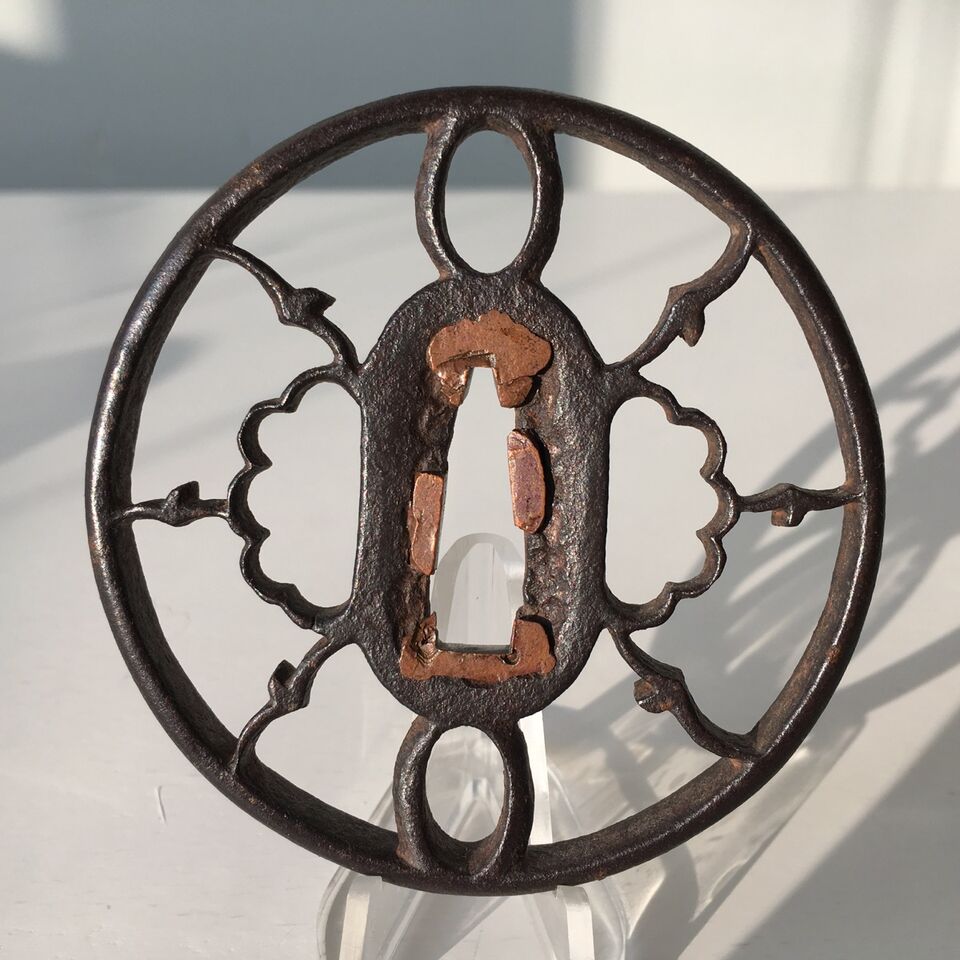
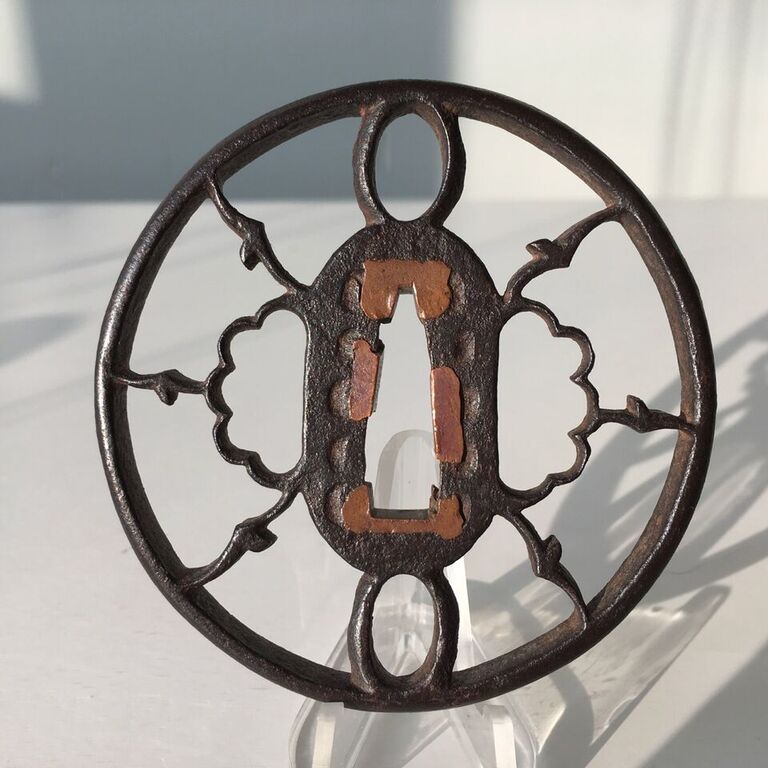
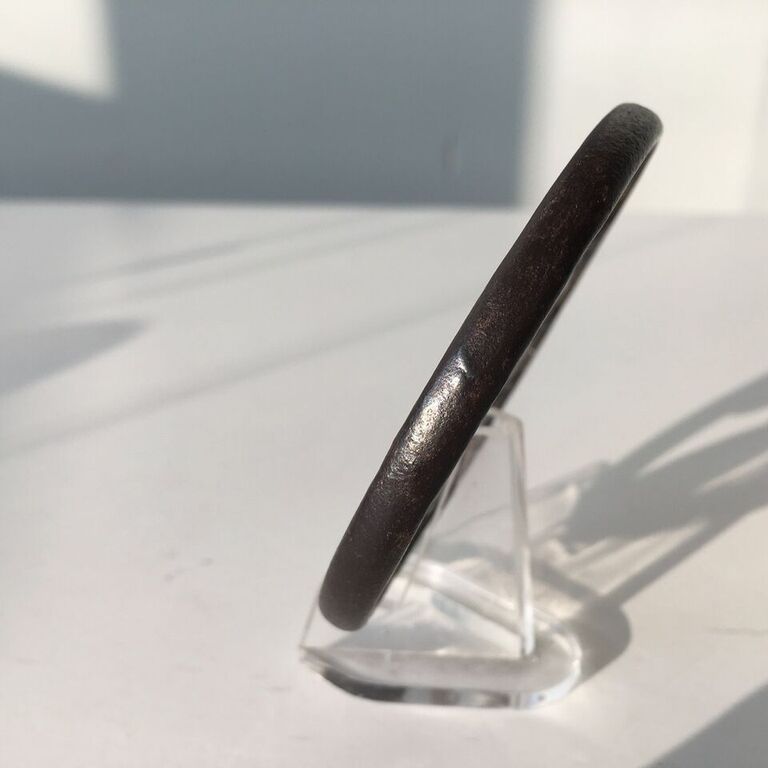
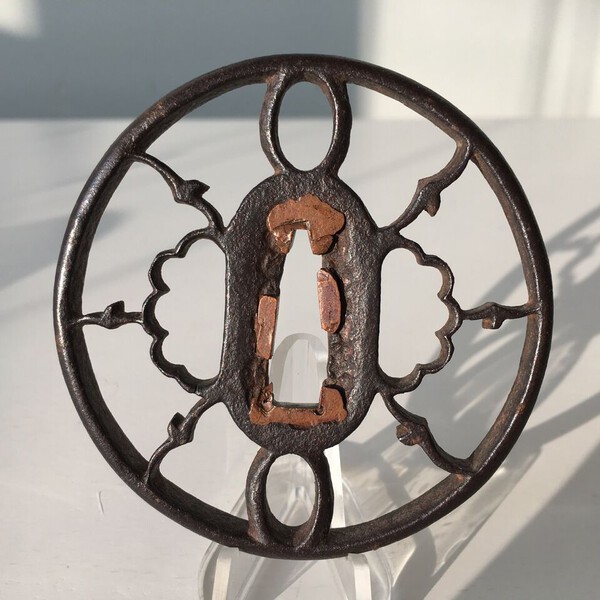
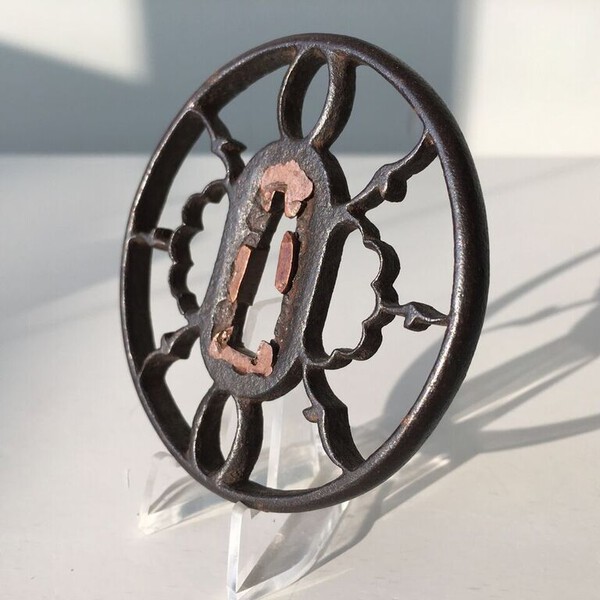
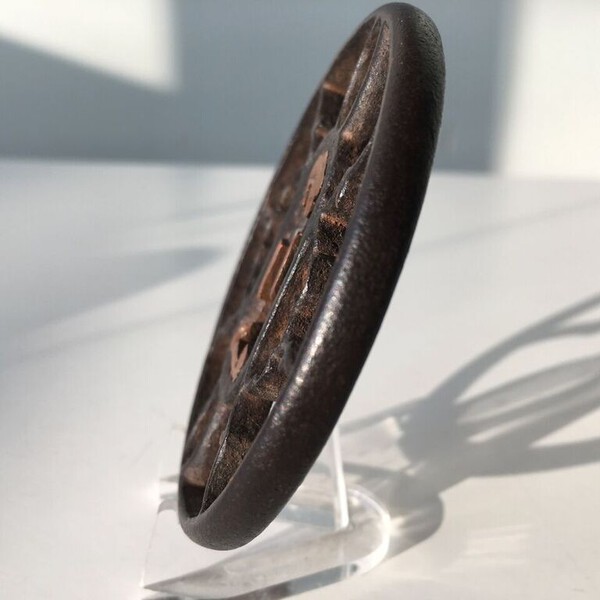
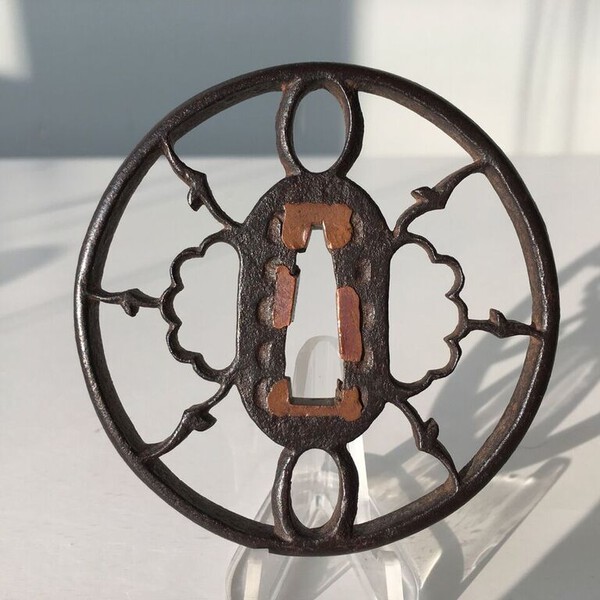
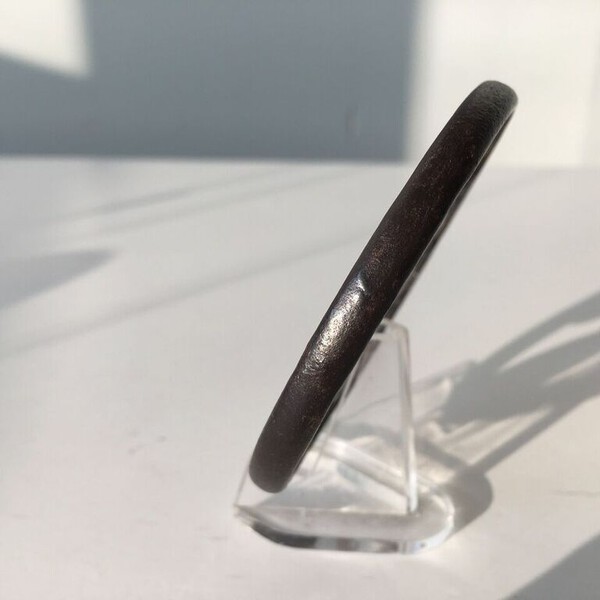
An excellent Owari tsuba, Momoyama to early Edo. 7.2 x 7.1 x 0.6 cm Outstanding workmanship, great patina. a fine tsuba. Rim displays tokketsu. SOLD Any questions, please pm me. Thanks to Mariusz for pictures.
-
Help/advice With A Potential Purchase
Alex A replied to nickm's topic in General Nihonto Related Discussion
Just found this with regards Baleen. http://cool.conservation-us.org/jaic/articles/jaic32-03-001.html -
Fuchi-kashira appear to be later than Tensho.