O koumori
-
Posts
357 -
Joined
-
Last visited


O koumori's Achievements






-
Rohan, Thanks again for posting these!
-
Some good news on U.S. tariffs
O koumori replied to atm's topic in General Nihonto Related Discussion
Thanks for posting the link, Dan -
Spoils of War or War loot?
O koumori replied to MassiveMoonHeh's topic in General Nihonto Related Discussion
or temple... -
Restoration possible??
O koumori replied to Ronald Aguirre's topic in General Nihonto Related Discussion
Can you post a picture of the nakago (tang), and one of the entire blade? -
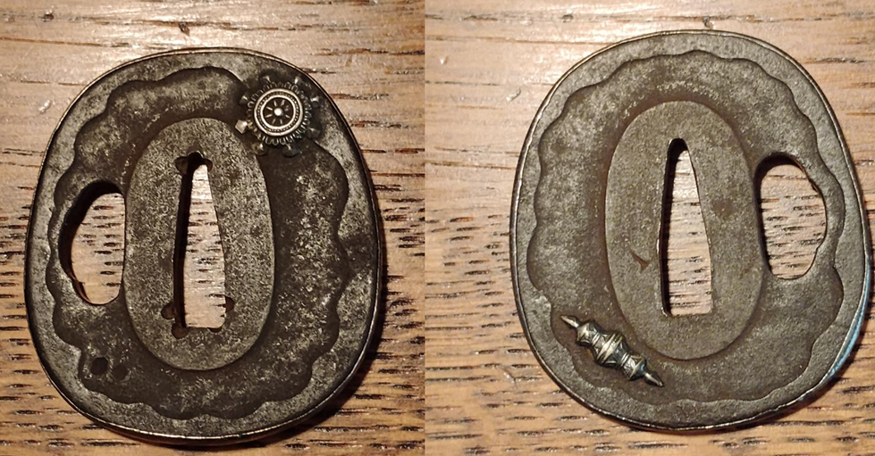
Was thinking about the legend that Daruma's intense stare bored holes in the wall of the cave...
-
Interesting point! You can see two 'holes' on the bottom left of the obverse side.
-
Wakizashi tsuba with Wheel of Dharma and Vajra

-
You are correct - it is mitsu. My bad
-
Hi Susan, Nice quilt, but Grey is right about using a dark background for photos. The sword appears to be signed with a two-character mei. Unfortunately in the picture the top kanji is partially obscured by the seppa (washer) and tsuba (guard) and I can't make it out. The second character is "yoshi." The blade is signed tachi mei. It is in "handachi" mounts. The blade would need to be carefully examined for flaws and condition before being able to estimate a value. Your best bet would be to locate a study group or experienced collector and have it looked at. If you are not too far, check out the Indiana Token Kai; we meet monthly and would be happy to help out. Dan
-
Ah, so likely gi-mei. Thanks Ray! Dan
-
Hello, I could use some help with the last character of this mei on a small tanto. I believe that the first two are 'Minamoto Kiyo__' - but I could be wrong Thanks! Dan

-
Major names in shinsa/kantei world
O koumori replied to Mark S.'s topic in General Nihonto Related Discussion
Crickets... -
$20 for the Shibata Mitsuo
-
Novel ‘oddity’ or painful to the eyes?
O koumori replied to Mark S.'s topic in General Nihonto Related Discussion
Not collectable for me.