
Leaderboard


Popular Content
Showing content with the highest reputation on 04/23/2025 in all areas
-
Dropping an interesting old text for everyone to download and read. Before the copyright police jump on me, this book is free to download from JSTOR as well and was published first in 1905. Light reading for fun. Not sure if it is in the downloads section already? The Japanese Book of the Ancient Sword.pdf6 points
-
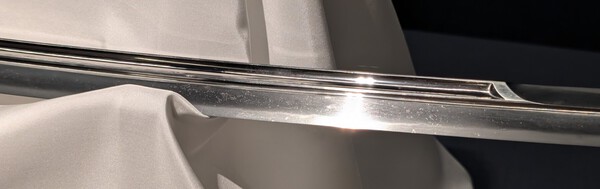
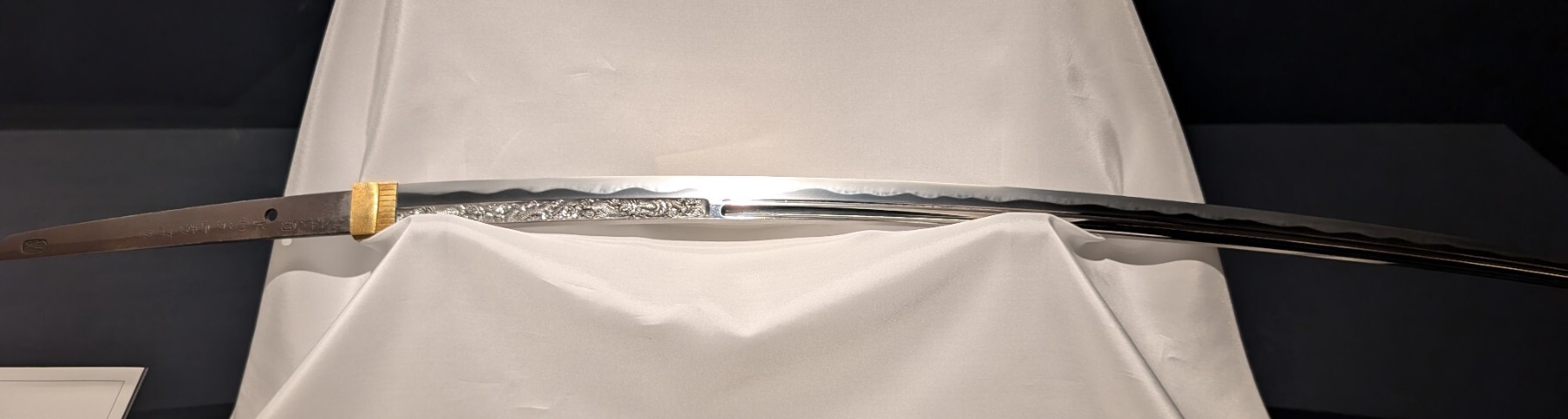
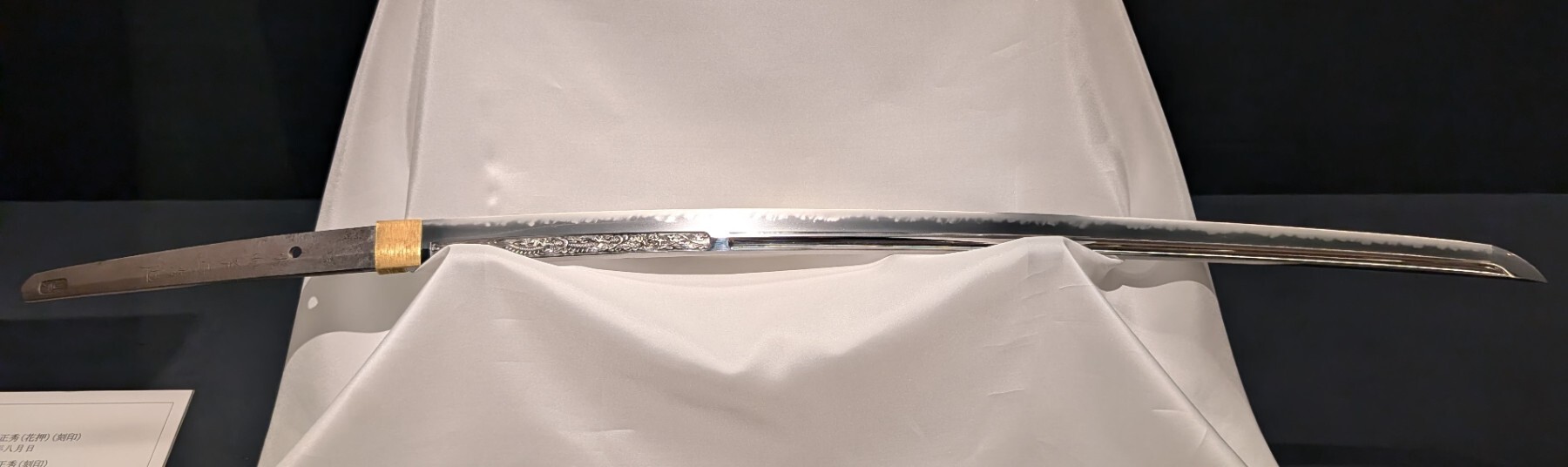
The Naotane kagarasumaru daisho weas so bad-ass that they were displayed even with sub-par polishes...


 6 points
 -
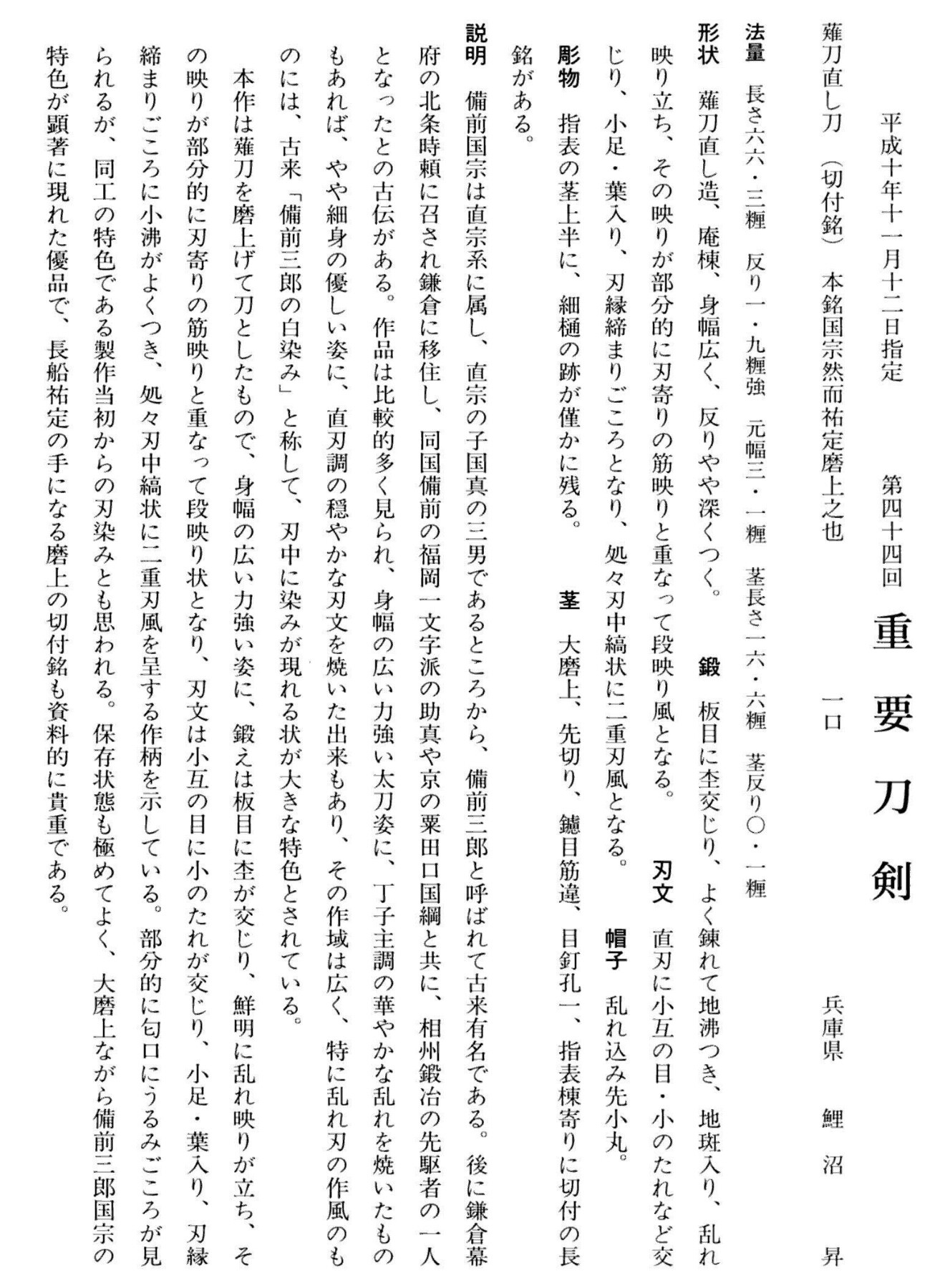
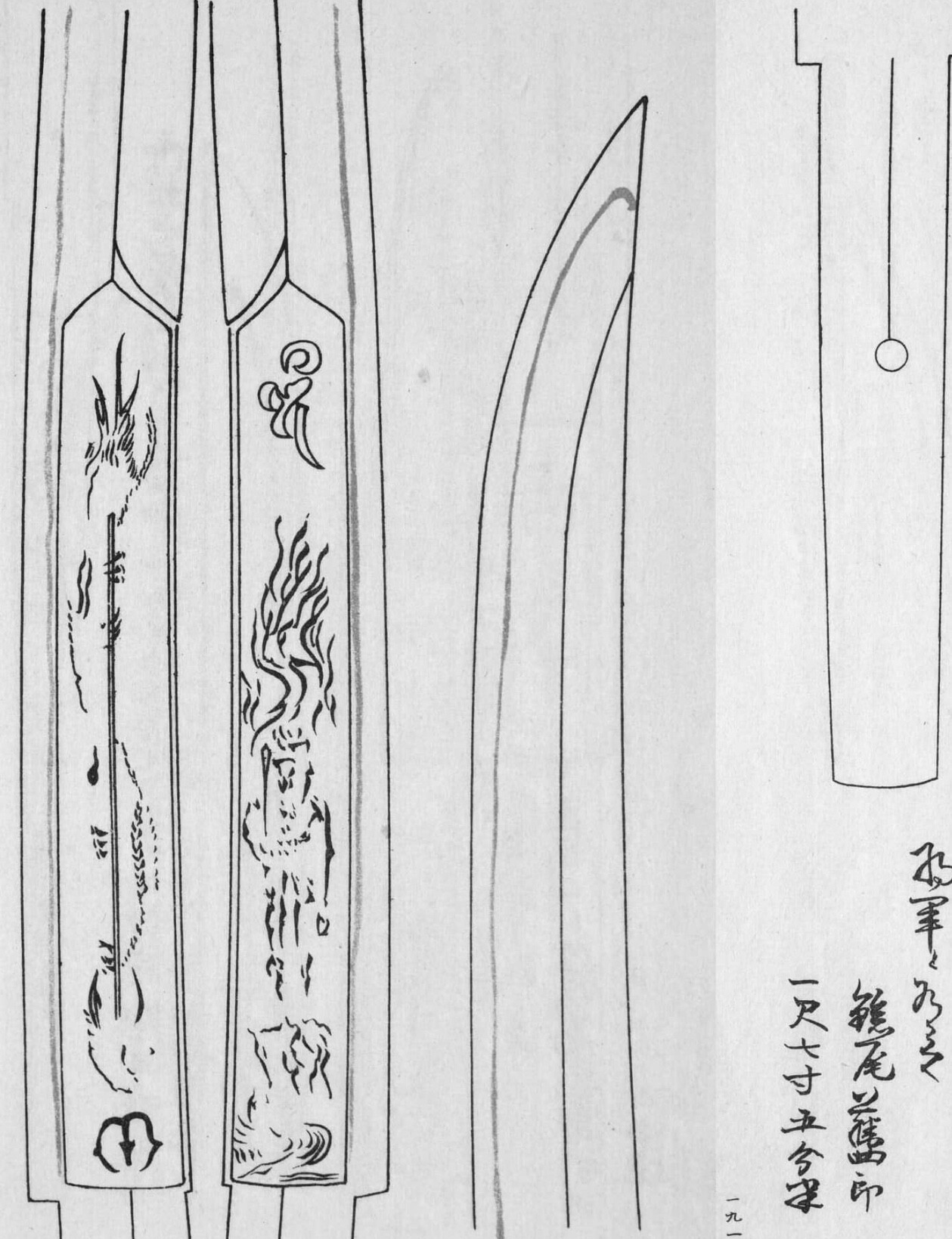
Against my better judgement — I posted this example earlier. Perhaps it was overlooked or an appropriately in-depth study was not made. This blade was Jūyō-tōken in the 44th shinsa. The NBTHK paperwork clearly attributes it as a 薙刀直し刀 naginata-naoshi katana, right there on the front of the certificate. A copy of the setsumei is attached. I will draw your attention to a few points. 形状 薙刀直し造 keijō naginata-naoshi zō 帽子 乱れ込み先小丸 bōshi midare-komi-saki kō-maru [kaeri] 茎 大磨上 nakago ō-suriage 説明 ... 本作は薙刀を磨上げて刀としたもので... honsaku wa naginata o suriagete katana to shita mo node... "Here we have a naginata which was shortened and made into a katana..." Thus: NBTHK calls this a naginata-naoshi and and describes the form as such. An intact boshi with kaeri remains. NBTHK specifically says in the setsumei that it originated as a naginata that was shortened.

 6 points
 -
You're right, Jacques, it is very clear. Which is probably why the NBTHK, Mr. Tanobe, and Kanzan Sato all agree with each other. And don't agree with you. First, Sato writes that "nagamaki" refers to the way these swords were mounted. Followed by "Therefore, nagamaki should properly be called naginata." Which blows the copies claim theory out of the water. Why? Because despite the marked differences in shape, they are still "naginata." Further, anyone reading Sato's article should realize that Sato is talking about blades made over multiple time periods encompassing a number of different shapes. To that point, when being reconfigured to other uses, katana, wakizashi, modifications would be adapted and customized to the individual sword. It was not a one cut fits all. Which accounts for the differences we now see in the boshi between the different types of naginata-naoshi. On the subject of "impossible to know." Again, Jacques, you are mistaken. When naginata-naoshi underwent a shape change there was a narrowing. That narrowing changed the appearance of the sword. When properly restored by today's polishers, excellent polishers will recognize this distortion and reconfigure the shinogi to give the sword more of the original appearance, as the maker intended. When it comes to nihonto, it's just when you begin to think you know something that you find out how little you know.4 points
-
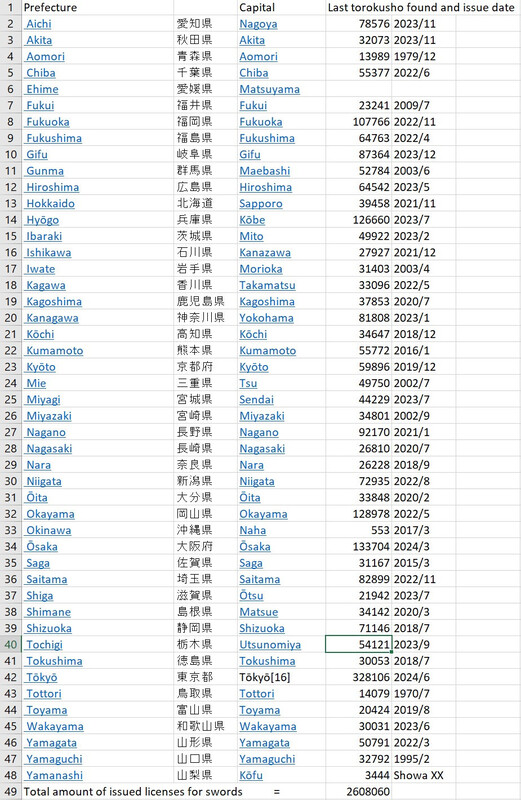
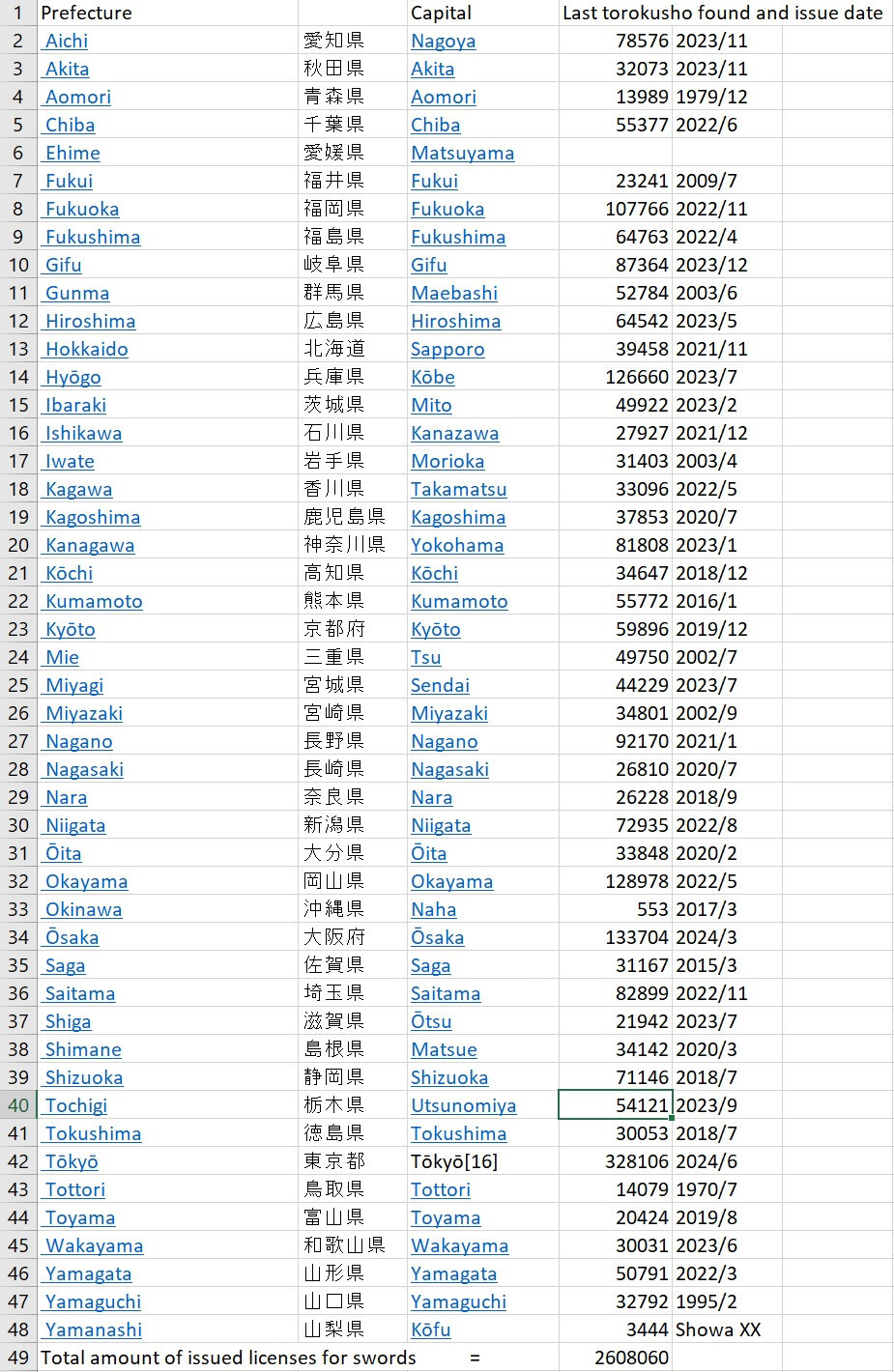
While I agree that 100% totality of data will be impossible task but we can try to get as close as we can. That is what I aim for on my personal project and have been doing it for 10+ years now. The thing is that surviving pre-Mid Muromachi naginata are extremely rare, as I said earlier in this thread so far I have uncovered 124 of them. They are so rare that now that I've gone through the major references, museums and shrines, getting one to pop up from somewhere is always a huge moment for me. Yes I do in general still find several of them each year but the number of them adds up slowly. The naoshi are much more common and I do find few dozens of new ones every year. Now as some might not know ōdachi and old naginata are my thing. When I travel to Japan each summer my goal in sword study is to see ōdachi and old naginata, I don't care that much about National treasures or other highly appreciated swords. I want to see big battlefield stuff. So far I have seen 27 ōdachi and 25 of these old naginata. I am not an academic person, and I don't care about that stuff at all. However I do dig up some statistical stuff as I want to always have proof to backup the things I write. Now as I mentioned in other thread I do have data of 14,000+ pre Mid-Muromachi blades and yes I do have measurements and pictures for pretty much all of them. What I haven't mentioned at NMB yet is that I recently did some calculations about tōrokushō (登録証) [sword registration licence in Japan] numbers. Now I did go through 4,000-5,000 NBTHK papered Hozon/Tokubetsu Hozon swords for this and I do have put out the data in excel about the findings. Now I could have aimed for 10,000 swords (or even a lot more) for more accurate results but as this already took few days and I didn't really care about this too much, it gives a rough idea. Now you can see that there have been 2,600,000+ sword licences that have been issued in Japan. As you can see I am unfortunately totally missing Ehime as I couldn't find a sword licence that would have been registered in there (of course there are swords being registered in there). For Aomori and Tottori last item I found was in 1970's... Now I do not know how many licences are reissues (new number as the old one was lost) etc. but for the sake of simplicity lets say that 600,000 of them are for doubles for already excisting sword licences. That would leave about 2,000,000 Japanese swords in Japan, pretty big number. Now as I have so far found 552 naoshi blades that are pre Mid-Muromachi. You can 4x that number (as I for sure havent yet found all of them) and be at roughly 2,200 very old naoshi blades. Now if my math is correct this 2,200 would just be 0,11% out of 2,000,000 blades in Japan. By logically thinking I do not believe it is too far stretch to think that there have been few thousand repurposed very old naginata blades. After all when you look at the extremely tiny number of actual naginata of that age remaining to this day. Then some general thoughts about the thread. I think there is too much focus on the term naginata-naoshi zukuri. I feel in general it is just made as a guideline for people to make them realize that there are ubu blades made to resemble reworked naginata. Personally I would just call these unokubi/kanmuri-otoshi/shōbu/shinogi zukuri katana/wakizashi depending on their blade style and length. I just feel like focusing on this very small detail is making things a lot more complicated. In general I feel all the references will use the term naginata-naoshi on actually what they see and consider as reworked naginata. The naginata-naoshi that Jacques posted by Yoshikage passed NBTHK Jūyō 23 session. It was also sold by Aoi Art 14 years ago: https://web.archive.org/web/20110913055258/http:/www.aoi-art.com:80/sword/sale/11237.html I am bit puzzled how naginata-naoshi is seen as it would be extremely rare occurrence, I mean to me it makes a lot more sense trying to rework thousands of naginata that were used, than just to trash them totally. Personally I would be much more curious about how there are so many 70cm+ mumei ō-suriage katana that have been attributed from the same period, yet extremely few actual ōdachi remaining to this day, and tachi from most of the makers for whom the blades are attributed towards. Of course that is another completely different topic where people might have varying views too.
 4 points
 -
What a joke. You think museums know anything?? Unless they have experts like Markus on board, you can assume they would show a dustbin lid if someone told them it was an ancient Chinese battle shield. C'mon...pull the other one.4 points
-
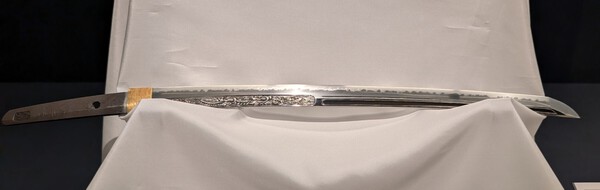
I just visited the NBTHK museum exhibit showcasing works from Kiyomaro, Naotane, and Suishinshi Masahide. There were 2 daisho from Suishinshi Masahide that were sublime, and an exquisite kogarasumaru daisho from Naotane. Pictures below...


 3 points
 -
I would like to take a moment to apologise to the JSSUS for not verifying and doing my research properly before posting one of their magazines (taken down long ago). If I had been more clinical I would have found this link https://www.jssus.org/Japanese_Sword_Society_Archive.html That has a full host of valuble materials and made available for free. Ladies and gentlemen of the JSSUS please forgive my oversight and arrogance. And for those students please check the link to see great material for beginners and seasoned collectors alike. Rayhan3 points
-
Dear Catalin. This appears to be a bonji horimono, have a look here and you might find it, https://swordsofjapan.com/nihonto-library/Japanese-bonji/ This would originally have been carved on the blade above the habaki and so its presence here suggest a sword which is suriage/shortened. The presence of two mekugi ana at his point suggests that it has been shortened quite a lot. A picture of the whole blade without the habaki might help us here. So far this looks like an original piece but the condition of the blade really matters so photographs please? All the best.3 points
-
Because I am not the God, I never say 100% or 0%.3 points
-
I primarily collect sword-makers tsuba. The aim being to own work by sword-makers whose blades I would otherwise not be able to afford. The only boundaries are age, health and pocket book. I suppose I am the soul of my collection. I have two pieces at the heart of my collection of which I am very proud; a Juyo Bizen Morisuke tachi that is ubu signed and dated to 1335, and a juyo tosogu daisho set of tsuba by Chikanori custom made by order of Mito Rekko. More than this I cannot hope for so am very content with what I have achieved thus far...2 points
-
Confusing matters by posting 2 different swords in this thread. The original sword is a repro. The second one looks to be a decent one. Swords with bonji and horimono on them, even if shortened until they are in the nakago, should be looked at more closely for quality, as it could be a decent sword.2 points
-
Hi Caitlin, I believe that you have a genuine Nihonto. Like you suggest, it appears to be o-suriage (greatly shortened). It's hard to put a date on your item, especially from photos. It's made even more difficult because it's been shortened, and the original shape has been lost to time. If you are interested in restoration, please keep in mind that it's a very expensive and long process. I would recommend finding a well respected and recommended TOGISHI to have a look at your sword, and help you determine if it's worth the price to restore or not. Unfortunately, I am in the USA and not the UK, and am unfamiliar with togishi over there. Maybe someone can chime in, and help. Best of luck, cool sword, and welcome to the forum! All the best, -Sam2 points
-
Sorry... Found it on YouTube Link:2 points
-
Yoshida Masaya (吉田正也) ?2 points
-
Yes, but I think we are both wondering who is the modern smith making it?2 points
-
Hi Michael, The blade is signed 豊州住藤原正行 = Hōshū-jū Fujiwara Masayuki2 points
-
Hi Rayhah, To be more specific, its mimic Yamatorige Sanchomo one. I will post full details once it’s in my hand.
 2 points
 -
Kind offer, Dale, appreciated. One of my sideline jobs has been proof-reading, so we are ok in that department. Back to your original question, though, Mr Sugawa is a tireless investigator, so for that reason alone (and the photographs) I would recommend getting his Book 2 in English, as part of a broader background. My instructor told me not to bother reading Sugawa as so much was plain wrong, back when he was new to the field and first writing books. "It would take too much time to sort out the good from the bad", he would say. This brought me into direct conflict with Eric (sadly no longer with us) who started Edo Period Corner Part II on this forum, and wanted me to tell him exactly what was wrong with it! As to Noel Perrin, I am not here to teach my grandmother to suck eggs, but bear in mind that his subliminal message was/is that if Japan could give up guns, then surely the US could too. He seems to have overlooked that Japan continued to have a mass of guns right through the Edo Period, but they were strictly regulated, whether used within the various schools of gunnery, or for target practice at designated shooting ranges or in communities for hunting. Japan never 'gave up' guns. This 'continued-but-well-regulated' usage is something that Jan documents in our new book. Actually, although something is known about how guns originally reached Japan, we switch on a light and fill in the as-yet unknown gap from there onwards, between the arrival of guns in Japan in 1543 through to the end of Edo/beginning of Meiji.2 points
-
Yes, by the way, I have also checked the literal translation. We are however not talking about repairing broken plates or chipped kettle here. So, in this context of naginata / nagamaki, it means altered or modified. Anyway, this will be my last post in this thread as the topic has been exhausted. Numerous Koto examples with retained kaeri have been added of what the NBTHK calls naginata naoshi. Lastly, herein an example of a short naginata and I have illustrated how it can be modified further. Imagine a significantly longer Nanbokucho blade of eg 100cm and you can understand how they naoshi-ed it. It is den Fukuoka Ichimonji Naganori but shortened by one of the Sukesada.
 2 points
 -
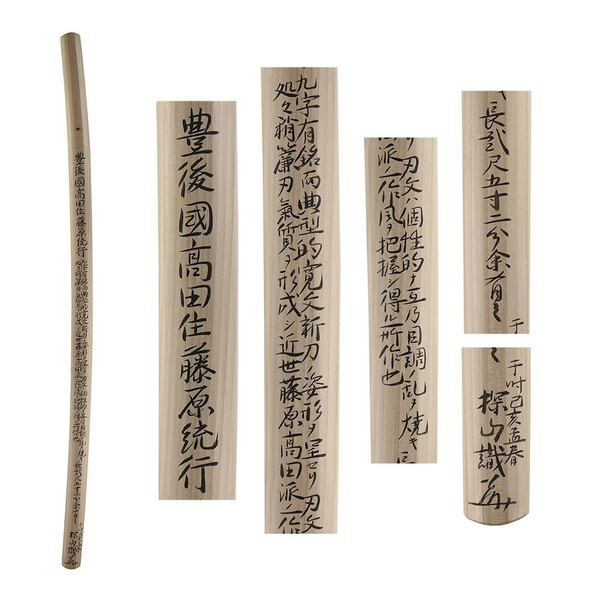
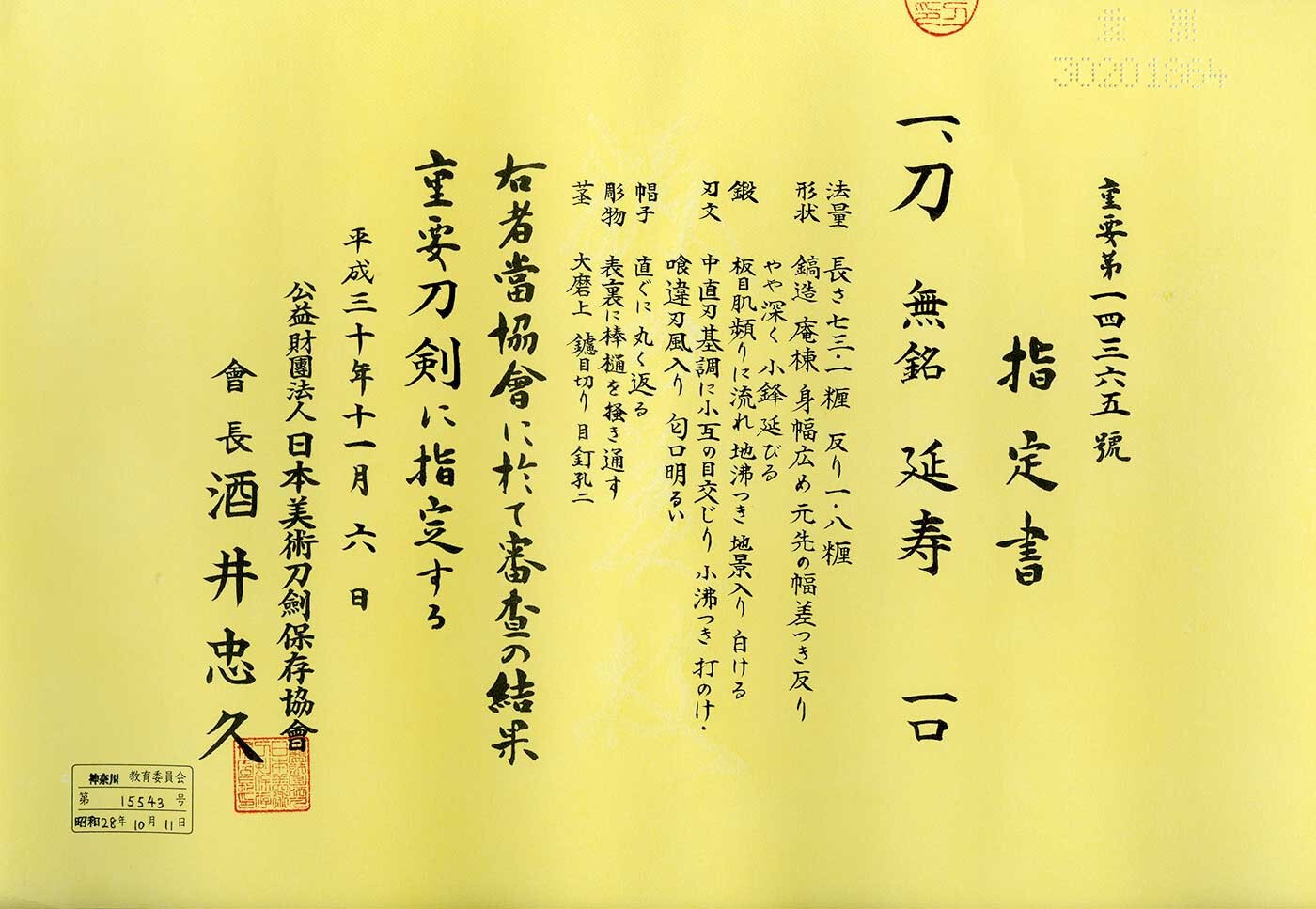
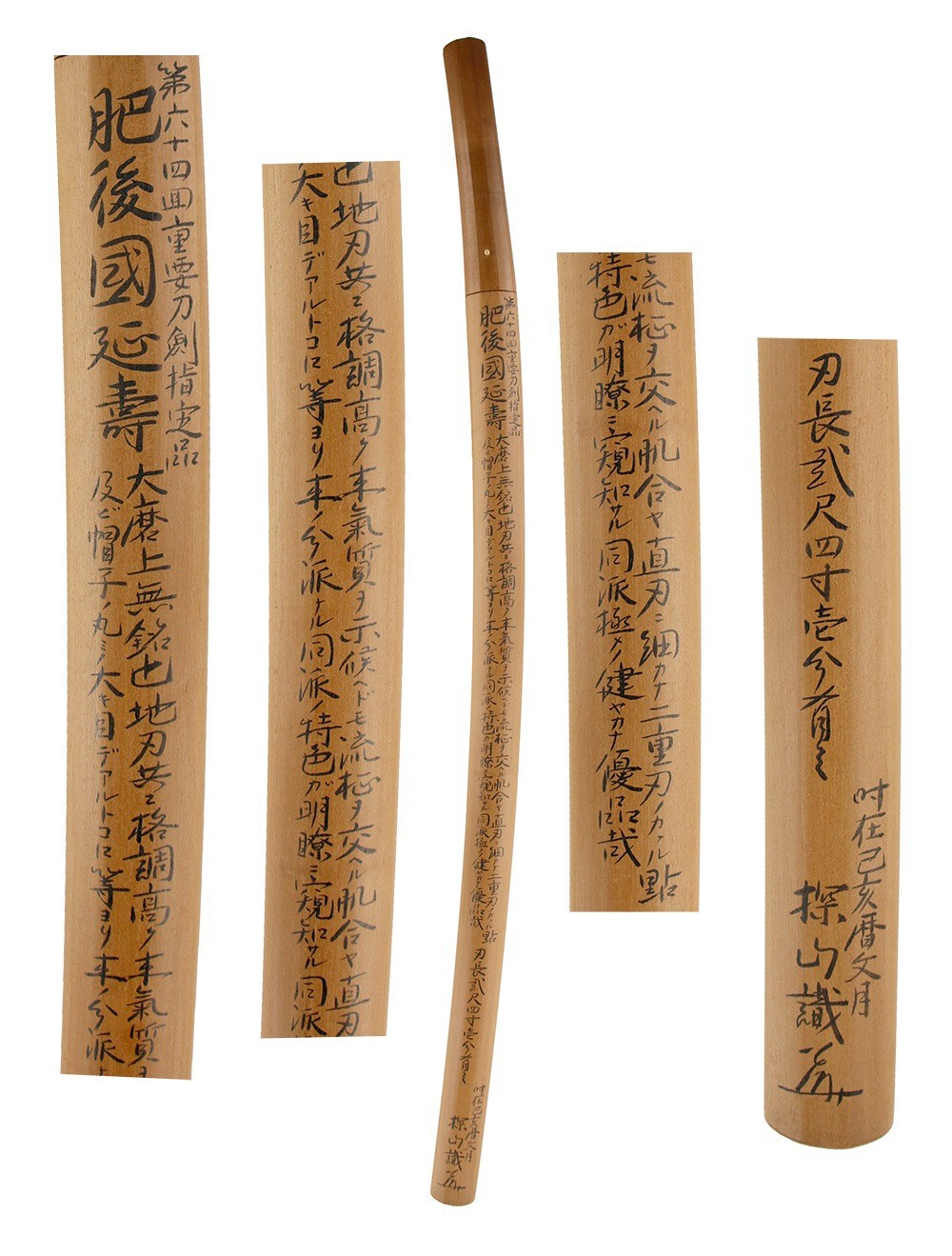
Whoa a Bungo thread! I do appreciate a good Bungo sword and can share the below examples for viewing pleasure. Takada is correct. If you want better resolution please download the images and open them in your gallery viewer. The Muneyuki is in a very interesting Hitatsura Bungo Tomoyuki Zufu.pdf Takada Muneyuki Sayagaki.pdf Takada Muneyuki Tokubetsu Hozon.pdf




 2 points
 -
Thank you again for your answer Colin. Even the katana is not genuine, believe or not.......I still like it (maybe because I never owed a genuine one 😁). The blade is well made (for sure high-grade steel) and incredible straight for a replica. Of course I didn't pay much and I'm not regretting for the money paid. THANK YOU ALL FOR YOUR PRECIOUS OPINIONS 😍2 points
-
Small story on Nihonto. SBS TV - on demand. Link: https://www.sbs.com.au/ondemand/ Search for James May Our Man in Japan. Episode 1. The segment starts at the 32 minute mark.1 point
-
Look at self-publishing. In today's world, it really isn't that difficult, even if you want a high class product. There are lots of resources and print on demand. We're way past the point of just Lulu now1 point
-
Your book sounds fascinating! And thanks for the ‘heads up’ in interpreting the others.1 point
-
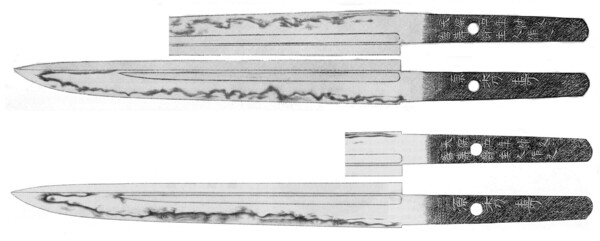
It's my understanding that it's not a distinct mune-machi, but rather the oshigata showing what the style of mune is, by "unfolding" it on the illistration. See other example below:
 1 point
 -
It's not 100% clear, as the polish and photos don't allow me to state definitively, but I'd be suspicious of this one as a reproduction - copying key features of a real sword.1 point
-
https://www.aoijapan.com/katanakatana-in-shirasaya-with-koshiraenbthk-hozon-tokennbthk-hozon-token/ Hi Jaques, I once owned a Naginata-Naoshi-Tsukuri by Kawai Hisayuki, clearly a Nanbokucho-Utsushi with a huge O-Kissaki. The Tokubetsu Hozon simply said “Wakizashi”. Since I'm at work now and can't refer to my documents, here's a quick example of Tsuruta-San with a naginata-naoshi-tsukuri. Here, too, it simply says: “Wakizashi”. I have yet to see an NBTHK paper that explicitly states “Naginata-Naoshi-Tsukuri-Wakizashi or Katana, if it is an Utsushi of a Naginata Naoshi. But if it was a naginata, then the NBTHK notes it as a naginata naoshi katana or waki. I'm starting to lose sight of what the problem really is.1 point
-
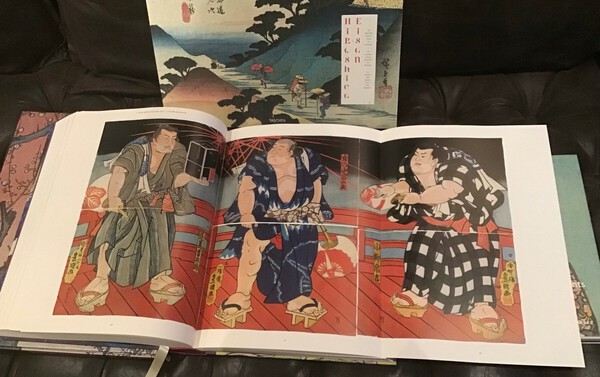
There are Taschen books that are exceptional but pretty expensive now .. first edition xxl version of Hiroshige 100 views of edo I have seen people trying to get 2k for (left book in pic) !! Any way Kunisada specifically, maybe have a look at Genji’s World (right book), that is all kunisada but only 11.5 x 11.5 .. The enormous Taschen book in the middle of the pic below is all artists and had some Kunisada, it’s called Japanese Woodblock Prints by Andreas Marks .. it’s the xxl version by Taschen and is 16 x 11.5 x 2.5 inches.. careful of the sizes for Taschen there are smaller versions , the large ones are incredible quality .. Cheers Rich

 1 point
 -
Well, here is another example : a Naginata Naoshi Katana, Nakago O-Suriage. The boshi is ko-maru with a short kaeri. The Sword is attributed to Kaneyuki, the son, but probably younger brother of Kinju. I studied Kinju intensively for some time. This way of working is typical for him and his environment. The yakiba is kept narrow, the character is retained in the kissaki, and the boshi forms the logical and harmonious conclusion. This way of working remains identical, whether tanto, ko-waki, tachi/katana or naginata. The boshi is usually a ko-maru with a very short kaeri up to the yakizume. This basically follows the style of its Yamato (Senjuin) roots, in which a short kaeri up to the yakizume is common. What I mean by this is that probably a whole series of naginata naoshi before the correction or change to katana/waki in the boshi region did not look significantly different, because the existing boshi corresponds to the style of the school/swordsmith. A yakizume at a school/swordsmith who otherwise does not harden something like this naturally indicates a clear modification in the sugata in the case of a naoshi. It could be difficult with Kinju, because yakizume can also be applied. And then we are back to the sugata and here we come full circle, which has already been mentioned here several times, that it was precisely because of this sugata that such naginata were particularly popularly modified into katana/waki, because the amount of work involved in the modification was correspondingly low and the original boshi remained largely intact. Conclusion: @ Jaques, no, I can't say how the Kaneyuki Naginata (Naoshi) shown by me looked 100% in its origin. But I know quite well the working style of the school around Kinju and would say that no significant modification of the sugata was made here. Nevertheless, the blade is called a naginata naoshi katana because the blade has been modified from a naginata to a katana. Well, a major point of contention here is obviously whether the example I showed was actually a naginata or nagamaki, or whether it was conceived from the beginning as a katana in this naginata-naoshi-tsukuri form. But I don't think so. The Nanbokucho period is not a revival period. Forms considered typical of this period were developed here, such as the often-mentioned enbun/joji sugata. A sugata that also emerged due to changing war tactics favoring infantry. The Nanbokucho is the heyday of the naginata. The typical castle towns, where swordsmiths worked for local princes and warlords, emerged much later. In Nanbokucho, many swordsmiths worked on the grounds of Buddhist temples. This was also the case at Kinju. Or at Kaneuji. A tegai smith who first switched to the mino-kokubunji, and there were also large temple complexes in Shizu and Naoe. Alongside the samurai, the monasteries represented the second most important military force, intervening in the fighting on behalf of one side or the other, or even just for themselves. It is also no secret that families of the court nobility supported monasteries or encouraged the establishment of monasteries on their lands, thus indirectly using their military power to achieve their goals. Morinaga, a son of Go Daigo, was the high priest of the Tendai-Shu on the Hiei and represented a significant military resource in his "reconstruction" against the Kamakura Bakufu. The naginata is also the standard weapon of the monastic military contingents. In any case, the naginata must have been produced in large numbers at that time. It's simply logical that naginata were later modified into katana/waki, firstly because they were particularly well suited for this purpose, secondly because there were still sufficient resources for such weapons, and thirdly because modifying them into katana and waki was obviously cheaper than producing them from scratch. The emergence of naginata naoshi zukuri, i.e. the deliberate copying of a shortened naginata, coincides, in my opinion, primarily with the copying of a specific forging style, such as the soshu style. Kaneuji, Naoe Shizu, Sue-Sa, Hasabe, and at the same time their typical sugata of the Nanbokucho were copied. This, in turn, is a Kantei characteristic of Keicho Shinto. This, of course, does not rule out the possibility that such utsushi existed much earlier. There are always exceptions, and nothing is set in stone. But the essence is always the obvious.
 1 point
 -
Hey Michael! I noticed you're a resident of Indiana. If you want someone to give you an in-hand opinion of your sword, let me know. I am centrally located. Feel free to message me here or email me if you like. ~Chris W.1 point
-
I also did not know what this was. After some research I realized it is a good thing.
 1 point
 -
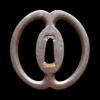
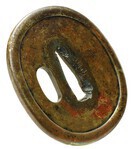
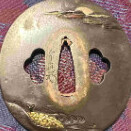
I found this in a book about tsuba thar are displayed in a museum. It appears to be cast iron and is described as "cast" and "iron". There are cracks in the hitsu and other signs that it is cast. My question is why would a museum display this tsuba? What are they trying to show and communicate with their visitors? Could it be they are trying to show that there is such a thing as early cast iron tsuba?" Just some more interesting stuff. Onward!
 1 point
 -
Another example is this old Kokuho Awataguchi naoshi….. So, these blades are also considered naginata even if they do not follow the typical flared and deeply curved formula we so closely associate with the typical naginata. So, please let us not argue. As we said earlier, in almost all cases of standard naginata, you are right about what you say. But for the slender, small-sori blades or blades which probably were nagamaki (but now the NBTHK simply calls them naginata naoshi), the kaeri can and has been retained.

 1 point
 -
Lastly there is this Enju. It shows the progress from Hozon to Juyo. I hope the work of Markus and the sharing of these Zufu will help who ever comes across them and answer some of the questions collectors may have about their own swords and fittings. I only wish there was more we could share with all. Enju Hozon.pdf Enju Juyo Paper.pdf Enju Juyo Zufu.pdf Enju sayagaki.pdf


 1 point
 -
In March, '45, they ordered changes to kaigunto to save on precious resources and speed production. The second haikan (ashi) was elliminated as well as the gold gilding.1 point
-
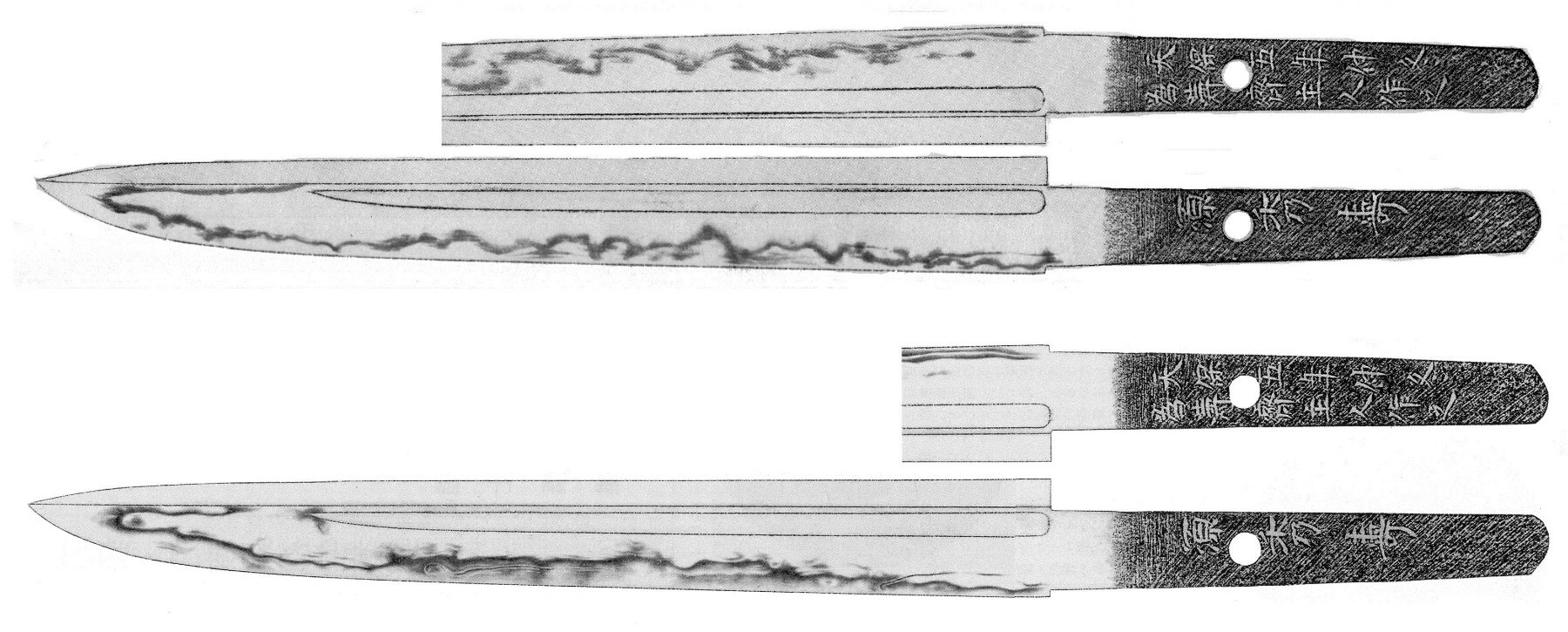
I confirm that Mr Benson has given us permission to share these with the NMB. In his words.. ".... I am always interested in seeing all Japanese Sword information disseminated...." I think that is an amazing gesture from someone considered one of the pillars of the Nihonto community in the West, and my thanks go out to him and also to Rayhan for facilitating this. Bushido magazine contains some amazing info, and everyone should grab this opportunity. I'll upload them in a day or 2 in individual editions for those who battle with the above transfer. We are awaiting response from other organizations to see if they will allow sharing of vintage (not recent or current) newsletters, many of which come from before the internet. Enjoy all.1 point
-
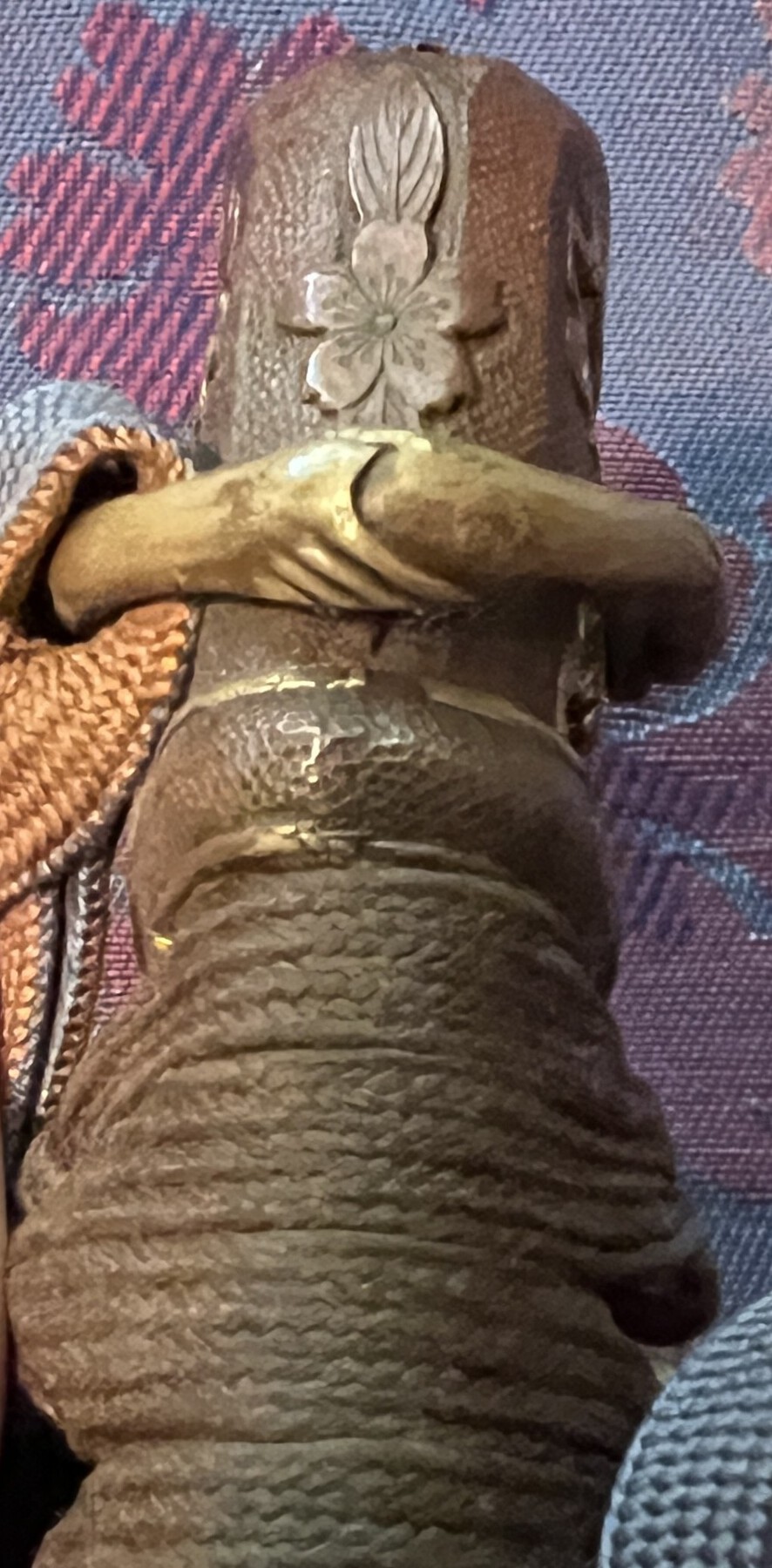
@JoeR1986 to help with your questions: this is a stainless steel blade mounted in Naval kaigunto koshirae. The mei looks to be "Taketaka saku" 武孝作 and it has an anchor in circle stamp. This would be made in the Tenshozan Tanrenjo a private factory that produced swords for the Navy. There were various mei used there , but there were other "Take" smiths": Takeyoshi, Takeyasu and Takeyuki. I had not seen a Taketaka before. The blade is a production line product although neat finish. These mei look to appear through the war, but not large numbers. There were more of a similar form with mei of Hiratoshi saku. Bit hard to tell about mounts from pics but unusual to have only one suspension ring and menuki and seppa look a bit odd, so not sure if late war or a post-war souvenir item. The paint figures on the nakago are 伊 二四四 ("e" ?) 2 4 4. These look repeated on mouth of saya (not sure of first one). These are assembly numbers to match the various parts. For lots for info on WW2 Naval swords and smiths, and Tenshozan go the NMB Downloads:1 point
-
Another has appeared -will be posting soon
 1 point
 -
Ok this is an incredible offer at this price, amazing sword.1 point
-
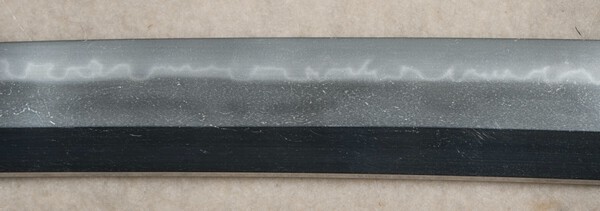
Sigh... sword porn people showing jifu in public...
 1 point
 -
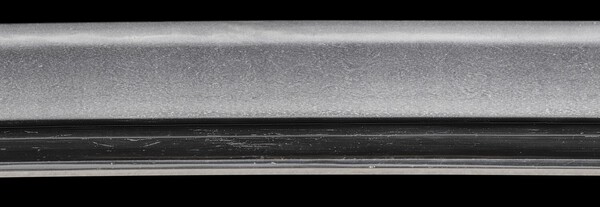
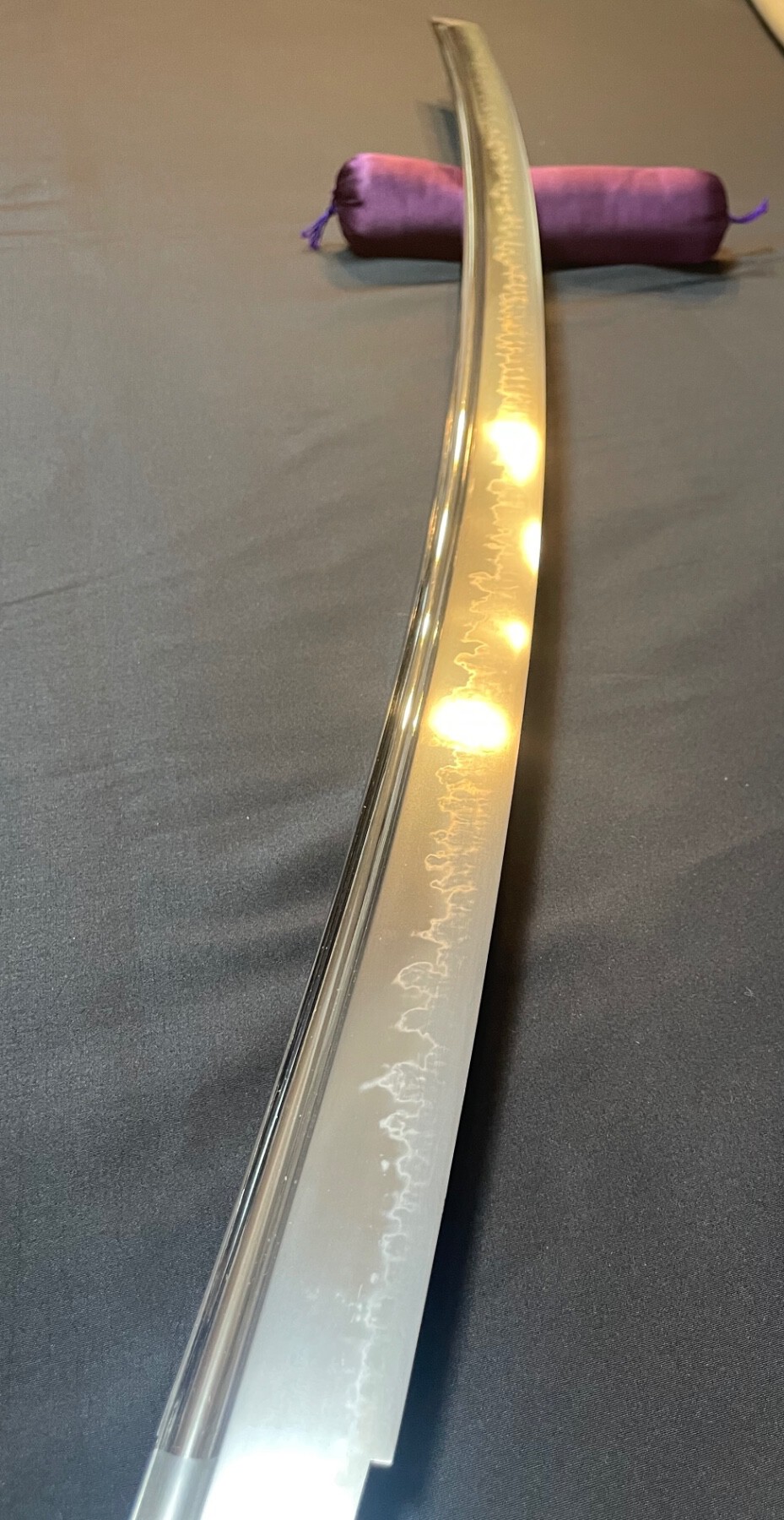
Rai Kunitoshi Katana. Mumei. Juyo Token
 1 point
 -
A significant update for all who follow the SMR/Mantetsu production history. Thanks to Trystan - @BANGBANGSAN - we now have photos of 2 1937 first year of production blades! I don't know how you do it, Trystan, you have a gift! The first, we have known about, but had no photos. The serial number was not provided. With both you will immediately see they were dating with just the 2 Zodiacal kana for the year, and the Winter kana. The second, that just showed up, has serial number "104". You can see they were not using an Alpha/numeric system yet. That appears in 1938 (we have Spring and "B", "C" series forward, and the 4 seasons progress normally that year). First one Second one I have constantly been uncommitted on whether SMR was using a calendar year or fiscal year to date these blades, but it now seem obvious that they were using a fiscal year. These 1937 blades were "Winter" dates. The 1938 year began with "Spring" and showed all 4 seasons from there. The WWII Japanese fiscal year, in WWII, started April 14.




 1 point
 -
The one issue I have with a lot of this thread is that it seems to imply that polishing is a black art, which tends to dissuade people from even trying to learn it. I think we all need to be thinking carefully about how we encourage people to learn it responsibly and at least reasonably within the togishi tradition, given that we already have a shortage of polishers, and it's only likely to get worse. For myself, I am ordering in polishing stones and supplies, and I am going to start experimenting, following all the information I can gather from books, videos, etc. ... but don't worry, not on nihonto. As an occasional knifesmith, I have old blades lying around that weren't my favourites, and which have collected some rust or discolouration over the years. I'm going to see what results I can get using traditional togishi methods as best I understand them, and then move on to traditional Japanese kitchen knives, etc. Someday, years from now, if I'm getting consistently repeatable and high quality results with those, then yes, I will work on a cheap nihonto as a trial. Given that I can't afford a 5 to 10 year apprenticeship in Japan, that seems to be the only path, and even if I never venture to work on a nihonto, I will have learned a great deal about traditional Japanese steel, polishing, etc., which can only benefit my understanding of nihonto. I'll also meticulously document my journey, which may help someone else down the line. Finding outside the box methods to encourage the development of new generations of polishers is probably necessary if we really care about the preservation of nihonto.1 point
-
Excellent post, Jean. Thank you.1 point
-
Sorry to say that the blade is a Chinese fake. I am 99% sure.1 point
-
Can you slide the copper habaki off and show a photo of the machi (notches) alignment? Chinese fakes often have off-set machi, but even aligned ones can be found on fakes. If they are off-set, though, it would be clear evidence.1 point






























This leaderboard is set to Johannesburg/GMT+02:00