
Leaderboard


Popular Content
Showing content with the highest reputation on 04/18/2025 in all areas
-
It has been many years but I think there is a disconnect in information and important translated information that is held quietly between a select few. I am one of those guilty parties, if @Brian was open to it i would very much like to pass all my translated Juyo documents, edo period documents and many other acquired articles for him to post on the site but we are talking many gigabytes of data... no idea how to make that work and there is a time consuming element to it. @Brian let me know.5 points
-
Thank you Piers your friend has absolutely amazing naginata I personally like the sugata of it much more than the Date family one that I posted. I feel Jacques is in general correct with his view on how naoshi will alter the tip of the naginata. However there are naginata shapes with no "swelling" in the upper area so altering them will be different from the other common form. I think polishers or swordsmiths would be much more qualified to answer than myself but in naoshi process we need to think 3D view of the item. Of course the most important end result is to make it as workable sword blade as you can. Basically I feel you cannot have 80 cm naginata with 80 cm nakago and just cut 60 cm of nakago and shave off bit of the curvature, as the end result would be far from good sword blade. You will need to think about length, curvature, thickness, profile taper. Hopefully I will find time to make a small combination photo of some various styles or original surviving naginata from Kamakura & Nanbokuchō periods to show that some can be tweaked into sword blades with slight adjustments, while for some quite extreme measures would be required in order to fix them as swords. Unfortunately in pictures we only get to see the 2D view of the item, so it does not make the 3D alteration thinking easy. Generally the naginata are not too often displayed in popular museums but there are some shrines in Japan that have amazing naginata in their museum rooms. I have been lucky to see many of them.3 points
-
Both appear to be original examples, there was a rather wide range of colours used for Saya and that sort of red (akin to Azuki - red bean) is seen now and again. http://ohmura-study.net/904.html
 3 points
 -
Mike, looks like “Izumi no Kami Kaneshige” (和泉守兼重) so would be in 1640's. He was in "Musashi" which was Edo now Tokyo. Izumi no Kami is a title. What is the length of blade (cutting edge)? Be good to see pics3 points
-
Hmmm, a very contentious and risky subject all of a sudden. Let us just say that I am aware of various individuals and groups making various attempts at digitalising, translating, etc. The above statement is wrong. If the definition of profit is clear (total gain arising out of the the difference by which revenue exceeds production costs, distribution cost and other costs and expenses of bringing the item to the end user) then to everyone it will be very clear that exercise was very likely a massive loss-making endeavour. Strong word of caution please: be very mindful of who owns the copyright to the text and the translation.... It is not the one who has paid for the translation (even though it might be believed to be so) or has purchased the published variant of the underlying text (eg hard copy of the Nado Zufu or a digital scan of it). Furthermore, the copyright to the underlying text also is owned by the original publisher and in the case of the Zufu, that is the NBTHK. The copyright of the translation remains with the translator, or potentially the publisher of the translated text (who likely separately paid the translator and obtained the sub-copyright from the translator, so that the publisher can subsequently package and sell the overall translated underlying text.) Please be mindful of potentially breaching both sets of copyright and entering the zone of potential litigation... I shall stop here.2 points
-
Jacques, there is no confusion. Naginata naoshi and naginata (zukuri) naoshi all fall under and into one category, naginata. Naginata are pole arms. Therefore, even when they have been modified they will all be recognized as naginata-naoshi. A nagamaki designation will only be given when there is documentation that a naginata was mounted as a nagamaki. Otherwise, it remains as a naginata. So, then, what is true? What is true will be determined by evaluating each piece independently. That, unless someone talks the NBTHK into redefining established definitions and terms. And as Michael has said here as well as others before, making blanket statements when it comes to nihonto should be approached with clear attention and caution. Had it been said, "naginata-naoshi (zukuri) will end in yakitsume," most likely no one would have batted an eye. Further, you used the words "real", "true", and "copies". Yes, there are indeed copies, but these words are suggestive that some of the "naginata-naoshi images and oshigata of" posted in this thread are just copies, too. No, they are not copies. The shape of these polearms evolved through time. They are not copies, they are true, and they are real! Words and language like "zukuri" are essential/critical to say what you mean and mean what you say.2 points
-
It is undoubtedly a generous gesture from @Rayhan It is one thing to process data and databases for one's own use And another thing to have publicly available data Just a friendly reminder Every publication is subject to copyright And since Japan is a signatory to the Berne Convention, copyright expires 50 years after the author's death2 points
-
Let's get the docs, and then myself and Rayhan can work out the logistics. I suspect this forum is currently the largest English online repository of Nihonto info in the world currently, so we'll do the best we can to share what we can. Thanks Rayhan, PM sent.2 points
-
I'd be not only happy to do it, but grateful for the info. Can either transfer via email, or use one of the filesharing sites. I can research some options if you like @Rayhan As far as the space, if necessary I'll take more hosting space from my hosts and happy to compile into documents if needed. Whatever works for you, consider me in. Thanks for the offer, I think we'd all benefit greatly.2 points
-
Open debate is wonderful indeed. The state of knowledge in nihonto evolves over the years and I am thankful for this. The sources that I have found to be the most transformative in my knowledge: Kanto Hibisho Gokaden series Token Bijutsu Meihin Extracts from Juyo and Tokuju Zufu Darcy’s posts on NMB, his site, blog, and lessons. Plenty of Tanobe sayagaki Especially, the combination of all of these. if future me was speaking to past me, I would recommend skipping a few of the generalist, picture-poor treaties that are cited so often.2 points
-
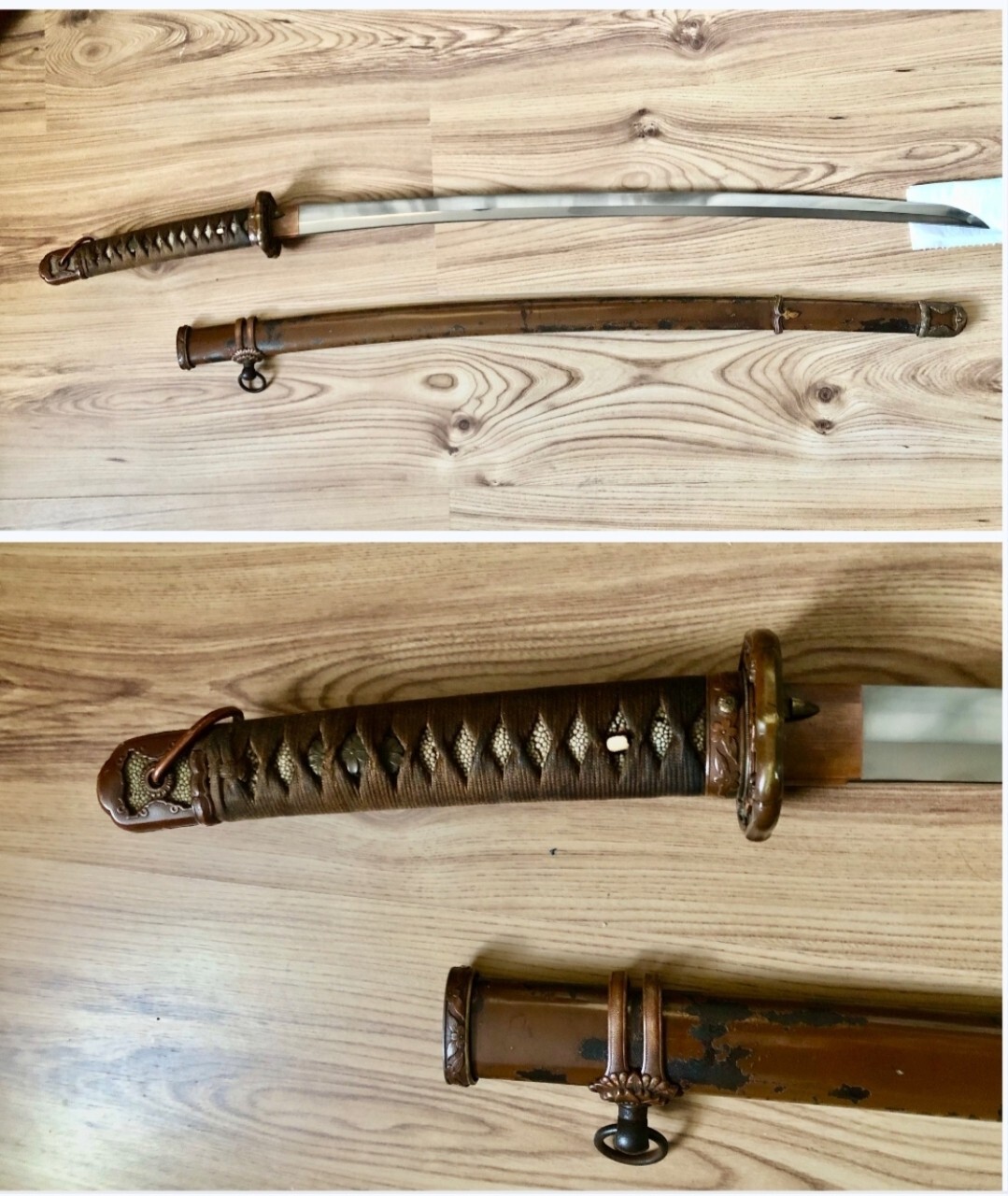
Joe, sword is a Naval kaigunto with stainless steel blade made at Tenshozan Tanrenjo. It has the stamp of anchor in circle and reads "Taketaka saku" (made by Taketaka). These were made on production line. Of interest this name is not common...there are a series of others: Takeyoshi, Takeyuki and Takeyasu. On NMB Downloads lots of info on these swords:2 points
-
https://ameblo.jp/toudou455/entry-12527870806.html This is a discussion of its possible functions. The writer has searched high and low but says he cannot find anything written as to the definitive use of ナマコ金 Namako-gane, other than that it was a feature of Ogino-Ryu (school of gunnery) guns, and later copied by others. The alternative word he notes is 力金 Riki/Chikara-gane, which could indicate a firmer grip obtained with your other fingers against it, in contrast to and to help the trigger finger aim safely and accurately. (He also repeats what I covered in my previous post.)2 points
-
I don't remember ever seeing an Edo period Hon'ami document that addresses details like such. Only entering the Meiji era, and then we already get overlapping/contradicting terminology. @Rivkin Hi Kirill on this occasion, long time no see. Downloaded your guide and eagerly read it the other day. Very good!2 points
-
Welcome to NMB Martin. Point 1 Don't poliosh anything! I assume that you know not to touch the blade with bare hands, just a little light oil on this, very thin coat. So far this looks like a nice example and, depending on what the nakago/tang reveals, by a smith who commands some interest. Do you know how to disassemble the sword? If so then a good shot of the tang/nakago would be interesting. Next question, is the tsuba/guard pierced? Depending on where you are there may be some members not too far away who would be happy yo tell you more with the sword in hand. All the best.2 points
-
There are questions about collecting that come up (or worse do not come up but are present) which are, unfortunately, not covered in any of the books. So I wrote a guide which answers at least some of them: papers, polish, etc.. It is a directly phrased document which I am planning to put it in my signature since unfortunately I don't have time anymore to manage my website. cert.pdf1 point
-
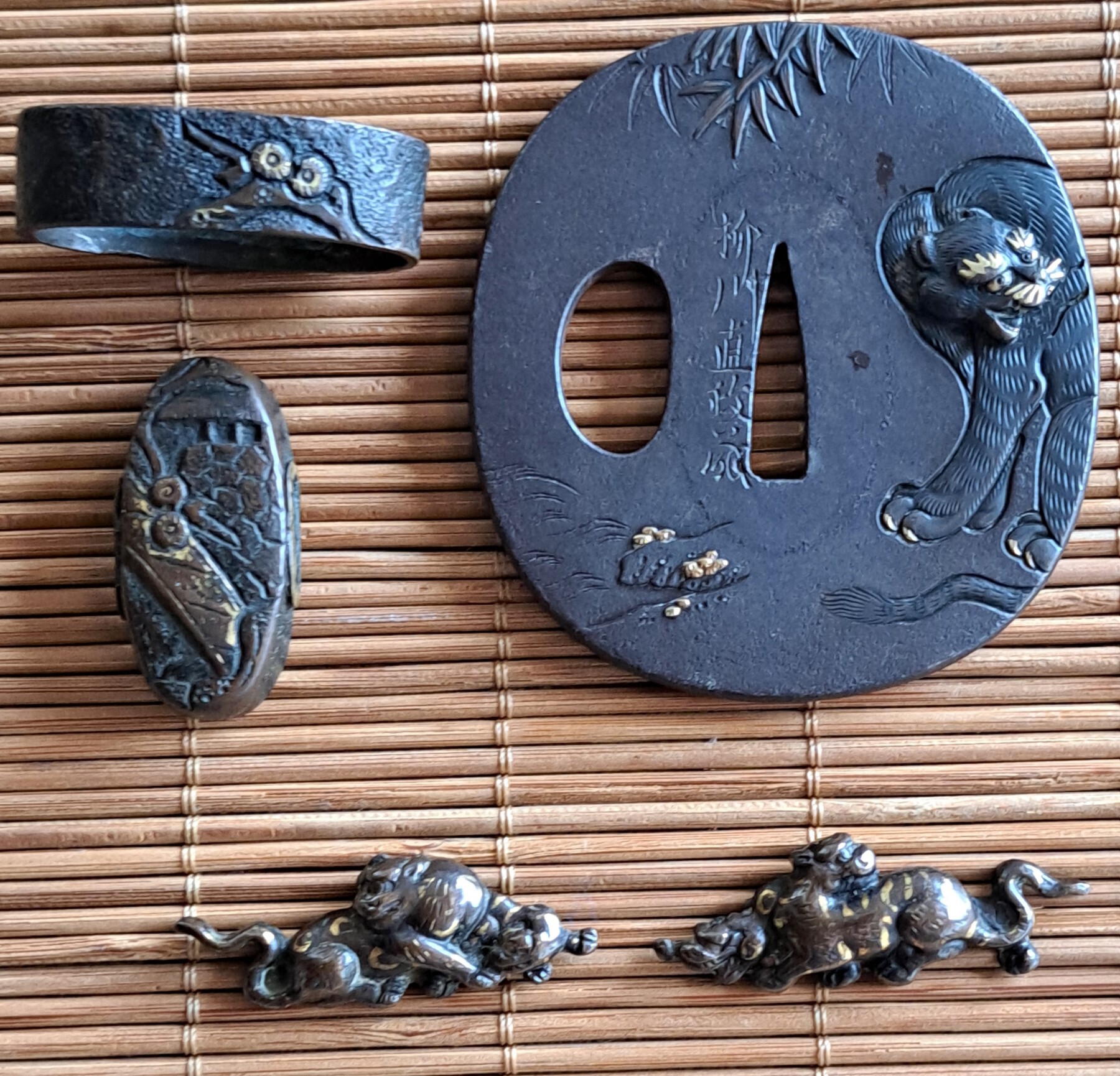
Hello, For sale set. Tsuba mei (yanagawa naomasa +kao) Tiger and bamboo 6.5×6.15 cm. Menuki tiger with pups 4cm Fuchi-kashira 950€+shipping cost only europe Thanks Ran

 1 point
 -
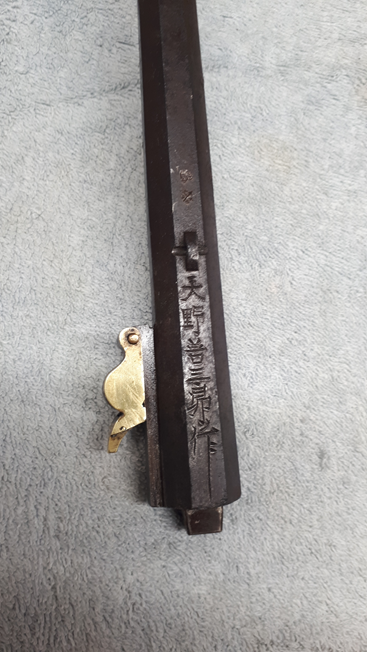
I recently bought a Japanese matchlock pistol and I would like to know what is written on the bottom of the barrel. Can anyone help?
 1 point
 -
Its signed: 東神正茂作 昭和十九年三月日 Tojin? Masashige Saku A day in March 19441 point
-
Actually the Japanese did use wooden swords. From memory, it was called a bokutō 木刀 and it was used for training. However, this is not one of them and I agree with Brian.1 point
-
https://www.nipponto.co.jp/swords/JT988980.htm1 point
-
Ok this is an incredible offer at this price, amazing sword.1 point
-
Yes, Piers ... using the principle of Occam's Razor and only seeing them on the heavier caliber arms leads me - as a shooter - to that conclusion. Even Samual W. Beach can see that function. Here is how it is held in place:1 point
-
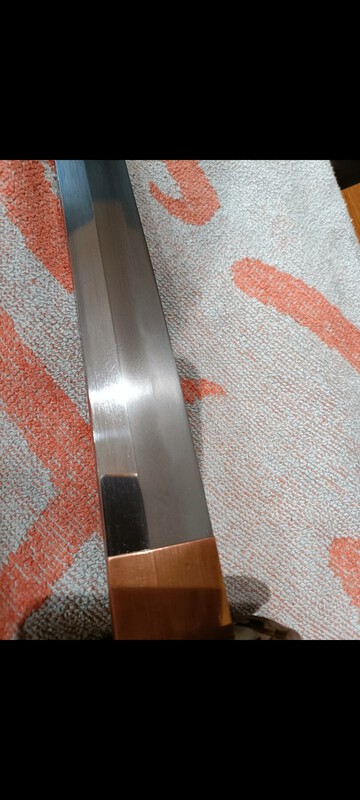
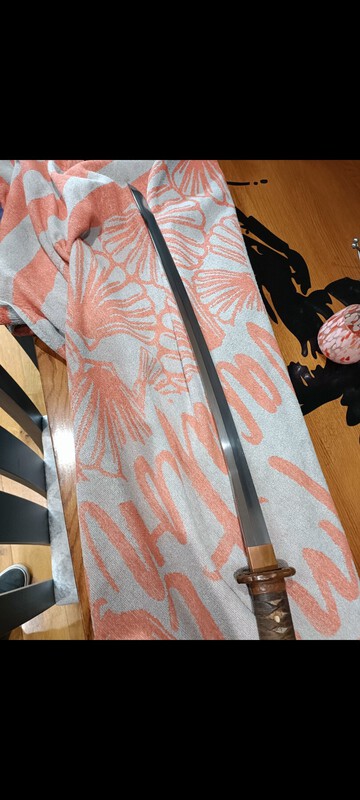
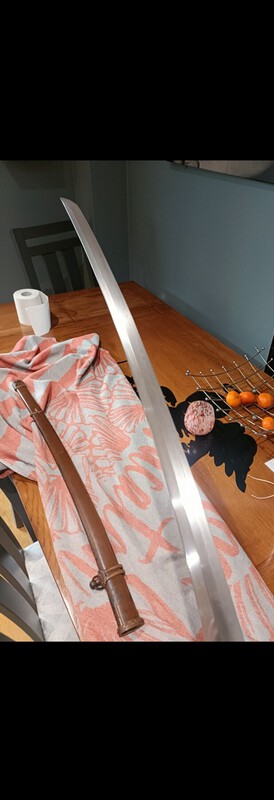
Hi, people. Just purchased my first Japanese sword. It's a 1941 mill steel water quenched kanemichi . I've not paid alot , I don't think.. The blade is immaculate, fittings is a little worn. ( bought from a local collector who didn't even want this sword, but bought as a job lot, so he didn't have alot invested) seemed a very knowledgeable and genuine person. I know that there's multiple different ways of making these swords. I just wondered which was the rarest most desirable to collect? Also torn between polishing fittings etc, or leaving the patina. I don't want to ruin it.. thanks

 1 point
 -
Joe, Your kaigunto appears to be an example of the late-war swords that were made under new rules, reducing the specs, due to shortages. Here is a post from another thread - Recently discovered by NIck Komiya at Warrelics: "I don't know how relevant it is to the discussions here, but the navy also issued a "Last Ditch" Rinji spec directive for officer swords on 27th March 1945. Directive Number 54 said "1: Gilding, Gold Colored Metal and Cherry branch engravings are to cease, 2:Sarute not to be attached, 3:Only one Haikan (scabbard ring) to be present, 4: Use of animal skins to be minimized, 5: Push button type locks to be changed to tie-cord type, 6: Scabbards to be wrapped in tree bark and be finished with black lacquer. By that time, the navy had lost its ships and most members got deployed as land troops, so it is understandable if the above Rinji spec got to be associated with the NFL. The PX sword discussed here seems to consist mainly of parts matching the description above, but with some gold colored parts thrown in to beautify them. I asked for clarification on the fuchi design, and he said: "In Japanese, point 1 is 「金鍍金、金色金属、枝桜毛彫及彫刻ヲ用ヒザルコト」, which says no gold color nor engraved or relief adornment, so a "plain Jane". This directive is mentioned in the Ohmura site as well as Wikipedia, so it should be common knowledge to Gunto collectors already." So this explains the odd-ball navy gunto with one haikan (ashi). I'm not talking about the souvenir sold with mixed army/navy fittings, but actual navy gunto. If memory serves, I saw one in combat saya with single haikan. If anyone has an example, I'd love to get it posted here." There are other examples on this thread:1 point
-
The exceptions are so rare as to make it fairly reasonable to assume that swords stamped this way are not fully traditionally made. This isn't an old blade, and it can be assumed reliably that it is a wartime "Showato" that is most likely oil quenched.1 point
-
I think just a mis-translation, they mean post-war tsunagi most likely.1 point
-
Jussi, forgive the thread drift, but yes, it is a different naginata, but both were special order items, made for the same person, Miyake Ason, about 20 years apart! Funnily enough, I was round there again today, and doubly funny, there was an article in today's Sanyo Shimbun about the one you just mentioned above! I took a photo of the newspaper article about the Date naginata, and the NBTHK explanation of the tokubetsu juyo naginata owned by my friend. I will pm them to you. (All of my information above was correct except that it is not a Prefectural Bunkazai. That was a different blade.)1 point
-
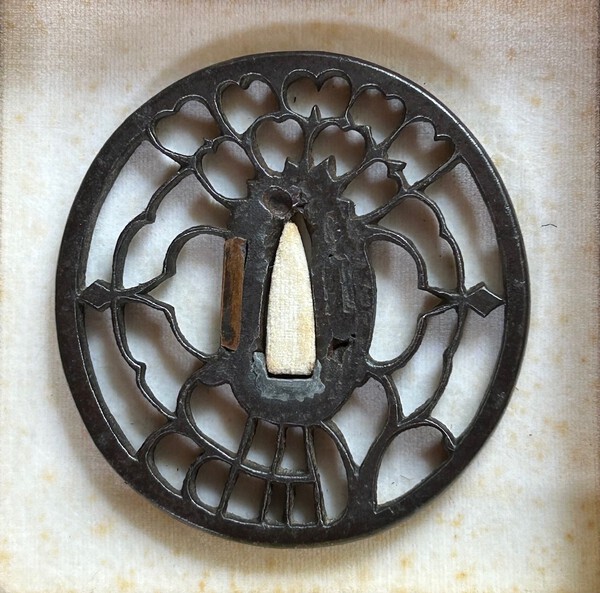
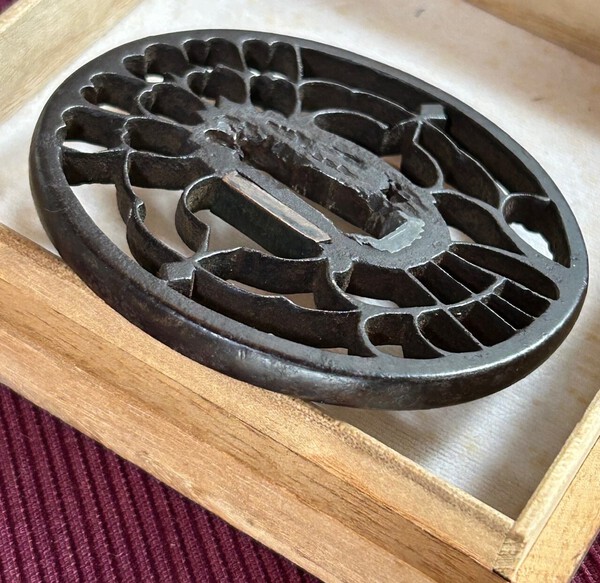
I read that late Akasaka tends towards thinner tsuba plates, but the three early generations made tsuba thicker at the mimi. Found this recently… Mimi seems quite thick. No immediately discernible tekkotsu.
 1 point
 -
For 800 Euros it's a gamble, the blade has a good shape but there are some large Mune-Ware that give one pause. Decent quality Koshirae, it could be something good but would require quite a bit of money and expertise invested.1 point
-
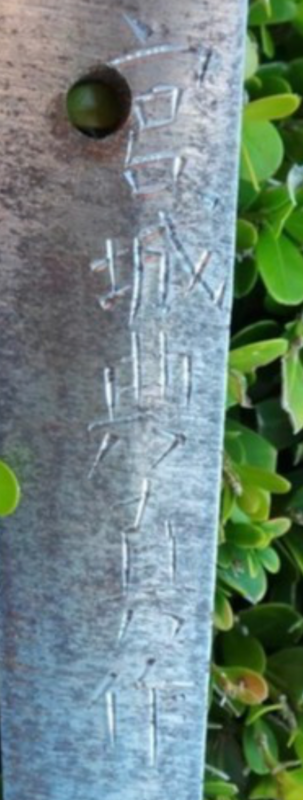
Have a close look at the placement of the mei the proportions of the individual characters the proportions of the characters relative to each other the execution of the characters (e.g., depth, width and shape of strokes) One of them is consistent with a master craftsman putting the final touch on a work of art that took hundreds of hours to create. The other one is sloppily executed with poor calligraphic aesthetics...

 1 point
 -
Another jarring loss. The tsuba world, it seems, has been especially hard hit in the past several months (Ford Hallam, Bruce Kirkpatrick, Skip Holbrook). I'll miss you, Skip. RIP my friend.1 point
-
Dale, these are called Namako-gané, which is ‘sea-cucumber metal fitment’. There are several varieties of these. One I saw had a hollow (like yours?) that the trigger pulled back into. From what I understand they were a stopper, to protect the trigger when dropped or against accidental firing. They actually look good, I reckon, and do give a more comfortable grip for the other fingers. I have never been totally convinced though. I’ll check my sources once more!1 point
-
RIP Skip1 point
-
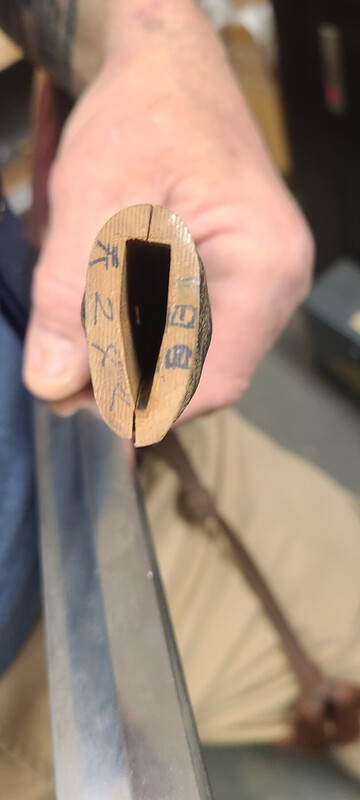
I recently came in to possession of one of these swords and if anyone can give me information on it from the photos it would be truly appreciated.



 1 point
 -
Always so sad to hear. May his family and friends find Peace in the days ahead.1 point
-
@Rayhan I know I used to be very fixated on terminology but as years have passed, I have become extremely relaxed on terminology. The polearm by Kunimichi has actually incredibly rare term (長刀) nagatō on the NBTHK paper. I think I cannot remember another one having that particular term on NBTHK paper. However from my research on surviving examples, I believe this type of polearm was popular during Muromachi spanning into early Edo period. They range from absolutely massive into smaller lengths of c. 60 cm like the Kunimichi example. I think the terms can be somewhat switched based on feeling (I have never seen any clear definitions anywhere), as there are for example some quite similar polearm koshirae at Jūyō some are classified as nagamaki koshirae some as nagatō koshirae. As far as naginata and their shape in general go there is a lot of variation, so I would avoid making any definitive conclusions as Michael suggested above. So far I have data of 124 surviving pre-Mid Muromachi naginata, and 552 naoshi blades presumably all from same period range. In comparison I have data on 154 naginata from Mid Muromachi to early Edo. In order to try to understand the variations in naoshi blades I think it is very important to research the intact original historical naginata examples, and as they are incredibly rare in general that makes it difficult.1 point
-
Here is another example, this time a Saburo Kunimune. This very clearly shows the preserved kaeri and the NBTHK describes the boshi as simply "midare-komi with ko-maru-kaeri." There is no yokote and this is unquestionably a naginata-naoshi.1 point
-
I am confused now. Are there not several examples illustrated above that show you, Jacques, quite clearly altered naginata that retained their kaeri; that have a clear turn back? It's likely not as grand as it might have once been, but it's there. How they did that seems to have varied from blade to blade, depending on the sugata of the original piece. The evidence is in plain site. You can argue, which seems to be your want, about their techniques or which end they started at, or the original shape of the kissaki, but that they did it and left us examples is not even in question.1 point
-
皇紀二千六百一年 = year 2601 of the Imperial calendar (1941 CE) 出征詔念應永田千弘代需 = in commemoration of Nagata Chihiro answering the Imperial command to go to war1 point
-
Hmmm… could be a Tosa smith in Shikoku. The shape and construction of the butt should clarify this. Family name Ono. There are five Tanegashima matchlock gunsmiths listed under this name, two of them working in Tosa, a large province in the southern part of Shikoku. (There were two in Hyūga in Kyūshū, and one Ono smith in Bizen.) The style of your name is very similar to one of the listed Tosa smiths, so although unlisted I reckon yours should be a relative in the same Ono smith line. Can you spot it?
 1 point
 -
Congratulations on your purchase, Grahame! 大野善三郎作 Ōno Zenzaburō Saku (I think!) (Possibly Zensaburō?) I’m about to check this smith out. If I find anything I’ll post it here.1 point
-
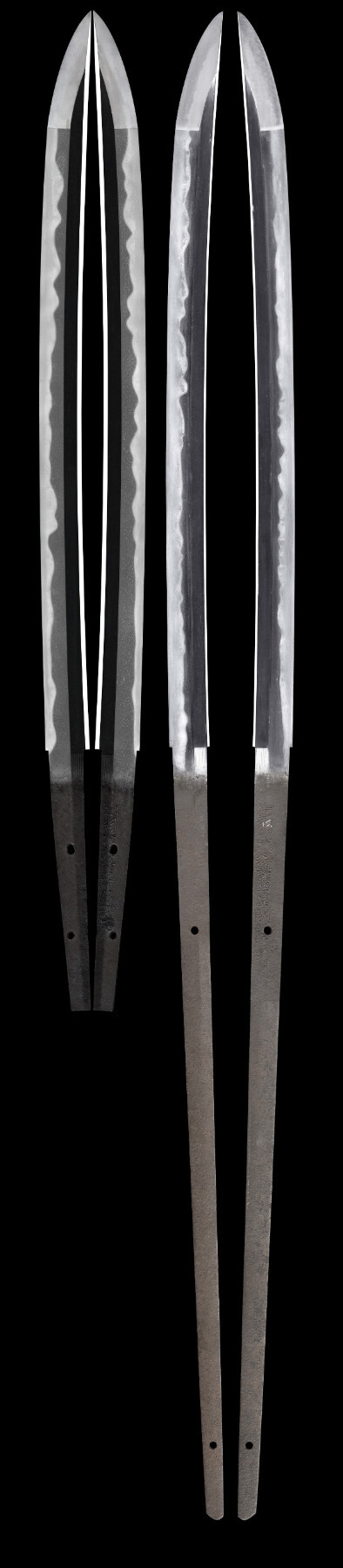
There has been solid advice there above by every member. My love in Japanese swords are ōdachi and big naginata. However even after all the years of focusing on them I still think it can often be very difficult to say how much a sword has been altered. Sometimes it is easy to say that a sword has been shortened or it has been shaved down from the top part. However there are times when I often am left scratching my head when trying to figure out the original shape of the item. The tricky thing is that there are lots of variations in naginata. In order to fully understand the variations and their specific features you will need to devote quite a bit of time into researching naginata. However people in general do not appreciate them, and common reference books do not have info on them, as they are not thought highly of in Japanese sword appreciation circle. Some forms of naginata require quite extreme measures to be cut down to be used as sword (sometimes it might not even be feasible) while some forms require very little adjusting. Here I present 2 items by Dewa Daijō Kunimichi (an excellent smith), both items are Tokubetsu Hozon. Left one has been judged as wakizashi by NBTHK, I think originally it was similar to the polearm on the right. The picture is in scale, I just photoshopped the items side by side for my own fun. Of course I might be wrong in my assumption but I am fairly confident in my belief on this particular piece. I think not many might have seen this type of naginata blade before, as this variation is bit different compared to more common surviving intact naginata.
 1 point
 -
Looks like liquid metal.
 1 point
 -
Please don't confuse naginata naoshi with naginata naoshi zukuri...
 1 point
 -
I have included a photo of the entire tsuba for anyone interested.
 1 point
 -
Hamidashi tsuba both hitsu are open. It is for a smaller sized tanto, nice raised rim. Wisteria decoration (?). The ura side looks recessed to fit over the Habaki closer into the saya. There is some information in this thread about similar types. An odd one here https://soldiersmuseum.com/shop/index.php?main_page=product_info&products_id=97 It says it was fitted with a thick wooden seppa but the one you have has the recess better made.1 point
-
This one on Yahoo Japan seems like a water quenched hand forged example: https://www.jauce.com/auction/o11806039651 point
-
That example appears to be an oil quenched sword, the dark peaks of the Hamon are a textbook sign. If there is a true Amahide Gendai shown anywhere, it will appear in Mal's excellent article:1 point
-
Piggybacking this thread with two new books just listed - both are Museum catalogues/catalogs and not scholarly works. Small collections with little information - picture books at best! https://au.blurb.com/b/12376932-tsuba-in-the-national-museum-of-norway Hard and softcover versions https://au.blurb.com/b/12376937-the-national-museum-in-warsaw-tsuba-collection Hard and softcover versions

 1 point
 -
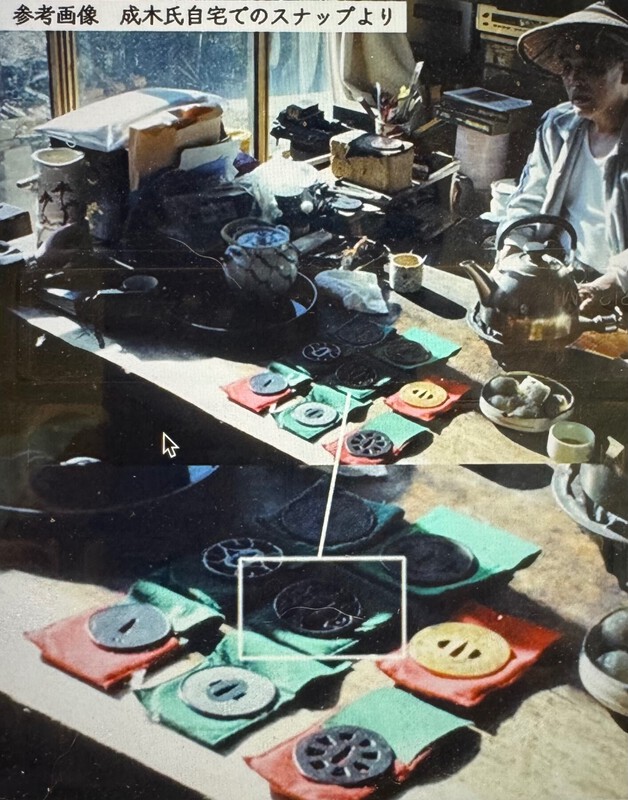
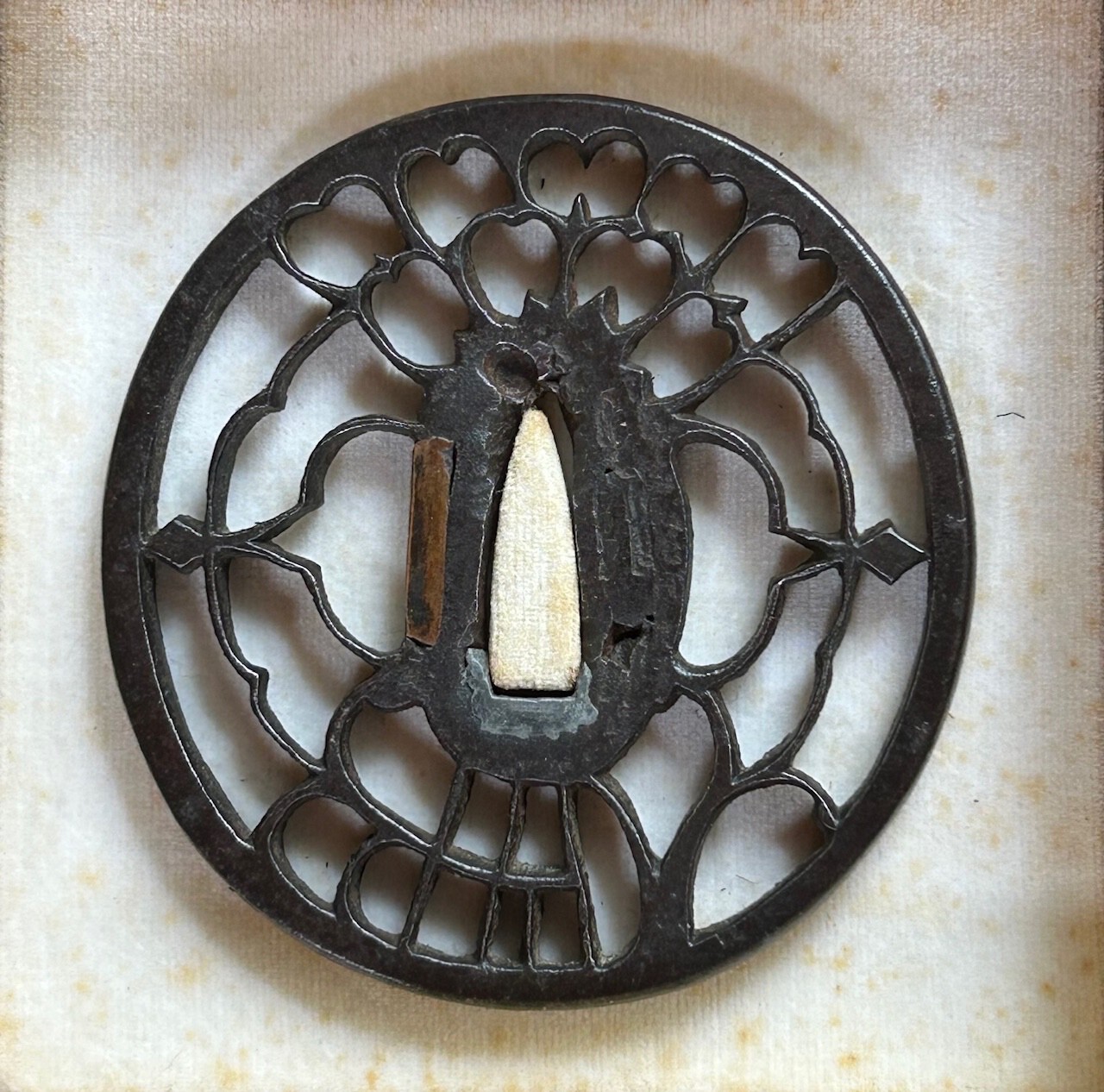
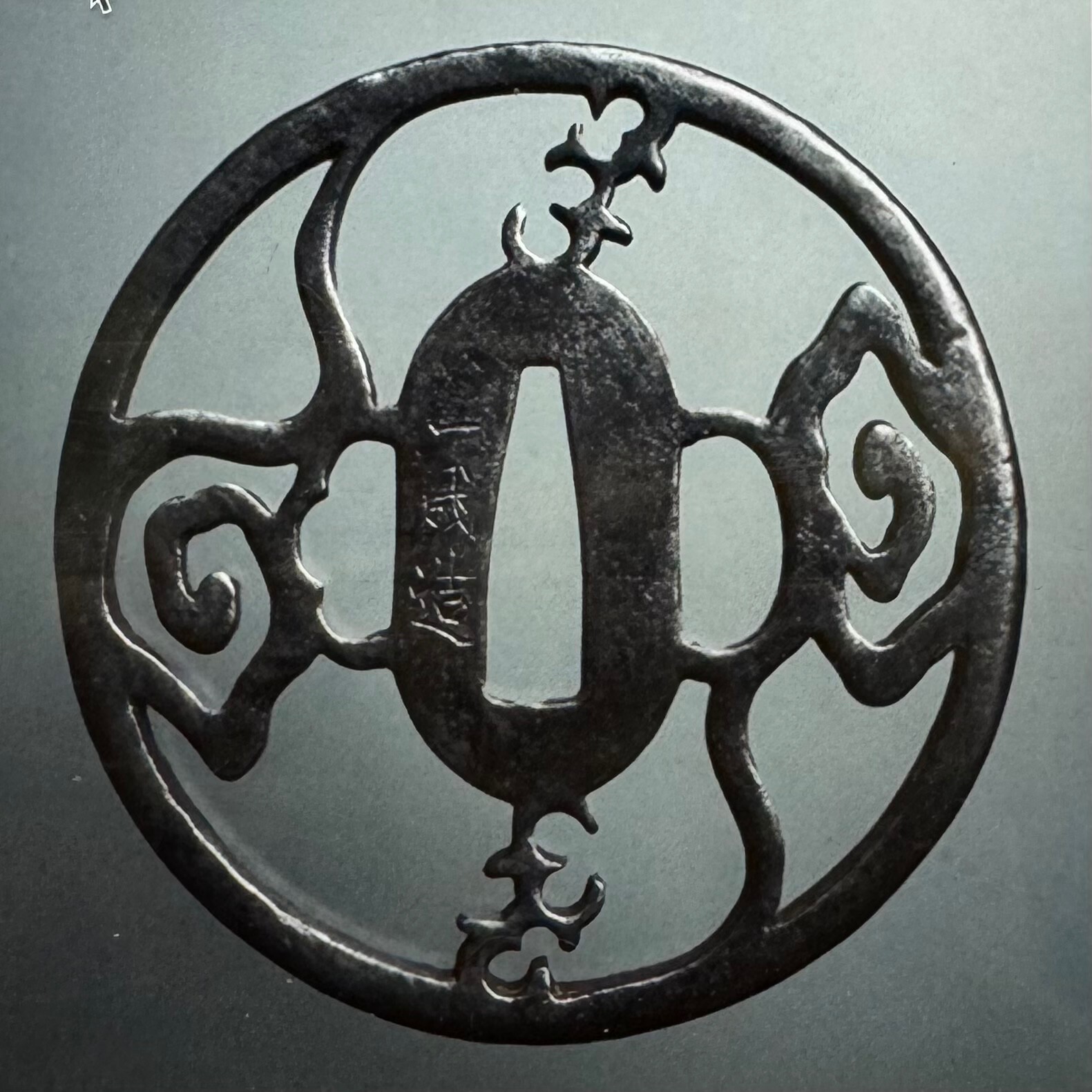
Bravo, although I wonder what specific features tipped you off. Noriki is a master contemporary smith who was born in the first half of the 20th century. He creates exquisite utsushi of Owari province guards of the late 16th and early 17th centuries. I didn’t include a pic of the ura with his mei on purpose for this exercise because I want to make a point about the significant flaw of attribution on the basis of the color and surface treatment of iron sukashi tsuba as propagated by Sasano sensei and his students. The smiths who created Owari province tsuba were highly skilled at forging iron plates with surface treatments to express many different styles and artistic sensibilities (e.g. wabi, sabi, mono no aware, yugen). The Noritsuke school and contemporary smiths like Noriki can likewise create these effects including tekkotsu and yakite shitate. The last photo below shows a tsuba (encircled) of the identical composition in Noriki’s workshop. Just look at the array of styles and composition and features on display among his creations. He creates homage pieces with his mei. We were all “fooled,” which attests to Noriki’s artistry and immense skill. https://www.jauce.com/auction/m1177516137


 1 point

























This leaderboard is set to Johannesburg/GMT+02:00